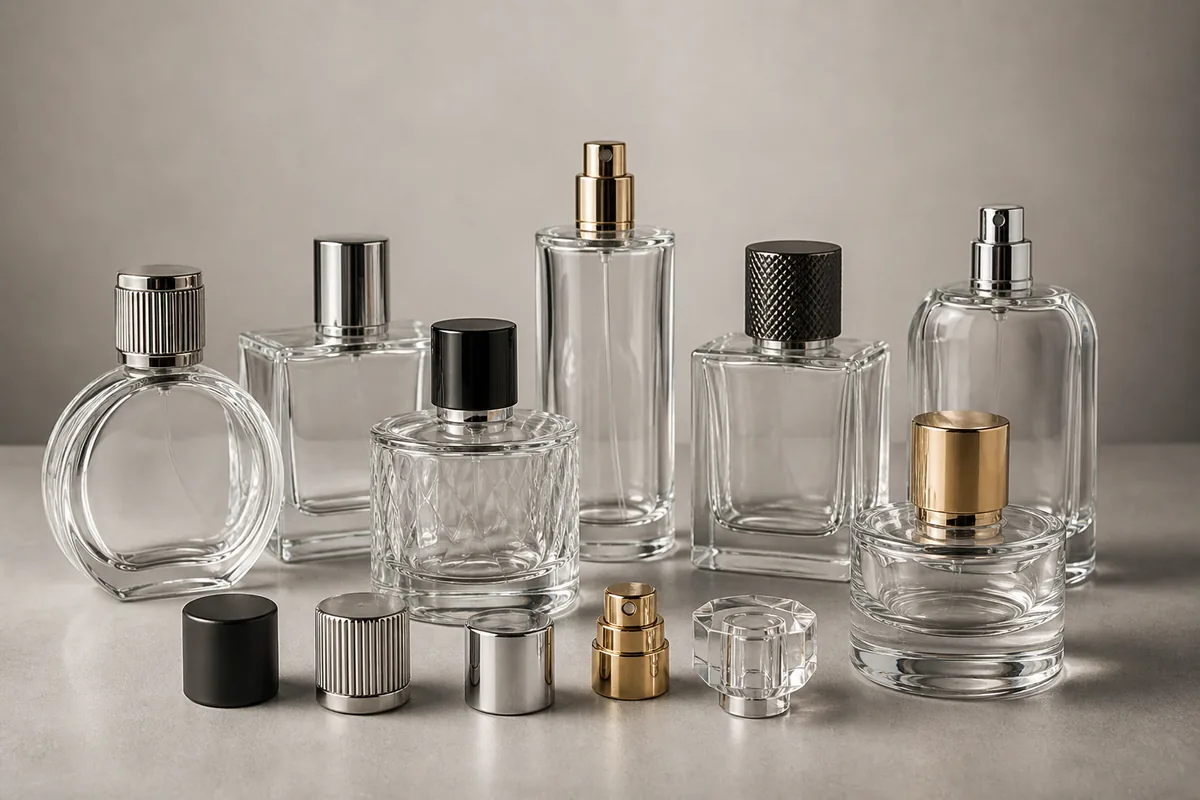
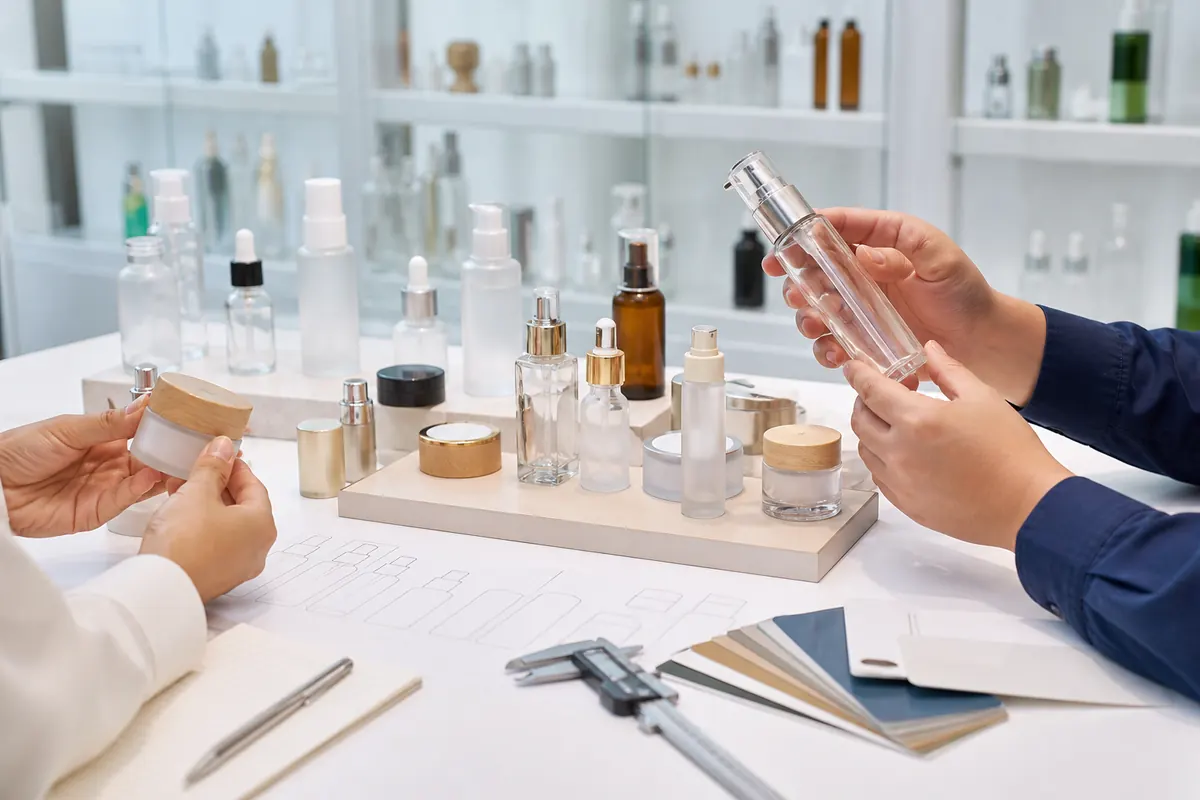
The best cosmetic packaging supplier is not simply the company with the lowest unit price. It is the supplier that can define the package clearly, coordinate the bottle and components, provide representative samples, control decoration and quality, document what is being supplied, and resolve problems against an agreed specification.
For B2B buyers, supplier selection should therefore start before the quotation comparison. Define the packaging type, formula use, required components, decoration, estimated quantity, target market, filling process, sample expectations, secondary packaging, and required timeline. Then ask every candidate the same technical and commercial questions. This guide supports the supplier-selection stage within FOLOVER PACK’s packaging buying resources.
Buyer conclusion: A good supplier should be able to move a project from requirement → specification → matched components → samples → approval → production → inspection → packing without repeatedly changing what was originally quoted. If those handoffs are unclear, a low quotation can create a high purchasing risk.
1. Does the Supplier Specialize in Your Packaging Type?
Start by checking whether the supplier regularly works with the type of package you need. Cosmetic glass bottles, perfume bottles, jars, pumps, sprayers, droppers, caps, decoration, and final assembly involve different technical interfaces and supply chains. A company may be experienced in glass containers while having limited control over pumps, droppers, decorative caps, or finishing processes.
Ask which products are manufactured or processed in-house, which components are sourced from partner factories, and who is responsible for matching the complete package. Request relevant production samples rather than relying only on catalog images. If the project needs a complete bottle-and-closure system, one party should clearly own component coordination and communicate any changes across the assembly.
For skincare projects, buyers can also use the skincare packaging guide to define the bottle, jar, and dispensing direction before comparing suppliers.
2. Are the Product Specifications Clearly Documented?
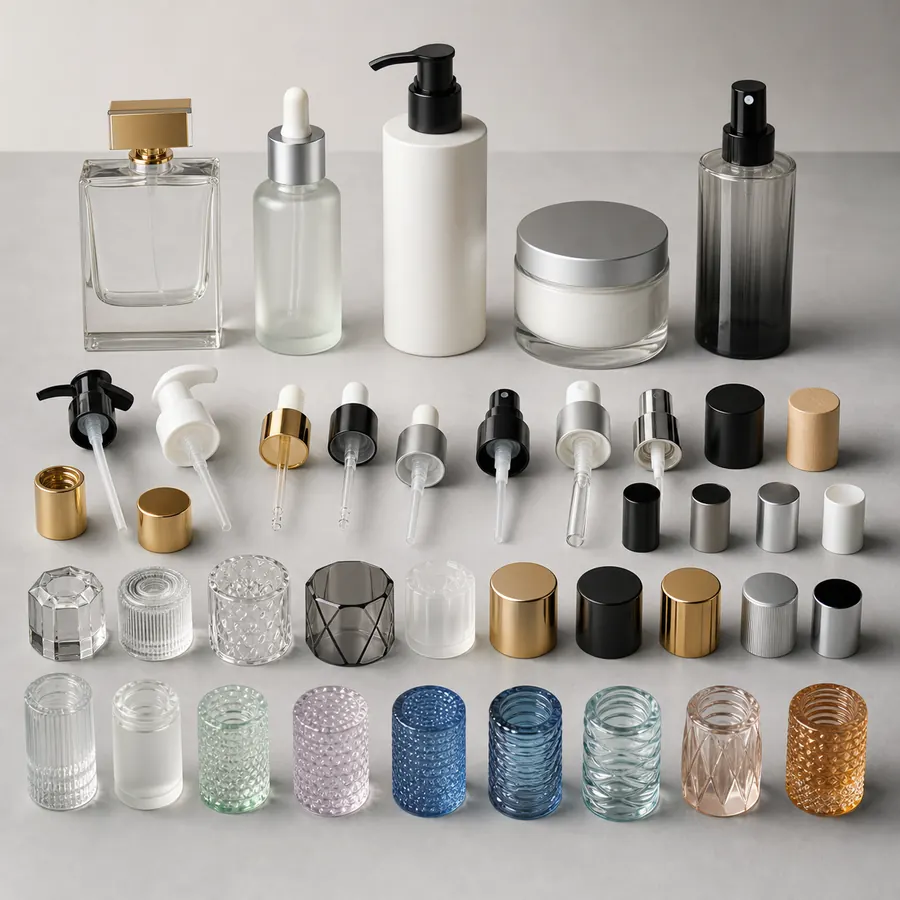
A useful quotation identifies more than a product photo and nominal capacity. Ask for the exact bottle model, material, capacity basis, neck specification, closure and dispenser configuration, color, decoration, packing method, and any approved drawing or specification. The quotation should make clear which items and services are included and which remain to be confirmed.
Document control becomes especially important when similar bottles have different necks, weights, tolerances, or compatible components. Record drawing or specification revisions and confirm that samples, quotations, purchase orders, and production approvals all refer to the same configuration.
Common failure mode: A buyer approves one physical sample, but the purchase order later describes only “30 ml serum bottle + dropper.” If the bottle model, neck, dropper assembly, pipette configuration, finish, and approved sample reference are not locked, different teams may believe they are working on the same package when they are not.
A practical supplier should therefore be able to answer: Which exact configuration is being quoted, and what evidence identifies it?
3. Can the Supplier Confirm Bottle and Closure Compatibility?
Visual fit is not evidence of compatibility. Bottle and closure performance can depend on neck finish, thread or crimp geometry, sealing surface, gasket, liner, closure construction, dip tube or pipette, bottle height, formula viscosity, dosage requirement, and assembly conditions.
Ask how the supplier selects the proposed bottle-and-closure combination. A responsible answer should separate three things: what is confirmed by specifications, what can be screened with assembled physical samples, and what still needs evaluation with the intended formula and use conditions.
A cap, pump, or dropper that appears to fit can still create incomplete thread engagement, closure wobble, uneven gasket contact, poor sealing, incorrect pipette or dip-tube fit, or dispensing problems. Final bottle and closure compatibility should be confirmed using the selected components and physical samples before bulk production.
Avoid suppliers that promise universal compatibility from photographs or nominal sizes alone. The complete-system framework in the cosmetic glass bottle buying guide provides additional questions for bottle and closure review.
4. What Customization Processes Are Actually Available?
Customization may include stock-bottle decoration, component color changes, custom caps, new molds, coating, frosting, screen printing, hot stamping, labels, or secondary packaging. Ask which processes the supplier controls directly, which are handled by specialist partners, and who approves feasibility before a quotation becomes a production commitment.
Clarify artwork limits, color references, sample route, surface preparation, decoration position, inspection criteria, and how finished components will be protected during assembly and packing. Screen colors and digital renderings are useful communication tools, but they do not establish the final appearance of coated glass, printed ink, metallic decoration, or component color.
Final color, logo, coating, and decoration should be approved on physical samples whenever these characteristics are important to the project. Complex projects may benefit from a defined custom packaging development process with named approval stages.
5. What Is the MOQ for Each Configuration?
Minimum order quantity can change with the bottle, closure, decoration, component color, custom mold, packing method, and production route. A stock clear bottle with a standard closure may have a different MOQ from the same bottle with coating, custom-colored components, printing, or newly developed tooling.
Ask for MOQ by line item and by finished configuration. Confirm whether the bottle, closure, decorative component, decoration process, or packing requirement has a separate minimum or production multiple. Otherwise, a project may meet the bottle MOQ but still create excess pump, cap, collar, or decorated-bottle inventory.
Treat every MOQ as a project-specific commercial term rather than a permanent catalog guarantee. Buyers who need a deeper breakdown of how stock components, decoration, and custom development affect purchasing quantities can use the custom cosmetic packaging MOQ guide.
Before comparing MOQ, confirm:
- MOQ for the bottle or jar
- MOQ for the selected closure or dispensing component
- MOQ for custom component colors
- MOQ for each decoration process
- Production multiples that can create excess components
- Whether spare components are included or quoted separately
- How repeat orders will be handled if one component has a different production minimum
6. What Samples Can Be Provided Before Production?
Different samples answer different questions. A stock sample can confirm shape, handling, and basic dimensions. An assembled component sample can screen bottle and closure fit. A decorated sample can support color, artwork, and finish approval. A production-intent sample gives the closest representation of the package expected for bulk production.
Ask what each sample includes, whether it uses the selected production components, and which characteristics are still provisional. Record sample IDs or clear approval references, together with comments about color, component combination, decoration, and function.
For complete packaging, evaluate multiple assembled units with the intended formula and planned secondary packaging where relevant. One visually acceptable sample should not automatically become proof of formula compatibility, leakage performance, dispensing consistency, or bulk-production quality.
The canonical packaging sample evaluation guide provides the deeper sample-review process.
- Exact bottle or jar model
- Selected closure, pump, sprayer, dropper, cap, liner, or gasket
- Decoration and component color
- Artwork version where applicable
- Formula used for functional evaluation
- Characteristics that are approved
- Characteristics that are still provisional
- The physical sample or documented reference that production should match
7. How Is Quality Controlled?
Ask the supplier to explain the controls relevant to your exact package rather than requesting a generic statement such as “strict quality control.” Useful areas can include incoming component inspection, in-process checks, final visual and dimensional inspection, decoration review, assembly checks, packing inspection, nonconforming-product handling, and production records.
Request the proposed acceptance criteria and clarify who approves them. Cosmetic glass may be reviewed for dimensions, visible defects, neck condition, decoration, cleanliness, and packing, but the applicable criteria must come from the agreed product and project specification.
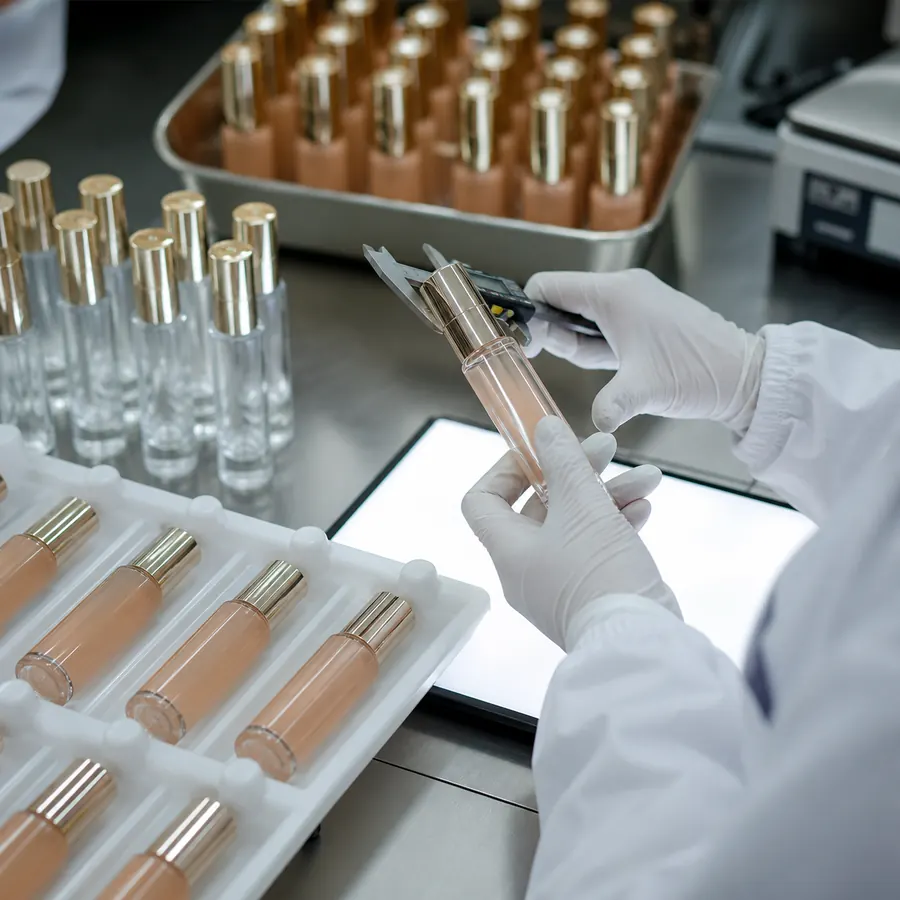
Buyer action: Ask the supplier to show how the approved sample, drawing, decoration standard, component specification, inspection criteria, and production lot are connected. A quality-control system is much more useful when a later issue can be traced to the exact specification and batch rather than discussed only from photographs.
Do not assume that a general factory certificate or quality-system statement proves that a particular bottle, closure, decoration, or finished package has been approved for your project.
8. What Testing Can Be Supported?
Packaging projects may require compatibility, leakage, dispensing, decoration, storage, assembly, or transport evaluation. Ask what the supplier can perform internally, what requires a qualified external laboratory, what the brand or filler must complete, and which protocol and acceptance criteria will be used.
Formula compatibility must use the intended formula and the selected packaging configuration under relevant storage and use conditions. A report for another bottle, closure, formula, material, or decoration should not automatically be transferred to the new project.
The European Commission’s guidelines for the Cosmetic Product Safety Report identify formulation-packaging interaction, packaging barrier properties, migration, and sensitivity to light or air as considerations that may be relevant to finished cosmetic safety. In the United States, the FDA’s cosmetic product testing guidance does not prescribe one universal test program for every cosmetic product. The responsible company must have appropriate support for product safety.
Supplier evaluation point: A stronger answer is “this is what we can verify, this is what still needs formula testing, and this is who is responsible for each step.” A weaker answer is “our packaging works with all cosmetic formulas.”
9. What Are the Tooling and Mold Ownership Terms?
For custom bottles, caps, or other components, document who owns the tooling, who maintains it, where it is stored, how revisions are handled, and what happens if the supplier relationship ends. Ask what the tooling charge actually includes and which drawing or physical sample defines final approval.
Also clarify exclusivity, ownership or permitted use of design files, responsibility for replacement after wear or damage, and any conditions affecting future production. These terms should be agreed before tooling begins rather than after the mold has already been made.
A low mold quotation is difficult to evaluate when ownership, maintenance, revision, sample approval, or future-production assumptions are missing. Buyers planning proprietary glass should review the full custom glass bottle mold development sequence before approving tooling.
10. What Is the Real Production Lead Time?
Separate the schedule into stages instead of asking only for one lead-time number. Depending on the project, stages may include stock sample review, decoration sampling, mold development, tooling samples, formula evaluation, artwork approval, component production, decoration, assembly, inspection, packing, and shipment preparation.
Ask which approval or commercial event starts each stage and which changes can reset the schedule. Different components can have different production cycles, so the bottle may be ready while a custom pump, cap, collar, carton, or decoration process remains on the critical path.
Commercial timelines should come from the current quotation and production plan. Do not convert a preliminary estimate into a guaranteed lead time unless the supplier has defined the required approvals, component status, and start point.
11. What Documentation Is Available?
Required documentation varies by product, component, material, decoration, destination market, formula, and buyer process. Depending on the project, relevant files may include specifications, drawings, material information, technical data, safety information, test reports, inspection records, packing lists, and other scoped compliance or shipping documents.
Ask for the exact document title, issuing party, date, revision, tested or declared item, and scope. A report for one glass composition, coating, plastic component, ink, or closure does not establish that every packaging configuration has the same status.
For EU-market cosmetics, Annex I of Regulation (EC) No 1223/2009 requires relevant information on characteristics of packaging material, particularly purity and stability, as part of the Cosmetic Product Safety Report. This does not turn the packaging supplier into the party responsible for the complete cosmetic safety assessment; it does mean that buyers need accurate, scoped packaging information for the exact configuration they use.
Where buyers need a structured explanation of specifications, SDS/TDS-type files, declarations, COA-style documents, and test reports, the cosmetic packaging documents guide provides the deeper reference.
12. How Are Problems Handled After Production?
Ask how the supplier receives claims, protects evidence, traces production lots, investigates root causes, reports findings, and agrees corrective action. Clarify what information the buyer should retain, such as carton labels, lot references, photographs, affected quantities, samples, filling conditions, assembly records, and discovery date.
A strong complaint process separates three stages: immediate containment, root-cause investigation, and corrective or preventive action. For example, isolating affected cartons is different from determining whether the issue came from bottle production, closure matching, decoration, assembly, filling, transport, or handling.
Commercial remedies should be documented in the quotation, purchase order, or purchase agreement rather than assumed. Fast replies are useful, but traceable records and clear responsibilities are more valuable when a technical problem must be resolved across several component suppliers.
Red Flags When Evaluating a Packaging Supplier
- Specifications remain vague or change between the sample, quotation, purchase order, and production approval.
- The supplier guarantees bottle, closure, or formula compatibility without drawings, matched samples, or relevant testing.
- A quotation lists a bottle but does not clearly identify the closure, dispenser, decoration, or packing scope.
- Production samples are discouraged even though the package includes custom decoration or multiple matched components.
- MOQ and lead time are quoted without the assumptions that create those numbers.
- Different bottle, closure, decoration, or packing minimums are not explained.
- Tooling ownership, maintenance, drawing approval, and future-use terms are not documented.
- Certificates or reports are supplied without identifying the exact material, component, finish, revision, or scope.
- The supplier changes a component after sample approval without asking whether re-evaluation is required.
- Quality claims are broad, but no approved specification or inspection criteria can be linked to the production order.
- After-sales discussions rely only on photographs and cannot trace the affected production lot or component source.
Supplier Comparison Scorecard
Use the same criteria and evidence requirement for every candidate. Weight factors according to the project rather than treating all categories equally. A supplier should not receive a higher evaluation simply because one quotation is cheaper if the technical configuration or included scope is different.
| Area | What to Compare | Evidence to Request | Buyer Decision |
|---|---|---|---|
| Technical fit | Package type, component matching, formula-use understanding, filling and assembly requirements | Specifications, drawings, matched samples, clear component references | Can the supplier define one complete production configuration? |
| Quality | Relevant controls, acceptance criteria, traceability, nonconforming-product handling | Inspection plan, approved reference, production records or representative evidence | Can quality discussions be tied to the exact order and approved sample? |
| Customization | Decoration capability, custom components, mold development, feasibility and approval sequence | Relevant production examples, sample route, artwork or drawing requirements | Are limitations explained before production commitment? |
| Samples | Stock, assembled, decorated and production-intent sample availability | Identified samples and documented approval comments | Can the buyer approve the configuration before bulk production? |
| Documentation | Availability, date, revision, issuing party and exact product scope | Project-specific document list | Do the documents actually apply to the ordered configuration? |
| Commercial fit | MOQ, lead time, tooling, packing, payment and quotation scope | Itemized current quotation with assumptions | Are suppliers being compared on the same finished-package scope? |
| Problem resolution | Traceability, claim process, root-cause review and corrective action | Defined claim requirements and responsible contact | Can a later issue be investigated with evidence rather than assumptions? |
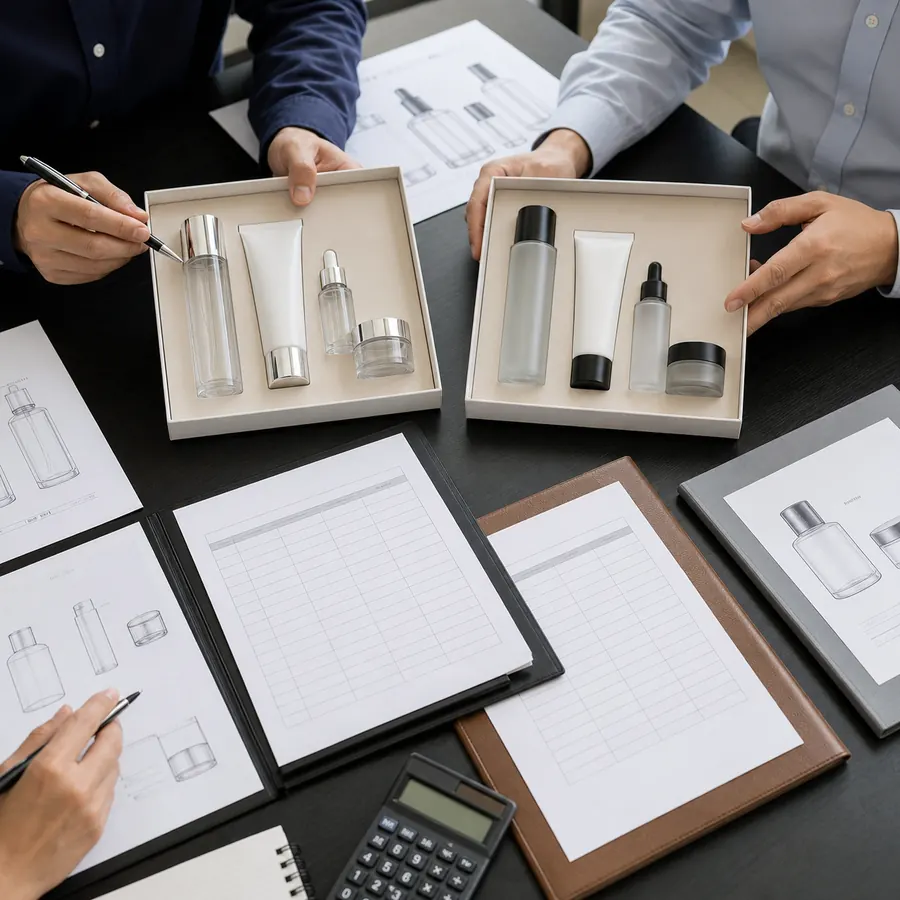
Frequently Asked Questions
What should I ask a cosmetic packaging manufacturer?
Ask about specialization, exact specifications, bottle and closure matching, customization, MOQ, samples, quality controls, testing responsibilities, tooling terms, lead-time stages, documentation, packing, and problem resolution. The strongest answers should identify what is already confirmed, what still requires a sample or test, and who is responsible for each step.
How do I verify a glass bottle supplier?
Verify the supplier by comparing documented specifications, relevant physical samples, component coordination, quality evidence, current commercial terms, documentation scope, and traceability. For a complete package, check whether the supplier can consistently connect the bottle, closure, decoration, approved sample, quotation, and production order to the same configuration.
Should I choose a factory or trading company?
Choose the organization that can transparently manage the products, components, quality, communication, documentation, and accountability required by your project. Business type alone does not prove suitability. For multi-component cosmetic packaging, coordination and technical ownership can be more important than whether every component is produced under one roof.
What documents should a packaging supplier provide?
The required documents depend on the package and destination market. Ask for current specifications and drawings first, then request applicable material information, scoped declarations or reports, inspection records, and shipping documents. Always verify the issuing party, date, revision, tested item, and exact component or decoration covered by each document.
How many samples should I test before ordering?
There is no universal sample quantity for every packaging project. Use enough representative units to evaluate the agreed variables and test plan. The quantity should reflect package complexity, formula, component variation, decoration, testing requirements, and buyer risk. More important than an arbitrary number is ensuring the samples represent the intended production configuration.
Is the lowest packaging price always the best option?
No. Compare the complete scope, technical fit, component matching, quality controls, samples, tooling, lead time, documentation, packing, service, and potential rework. A lower unit price can become more expensive if key components, decoration, testing support, or quality requirements were excluded from the original quotation.
Conclusion
A reliable cosmetic packaging supplier makes the project easier to specify, sample, verify, produce, inspect, pack, and trace. Use the same twelve questions and a shared scorecard to compare technical fit, component coordination, quality, customization, documentation, commercial terms, and accountability before approving bulk production.
FOLOVER PACK supports cosmetic and fragrance packaging projects involving glass containers, matched components, decoration, samples, and custom development. Buyers can review cosmetic glass packaging, OEM and ODM packaging services, or send a defined bottle, formula-use, closure, quantity, decoration, sample, and packing brief for project review.