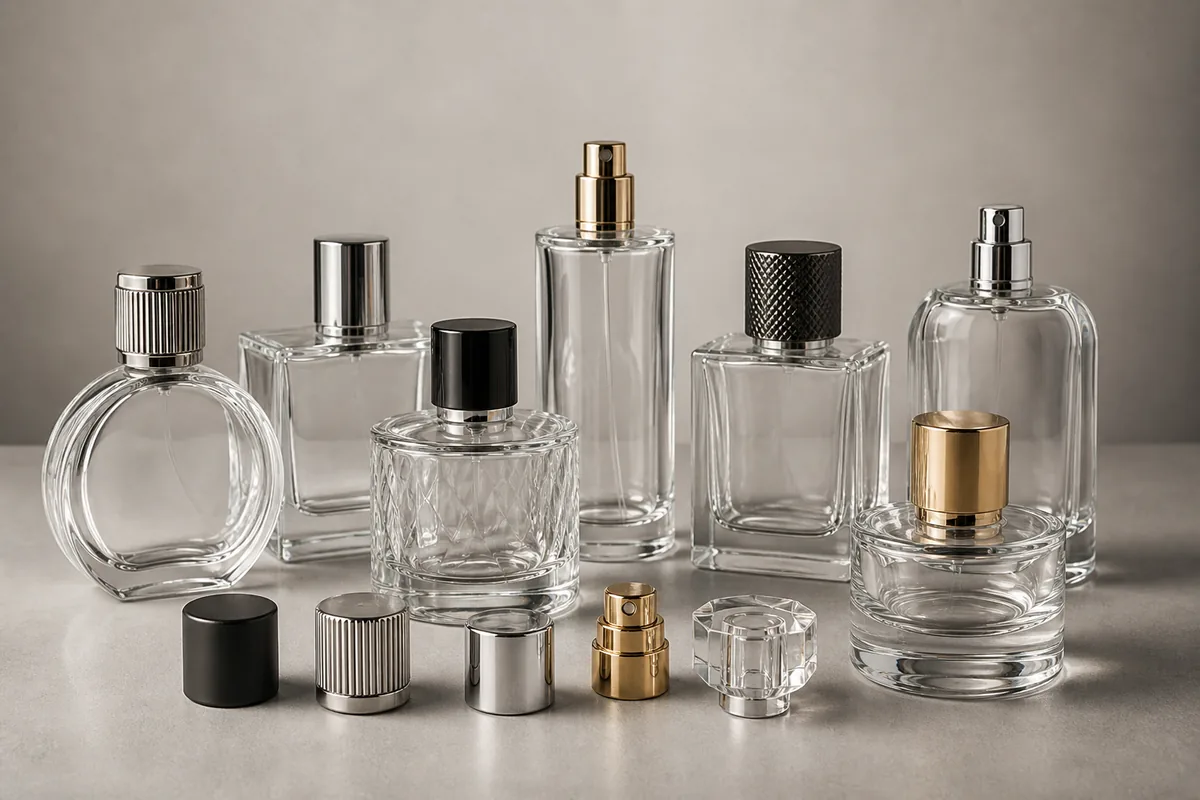

There is no single serum bottle that works for every skincare formula. A water-like serum, an oil-based serum, and a thicker treatment can behave very differently in the same dropper or pump. The correct choice starts with the formula, then moves through dispensing, bottle geometry, light sensitivity, neck compatibility, decoration, and physical sample approval.
For B2B buyers, the practical question is not “Which serum bottle looks premium?” but “Which complete bottle-and-closure system can dispense this formula reliably and still meet filling, branding, transport, and user-experience requirements?” This guide keeps that decision sequence at the center of the selection process.
Buyer conclusion: Select the serum bottle from the actual formula and intended dispensing experience, then validate the exact bottle, closure, pipette or dip tube, sealing elements, decoration, and filled samples before bulk production. Do not use appearance, nominal capacity, or a generic neck description as proof of compatibility.
Start With Serum Viscosity
Formula viscosity is the first practical filter because it affects uptake, release, priming, flow through an actuator, and the amount of product that can remain inaccessible near the end of use. However, there is no universal cP threshold that automatically makes a dropper or pump correct for every serum. Rheology, surface tension, suspended materials, temperature, and the internal geometry of the dispensing component can all change the result.
Ask the formulator or filling partner for the final production formula and a useful description of how it behaves under intended storage and use conditions. If viscosity data are available, record them together with the measurement conditions rather than treating a single number as a universal packaging rule. The packaging supplier can then screen candidate components, but the actual formulation still needs physical evaluation.
| Formula Behavior | Practical Starting Direction | Main Risk to Check | Buyer Verification |
|---|---|---|---|
| Water-like or very free-flowing serum | Dropper or suitable treatment pump can both be considered | Over-dosing, dripping, leakage, or inconsistent release | Check actual dose behavior, sealing, and user control with filled samples |
| Medium-flow serum | Compare dropper uptake/release with pump priming and actuation | Slow pipette filling, incomplete release, or unstable pump output behavior | Run repeated dispensing cycles with the intended formula |
| Thicker gel-like treatment | Screen pump options and only retain a dropper if uptake and release are acceptable | Poor suction, stringing, difficult priming, or incomplete evacuation | Test the exact component pathway rather than applying a generic viscosity cutoff |
| Oil-based serum | Dropper or pump may be possible depending on the complete component system | Seal-material interaction, leakage, bulb or gasket behavior, and dose control | Evaluate the formula against all product-contact parts and the assembled package |
Technical boundary: Packaging compatibility should be evaluated with the actual formulation under intended storage and use conditions. Do not assume that a bottle, bulb, gasket, wiper, pipette, dip tube, or pump is chemically or functionally compatible from appearance alone.
Dropper Bottle vs Treatment Pump
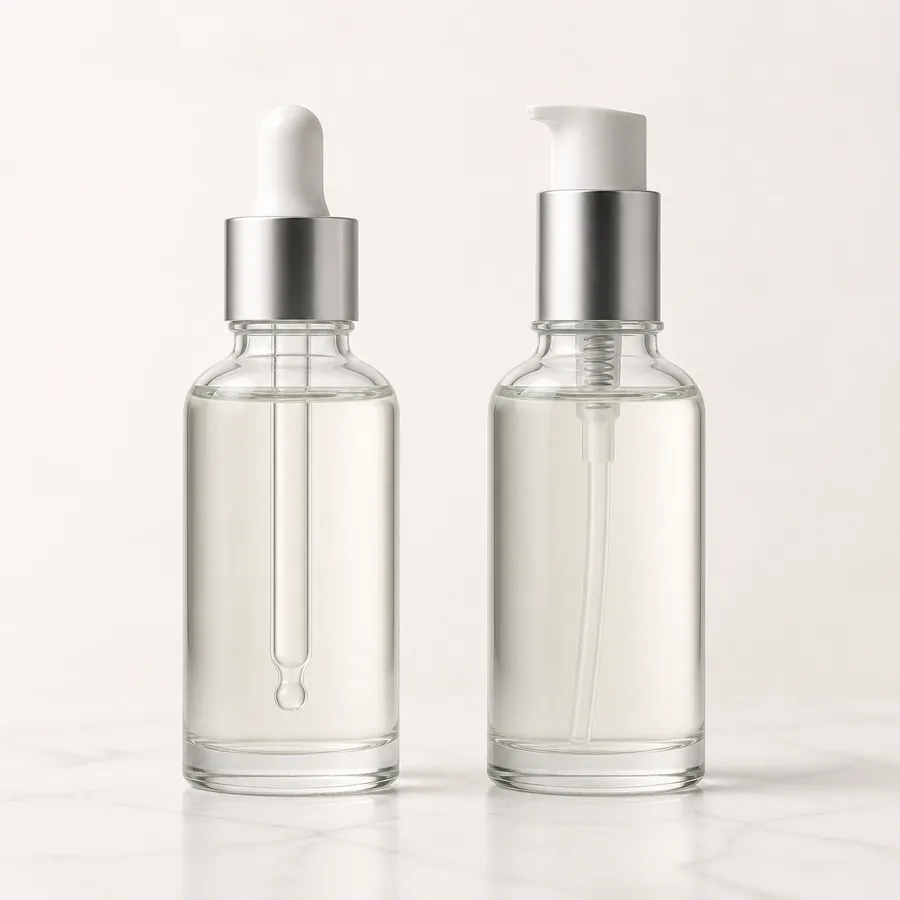
A dropper supports visible, manual dosing and can reinforce a deliberate skincare ritual. A treatment pump can simplify repeated use and may provide more consistent actuation when the pump is correctly matched to the formula. Neither format is automatically better.
For a dropper, evaluate pipette uptake, release speed, tip behavior, bulb rebound, wiper interaction where used, bottom clearance, and sealing. For a treatment pump, evaluate priming, repeated actuation, formula movement through the pump pathway, dip-tube fit, closure seating, and the amount of product left near end of use.
For a component-level comparison before selecting a dispensing route, review serum bottle types, droppers, pumps, sizes, and glass options.
| Factor | Dropper | Treatment Pump |
|---|---|---|
| Dosing style | Manual drop or partial pipette dose | Controlled actuation determined by the selected pump |
| Viscosity suitability | Depends on formula, pipette and orifice design | Depends on formula and pump construction |
| User interaction | Visible and ritual-oriented | Convenient and controlled |
| Exposure during use | Depends on how the dropper is handled | Depends on the complete pump and bottle system |
| Key validation | Uptake, release, pipette reach and sealing | Priming, actuation, output behavior and product evacuation |
Buyers can browse available glass serum bottles, then review compatible closure candidates for the exact neck finish. If the project uses a dropper, the serum and essential-oil dropper category provides the appropriate product-browse path. Treatment-pump projects can compare cosmetic pump options while confirming whether a specific pump suits the formula and bottle.
Manufacturer Insight
A common sourcing mistake is approving the bottle and dispenser separately. Lock the bottle neck, closure structure, sealing element, pipette or dip-tube configuration, assembled height, and dispensing behavior as one package. A late component change can affect leakage risk, dosing, decoration position, cap alignment, carton fit, and sample approval at the same time.
Choose the Right Bottle Capacity
Serum bottles are commonly seen in formats such as 10 ml, 15 ml, 30 ml and 50 ml, but these are market directions rather than mandatory standards. The right capacity depends on the amount used per application, frequency of use, expected product life after opening, retail positioning, portability, filling requirements, and whether several SKUs need to share a packaging platform.
Capacity also changes the dispensing system. A different bottle height may require a different pipette or pump dip tube, even when the neck looks similar. Buyers should verify nominal and brimful information for the exact bottle, confirm the intended fill with the filling partner, and avoid transferring component lengths from one bottle size to another.
Failure mode: A dropper or pump approved on one 30 ml bottle should not be assumed to fit a different 30 ml bottle. Shoulder profile, internal depth, base geometry, neck construction, and component length can all change even when nominal capacity is identical.
Consider Light Sensitivity

Clear glass shows the formula and can support a clean clinical or premium presentation. Amber glass, colored glass, coatings, and secondary cartons may be considered when a formula has light-sensitivity concerns. However, color alone does not prove a specific UV or visible-light protection level.
The European Commission’s guidelines for the Cosmetic Product Safety Report note that formulation-packaging interaction, packaging barrier properties, migration, and formula sensitivity to light or air may be relevant to finished cosmetic safety and suitability. If a serum requires quantified light protection, request evidence for the exact bottle, finish, and secondary package instead of assigning a generic protection percentage to “amber glass.”
The broader skincare packaging guide can support formula-to-package planning across a product range.
Check Neck Finish, Dropper and Pump Compatibility
The bottle neck is the mechanical interface for the closure. Thread structure, sealing surface, closure geometry, gasket or liner, collar construction, and the component’s intended bottle interface must work together. A similar appearance or nominal neck description does not establish compatibility.
For droppers, check the pipette length, bulb, collar, sealing element, wiper if used, and how the pipette enters and clears the bottle. For pumps, check neck engagement, sealing, actuator, dip-tube configuration, priming, repeated dispensing, and product pickup. Exact output values, lengths, torque requirements, and tolerances must come from the selected component specification or an approved project standard—not from another bottle or a generic article.
Manufacturer Insight
FOLOVER PACK supports coordinated bottle, dropper, pump, cap, and decoration sourcing. In practice, the useful approval unit is the assembled package, not the individual bottle. If bottle height, neck geometry, sealing component, dropper supplier, pump supplier, or decoration changes, confirm whether physical re-evaluation is required before bulk production.
Compatibility rule: Final bottle and closure compatibility should be confirmed using the selected components and physical samples before bulk production.
Evaluate Dosing and User Experience
The package should help users apply a practical amount without unnecessary mess or confusion. A dropper allows visible control, but uptake and release can vary with formula behavior and pipette design. A pump can simplify use, but its priming, actuation, and output behavior must be confirmed with the actual serum.
Evaluate the filled package across repeated cycles rather than only the first actuation. Watch for dripping after release, residue around the neck, inconsistent pickup, difficult closing, formula left below the reach of the pipette or dip tube, and changes in operation after storage. These observations are more useful than trying to force every serum into a generic “thin = dropper, thick = pump” rule.
Premium feel comes from the complete interaction: stable bottle, smooth closure engagement, controlled dispensing, clean product release, and consistent component alignment. Decorative weight alone cannot compensate for poor dispensing.
Decoration Options for Serum Bottles
Depending on the selected bottle and project, serum bottles may use coating, frosting, screen printing, hot stamping, labels, or coordinated colored components. Curved shoulders and small formats can limit printable area, while component changes can alter the visible spacing between artwork, collar, and cap.
Approve final color, logo, finish effect, and component combination on physical samples. Do not assume that a digital rendering, Pantone reference, or screen display will reproduce the exact appearance of coating, ink, metallic decoration, or a colored accessory on glass.
See FOLOVER’s decoration and finishing options for the relevant solution path.
Buyer action: Freeze the bottle and functional closure before final artwork approval whenever artwork position depends on the assembled height or collar line. A late dispenser change can force the decoration and carton approval process to restart.
What to Test Before Mass Production
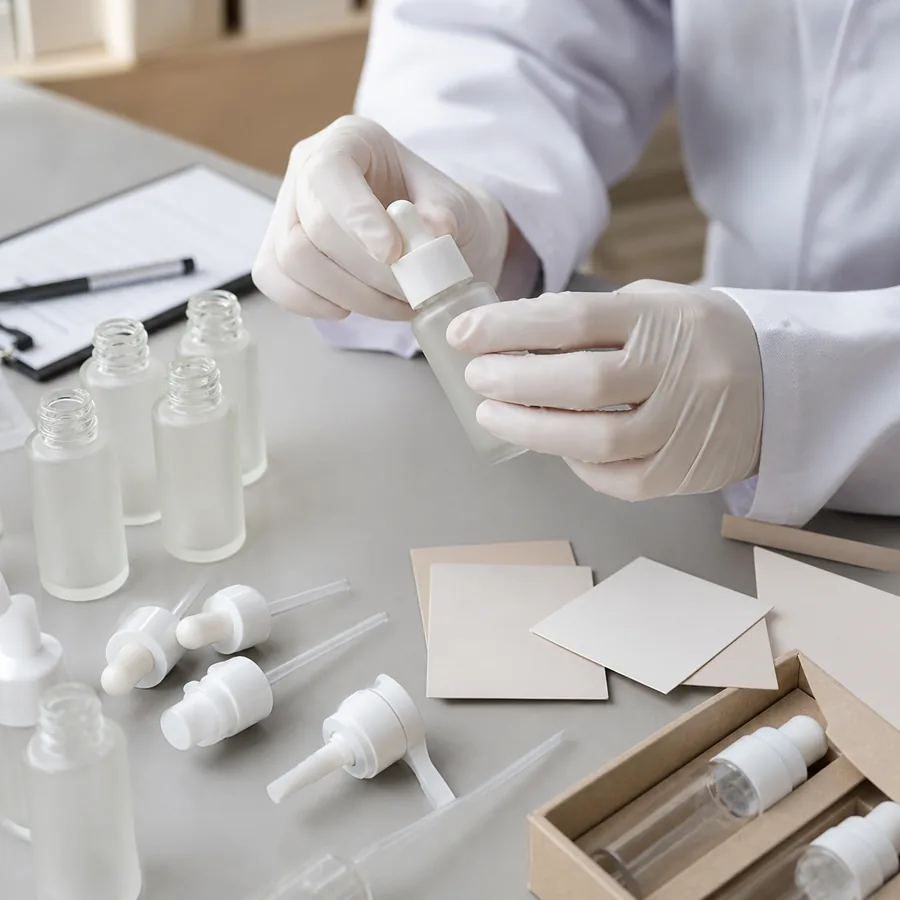
Physical Sample Checks
- Evaluate formula compatibility with all product-contact components.
- Check sealing and leakage using an agreed method and the intended filled package.
- Operate the pump or dropper repeatedly and observe priming, uptake, release, and residue.
- Review dose behavior without inventing a tolerance not supplied by the component maker or project specification.
- Confirm neck fit, closure engagement, pipette or dip-tube configuration, and component alignment.
- Evaluate the amount of product that remains inaccessible near end of use.
- Approve coating, printing, hot stamping, and component color on physical samples.
- Use transport or storage evaluation where the project, formula, and distribution route require it.
The EU cosmetic safety-report guidelines state that formulation-packaging interaction studies should use specific and relevant conditions and that there is no single standard procedure for all cosmetic products. In the United States, the FDA’s Product Testing of Cosmetics page likewise explains that FDA does not prescribe one fixed list of tests for every cosmetic product. The practical implication is that a serum packaging test plan should be built around the actual formula, selected components, intended storage, distribution, and use.
A successful visual sample is not the same as a validated filled package. Record the exact bottle, closure, dispenser, sealing component, decoration, and physical sample that were approved. Any later substitution should be reviewed before it enters production.
RFQ Checklist for Serum Bottle Projects
- Formula type, viscosity description, and known sensitivity concerns
- Target capacity and expected amount used per application
- Preferred dropper, treatment pump, or other dispensing method
- Exact bottle and closure configuration to be quoted
- Bottle glass color, coating, logo, and decoration requirements
- Target order quantity and required sample stages
- Filling, assembly, carton, and transport requirements
- Destination market and product-specific documentation needs
- Target production timeline and launch constraints
- Which characteristics must be approved before bulk production
For the wider decision process, read the Serum Bottles and the published guide on choosing cosmetic glass bottles for a brand. More sourcing topics are organized under Packaging Buying Guides.
Frequently Asked Questions
Is a dropper or pump better for serum?
Neither is universally better. A dropper supports visible manual dosing, while a treatment pump supports actuation-based dispensing. The right option depends on formula behavior, target dose, application method, bottle neck, and verified component performance. Compare both systems with the intended serum when the choice is uncertain.
What size bottle is best for facial serum?
Common market formats include 10 ml, 15 ml, 30 ml and 50 ml, but the best capacity depends on usage, formula life, retail positioning, portability, and filling requirements. Capacity also affects pipette or dip-tube configuration, so confirm the exact bottle and closure assembly rather than choosing by appearance alone.
Can thick serum be used with a dropper?
Sometimes, but there is no universal viscosity cutoff. A thicker serum may show slow uptake, incomplete pipette filling, stringing, or poor release with one dropper and acceptable behavior with another. Evaluate the actual formula with the intended pipette, bulb, wiper, bottle, and repeated dispensing cycles before approval.
Does amber glass protect serum?
Amber glass may be considered when light sensitivity is a concern, but it should not be assigned a universal protection percentage. Define the formula’s sensitivity and verify the exact bottle, glass or coating system, and secondary packaging when protection is critical. Request measured evidence if a quantified transmission requirement is needed.
How long should the pipette be?
Pipette length depends on the exact bottle height, shoulder, internal depth, base geometry, and dropper construction. The pipette must reach sufficiently for product pickup without creating an unsuitable fit or bottom contact. Use the verified bottle and component specification and inspect the physical assembly before bulk production.
Can serum bottles be customized?
Depending on the bottle and project, customization may include glass color, coating, frosting, printing, hot stamping, labels, droppers, pumps, caps, and coordinated component colors. Approve the final assembled combination, color, artwork, and decoration on physical samples because a decoration approval does not automatically confirm dispensing or formula compatibility.
Final Recommendation
Choose the serum bottle by moving from formula behavior to dispensing, capacity, light sensitivity, neck compatibility, dosing, decoration, and physical validation. The strongest package is not the bottle with the most premium appearance; it is the configuration that dispenses the intended formula reliably and can be approved as a complete bottle-and-closure system before bulk production.
FOLOVER PACK can support bottle selection, dropper or pump matching, decoration coordination, and physical sample review for serum packaging projects. Share the intended formula type, capacity, dispensing direction, decoration, quantity, and sample requirements so the proposed components can be evaluated as one package.