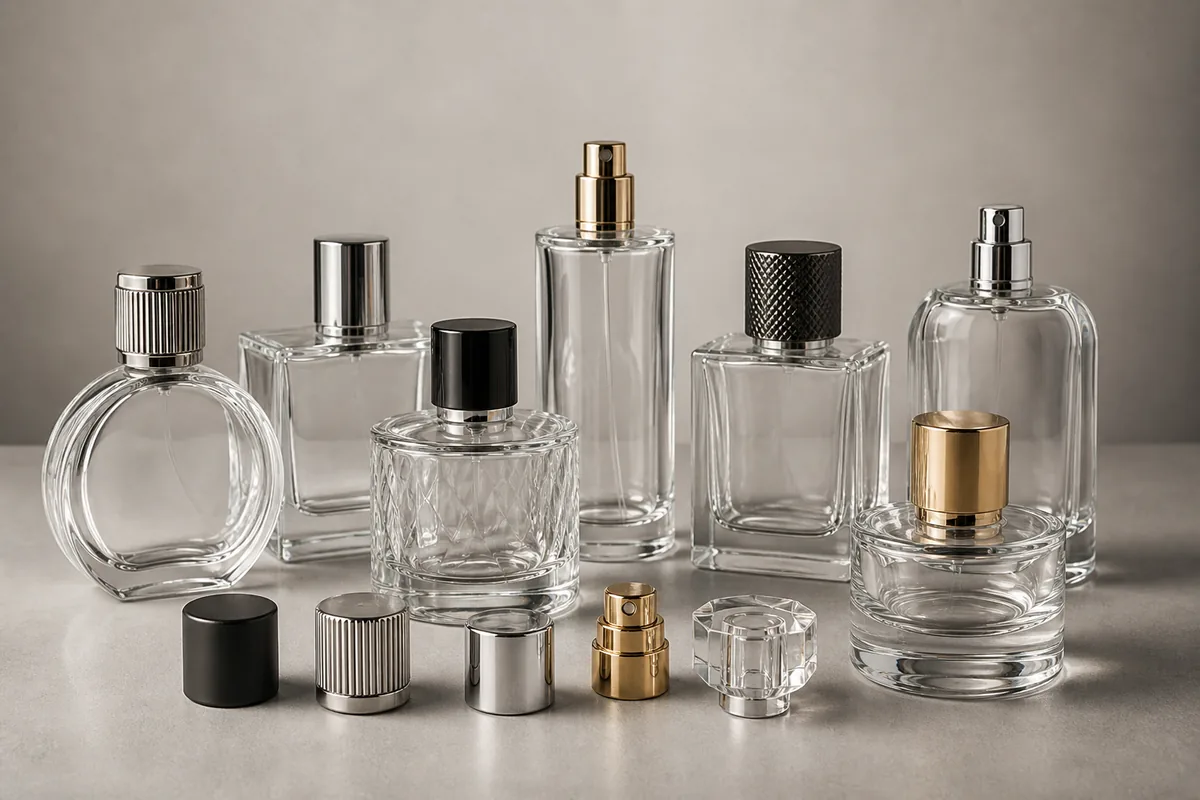

The right cosmetic glass bottle is the one that matches the formula, filling volume, dispensing method, neck and closure system, intended use conditions, and brand requirements—not simply the most attractive bottle shape. A buyer should first define formula viscosity, target dose, filling process, light or oxygen sensitivity, and how the user is expected to dispense the product.
The bottle should then be reviewed as part of a complete packaging system. Bottle geometry, closure fit, dispensing performance, decoration, filling and assembly conditions, secondary packaging, and physical samples all affect the final decision. A visually suitable bottle can still create sourcing or performance risk if the selected components have not been verified together.
Start With the Formula, Not the Bottle Shape
The formula creates the first set of packaging requirements. A watery toner, facial serum, lotion, oil, and cream may need different dispensing systems even when the bottles look similar. Begin by documenting how the formula flows, how much product should be dispensed during use, whether users need pouring or controlled application, and how the package will be filled and assembled.
The article on cosmetic packaging for different skincare formulas compares these application-led packaging directions in more detail.
Formula viscosity
Viscosity affects how a formula moves through a pump, sprayer, dropper, reducer, or bottle opening. A low-viscosity liquid may suit several dispensing directions, while a thicker formula may require a dispensing component designed for its flow behavior. The correct choice cannot be made from a product photograph or a generic component name. Buyers should evaluate the selected dispenser with the intended formula and target dose.
Product behavior can also change during storage or at different temperatures. Packaging selection should therefore reflect intended filling, storage, and use conditions rather than a one-time visual assessment.
Light and oxygen sensitivity
Clear glass provides product visibility, while amber, colored, frosted, or coated glass can support a different protection or branding strategy. However, bottle color alone does not prove that a package provides sufficient light protection for a particular formula. The required level of protection should be established from formulation and stability requirements, then verified using the selected bottle, finish, closure, and any secondary packaging.
Oxygen exposure is also a package-system question. The bottle, closure, sealing structure, dispensing mechanism, headspace, opening frequency, and storage conditions can all matter. The European Commission’s guidelines for the Cosmetic Product Safety Report specifically note that formulation-packaging interaction, barrier properties, migration, and sensitivity to light or air can be relevant to finished-product safety. Buyers should therefore avoid treating glass color alone as proof of protection.
Formula compatibility must be tested
General material descriptions cannot confirm compatibility with a specific cosmetic formulation. Essential oils, alcohol-containing products, active ingredients, solvents, coatings, gaskets, liners, and plastic dispensing components may behave differently in different configurations. Packaging compatibility should be evaluated with the actual formulation under intended storage and use conditions.
Verification boundary: A compatibility result applies to the exact bottle, closure, dispensing component, decoration, formula, and test conditions reviewed. It should not be transferred automatically to another bottle model, finish, formula, or component set. For EU-market cosmetics, Annex I of Regulation (EC) No 1223/2009 requires the safety report to consider relevant characteristics of packaging material, particularly purity and stability. In the United States, the FDA’s cosmetic product testing guidance does not prescribe one universal test regimen; the responsible company must use appropriate, scientifically sound evidence to substantiate safety.
Choose the Right Bottle Type for the Product
After defining the formula, compare packaging directions by function. The table below is a starting framework, not a compatibility guarantee. Each option still requires component and formula verification.
For a structured overview of the main bottle families behind these options, review cosmetic glass bottle types, uses, and key features.
| Product Direction | Common Packaging Direction | Key Selection Factors | What Buyers Should Verify |
|---|---|---|---|
| Facial serum | Dropper bottle or treatment-pump bottle | Viscosity, target dose, user interaction, light sensitivity, neck and dispenser fit | Actual-serum dispensing, bottle-and-dropper or pump match, sealing, pipette or dip-tube configuration, and assembled sample performance |
| Lotion or emulsion | Pump bottle or another controlled-dispensing package | Flow behavior, pump design, output requirement, dip-tube configuration, filling process | Formula pickup, pump priming and dispensing, neck and gasket match, dip-tube fit, and filling-line compatibility |
| Toner or watery formula | Sprayer, pump, reducer, or screw-closure bottle | Application style, dispensing control, formula behavior, closure system | Spray or flow behavior, leakage, closure fit, actual-formula performance, and intended user application |
| Cream or balm | Jar or a dispensing package designed for the formula | Product access, viscosity, hygiene goals, sealing structure, filling method | Filling method, liner or sealing arrangement, user access, secondary protection, and formula-package suitability |
| Facial oil or essential-oil blend | Dropper, reducer, roll-on, or other controlled-dispensing bottle | Dose control, formula compatibility, light sensitivity, closure and sealing components | Actual-formula compatibility, dose behavior, sealing, reducer or dropper fit, and intended storage conditions |
| Perfume or fragrance | Spray bottle with a coordinated atomizer, collar, and cap system | Neck system, atomizer fit, filling and assembly method, cap alignment, formula compatibility | Exact bottle-and-atomizer match, crimp or closure assembly, cap alignment, spray performance, and formula compatibility |

Buyers can review FOLOVER PACK’s cosmetic and skincare glass packaging for product-browsing intent, then use the skincare packaging guide for a more application-focused selection path. Specific product families include serum bottles, lotion bottles, toner bottles, and cream jars.
Select the Right Capacity
There is no universal cosmetic bottle capacity that suits every brand or formula. Capacity should follow the intended fill quantity, expected usage period, dose per application, product positioning, filling-line capability, and package proportions. Travel or trial products may prioritize portability and controlled use, while standard retail or professional products may need a different balance of shelf presence, handling, and product volume.
Capacity also changes more than the amount of product inside the bottle. It can affect bottle height and diameter, component length, carton dimensions, shipping weight, filling efficiency, decoration area, and the way the package feels in the user’s hand. Two bottles with similar nominal use may require different closure or secondary-packaging decisions because their geometry differs.
Manufacturer Insight: Approve Capacity as Part of the Assembly
FOLOVER PACK recommends reviewing the intended fill, bottle geometry, selected closure, dispensing component, and secondary packaging together. In practice, approving capacity before the final component set is locked can create avoidable rework in dip-tube or pipette fit, carton dimensions, decoration layout, or filling setup. The safer sequence is to confirm the bottle and functional closure first, evaluate the assembled sample, and then freeze the reference configuration used for decoration and bulk-production approval.
Understand Neck Finish and Closure Compatibility
The bottle neck is the technical interface between the container and its closure. Similar-looking necks are not automatically interchangeable, and a cap or pump that appears to fit may not provide the required engagement, sealing, alignment, or dispensing behavior.

Why neck finish matters
Neck finish can include thread or crimp structure, sealing surfaces, dimensions, and other geometry that affects how a closure seats on the bottle. The correct specification must come from the selected bottle and component documentation or verified physical samples. Buyers should not infer a neck size from a photograph or transfer a closure specification from another bottle.
Common failure modes include incomplete thread engagement, uneven gasket contact, closure wobble, misaligned decorative components, or a closure that seats visually but does not create a stable seal. Final bottle and closure compatibility should be confirmed using the selected components and physical samples before bulk production.
Pumps, droppers, sprayers, and caps
Each dispensing system introduces additional variables. Pumps and sprayers may involve an actuator, closure, gasket, liner, dip tube, and internal mechanism. Droppers may involve a bulb, collar, pipette, wiper, or reducer depending on the design. Caps may need to coordinate with a closure, collar, or decorative component rather than attach directly to the bottle.
The cosmetic bottle closures and dispensing guide provides a decision path for pumps, sprayers, droppers, and caps. Final compatibility still needs verification for the exact bottle and component combination.
Dip tube and component fit
Dip-tube or pipette fit depends on the assembled closure position, bottle internal height, base geometry, required product pickup, and manufacturing tolerances. A component that is too long may bottom out or interfere with seating; one that is too short may leave more product inaccessible. Exact lengths should be set from the confirmed bottle and closure specifications, then checked on physical samples with the intended formula.
Key takeaway: Bottle and closure compatibility is established by specification review and physical evaluation—not by appearance. Buyers should confirm neck finish, sealing structure, component dimensions, dispensing behavior, and formula performance before bulk production.
Decide Between Stock Bottles and Custom Molds
A stock bottle can be the practical direction when speed, lower development complexity, and an already defined structure matter more than a proprietary shape. It also allows the brand to focus differentiation on color, decoration, closure selection, labels, and secondary packaging. Stock does not mean risk-free: the selected bottle still needs a verified closure system, acceptable quality, available supply, and sample approval.
A custom mold becomes more relevant when bottle geometry is central to brand identity, a standard model cannot meet the structural requirement, or the project needs a proprietary shape. Custom development normally introduces tooling, drawing approval, sampling, additional development time, and project-specific quantity requirements. Exact tooling terms, mold ownership, timing, cost, and tolerances must be confirmed for the individual project.
| Option | Best For | Main Advantage | Main Limitation | What Buyers Should Verify |
|---|---|---|---|---|
| Stock bottle | Faster launches, lower development complexity, and projects where decoration can provide enough differentiation | Existing structure can shorten the development path and simplify sampling | Shape differentiation is limited and component availability still needs confirmation | Current bottle supply, matched closure options, decoration feasibility, sample standard, and repeat-order continuity |
| Custom mold | Projects where proprietary geometry or structural differentiation is commercially important | Greater control over bottle shape and brand-specific structure | Requires project-specific tooling, drawings, sampling, validation, and a longer approval sequence | Drawing approval, tooling terms, mold ownership, sample approval, compatible components, production requirements, and launch timing |
FOLOVER PACK supports custom bottle development for brand-specific concepts. Buyers should compare the commercial value of differentiation with development risk, launch timing, expected volume, and the availability of a suitable stock alternative.
Plan Decoration and Branding After the Structure Is Confirmed
Decoration should support a structure that has already been selected and tested. Available general directions include spray coating, frosting, screen printing, hot stamping, labels, colored glass, customized logo decoration, and electroplated decorative components. These processes are not interchangeable, and their appearance can vary with bottle geometry, glass surface, color, component material, and production method.
Approve the bottle, neck, closure, and assembly before locking decoration. A late structural change can alter printable areas, logo alignment, cap orientation, color relationships, or secondary packaging. Final colors, finishes, logos, and decorative effects should be approved on physical samples rather than from screen references alone.

Use FOLOVER PACK’s decoration and finishing page when the project moves from structural selection to surface treatment and branding decisions.
Evaluate Packaging as a Complete System
A cosmetic package should be evaluated as one assembled system:
Bottle or jar + closure + dispensing component + decoration + secondary packaging = one packaging system.
This system may include a bottle, pump or dropper, gasket or liner, collar, cap, label, carton, insert, and protective export packing. A change to one element can affect several others. For example, changing the bottle height may affect component length and carton fit; changing a coating may affect decoration approval; changing a closure may affect sealing, alignment, and user experience.
What to Evaluate on the Assembled Sample
- Confirm that the bottle and closure match the approved specifications.
- Review assembly, seating, alignment, opening, closing, and dispensing behavior.
- Evaluate the package with the actual formula under intended filling, storage, transport, and use conditions.
- Check for leakage, closure loosening, component interference, dispensing inconsistency, and other assembly-specific failure modes appropriate to the selected package.
- Approve color, coating, printing, hot stamping, labels, and decorative components on physical samples.
- Check how the assembled package fits its carton, insert, divider, or other secondary packaging.
- Record the approved component set so later substitutions are not treated as automatically equivalent.
FOLOVER PACK supports coordinated custom packaging solutions involving bottles, closures, decoration, and outer packaging. The exact configuration and responsibility for each component should be confirmed in the project specification.
What Should You Confirm Before Requesting a Quote?
A useful quotation depends on a clear and consistent request. If suppliers quote different bottle, closure, decoration, testing, or packing scopes, the totals are not directly comparable.
Information to Include in a Cosmetic Bottle RFQ
- Product type and intended formula application
- Formula viscosity and any known sensitivity requirements
- Target filling volume and preferred bottle or jar direction
- Required dispensing method, closure, cap, or accessory
- Known neck-finish or component specifications, if already approved
- Desired glass color, coating, printing, hot stamping, label, or other decoration
- Estimated order quantity by model, color, and decoration
- Secondary packaging and export-packing requirements
- Destination market and required product-specific documentation
- Target launch timing and sample-approval requirements
Ask each supplier to identify what its quotation includes: bottle, closure, dispensing component, decoration, tooling where applicable, inner packing, outer packing, samples, testing support, and any excluded services. Documents and reports may vary by bottle, material, closure, decoration, and destination market, so buyers should verify the exact packaging configuration rather than relying on a general compliance statement.
Common Mistakes When Selecting Cosmetic Glass Bottles
- Choosing by appearance only. A shape can fit the brand concept while failing to support the formula, dispenser, filling process, or user experience.
- Ignoring the neck finish. The neck is a technical interface. Visual similarity does not establish closure fit or sealing performance.
- Assuming closure compatibility. Pumps, droppers, sprayers, caps, liners, gaskets, dip tubes, and pipettes must be checked as part of the selected assembly.
- Skipping formula testing. General material information cannot replace evaluation with the actual formula under intended conditions.
- Confirming decoration too early. Structural changes after artwork or color approval can create rework, clearance problems, and misalignment.
- Comparing quotations with different specifications. A bottle-only price and a complete decorated set are not equivalent purchasing scopes.
- Changing one component without rechecking the system. A substitute closure or bottle may change fit, dispensing, decoration, and secondary packaging requirements.
- Using another project’s test result as proof. Compatibility, leakage, decoration, and component performance need to be evaluated for the exact package and formula under the relevant conditions.
Final Checklist for Buyers
- The formula, viscosity, filling volume, and dispensing goal are documented.
- The selected bottle type supports the intended product and user experience.
- The neck finish and complete closure system are identified from verified specifications.
- Component dimensions and dispensing behavior will be checked on assembled samples.
- The stock-versus-custom decision reflects timing, risk, differentiation, and project requirements.
- Decoration will be approved after the structural package is stable.
- The actual formula will be evaluated with the selected packaging configuration.
- Secondary packaging and export protection are included in the system review.
- Supplier quotations cover the same specification and commercial scope.
- Required documents are checked against the exact product, component, decoration, and destination-market configuration.
- Final approvals are recorded against the exact bottle, components, finish, artwork, and approved physical sample.
Frequently Asked Questions
What type of glass bottle is best for facial serum?
There is no single best bottle for every facial serum. The choice depends on formula viscosity, target dose, light sensitivity, user interaction, neck finish, and whether a dropper or treatment pump is more appropriate. Buyers should compare the selected bottle and dispenser as one system and test the assembly with the actual serum before bulk production.
What size cosmetic bottle should I choose?
Choose capacity from the intended fill quantity, dose per use, expected usage period, retail positioning, filling process, package proportions, and secondary packaging. A commonly seen market size is not automatically the right choice for a specific product. Confirm the final bottle geometry and component fit before approving the capacity.
Can one pump fit different glass bottles?
Not automatically. Pump fit can depend on neck finish, thread or crimp structure, sealing geometry, gasket or liner, closure dimensions, bottle height, dip-tube configuration, formula viscosity, and required output. Even similar-looking bottles should be checked against the exact pump specification and evaluated as assembled physical samples.
Are cosmetic glass bottles suitable for essential oils?
Glass bottles are widely used for essential-oil products, but suitability depends on the exact formula and package. Buyers should consider light sensitivity, dosage, closure and reducer or dropper selection, gasket and component materials, sealing, and intended storage. Evaluate the actual formulation with the selected package rather than assuming universal compatibility.
Should I choose stock bottles or custom molds?
A stock bottle is often appropriate when speed and lower development complexity are priorities. A custom mold may be justified when proprietary geometry or structural differentiation is central to the brand. Compare launch timing, expected volume, tooling requirements, project risk, and available stock alternatives before deciding; confirm all custom terms for the specific project.
Can cosmetic glass bottles be customized in brand colors?
FOLOVER PACK supports general decoration directions including colored glass effects, spray coating, frosting, screen printing, hot stamping, labels, and customized logo decoration. Available processes depend on the selected bottle and project. Final color and decoration should be approved on physical samples because screen references do not guarantee the finished appearance.
How do I test bottle and formula compatibility?
Evaluate the actual formula in the exact bottle, closure, dispensing component, and decoration configuration intended for production. The review should reflect intended filling, storage, transport, opening, dispensing, and use conditions. Define the project-specific test plan with qualified technical partners; do not treat a visual fit check or a different product’s result as proof.
Browse the packaging buying guides for related sourcing and selection topics.
Conclusion
The right cosmetic glass bottle is the one that supports the formula, filling volume, dispensing method, closure system, decoration, secondary packaging, and buyer’s commercial requirements as a coordinated package. Start with function, confirm the technical interfaces, then approve the visual design on physical samples. If a supplier cannot confirm how the bottle, closure, dispenser, formula, and approval sample work together, the package is not yet ready for bulk-production approval.
Review the Complete Packaging Requirement
FOLOVER PACK supports cosmetic glass bottle selection, component matching, decoration, custom bottle development, and coordinated packaging projects for beauty brands and B2B buyers. Prepare the formula application, target filling volume, dispensing requirement, decoration, quantity, destination market, and sample needs before requesting a project review.