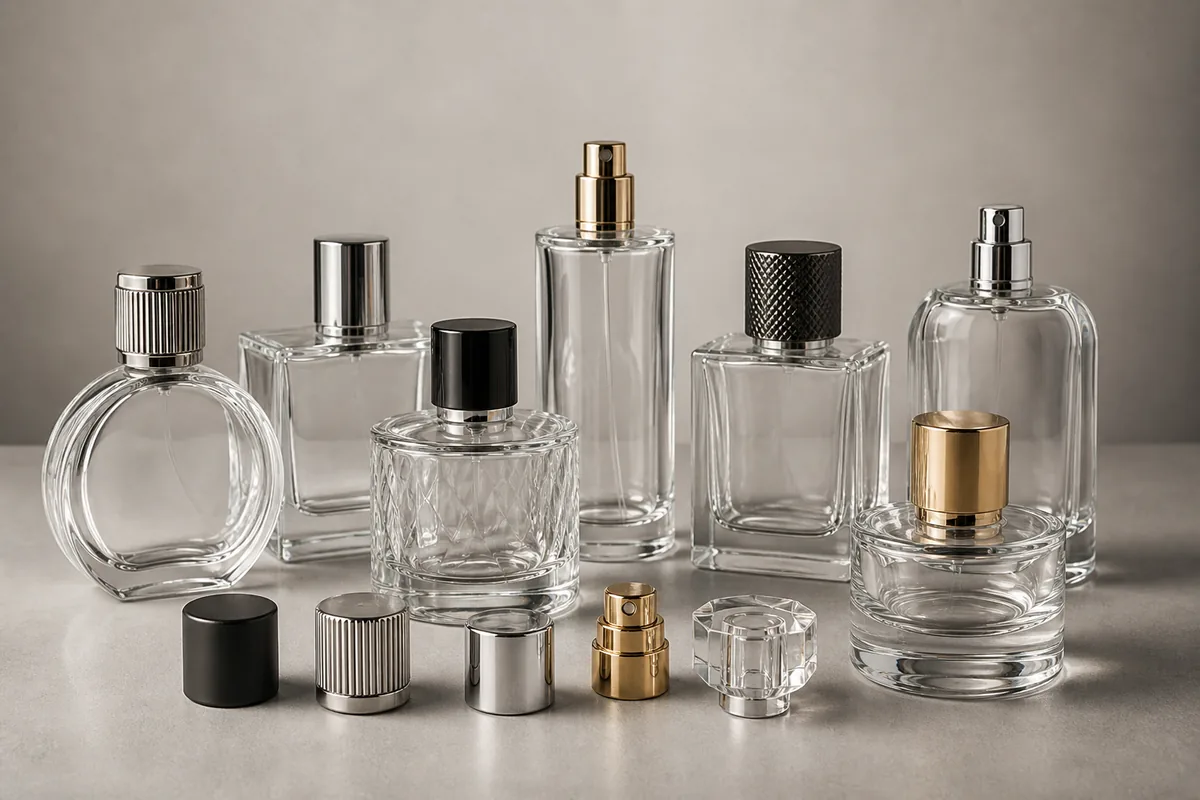

The best cosmetic packaging for a skincare formula is the package that protects the product, dispenses it appropriately, works with the filling process, and supports the intended consumer experience. Bottle appearance matters, but it should come after the formula and functional requirements.
Start by defining viscosity, typical dose, exposure to air and light, hygiene expectations, filling method, storage conditions, retail positioning, and how the consumer will use the product. Then evaluate the bottle or jar together with its pump, sprayer, dropper, cap, liner, seal, and secondary packaging. This formula-first approach is central to FOLOVER PACK’s packaging buying guides and its application-focused packaging resources.
Core principle: Product names such as “serum” or “lotion” are useful starting points, not complete packaging specifications. Two products in the same market category can behave differently because their formulas, doses, filling conditions, and user expectations are different. Select the package from the actual formula and intended use, then confirm it with production-intent components and physical samples.
Packaging for Facial Serums
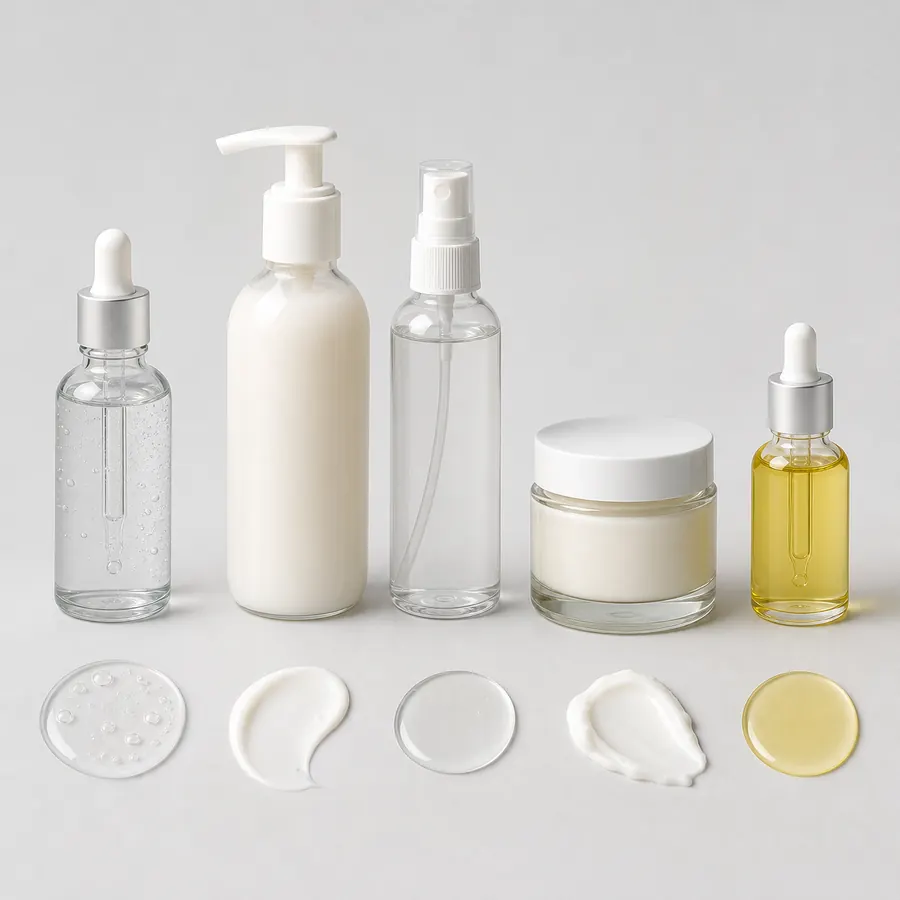
Facial serums range from water-like liquids to thicker gels and emulsions. That range makes viscosity and target dose more useful selection variables than the word “serum” alone. A dropper is a practical starting direction when visible manual dosing is part of the product experience. A treatment pump is usually the stronger direction when the brand wants actuation-based dispensing and less direct handling of the formula. Neither system is automatically right for every serum.
For a dropper system, confirm the bottle neck, closure, bulb, pipette, gasket, optional wiper, and bottom clearance. For a treatment pump, evaluate priming, output behavior, dip-tube fit, closure seating, and the product left in the package near the end of use. The intended formula should be tested in both systems when the choice is uncertain.
Buyers can compare glass serum bottle options and use the detailed article on choosing a serum bottle by formula for a deeper review of dropper, pump, capacity, and light-sensitivity decisions.
Packaging for Lotions and Emulsions
Lotions and emulsions usually need a dispensing system that can move the formula through the pump pathway and deliver a practical amount without excessive effort. Formula viscosity, suspended materials, air sensitivity, pump construction, dip-tube dimensions, dip-tube length, and desired output experience can all affect the result.
A pump bottle may provide convenient repeated use, but the complete bottle-and-pump combination must be confirmed. A pump that fits the nominal neck designation may still differ in thread geometry, sealing structure, gasket, dip tube, or output behavior. The bottle geometry also affects product pickup and the amount that remains inaccessible. For a very thick formula, a jar or another access system may be more realistic than forcing the product through an unsuitable pump.
When reviewing glass lotion bottle directions, confirm the exact pump configuration and evaluate it with the intended emulsion rather than approving an empty package. FOLOVER PACK’s cosmetic lotion pump range can be used to compare component directions, but output and bottle compatibility must be taken from the selected pump record rather than transferred from another model.
Packaging for Toners and Watery Formulas
Watery skincare formulas can be packed with screw caps, treatment openings, pumps, or fine mist sprayers depending on the desired use. A screw-cap bottle supports direct pouring or use with a separate applicator. A pump may provide controlled dispensing to the hand or a pad. A fine mist sprayer changes the application into a broader spray pattern and therefore makes spray performance part of the package specification.
The choice should reflect dose, spray expectation, formula ingredients, nozzle behavior, leakage control, and whether the product will be used close to the face. A thin liquid may move easily through a dispensing system, but that does not confirm spray quality or compatibility. Test the actual formula for priming, output consistency, spray pattern, clogging, leakage, and component interaction.
FOLOVER PACK’s current fine mist sprayer records include 18/410 at 0.12cc, 24/410 at 0.14cc, and 28/410 at 0.2cc per actuation. These are confirmed records for specific sprayer configurations, not universal dosage recommendations for toner. The selected fine mist sprayer still needs to be matched to the exact bottle, dip tube, formula, and required spray experience. Buyers can review glass toner bottles when comparing bottle formats.
Packaging for Creams and Balms
Creams, balms, and other high-viscosity products often use wide-mouth jars because direct product access is practical. Jar selection should consider opening diameter, product pickup, closure grip, liner or inner-lid arrangement where applicable, filling process, decoration, and the consumer hygiene model.
A wide opening improves access but also exposes more product during use. Brands should decide whether consumers will use a finger, spatula, or another applicator, then evaluate the closure and any inner component accordingly. The jar, lid, liner, seal, and formula must be treated as one system. A liner that fits one closure is not automatically suitable for another, and an attractive lid does not confirm sealing performance.
FOLOVER’s cosmetic cream jar range provides a product-browsing path, while the selection decision should remain tied to the exact formula and project requirements.
Packaging for Facial Oils and Essential Oil Blends
Facial oils and cosmetic essential-oil blends often use droppers or controlled dispensing inserts, but the correct system depends on the required dose and formula behavior. A pipette dropper can support visible manual application. An orifice reducer or Euro-dropper style system may support controlled drops without a pipette, depending on the selected bottle and closure.
Evaluate seal materials, bulb or gasket materials where applicable, drop behavior, closure application, bottle-neck compatibility, and the formula’s interaction with every contact component. As a general materials-testing reference, ASTM D471 evaluates changes in rubber and rubber-like materials after liquid exposure. It is not a finished cosmetic-package compatibility test, but it illustrates why elastomer performance should be evaluated rather than assumed from the component name alone.
Do not assume amber glass alone confirms formula protection. The appropriate light-management strategy may involve colored glass, coating, an opaque label, secondary packaging, storage instructions, or another combination supported by actual stability work. Buyers can review essential oil bottle formats, while the glass dropper bottle guide explains pipettes, closures, sealing, and sample checks in greater detail.
Packaging for Sensitive or Light-Reactive Formulas
Clear, amber, blue, green, opaque, and coated glass can support different visibility, design, and light-management goals. However, a color name is not a verified protection specification. Transmission depends on the glass, coating, color density, wavelength, exposure conditions, and complete package. The actual formula’s sensitivity must also be understood.
Ask the formulator which exposure conditions are relevant and what evidence is required. Packaging evaluation may include the primary container, closure, headspace, label coverage, carton, storage environment, and expected shelf life. When evidence is incomplete, describe the packaging as a design or light-management direction rather than making an absolute protection claim.
Regulatory context: The European Commission’s guidelines on Annex I to Regulation (EC) No 1223/2009 identify interaction between the formulation and packaging, packaging barrier properties, and migration from or to the packaging as relevant considerations. The same guidance states that when a formulation is sensitive to light or air in a way that affects safety or efficacy, appropriate packaging should be used. For buyers, this means “amber,” “frosted,” or “coated” should be treated as packaging directions until the actual formulation and complete package have been evaluated.
Consider Filling, Assembly and Secondary Packaging
A package that works during consumer use must also work through filling, closure application, labeling, packing, and distribution. Buyers should share the intended filling temperature, formula handling needs, filling-line requirements, closure application method, label or printing plan, and secondary-packaging format early in the project. These details can affect the practical bottle opening, component choice, available decoration area, and inspection method.
For pump and sprayer bottles, confirm how dip tubes will be supplied, cut, inserted, and checked. For droppers, confirm whether the pipette and bulb assembly arrives complete and how closure application will be controlled. For jars, review filling access, product leveling, inner-lid placement where applicable, and lid application. The exact settings and procedures belong to the verified component and filling specifications; they should not be copied from another package simply because its appearance is similar.
Secondary packaging should be evaluated with the final decorated primary pack. Cartons, inserts, dividers, and protective materials may need to control movement without rubbing decoration or placing harmful pressure on pumps, caps, droppers, or jar lids. Package height, actuator protection, glass weight, and orientation can change the insert design. A production-representative assembled sample allows the brand, filler, supplier, and packing team to confirm these interfaces before bulk materials are approved.
How Dispensing Method Changes the Packaging Choice
The dispenser changes more than the way product leaves the package. It can affect neck specification, seal design, dosage, filling and capping, component height, secondary packaging, consumer handling, and the amount of product that remains inaccessible.
| Dispensing Direction | Best Starting Use | Main Advantage | Main Limitation | What Buyers Should Verify |
|---|---|---|---|---|
| Pipette dropper | Serums and facial oils where manual application fits the product experience | Visible and flexible manual dispensing | Pickup and delivered amount can vary with formula, pipette, bulb action, and user technique | Neck fit, pipette length, bulb and gasket compatibility, bottom clearance, pickup, dripping, and sealing |
| Treatment pump | Serums and lighter emulsions requiring actuation-based dispensing | Cleaner, repeatable user action when the selected pump is correctly matched | Formula pickup and output depend on pump design and actual viscosity | Priming, output behavior, neck fit, seal, dip tube, formula pickup, and end-of-use access |
| Lotion pump | Lotions and emulsions that can move reliably through the selected pump pathway | Convenient repeated dispensing | Very thick or particulate formulas may not dispense satisfactorily through an unsuitable pump | Viscosity, pump pathway, output, dip tube, closure fit, leakage, priming, and residual product |
| Fine mist sprayer | Toners and facial mists where spray application is required | Distributes a low-volume liquid over a broader application area | A thin formula does not automatically produce an acceptable spray pattern | Component-specific output, spray pattern, priming, droplet behavior, clogging, leakage, dip tube, and formula compatibility |
| Wide-mouth jar | Creams, balms, and formulas where direct access is appropriate | Practical access for high-viscosity products | Greater product exposure during repeated opening and use | Opening, lid, liner, seal, filling, product access, hygiene model, and formula compatibility |
| Screw cap or reducer | Watery formulas and oils requiring simple pouring or controlled drops | Relatively simple dispensing structure | Flow depends strongly on opening or insert geometry and user handling | Flow control, reducer fit, neck compatibility, closure seal, formula behavior, and intended dose |

A broader skincare packaging guide can help buyers connect these functional decisions to a complete product range and brand program. For component selection, the cosmetic bottle closures and dispensing guide explains pumps, sprayers, droppers, caps, neck compatibility, dosage considerations, and component sourcing in more detail.
Why Formula Compatibility Testing Is Essential
Packaging compatibility testing checks whether the intended formula and complete package remain acceptable together under relevant conditions. Appearance alone cannot establish compatibility. The formula may interact with seals, liners, bulbs, dip tubes, coatings, printing, adhesives, or other contact materials even when the glass bottle itself appears stable.
Possible observations include swelling, softening, discoloration, odor change, leakage, loss of seal, dispensing changes, clogging, component deformation, decoration damage, or other performance shifts. These observations should be tied to the actual formula, package and use conditions rather than treated as a generic pass/fail list.
Evidence boundary: The European Commission’s Annex I guidance states that formulation-packaging interaction studies should use specific and relevant test conditions and notes that there are no standard procedures for cosmetic products. In the United States, the FDA’s cosmetic product testing guidance likewise does not prescribe one fixed list of tests for every cosmetic. The practical buyer implication is that arbitrary rules such as “45°C for a fixed number of days” should not be copied into every project without a qualified stability or compatibility plan.
Testing should use the production-intent bottle, closure, dispenser, seal, decoration, and formula. A substitute component can produce a result that does not represent the final package. This complete-system view also supports the decision framework in the guide to choosing cosmetic glass bottles for a brand.
Common failure modes buyers should investigate:
- A closure looks correct but does not seat or seal consistently on the selected bottle neck.
- A dip tube or pipette is too long, too short, or interferes with complete closure seating.
- A formula primes in a pump initially but becomes difficult to dispense under relevant storage conditions.
- A gasket, bulb, liner, or other contact component changes after formula exposure.
- A package remains dry upright but leaks during side or inverted storage or distribution handling.
- Coating, printing, or other decoration changes after formula contact, handling, or assembly.
How to Build a Packaging Test Plan
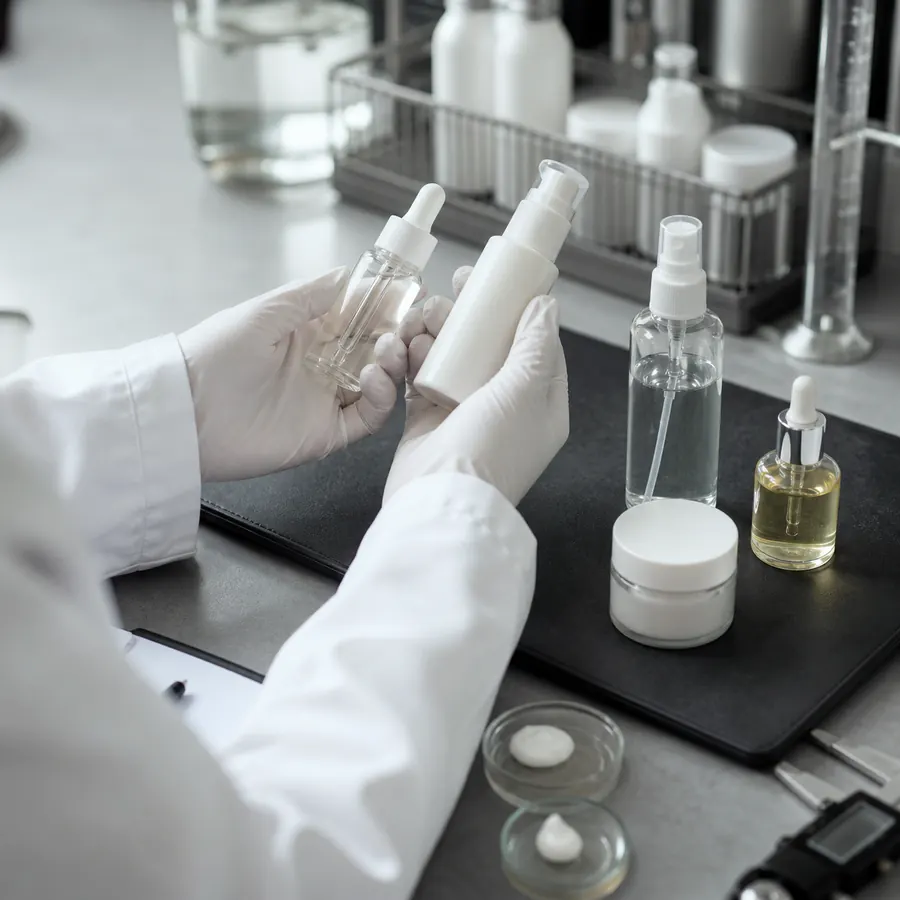
- Define the exact configuration: record the bottle or jar, neck, closure, dispenser, gasket or liner, dip tube or pipette, insert, decoration, and formula batch being evaluated.
- Compatibility: review the formula against all relevant package contact materials and interfaces.
- Leakage and sealing: evaluate closure application, seal contact, planned storage orientation, handling, and relevant temperature conditions.
- Dispensing: check priming, output behavior, spray or drop performance, clogging, pickup, withdrawal, and end-of-use access as applicable.
- Storage: define relevant time, temperature, light, air exposure, and orientation conditions from the product’s stability and market plan.
- Decoration: inspect color, print, coating, adhesion, abrasion from normal handling, and interaction with formula or components.
- Secondary packaging: confirm actuator and closure protection, carton or insert fit, decoration contact points, and movement of the assembled primary package.
- Approval: define who reviews the results, what acceptance criteria apply, and which physical sample becomes the production reference.
Keep a controlled record of the sample lot, component IDs, formula batch, assembly method, conditions, observations, and approval decision. If the bottle, closure, gasket, pump, sprayer, dropper, decoration, or formula changes after approval, determine which affected checks need to be repeated. A prior test on a visually similar package should not be treated as automatic approval for the new configuration.
Buyer Checklist Before Selecting a Package
- Define formula type, viscosity, sensitivity, fill volume, dose, and use frequency.
- Choose the intended access or dispensing experience before finalizing the bottle neck.
- Confirm bottle, jar, closure, pump, sprayer, dropper, liner, seal, and insert as one configuration.
- Confirm output or spray data from the exact selected component record rather than from a similar model.
- Share filling, capping, labeling, decoration, packing, and destination requirements with the supplier.
- Request drawings or specifications for the exact production-intent components.
- Evaluate multiple assembled samples with the intended formula and approved protocol.
- Confirm artwork, finish, component color, and secondary packaging after structural compatibility is established.
- Record the approved sample and any critical conditions for future production comparison.
- Do not approve a component substitution solely because the replacement has a similar appearance or nominal size.
Frequently Asked Questions
What packaging is best for facial serum?
Start with a pipette dropper when visible manual dosing fits the user experience, or a treatment pump when actuation-based dispensing is the stronger requirement. The final choice still depends on viscosity, target dose, formula sensitivity, bottle neck, and component compatibility. Test the intended serum in the complete production-intent package before approval.
What bottle should be used for lotion?
A pump bottle is a practical starting direction when the lotion or emulsion can prime and move reliably through the selected pump. Very thick formulas may require a jar or another access system instead. Confirm the bottle neck, pump pathway, output behavior, dip tube, sealing, filling, and end-of-use pickup using the actual formula.
Can toner be packaged in glass?
Yes. Glass can be used for toner when the bottle, formula, closure or dispenser, filling process, and handling requirements work together. Select a screw cap, pump, or fine mist sprayer according to the intended application, then evaluate leakage, dispensing, spray behavior where applicable, and formula compatibility on physical samples.
Are glass jars suitable for creams?
Yes, glass jars are a practical direction for many creams and balms when direct product access fits the formula and user experience. Buyers should still verify formula compatibility, opening size, filling access, lid and liner configuration, sealing, hygiene expectations, decoration, and secondary packaging before bulk approval.
Which packaging is best for facial oils?
Pipette droppers and controlled dispensing reducers are common starting options. A pipette suits visible manual application, while a reducer may suit controlled drops without a pipette. The final decision should consider target dose, formula behavior, bottle neck, seal materials, light-management requirements, and physical compatibility testing.
How do I test packaging compatibility?
Use the actual formula and the exact production-intent bottle, closure, dispenser, seal, decoration, and secondary-package configuration. Define conditions relevant to storage, transport, filling, dispensing, and normal use, then record changes against project-specific acceptance criteria. There is no single universal cosmetic packaging test schedule that can be copied into every project.
Conclusion
Skincare packaging should be selected by matching formula behavior with product access, dispensing, protection, filling, storage, and consumer use. A serum, lotion, toner, cream, or facial oil may point toward a common format, but that format is only a starting direction. The final bottle or jar, closure, dispenser, sealing elements, decoration, and secondary packaging must work as one verified system.
Explore FOLOVER PACK’s cosmetic and skincare glass packaging to identify suitable starting formats, then use verified drawings, production-representative samples, and actual-formula evaluation to approve the final configuration.
Discuss your formula, bottle, closure, dispensing, and sample requirements with FOLOVER PACK.