
Home / Cosmetic Bottle Closures Guide
COSMETIC BOTTLE CLOSURES & DISPENSING
Cosmetic Bottle Closures & Dispensing Systems Guide
Choose pumps, sprayers, droppers and caps by application, bottle interface, formula and dispensing requirements — then validate the assembled package before production.
The right component is not selected by appearance alone. Bottle neck structure, formula behavior, dispensing direction and the complete assembled package should be reviewed together.
Pumps
Sprayers
Droppers
Caps
Bottle Interface

QUICK CLOSURE SELECTOR
Start With How the Product Needs to Dispense
The application gives the first direction, but the final component still needs to be reviewed against the bottle, formula and dispensing requirements.
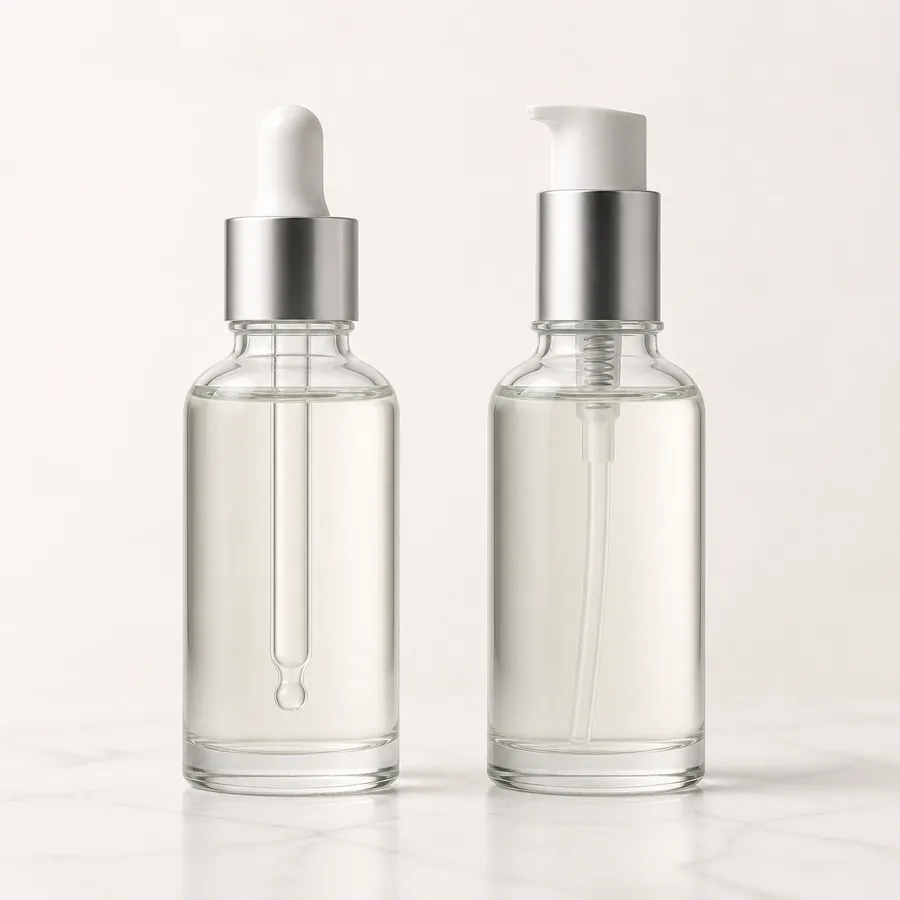
TYPICAL DIRECTION
Dropper or suitable pump
Still review:
Formula behavior · bottle neck · output requirement

TYPICAL DIRECTION
Lotion pump or treatment-type pump where verified
Still review:
Viscosity · bottle interface · output requirement

TYPICAL DIRECTION
Fine mist sprayer or suitable closure
Still review:
Spray requirement · formula · bottle neck
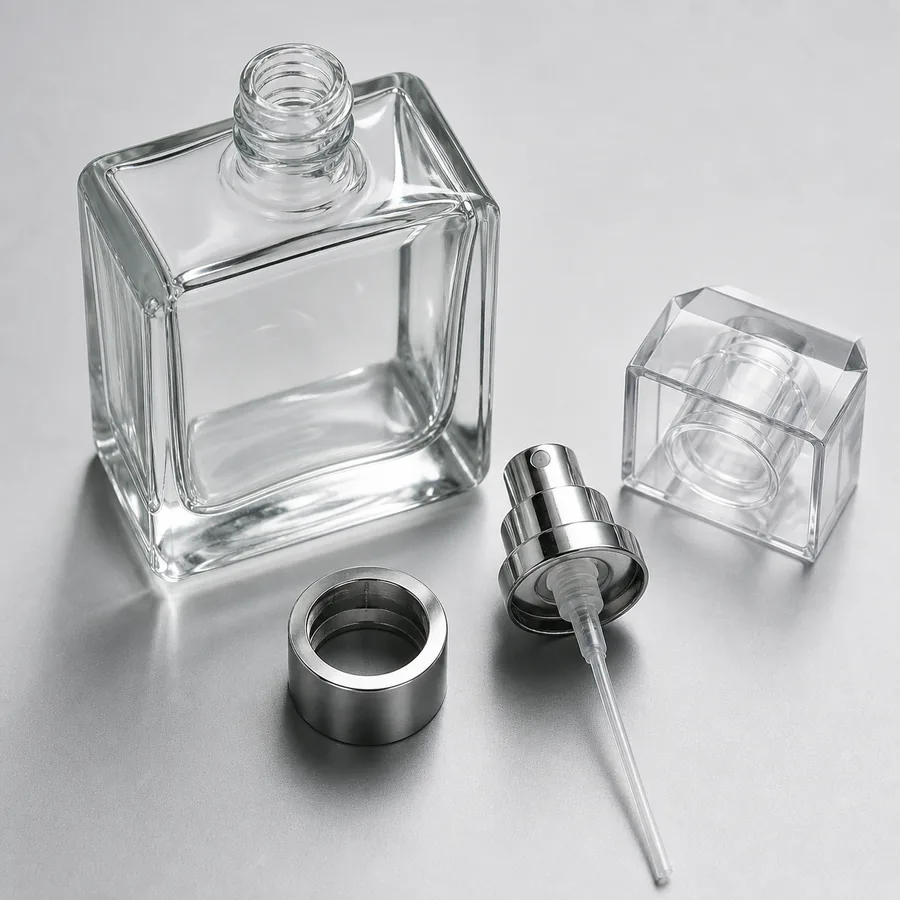
TYPICAL DIRECTION
Perfume sprayer or atomizer system where verified
Still review:
Neck system · sprayer · collar · cap
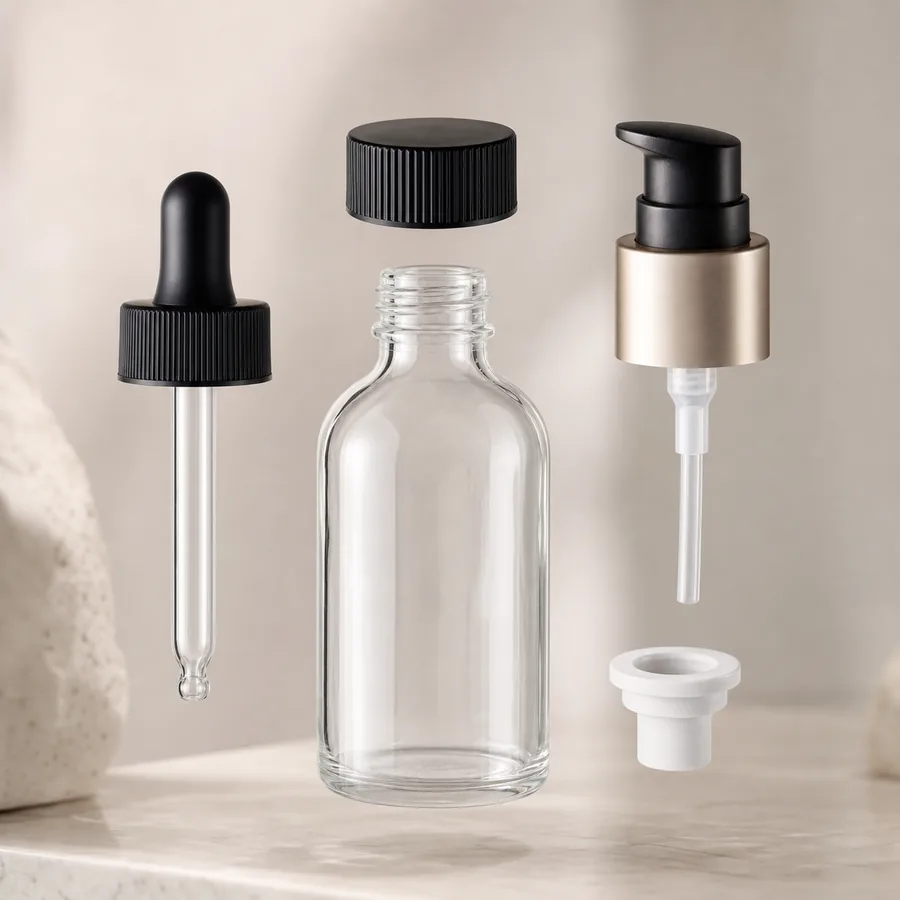
TYPICAL DIRECTION
Dropper or controlled dispensing component
Still review:
Bottle neck · pipette or insert · application method
COMPARE DISPENSING SYSTEMS
Compare the Main Closure & Dispensing Families
Each component family performs a different dispensing role. Selection should be based on the application, bottle interface and formula requirements. Browse the wider pumps, droppers and bottle accessories category after choosing a family direction.

Lotion Pumps
Primary use
Lotions and emulsions where the selected pump is suitable.
What it controls
Pump-style dispensing.
What must be checked
Viscosity · bottle neck · output requirement · assembled fit

Fine Mist Sprayers
Primary use
Toner, mist and other spray applications where suitable.
What it controls
Spray-style application.
What must be checked
Formula behavior · spray requirement · bottle neck · dip tube
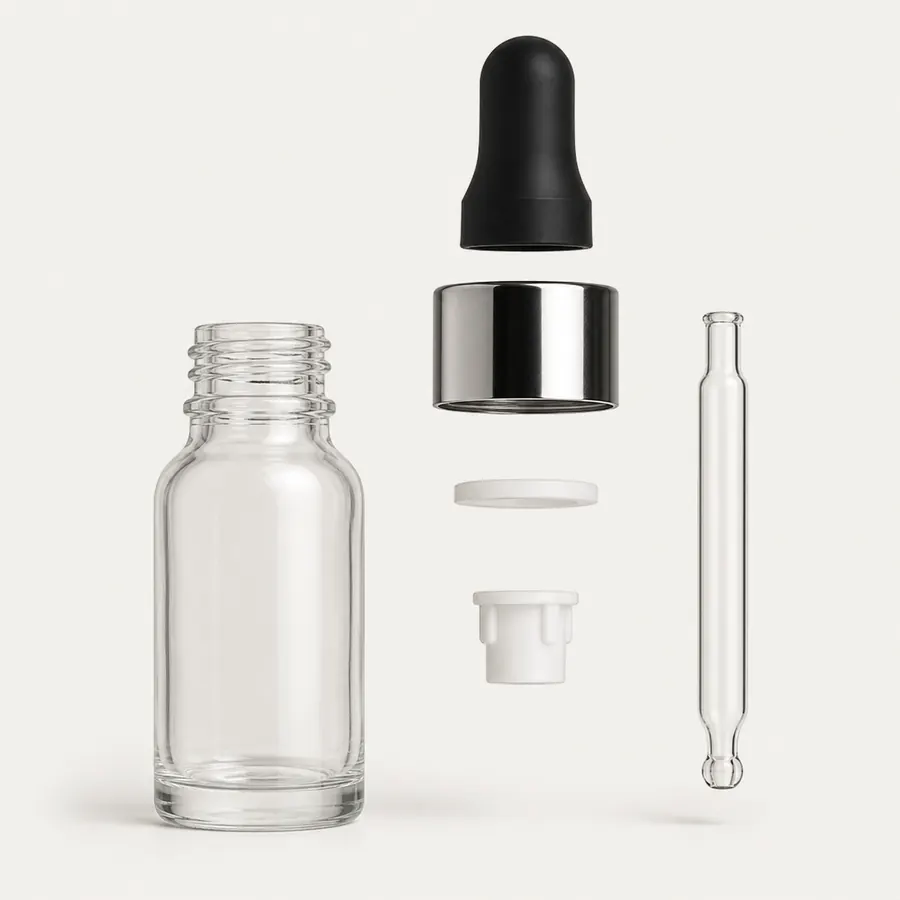
Droppers
Primary use
Serums, oils and concentrated formulas where appropriate.
What it controls
Pipette or drop-style application.
What must be checked
Bottle neck · pipette length · formula behavior · assembled fit
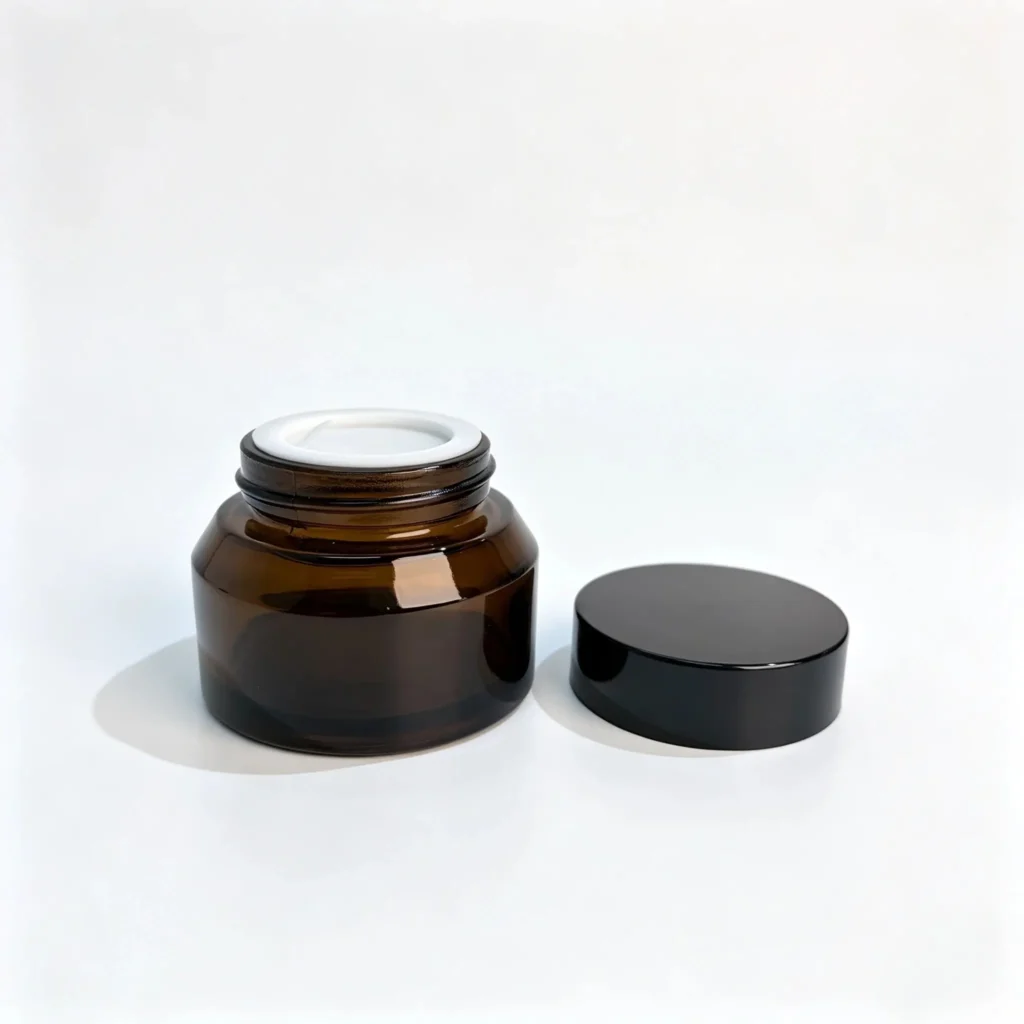
Screw Caps
Primary use
Reclosable bottle or jar systems where the interface is suitable.
What it controls
Closure engagement and access to the product.
What must be checked
Threads · liner or gasket · sealing surfaces · assembled fit
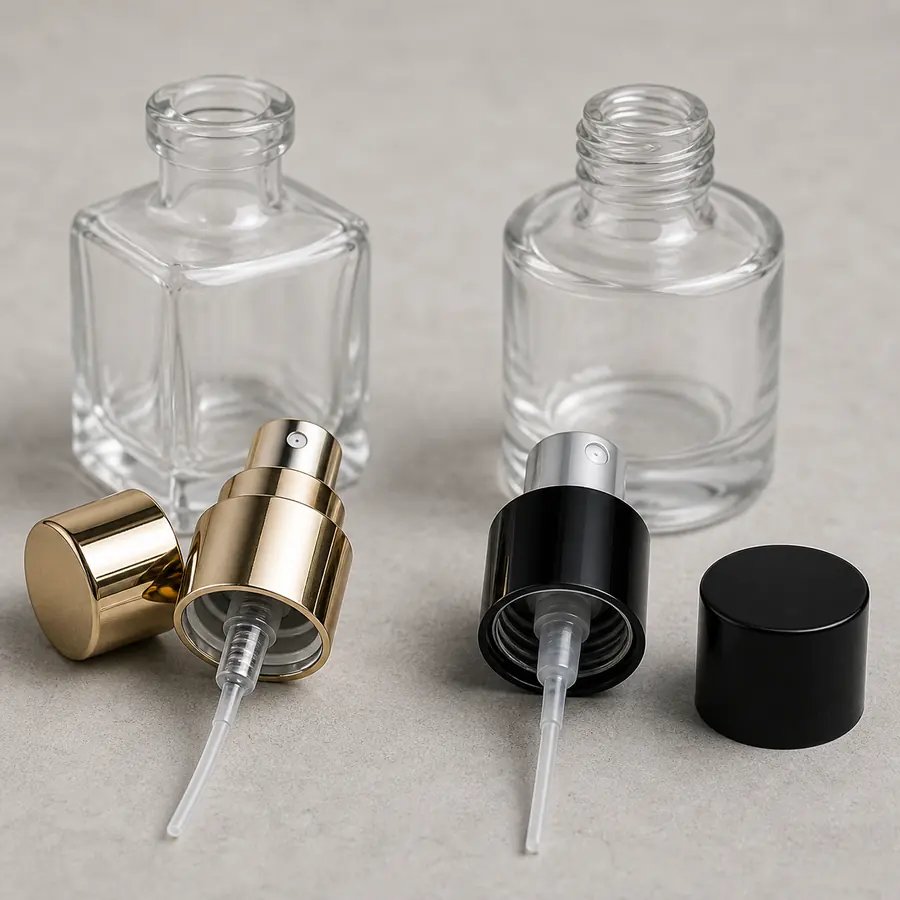
Perfume Sprayers
Primary use
Fragrance applications using an appropriate atomizer system.
What it controls
Spray actuation within the fragrance package.
What must be checked
Screw or crimp direction · collar · cap · dip tube · assembled fit
BOTTLE & CLOSURE INTERFACE
The Closure Must Match the Bottle Interface
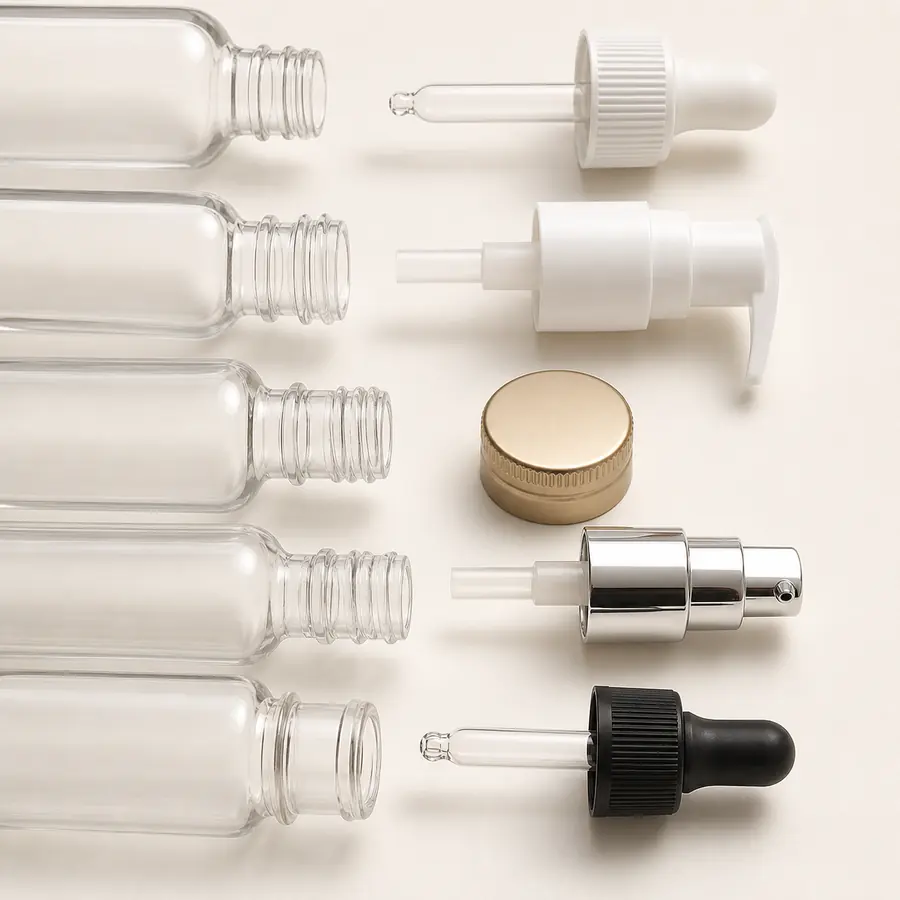
A closure or dispensing component should be reviewed as part of the complete bottle interface rather than as an isolated accessory.
01
Neck Structure
Threaded, crimp or another verified interface determines the component direction. Exact specifications must come from the selected bottle.
02
Closure Fit
The selected closure must correspond to the actual bottle neck and complete assembled package.
03
Sealing Direction
Sealing surfaces and assembled fit should be reviewed on the actual components.
04
Component Stack
Bottle, closure, actuator, collar and cap should be coordinated as one package where applicable.
Compatibility warning: A visually similar closure should not be treated as automatically compatible with another bottle.
FORMULA & DISPENSING REQUIREMENTS
The Formula Changes What the Dispensing System Must Do
Closure selection depends not only on the bottle but also on how the formula needs to move through and leave the dispensing system.
FORMULA FACTORS
- Viscosity — how readily the formula moves through the selected component.
- Product flow — how the product should travel and leave the system.
- Relevant formula characteristics — properties that may affect dispensing need project-specific review.
- Intended application — how and where the user applies the product.
DISPENSING FACTORS
- Pump, spray or drop direction — start with the intended delivery method.
- Output requirement — define the use need without assuming an unverified value.
- User application — consider control, placement and handling.
- Repeated dispensing behavior — review performance on the assembled sample.
Formula and component compatibility should be evaluated for the actual product and package configuration. For broader skincare format decisions, see the Skincare Packaging Guide.
ASSEMBLY & VALIDATION
Validate the Complete Bottle and Closure Assembly
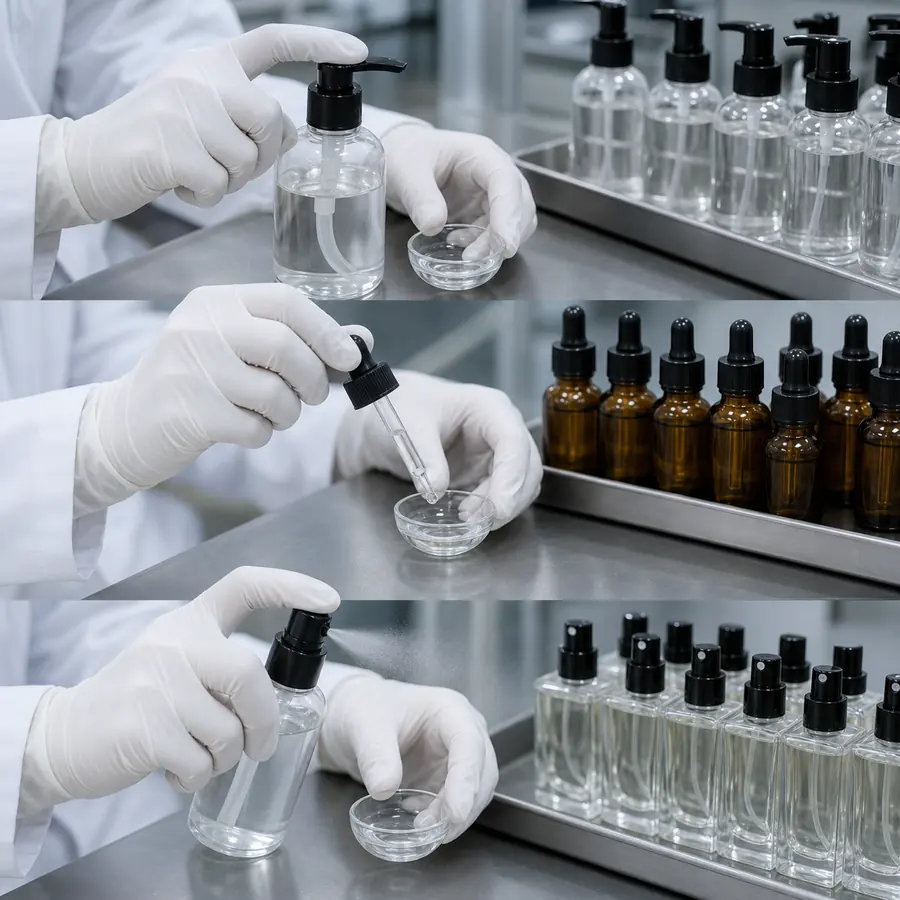
The bottle, neck, closure, dip tube or pipette and formula should be reviewed as one assembled packaging system.
Select Bottle & Closure
Confirm the intended component family and selected bottle.
Confirm Interface
Review the actual neck and closure connection.
Review Dip Tube / Pipette
Check length and assembly direction where applicable.
Assemble Physical Sample
Review the real bottle and dispensing component together.
Test Fit, Dispensing & Leakage
Validate the assembled package for the intended project.
Compatibility should be confirmed on the actual assembled package for the intended project.
START YOUR COMPONENT MATCHING PROJECT
Have a Bottle, Formula or Existing Closure?
Send the information you already have. A complete technical specification is not required to start the review.
Share whatever is available, and we can first determine the appropriate closure or dispensing direction for your packaging project.
WHAT YOU CAN SEND
- Existing bottle
- Existing closure
- Product or formula type
- Reference image
PROJECT REQUIREMENTS
- Preferred dispensing method
- Bottle capacity
- Neck information, if known
- Estimated quantity
- Destination
You do not need to have everything ready. Start with the information currently available for your project.
CLOSURES & DISPENSING FAQ