

A perfume atomizer turns liquid fragrance into a controlled spray by drawing product from the bottle, pressurizing a small pump chamber and forcing the liquid through an actuator nozzle. The liquid breaks into droplets as it exits. Pump design, nozzle geometry, fragrance properties, dip-tube position and user actuation affect spray performance, while the bottle neck and sealing components determine whether the complete package can be assembled and used reliably.
For perfume packaging buyers, understanding how perfume atomizers work is the starting point. The practical decision is whether the selected pump, bottle, closure, dip tube and fragrance perform together under intended storage and use conditions. Final compatibility should be confirmed with the selected components and physical samples before bulk production.
Main Parts of a Perfume Atomizer
The actuator is the top pressed by the user. It contains the spray outlet and directs the fragrance. The nozzle or orifice controls the final exit path. Beneath the actuator, the stem transfers movement into the pump body, where a piston, chamber and valve system manage liquid flow. The dip tube reaches into the fragrance, while a ferrule or threaded closure attaches the atomizer to the bottle. A gasket or other sealing structure helps seal the bottle-neck interface.
The surrounding collar and cap often contribute to appearance and protection, but they should not be confused with the functional pump seal. The article on perfume bottle anatomy maps the bottle, atomizer, collar, cap and neck as a complete packaging system.

What Happens During a Spray Cycle?
Before normal spraying, the pump path must fill with fragrance. Initial strokes move air out of the dip tube and chamber; this is priming. Once primed, pressing the actuator reduces chamber volume and directs liquid toward the nozzle. Releasing the actuator allows the return mechanism to reset and helps draw more fragrance through the dip tube for the next stroke.
Valves help keep liquid moving in the intended direction. The exact construction varies by atomizer, so this sequence describes a typical mechanical pump rather than every possible internal design. A slow return, incomplete press or air leak can interrupt the cycle and change the apparent spray.
How Atomization Is Created
Atomization occurs when pressurized fragrance passes through the actuator’s internal flow path and nozzle, breaking into droplets. In designs using a swirl chamber, the liquid follows a controlled path before exiting through the orifice. The resulting spray depends on the pump and nozzle working together.
A smaller outlet does not automatically produce a better mist. Nozzle geometry, pump output, formulation properties and actuation influence droplet formation and spray distribution.
For B2B buyers, the intended spray experience should be defined before selecting an atomizer. A broad mist, a more concentrated application and a particular dispensing amount can require different component configurations. Compare the actual spray using representative filled samples rather than relying only on a pump’s nominal specifications.
What Affects the Spray Pattern?
The orifice and internal actuator path influence how liquid exits. Pump output affects the amount available during each complete stroke. Formula viscosity, surface tension, alcohol content and other properties can influence droplet formation. Assembly alignment and a fully seated actuator also matter.
A spray that looks broad under one condition may appear narrower when the bottle is held at a different distance or the actuator is pressed slowly. Compare representative units with the intended fragrance, a consistent spraying distance and a defined actuation method.
Buyers can browse fine mist sprayers to review available dispensing options, but perfume projects should confirm the exact atomizer specified for the selected bottle and formulation.

Crimp Atomizer Assembly
A crimp atomizer uses a ferrule formed around the bottle’s crimp neck. The pump, gasket, neck and crimping setup must match. Assembly equipment forms the ferrule around the intended neck geometry, retaining the pump and establishing the designed sealing condition.
Uneven, incomplete or excessive crimping can affect alignment, retention, appearance and leakage. A pump that appears attached is not necessarily sealed correctly.
Crimping is not simply a decorative collar operation. The functional pump assembly should be validated before the collar and cap are treated as approved. The comparison of crimp and screw perfume bottles explains the practical sourcing and assembly differences.
Manufacturer Insight: Confirm the Neck, Pump and Crimping Process Together
For a crimp perfume bottle, matching a nominal neck designation is only the initial selection step. The actual glass-neck geometry, pump ferrule, gasket and crimping equipment must work together to achieve the intended assembly.
FOLOVER PACK recommends confirming the selected bottle and atomizer with physical assembly samples before bulk production. Buyers should check the finished crimp, pump alignment, sealing condition and spray performance rather than approving the components independently.
If the bottle supplier, pump supplier or crimping setup changes, the relevant assembly and sealing checks should be repeated. An approved result from one component combination should not automatically be transferred to another.
Screw Atomizer Assembly
A screw atomizer attaches through matching thread and sealing geometry. Controlled tightening helps the closure seat as designed. Too little engagement may leave an inadequate seal; excessive tightening can deform a gasket or damage components.
Hand feel alone is not a transferable assembly setting between unrelated packages. The appropriate tightening method and acceptance criteria should be established for the exact bottle and pump combination.
Screw systems can support disassembly or refill concepts in some designs, but this must be confirmed for the specific package. A threaded appearance does not automatically prove refillability, repeated-use durability or compatibility with another bottle.
For example, Aptar Beauty’s Essencia Screw pump is a specific fragrance-pump design developed for refilling and reuse. Its design includes a structure intended to reduce direct friction between the metal collar and glass bottle during removal and reattachment.
This product illustrates that refillability requires a suitable pump and bottle design. It does not establish that other screw perfume atomizers can be repeatedly removed, reused or refilled without additional validation.
Why Dip-Tube Length Matters
The dip tube must reach the intended product area without creating an unsuitable bend, hard bottom contact or pickup position. A tube that is too short can leave more fragrance inaccessible. A tube that is too long may curl excessively, interfere with assembly or press against the bottle base.
Bottle height, shoulder shape, internal base geometry and the pump’s installed position all affect the required tube length.
Length should be defined from the selected bottle and atomizer assembly, then checked physically. The method used for cosmetic pump dip-tube selection provides useful geometry principles, although the approved specification remains component-specific.
Buyers should evaluate initial priming, repeated spraying and product pickup at lower fill levels. An unsuitable dip tube can contribute to delayed priming or inconsistent product delivery, but it should not be assumed to be the cause of every spray-pattern problem.
Common Perfume Atomizer Problems
When a perfume atomizer fails to produce the intended spray, the visible symptom is the starting point for investigation, not proof of a particular component defect. The table below connects common observations with possible causes and practical buyer checks.
| Symptom | Possible Directions | What to Check |
|---|---|---|
| Weak or uneven spray | Incomplete priming, actuator path, formula properties or pump variation. | Prime consistently and compare representative filled assemblies under the same spraying conditions. |
| Stream instead of mist | Nozzle condition, actuator fit, incomplete actuation, pump behavior or formula properties. | Inspect the outlet and actuator seating. Compare the affected assembly with an approved reference using the same fragrance. |
| Delayed priming | Air in the liquid path, dip-tube position, valve behavior or pump-sealing problems. | Record initial priming strokes and inspect the dip tube, pump connection and assembled liquid path. |
| Dripping | Residual liquid, outlet geometry, actuator return or formula behavior. | Observe the outlet after repeated full strokes and distinguish normal residual droplets from continuing liquid discharge. |
| Leakage | Neck seal, crimp or thread assembly, gasket, component damage or transport conditions. | Locate the first wet interface and inspect the complete assembly before assigning a root cause. |
The troubleshooting guide on why cosmetic bottles leak explains why a wet collar is a symptom rather than a complete root-cause diagnosis.
Practical Troubleshooting: When a Mist Becomes a Stream
Consider a development-stage perfume bottle that produces an acceptable mist during initial testing but begins dispensing a concentrated stream after repeated use.
The first step is to compare the affected sample with an approved reference under the same conditions. Check the nozzle for visible obstruction or damage, confirm actuator seating, observe pump return and verify that both samples contain the same fragrance formulation.
If the symptom remains, compare the complete pump assemblies rather than immediately changing the dip-tube length or bottle neck. The investigation should identify the affected component or operating condition before a corrective action is selected.
This is an illustrative troubleshooting scenario, not a documented customer incident or a claim that a particular adjustment will resolve every stream-spray problem.
How Spray Performance Should Be Evaluated
Start with the exact bottle, atomizer, gasket, collar, cap and dip tube. Fill with the intended fragrance, identify each sample and record the assembly method. Water or another representative liquid may support preliminary mechanical screening, but final formula compatibility and spray performance should be evaluated with the actual formulation under intended storage and use conditions.
Prime every sample according to the same rule, then observe repeated complete strokes rather than selecting only the best spray. Evaluation can include priming behavior, spray pattern, apparent consistency, actuator return, dripping, leakage and performance after relevant storage or handling.
If dispensing output is a project requirement, agree on the measurement method and acceptance criteria for the selected atomizer. Do not transfer a nominal output value from an unrelated pump.
Atomizer Evaluation Sequence
- Confirm the exact bottle neck, pump, gasket, dip tube, collar and cap.
- Assemble representative samples using the intended production process.
- Fill with the actual fragrance and record the formula and component references.
- Record the initial priming strokes before assessing normal spray.
- Compare repeated full strokes for spray pattern, actuator return and dispensing consistency.
- Inspect the nozzle, bottle neck and collar for dripping or leakage.
- Check dip-tube pickup, cap clearance and collar alignment after functional testing.
- Repeat affected checks after any component, formulation or assembly change.
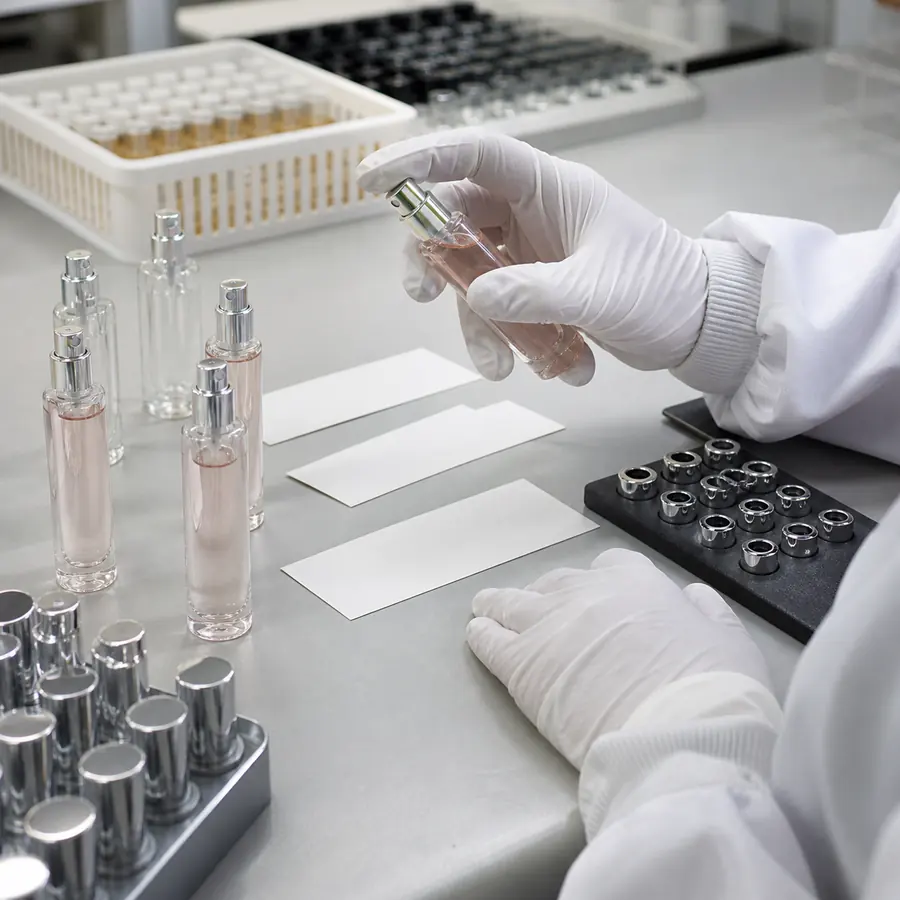
How Buyers Should Specify a Perfume Atomizer
An RFQ should identify the selected perfume bottle, neck structure, atomizer attachment, desired spray experience, formulation, dip-tube requirement, collar and cap concept, decoration and order conditions.
A useful supplier inquiry should also include the available bottle drawing, selected pump reference or physical sample, intended assembly method and required testing or approval process.
Avoid approving an atomizer by color, nominal neck size or cap fit alone. Technical and visual parts should be reviewed as one assembled package.
Buyers can compare perfume glass bottles and use the perfume packaging guide to frame the wider selection decision. Related mechanisms are organized in Packaging Technology, with component fundamentals in Product Knowledge.
Perfume Atomizer vs General Fine-Mist Sprayer
Both devices can create a spray, but their intended package, dispensing characteristics, actuator experience, attachment and aesthetic integration may differ.
A sprayer offered for toner or personal care should not automatically be treated as a fragrance atomizer. Likewise, a perfume atomizer should not be transferred to a skincare formula based on appearance alone.
Define the intended application, formulation, user experience and bottle system first. Then compare the supplier’s exact component specifications and filled-sample performance. Category names are useful for browsing; they are not proof that two dispensing systems are interchangeable.
Cap, Collar and Actuator Clearance
The cap should attach, remove and replace without pressing or pulling the actuator unintentionally. The decorative collar should sit as intended without hiding an uneven pump assembly or interfering with actuation.
Small alignment or height differences can change visible gaps and cap clearance across samples. Evaluate these decorative parts after functional spraying and handling. A package that looks aligned before use may reveal rubbing, looseness or residue after repeated cycles.
If the cap relies on a snap, friction or magnetic feature, verify that feature on the final collar and assembled bottle.
Production Handoff and Change Control
Record the approved bottle, atomizer, gasket, dip tube, actuator, collar and cap references together with relevant drawing and artwork revisions. Keep the priming and spray evaluation method attached to the approval. A general description such as “silver perfume pump” is not enough to prevent component substitution.
Production checks should compare representative assemblies with the approved physical sample and agreed functional criteria. If the fragrance, bottle, pump source, gasket, tube, crimping setup or cap changes, identify the affected risks and repeat the necessary fit, sealing and spray checks before accepting the revised system.
For FOLOVER PACK perfume packaging projects, buyers should confirm which party will supply each component, who will perform final assembly and which approved samples and specifications will be used for bulk-production comparison.
Conclusion
A perfume atomizer works by repeatedly drawing fragrance into a pump chamber and forcing it through an actuator outlet to create droplets. Spray quality depends on the selected pump, nozzle, dip tube, formulation and actuation, while the bottle neck, gasket and assembly determine whether the complete package is correctly attached and sealed.
For B2B perfume packaging buyers, the priority is to approve the bottle and atomizer as one system. Confirm the neck finish, pump attachment, dip-tube position, spray performance and sealing using representative filled samples before bulk production.
FOLOVER PACK supports perfume glass bottle selection, pump and closure matching, component coordination and sample development. Share your selected bottle reference, fragrance type, intended spray requirements, cap and collar design, and project quantity to discuss suitable packaging options.
Frequently Asked Questions
How does a perfume atomizer work?
Pressing the actuator moves a pump mechanism that forces fragrance through a small outlet, creating a spray of liquid droplets. Releasing the actuator allows the pump to reset and draw more fragrance through the dip tube. Spray performance depends on the selected pump, nozzle, formulation and actuation. Buyers should evaluate the complete filled bottle and atomizer assembly.
Why does perfume spray become a stream?
A perfume atomizer may produce a stream instead of a mist because of nozzle obstruction or damage, actuator fit, pump behavior, formula properties or incomplete actuation. The visible spray alone does not establish the cause. Inspect the outlet and compare the affected filled assembly with an approved reference under consistent spraying conditions before changing components.
What is a crimp perfume pump?
A crimp perfume pump is an atomizer retained on a compatible crimp-neck bottle by forming its ferrule around the neck using controlled assembly equipment. The bottle-neck geometry, pump ferrule, gasket and crimping setup must work together. Buyers should confirm assembly quality, sealing and spray performance using the selected physical components before bulk production.
Can a perfume atomizer be reused?
A perfume atomizer can be reused only when its specific design and the complete bottle system are intended and validated for repeated use. Some screw-pump systems support refillable fragrance packaging, but a threaded attachment alone does not prove refill compatibility or durability. Buyers should confirm the supplier’s specifications and evaluate the intended refill and reuse process.
Does dip-tube length affect perfume spray?
Dip-tube length affects fragrance pickup and priming and may indirectly influence spray consistency when the pump cannot draw sufficient liquid. A tube that is too short may leave product inaccessible, while an overlong tube may bend excessively or interfere with assembly. Buyers should confirm the installed tube position and test performance at relevant fill levels.
Can any atomizer fit any perfume bottle?
No. Perfume atomizer compatibility depends on the exact neck finish, attachment structure, sealing geometry, gasket, component dimensions, dip tube and assembly process. Similar bottle capacity or nominal neck size does not guarantee compatibility. Buyers should confirm the selected bottle and atomizer specifications and test the complete physical assembly before approving bulk production.