
A 100ml perfume bottle can provide approximately 1,000 theoretical sprays if its atomizer releases 0.10ml of fragrance with every full press. That figure is a useful starting estimate, not a fixed specification for every bottle. A sprayer dispensing 0.08ml per actuation would theoretically deliver about 1,250 sprays from 100ml, while one dispensing 0.12ml would deliver about 833.
The difference comes mainly from the dispensing system, not the shape of the glass. For someone wearing perfume, it changes how long a bottle may last. For a fragrance brand developing a 100ml retail package, it raises a more specific question: what output should the selected atomizer deliver, and how should that output be checked on the assembled bottle?
How Many Sprays Are in a 100ml Perfume Bottle?
There is no universal spray count for a 100ml fragrance. If the filled bottle contains 100ml of perfume and every full press dispenses 0.10ml, dividing 100 by 0.10 produces 1,000 theoretical sprays. This calculation assumes that all 100ml can be dispensed. Actual use may involve pump priming, inconsistent partial presses, or some liquid remaining when the sprayer can no longer draw it up.
The output per spray is therefore a more useful starting point than a single advertised spray-count figure. The same nominal bottle capacity can produce different estimates when fitted with different, properly matched atomizers.
How Is the Spray Count of a 100ml Perfume Bottle Calculated?
Start With the Amount Released per Full Spray
An atomizer’s output describes how much liquid it dispenses during an actuation, often expressed in milliliters per spray. To estimate total sprays, divide the amount of perfume available to dispense by that output:
Theoretical spray count = perfume volume (ml) ÷ output per spray (ml).
For example, 100ml ÷ 0.10ml per spray = 1,000 theoretical sprays. If the specified output changes, so does the estimate.
100ml Spray Count at Different Atomizer Outputs
| Assumed output per full spray | Theoretical sprays from 100ml | What the estimate shows |
|---|---|---|
| 0.05ml | 2,000 | A lower dose produces more theoretical actuations. |
| 0.08ml | 1,250 | Less liquid is used per press than in the 0.10ml example. |
| 0.10ml | 1,000 | A straightforward reference calculation. |
| 0.12ml | About 833 | A higher dose reduces the theoretical count. |
| 0.14ml | About 714 | Each full press consumes more of the available fragrance. |
These are mathematical scenarios, not measured performance claims for a particular FOLOVER PACK perfume bottle or atomizer. Values such as 0.05ml and 0.14ml should not be treated as universal definitions of “precision” or “large-output” perfume sprayers. For a specific package, use the selected sprayer’s confirmed output and the actual filled volume.
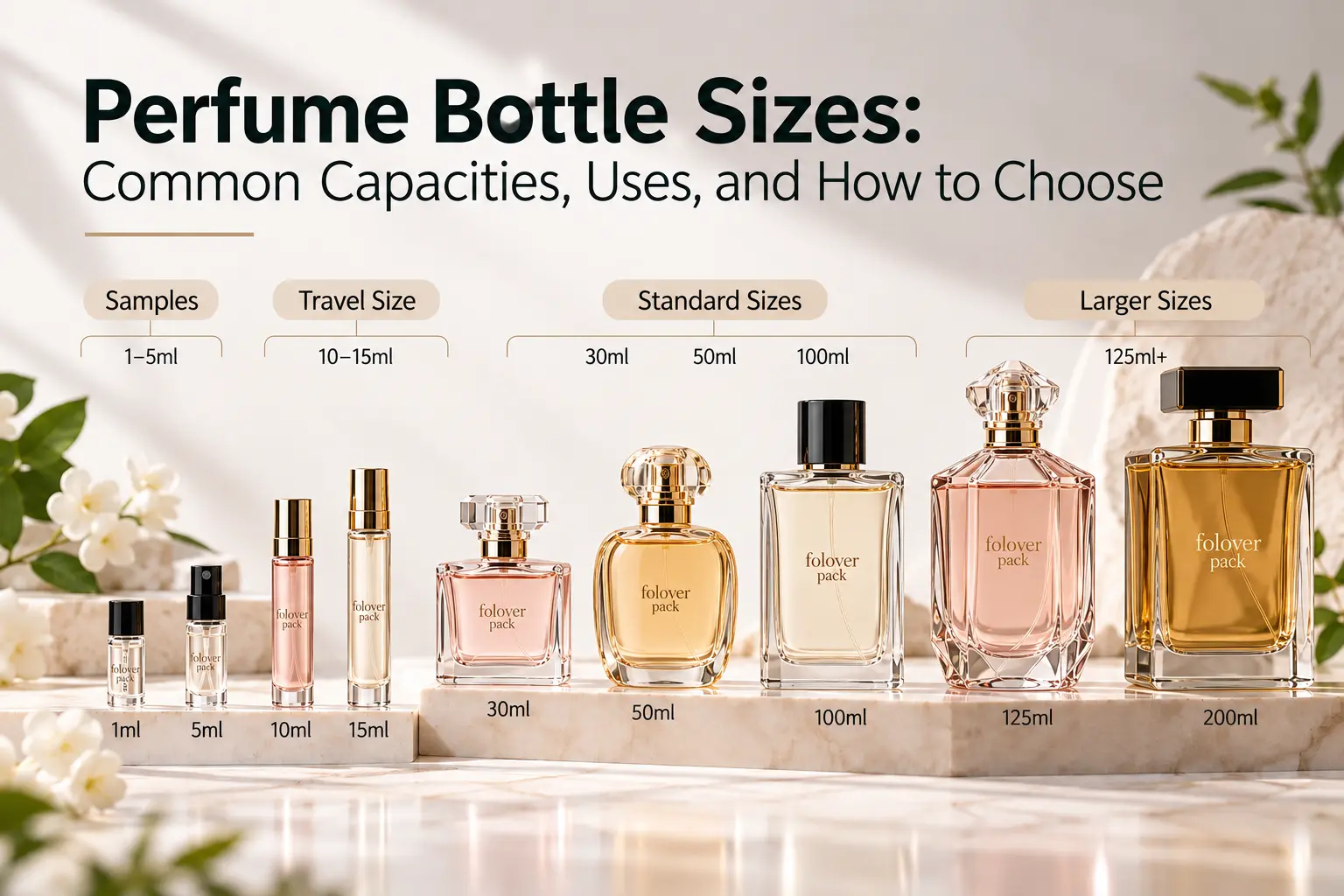
If you want to compare 10ml, 30ml, 50ml and 100ml formats instead, FOLOVER’s perfume bottle size guide addresses capacity selection. The discussion here stays focused on what changes the number of sprays in a 100ml package.
What Affects the Number of Sprays in a 100ml Perfume Bottle?
Atomizer Output and Internal Pump Design
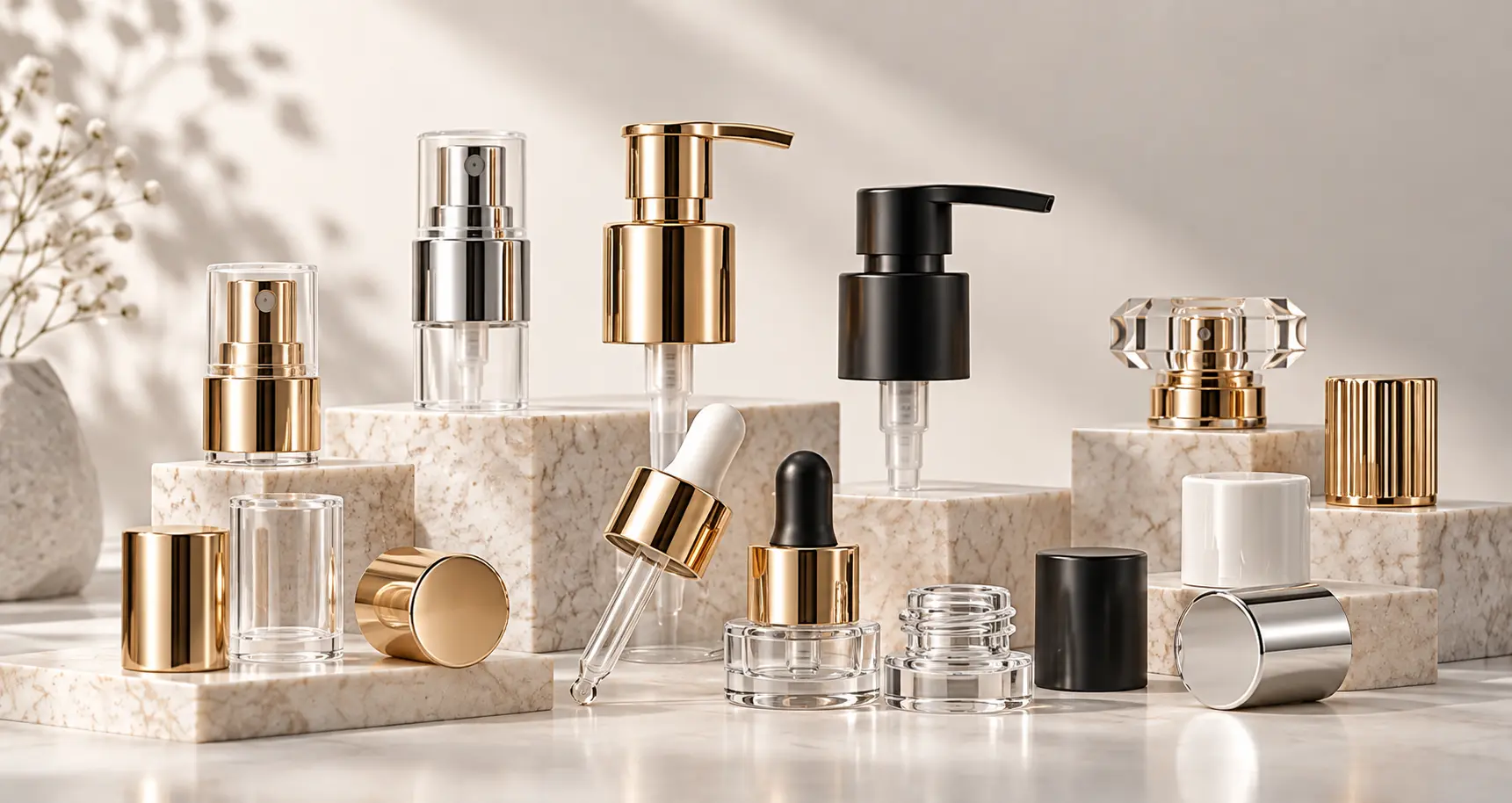
The clearest variable is the amount of fragrance released by the pump in a full stroke. The pump mechanism, actuator and nozzle are parts of a dispensing assembly, but a fine-looking mist does not by itself establish a low output. Two sprayers may create noticeably different spray patterns while releasing similar amounts of liquid, or produce a similar-looking mist with different outputs.
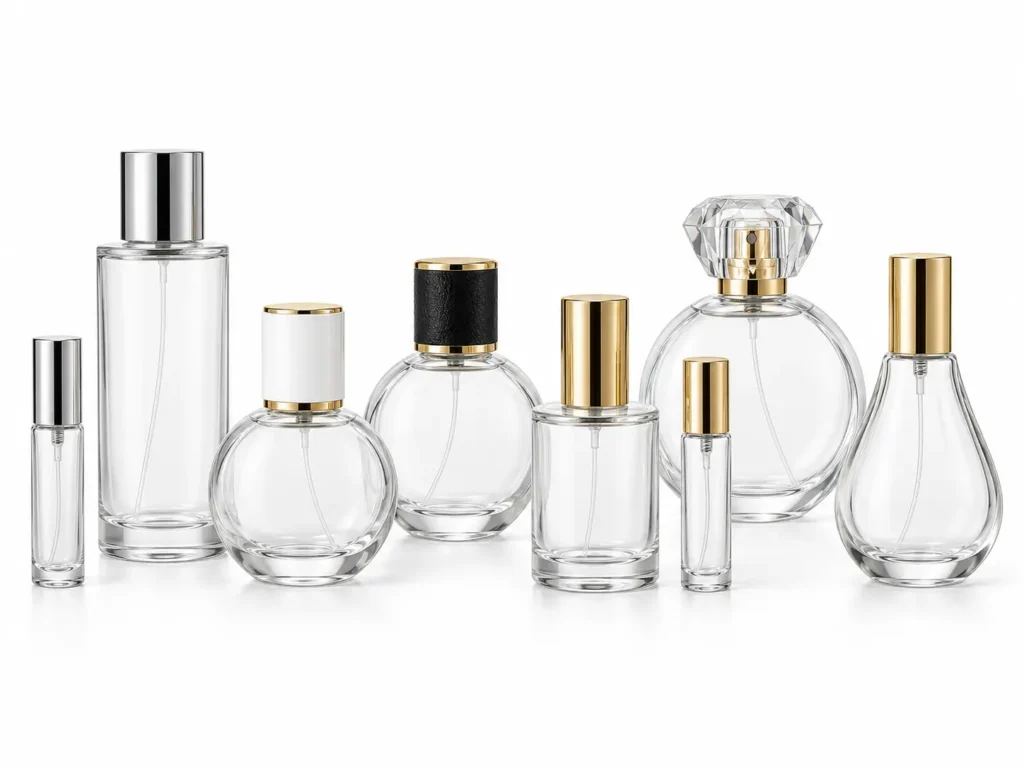
The relevant comparison is the dispensing specification of the actual atomizer under the intended conditions. Bottle capacity alone cannot tell you how much each press will release.
Full Presses, Partial Presses and Priming
Someone who presses the actuator only partway may not dispense the same dose as someone making a complete, repeatable stroke. A new sprayer may also require several presses before its dip tube and pump are primed. Those early actuations do not necessarily deliver a normal spray. This is why a theoretical count based on full strokes should not be presented as a guaranteed number of visible sprays in everyday use.
Perfume Formula and Spray Behavior
The liquid itself can affect how a particular dispensing assembly behaves. Viscosity and formulation differ across fragrances, and a sprayer’s behavior with one test liquid may not be identical to its behavior with the finished perfume. Eau de parfum and eau de toilette labels do not translate into fixed milliliters per spray. Brands should evaluate the chosen pump with the intended formula rather than infer output from fragrance concentration alone.
Actual Fill Volume and Perfume Left in the Bottle
A 100ml retail fill and a bottle’s maximum brimful capacity are not the same specification. Spray-count calculations should begin with the intended filled quantity, not the bottle’s external dimensions or its brimful volume. Near the end of use, the dip tube’s position and the bottle’s internal base shape can leave some fragrance inaccessible to the pump. How much remains depends on the individual bottle and assembled sprayer; a fixed residual-loss allowance should not be applied to every design.
How Long Does a 100ml Perfume Bottle Last?
Usage duration depends on both the number of usable sprays and how often the wearer applies fragrance. If we use the 0.10ml-per-spray calculation as an illustration, 100ml provides 1,000 theoretical sprays. Dividing that number by daily usage produces the following estimates:
| Full sprays per day | Estimated duration at 1,000 sprays | Approximate months |
|---|---|---|
| 2 | 500 days | 16.4 months |
| 3 | 333 days | 10.9 months |
| 4 | 250 days | 8.2 months |
| 5 | 200 days | 6.6 months |
| 6 | About 167 days | 5.5 months |
These durations assume a consistent number of full sprays every day and are rounded using an average month of about 30.4 days. They are not shelf-life recommendations. If the chosen atomizer has a different output—or the wearer reapplies frequently—the bottle may empty sooner or later than the table suggests.
Spray pattern can influence how someone chooses to apply a fragrance, but it should not be confused with the volume dispensed. A wider mist does not automatically mean a larger dose. Likewise, perceived scent strength and how long fragrance remains noticeable on skin are different questions from how many actuations a bottle contains.
Real 100ml Perfume Bottle Examples From FOLOVER PACK
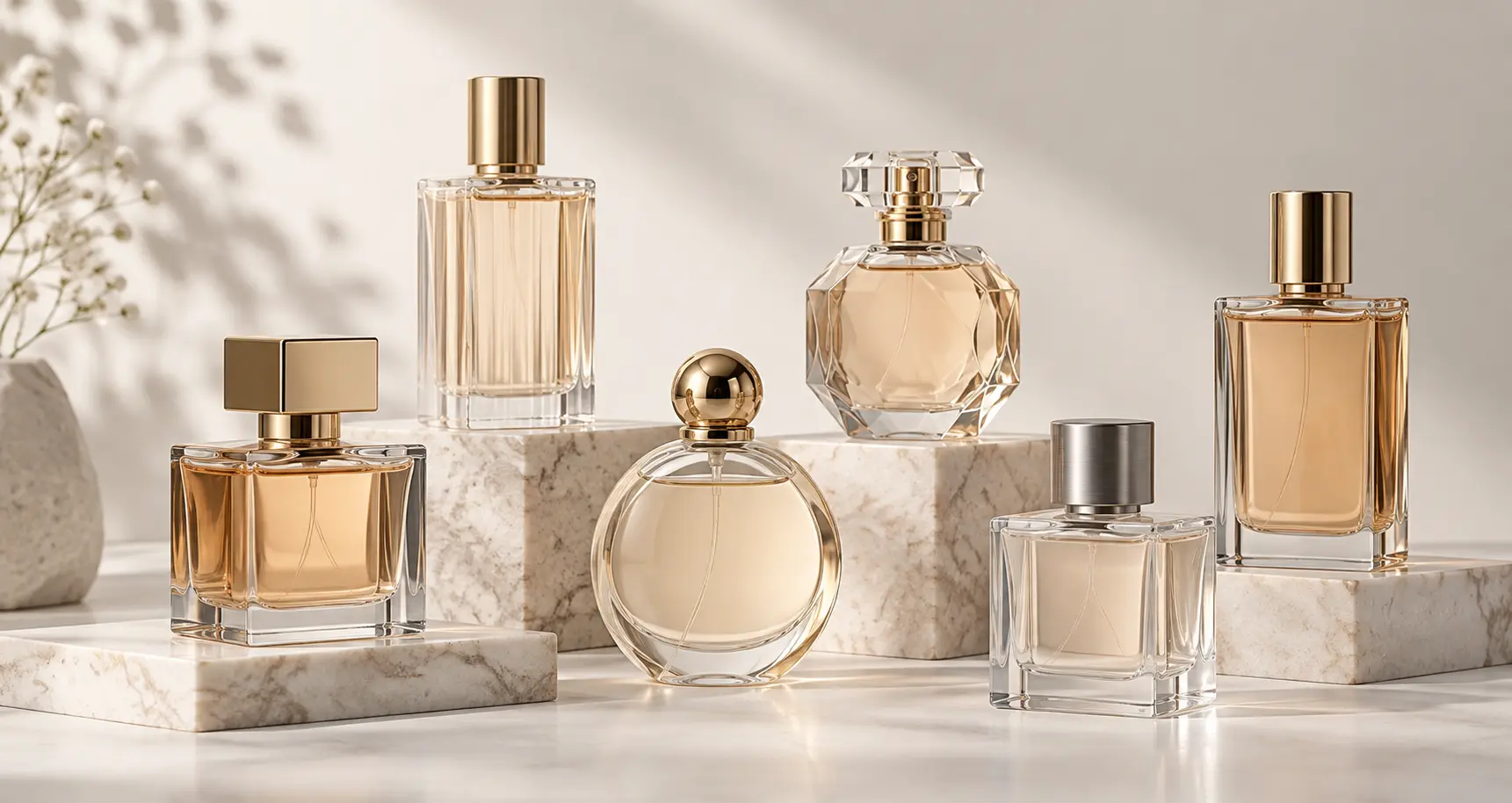
Two FOLOVER 100ml products illustrate the difference between bottle capacity and sprayer performance. The fluted bottle is listed with a press-on sprayer arrangement; the rectangular bottle uses a crimp sprayer. Their glass shapes and connections differ, but neither bottle’s published product information confirms an exact milliliter-per-spray output. That value must be established for the selected atomizer.
Related FOLOVER 100ml Perfume Bottle Options
These are FOLOVER product photographs and product pages, not substitute images. Compare the complete bottle configurations before choosing an atomizer for a fragrance project.
| 100ml Elegant Perfume Bottle with Fluted Glass Body and Gold Cap | 100ml Customized Rectangular Perfume Bottle with Crimp Sprayer |
|---|---|
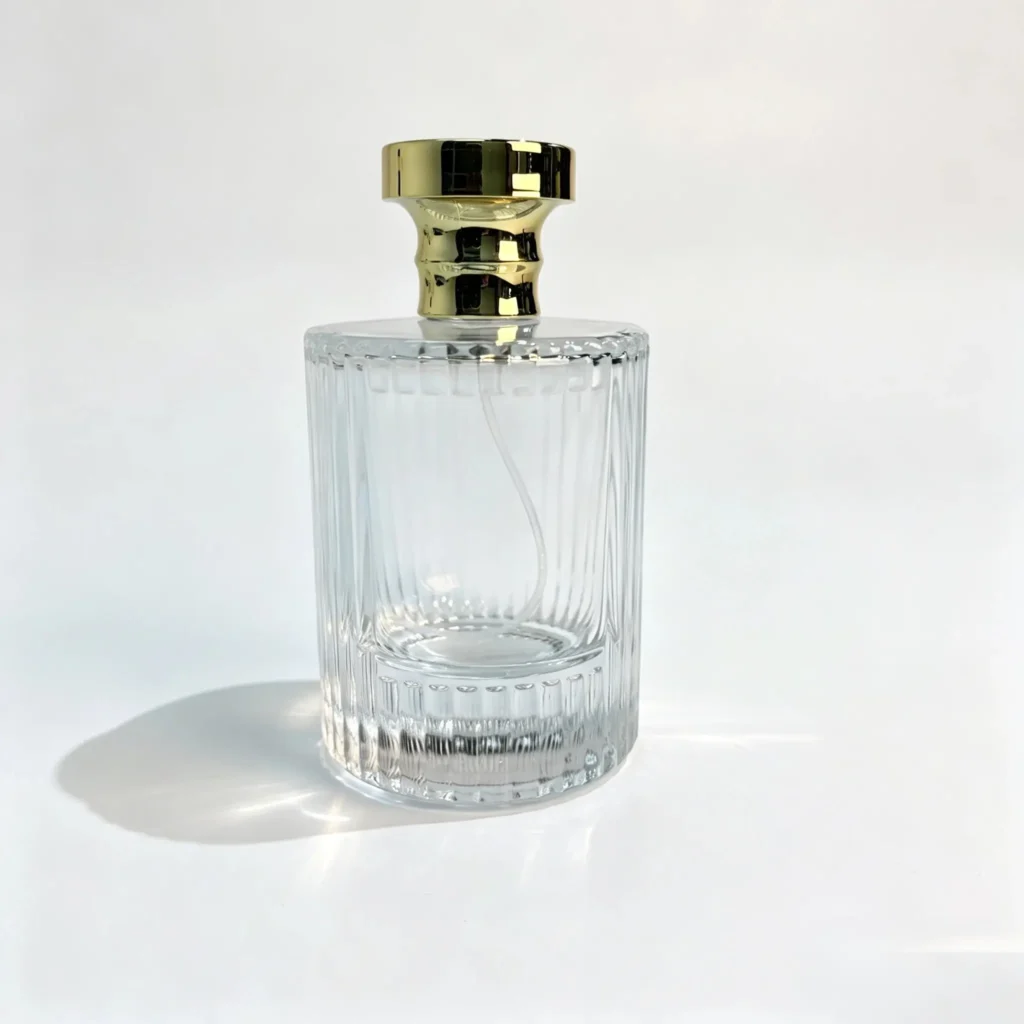 The fluted clear-glass body is presented with a sculpted gold cap and press-on sprayer configuration. For this bottle, the sprayer output, bottle-neck fit and dip-tube reach should be checked on the approved assembly before calculating expected use. | 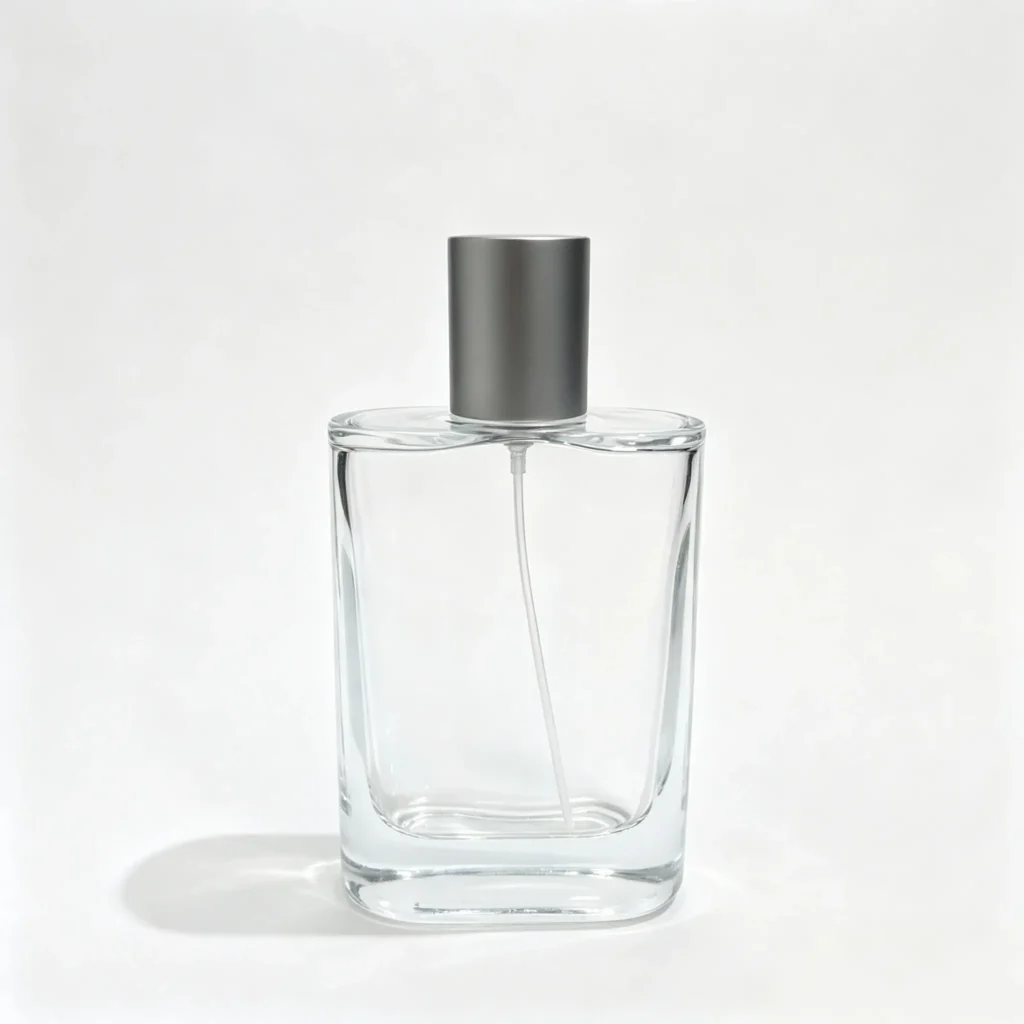 The rectangular glass bottle is listed with a crimp sprayer, inner plug and outer cap. Its assembly requirements differ from those of the fluted bottle. The specific atomizer’s output and performance still need to be verified with the intended fragrance. |
How Would Their Spray Counts Be Estimated?
For either bottle, a hypothetical 100ml fill divided by an atomizer output of 0.10ml per complete press gives 1,000 theoretical sprays. An output of 0.12ml would give approximately 833; an output of 0.08ml would give 1,250. These are calculation examples, not published test results or confirmed outputs of the two featured FOLOVER sprayers.
The buyer’s next step is to request the actual dispensing specification for the chosen pump, confirm bottle-neck compatibility and assess a filled sample. A different bottle shape does not change the formula; a different selected sprayer can change the result.
What the Two Bottle Assemblies Tell a Buyer
The visible cap and glass design are only part of the selection. For the fluted press-on option, check the fitted press-on sprayer assembly. For the rectangular crimp option, check the crimp neck, sprayer and corresponding sealing and cap components. In both cases, dip-tube reach, spray behavior and formula contact-material suitability should be evaluated on the actual assembled sample.
What Should Brands Consider When Choosing a 100ml Perfume Bottle and Sprayer?
Define the Output Before Approving the Complete Package
A fragrance buyer may want a lighter dose, a particular spray feel, or more consistent dispensing across a product range. Those requirements should be described separately. The specification should identify the selected sprayer and its output, while sample review should assess whether the mist pattern and actuation feel meet the intended use. Changing output can change theoretical spray count, but it does not automatically improve the fragrance experience.
Check the Bottle Neck, Sprayer, Dip Tube and Cap Together
Two glass bottles with the same 100ml capacity may have different neck systems. A crimp sprayer cannot be assumed interchangeable with a screw-fit assembly. The neck finish, pump attachment, sealing components, collar dimensions, dip-tube length and cap fit all need to correspond to the selected bottle. An attractive cap is not evidence that the sprayer beneath it is mechanically suitable.
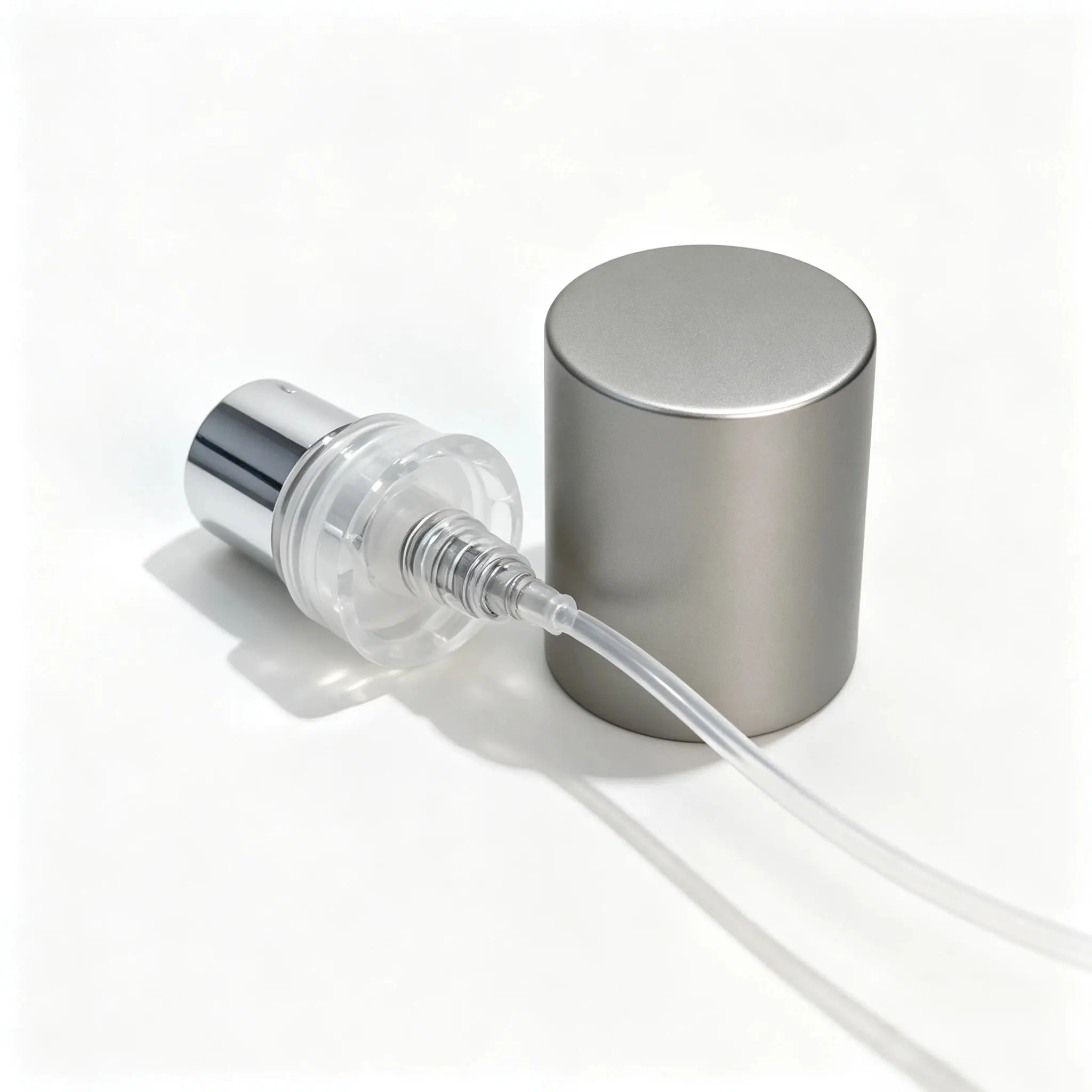
For a broader view of matching these parts, FOLOVER’s bottle closures and dispensing guide explains the component decisions that sit behind the finished appearance.
Evaluate Filled Samples Before Bulk Production
Supplier catalog figures are a starting point. The final assembly should be reviewed using the intended fragrance formulation, consistent full-stroke actuations and an agreed method of assessing output and spray behavior. If output is checked by weighing a series of sprays, the result is mass per spray; converting it to milliliters also requires the liquid’s density. A visual mist test alone is not a measurement of volume.
What to Check on a 100ml Perfume Packaging Sample
- Confirm the exact glass-bottle SKU, intended fill quantity and neck specification.
- Identify the actual fragrance sprayer and its stated output, rather than borrowing a figure from another pump.
- Review complete-actuation behavior, spray pattern and priming with the intended formula.
- Check dip-tube reach, remaining liquid, seal configuration, collar position and cap fit.
- Approve glass finish, logo placement, any coating and the final assembled appearance on physical samples.
What FOLOVER PACK Can Help Coordinate
For a 100ml perfume project, FOLOVER can help buyers compare available glass designs, review matching fragrance sprayers and caps, and coordinate suitable decoration options such as coating, frosting, screen printing and hot stamping. The exact configuration depends on the chosen bottle and component specifications. Buyers comparing other bottle shapes and available configurations can explore the perfume glass bottles collection before requesting samples of their preferred bottle-and-sprayer assembly.
Information to Include in a Packaging RFQ
- Preferred 100ml bottle design and the exact product reference.
- Target sprayer output, desired spray feel and any dispensing requirements.
- Fragrance type and relevant formulation or component-contact requirements.
- Cap, collar, color, printing and other decoration preferences.
- Required sample approvals, planned order quantity and filling arrangements.
Frequently Asked Questions About 100ml Perfume Sprays
How many sprays are in a 100ml perfume bottle?
About 1,000 theoretical sprays is a useful estimate if the atomizer releases 0.10ml per complete press. A different output changes the calculation: for example, 0.08ml per spray gives 1,250 theoretical sprays, while 0.12ml gives about 833. The actual usable count also depends on priming, how the sprayer is operated and how much liquid remains when the bottle stops spraying.
Is 100ml perfume the same as 3.4 oz?
100ml is approximately 3.38 US fluid ounces, which is commonly rounded to 3.4 fl oz on perfume packaging. Fluid ounces measure liquid volume, not the weight or physical size of the glass bottle. Two 100ml bottles can have very different heights, widths and glass weights while containing the same nominal amount of fragrance.
How many days will a 100ml perfume last?
At an assumed 0.10ml per full spray, 100ml gives 1,000 theoretical sprays. Using three full sprays a day would therefore give roughly 333 days; using five would give 200 days. These are arithmetic estimates, not guaranteed use periods. A different pump output, variable daily application or residual perfume will change the actual result.
Does the perfume atomizer affect the number of sprays?
Yes. Output per actuation is the main variable in a spray-count calculation. An atomizer that releases more liquid each time will generally use the filled volume in fewer full strokes. Nozzle appearance and mist fineness should not be used as substitutes for an output specification. Buyers should evaluate the particular sprayer and fragrance together.
Do all 100ml perfume bottles give the same number of sprays?
No. A 100ml label describes the fragrance volume, not a guaranteed number of actuations. Bottles may be fitted with different sprayers, and assembly details such as dip-tube position can affect how much of the filled fragrance remains usable. Even with the same theoretical output, priming and incomplete presses can change the count observed by the wearer.
Can a fragrance brand change the sprayer to get a different output?
Potentially, but changing an atomizer is not simply a matter of choosing a different milliliter-per-spray figure. The alternative must fit the bottle’s neck system and work with its collar, cap, dip tube and sealing components. Its dispensing behavior and contact-material compatibility should be evaluated with the actual perfume before the brand approves the package for production.
Final Recommendation: Calculate the Sprays, Then Verify the Package
A 100ml perfume bottle can be estimated at roughly 1,000 sprays when a full actuation dispenses 0.10ml. That number is a calculation, not a promise about every atomizer. To make a useful product-specific estimate, identify the actual filled volume and the output of the selected sprayer, then assess the complete bottle-and-sprayer sample.
For fragrance brands comparing the fluted press-on and rectangular crimp 100ml designs, the next step is to specify the required sprayer, cap, decoration and sample checks. FOLOVER PACK can review those requirements as part of a complete perfume-packaging discussion. Discuss Your Packaging Project.