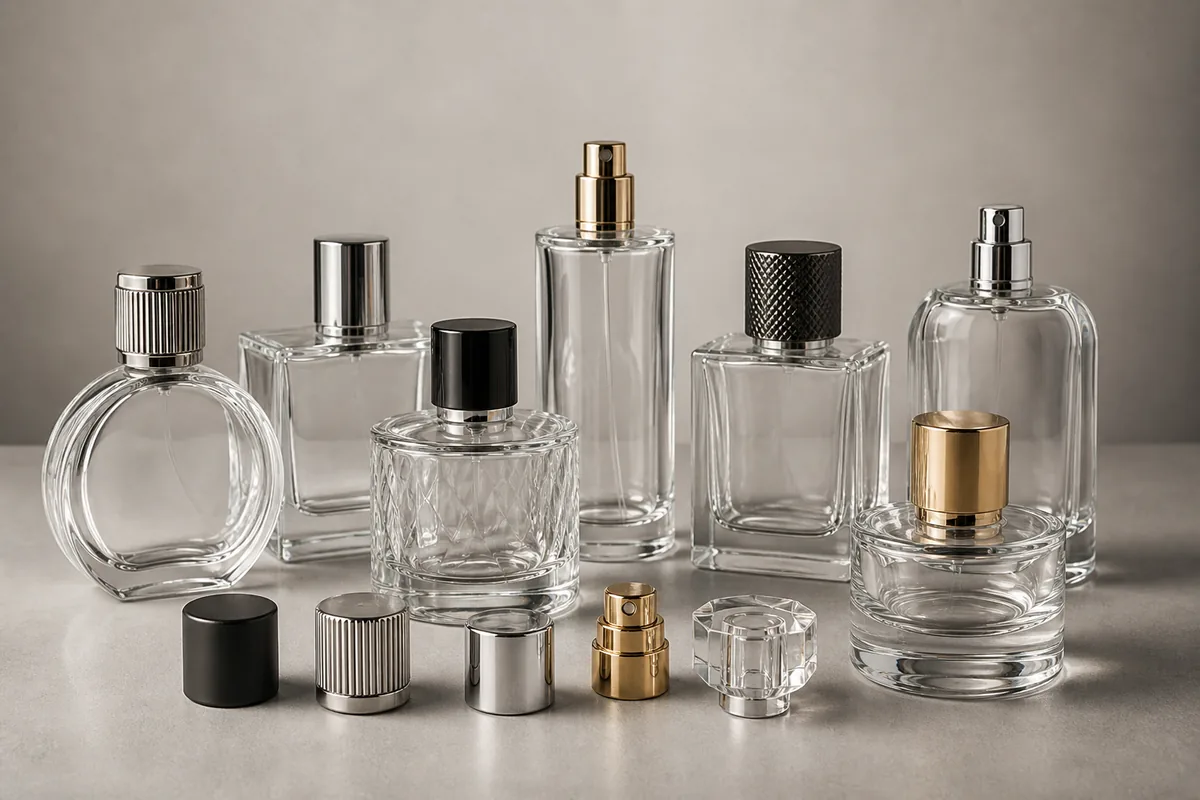

Clear, amber and colored glass cosmetic bottles differ in product visibility, brand presentation and light transmission. Clear glass displays the formula. Amber glass can reduce light transmission in parts of the spectrum, while colored glass, spray coatings and frosting offer different visual effects. However, bottle color alone does not establish formula stability or a specific level of light protection.
For B2B cosmetic packaging buyers, the correct choice depends on the actual formulation, required protection, intended storage and use conditions, decoration, closure system and secondary packaging. When light protection matters, the selected bottle must be evaluated against the formula’s documented stability requirements.
The practical distinction is between appearance and verified performance. Choose a glass color for its visual and branding characteristics, but approve any protective function through evidence for the exact bottle construction and finished packaging configuration.
Clear Glass Cosmetic Bottles
Clear glass makes the product visible. This can support formulas whose color, texture or clarity contributes to the customer experience, and it can create a clean, neutral or premium appearance. Clear glass also provides a flexible base for printing, labeling, frosting or project-specific coating when those processes are feasible for the selected bottle.
Clear bottles are worth considering when product visibility is important and the formulation’s stability requirements can be met under the intended packaging, storage and use conditions.
Visibility also exposes natural product variation, fill-level differences and changes in appearance over time. If the formula is light-sensitive, a clear bottle may require additional evaluation under realistic exposure conditions or the use of suitable secondary packaging.
Buyer decision: Do not reject clear glass solely because a formulation contains active ingredients, and do not approve it solely because the product looks stable in an initial sample. The formulation team should establish whether the intended clear-glass packaging provides sufficient protection throughout the required product life.
Amber Glass Cosmetic Bottles
Amber glass is commonly associated with essential oils, facial oils and apothecary-style products. It provides a recognizable visual identity and may be considered when light exposure is part of the packaging brief.
Amber glass can reduce transmission in parts of the visible and ultraviolet spectrum, but its actual performance depends on the selected glass composition, wavelength, glass distribution and test conditions. It must not be described as blocking all UV light or guaranteeing formula protection without supporting evidence.
For example, a brand developing a light-sensitive facial oil may compare clear and amber glass. However, if the formulation requires protection against a particular wavelength range, the buyer should request relevant transmission information for the selected bottle and confirm that the finished package meets the formulation’s stability requirements.
Amber also influences brand color, product visibility and decoration contrast. Dark contents may be harder to inspect visually, and printed colors can look different against amber than against clear glass. The planned Essential Oil Bottles category connects amber glass with reducers, caps and formula compatibility without treating color as the only selection factor.
For the narrower question of whether oil products can use transparent packaging, the planned article can essential oils be stored in clear glass? separates material appearance from formulation, exposure and storage requirements.

Colored Glass Bottles
A colored bottle may use glass whose color is integral to the material, or it may be clear glass with an applied surface treatment. Buyers should ask which construction is being proposed because appearance, decoration compatibility, abrasion behavior and potential light-transmission performance are not automatically the same.
Integral colored glass incorporates color into the glass material, while a coating creates a colored layer on the surface. Available colors, production feasibility and consistency depend on the exact bottle and manufacturing route.
For example, an integral blue glass bottle and a clear bottle with a blue coating may appear similar in a product photograph. However, the two constructions should not be treated as equivalent in terms of color distribution, surface durability or light protection.
Buyer action: Confirm whether the proposed color is integral to the glass or applied as a coating. Request a physical sample of the exact bottle and review the color with the intended formulation, closure and decoration before approving production.
Spray-Coated Glass
Spray coating can create opaque, translucent, gradient, glossy, matte or project-specific color effects when feasible. It is primarily a surface decoration and branding process. An opaque appearance does not by itself prove a defined light barrier, chemical resistance or durability level.
For buyers seeking a customized color without developing a new glass bottle shape, coating an existing bottle may be a practical option, subject to the selected bottle, coating process, order requirements and project feasibility.
However, coating approval must cover more than the desired color. The actual bottle geometry, coating coverage, masking areas, decoration sequence, component contact and intended handling conditions can affect the finished result.
For example, when a decorated bottle is assembled with a pump or dropper collar, the buyer should confirm whether the coating extends into the neck or component-contact area. A coating applied to an unintended sealing or attachment surface may affect component seating or assembly.
Where coating, screen printing, hot stamping or labeling will be combined, the order of operations and compatibility of the selected processes should be confirmed before bulk production.
FOLOVER PACK’s decoration and finishing options provide additional context for glass coating, frosting, printing and other customization processes.
Buyer action: Approve a representative physical sample showing the final color, gloss, coverage, masking, artwork and assembled components. If the coating is intended to provide light protection, request separate evidence for that function rather than relying on its opaque appearance.
Frosted Glass
Frosting creates a diffuse surface appearance that can soften reflections and reduce direct visual clarity. Depending on the selected process, frosting may be created through glass surface treatment or a coating-like finish. It should not automatically be described as a light-protection system.
A frosted bottle can create a softer visual presentation, but reduced visual clarity is not the same as verified light attenuation across the wavelengths relevant to the formulation.
Frosted surfaces can also affect printing contrast, label adhesion, handling marks and color perception. A logo or metallic decoration that appears clear on smooth glass may produce a different visual result on the selected frosted surface.
Buyers should approve the complete decoration configuration rather than approving frosting, ink, hot stamping and label materials independently.

How Bottle Color Affects Brand Design
Clear glass can emphasize formula color and allow a neutral bottle to work across multiple SKUs. Amber can support botanical, technical or traditional brand directions. Blue, green, black, white and custom coating options can strengthen product recognition when the selected glass or finishing process is feasible.
For a skincare range with several formulations, the brand must decide whether the bottles should share one consistent exterior color or allow the product inside to influence their final appearance.
A clear bottle may reveal differences between serum colors. Amber glass may create a more consistent external impression while reducing product visibility. A translucent coating can introduce another variable because the underlying formula may influence the perceived finished color.
Color must also be evaluated with the pump, dropper, cap, label, printing and carton. The same digital color reference may appear different when applied to glass, plastic or metal components with different surface finishes.
FOLOVER’s cosmetic and skincare glass packaging category provides the wider product-browsing route, while essential oil bottles show the relevant product category for oil-oriented projects.
Why the Filled Bottle Can Look Different
An empty glass sample shows the bottle material and surface finish, but it does not show the final package appearance. A pale oil may make amber glass look warmer. A strongly colored serum can change the apparent shade of clear, translucent-coated or frosted glass. Air space above the fill may create a visible band, especially in transparent packaging.
Glass distribution also affects how color appears around the base, shoulder and corners. Areas with greater glass thickness may appear darker, while curved surfaces can create highlights and optical distortion.
These visual effects are reasons to review the filled package rather than automatically treating a difference in appearance as a glass manufacturing defect.
Manufacturer Insight: Approve Color Using the Actual Filled Bottle
For a multi-SKU cosmetic packaging project, FOLOVER PACK recommends reviewing representative filled bottles before approving a shared glass color or decoration specification.
For example, a brand may select one translucent coating for several serum products. The same coating may appear different when the bottles contain a pale yellow formula, a transparent formula and a strongly colored formula.
If the brand requires a consistent exterior appearance, the buyer should evaluate whether the proposed coating or glass-color construction can achieve the desired result across the intended product range.
The final approval should include the actual bottle, representative formulas, selected pump or dropper, decoration, label and carton under agreed viewing conditions.
A Practical Bottle-Color Sample Plan
- Identify the exact bottle code and whether the proposed color is integral to the glass or applied as a surface coating.
- Prepare clear, amber or decorated samples that represent the intended production route.
- Fill the samples with the actual formulation for appearance approval, including representative formula colors for multi-SKU projects.
- Assemble the intended pump, dropper or cap and apply the planned decoration.
- Compare the samples under agreed daylight-like and retail-relevant lighting conditions.
- Review the bottles inside and outside the proposed secondary carton.
- Conduct the necessary formulation and packaging evaluations using defined exposure conditions and acceptance criteria.
- Record the approved physical sample, color reference, artwork revision, component configuration and approval date.
Visual approval and performance approval should be recorded separately. A bottle may meet the brand’s color requirements while still needing formula-stability evidence. Similarly, a package may satisfy the defined protection requirements but require additional decoration adjustments.
When a coating or closure changes after sample approval, review the affected appearance and functional requirements before releasing the revised configuration for production.
How to Evaluate a Light-Sensitive Formula
Start with the formulation’s documented sensitivity and the intended shelf life, market, storage and use conditions. Then define what the complete package must achieve.
The U.S. FDA’s guidance on cosmetic shelf life and expiration dating identifies temperature changes and exposure to sunlight and air as factors that can affect cosmetic products over time. This supports evaluating the actual packaging and storage conditions instead of assuming that a particular bottle color guarantees product stability.
ISO/TR 18811:2018, Cosmetics — Guidelines on the stability testing of cosmetic products, provides a technical framework for selecting suitable stability assessment methods. It does not prescribe one universal testing protocol, exposure condition or acceptance criterion for every cosmetic formulation.
For a light-sensitive formula, the formulation team should define the relevant exposure conditions, performance requirements and stability endpoints. The evaluation may consider wavelength range, exposure duration, temperature, opening frequency, storage orientation, secondary packaging and distribution conditions.
Test the actual formulation in the proposed production-intent bottle with the intended closure and decoration. Results obtained from another formula, glass color, coating or bottle construction should not be transferred automatically.
The planned article on packaging for facial oils addresses light exposure alongside dispensing and closure choices.
Technical distinction: Light-transmission testing evaluates how much light passes through the selected packaging under defined conditions. Formula-stability testing evaluates how the product performs under the specified exposure and storage conditions. A transmission result alone does not establish the finished cosmetic product’s shelf life.
Manufacturer Insight: Define the Protection Requirement Before Selecting the Finish
If a buyer requests an amber or opaque cosmetic glass bottle because the formula is light-sensitive, the first step is to identify the actual protection requirement.
FOLOVER PACK recommends confirming whether the buyer needs a particular glass appearance, a specified light-transmission performance or a complete packaging configuration that meets the formulation’s stability requirements.
These are different purchasing specifications. A dark coating may achieve the desired appearance without establishing the required protective performance. Likewise, a bottle with suitable light-transmission characteristics may still require separate evaluation of the formula, closure and storage conditions.
Where light protection is a technical requirement, buyers should obtain relevant evidence for the exact selected bottle and finish, then arrange appropriate finished-package stability evaluation with the formulation or testing team before bulk production.
Glass Color Comparison
The table below compares appearance, application considerations and the main verification requirement for each glass-color option. It is a purchasing reference, not a universal ranking of protective performance.
| Option | Best Considered For | Main Advantage | Main Limitation | What Buyers Should Verify |
|---|---|---|---|---|
| Clear glass | Formulas where product visibility is important and the proposed packaging meets stability requirements. | Displays product color, clarity and fill appearance. | Provides no basis for assuming adequate protection of a light-sensitive formula. | Formula stability, intended exposure, filled-bottle appearance and secondary packaging. |
| Amber glass | Products requiring an amber visual identity or consideration of reduced light transmission. | Provides an established apothecary appearance and may reduce transmission in relevant spectral regions. | Actual protection varies by the selected glass and wavelength; total UV blocking cannot be assumed. | Exact glass specification, relevant transmission data and finished-product stability. |
| Integral colored glass | Projects requiring color within the glass material rather than a surface-applied finish. | Creates a color effect through the glass body. | Available colors, appearance and transmission performance depend on the glass composition and production route. | Glass construction, physical color samples, supply feasibility and any required protection data. |
| Spray-coated glass | Brands seeking custom colors, gradients or opaque and translucent surface effects. | Offers a broad range of decorative finishes when feasible. | Surface durability, coating coverage and protective performance require separate evaluation. | Physical color, masking, adhesion, decoration compatibility and light protection if claimed. |
| Frosted glass | Brands seeking a diffuse, softened or matte visual presentation. | Changes surface appearance and reduces direct visual clarity. | Frosting is not automatically a verified light-protection system. | Frosting process, decoration quality, handling marks, label compatibility and any claimed protective function. |
Buyer conclusion: For a visually stable formula where showing the product is important, clear glass may be the appropriate starting point. When light protection is required, compare the verified performance of the proposed glass and finished package rather than selecting amber or an opaque coating solely by appearance. For projects driven primarily by brand color, evaluate integral colored glass and decorative coatings according to the required appearance, production feasibility and physical sample results.
Common Selection Mistakes
- Assuming amber glass solves every stability issue: Confirm the formulation’s actual sensitivity and the selected bottle’s relevant light-transmission performance.
- Treating an opaque coating as verified protection: Request evidence for any claimed protective function of the finished coating and bottle configuration.
- Confusing frosted, coated and integral colored glass: Identify the actual construction and manufacturing process before comparing appearance or performance.
- Approving color only from a rendering: Review physical samples against the agreed color reference under defined lighting.
- Ignoring formula color: Evaluate representative filled bottles, particularly when using clear, amber or translucent finishes across multiple SKUs.
- Testing a different package from the production version: Confirm the exact glass bottle, decoration, closure and actual formulation used in the evaluation.
- Overlooking secondary packaging: Include the intended carton, storage, retail and consumer-use conditions in the packaging assessment.
- Failing to control sample revisions: Record the approved bottle and component codes, finish reference and artwork before bulk production.
For broader purchasing decisions, the glass dropper bottle buying guide compares colors with droppers and compatibility. The Serum Bottles category supports serum-specific product selection, while the skincare packaging guide covers the wider packaging system.
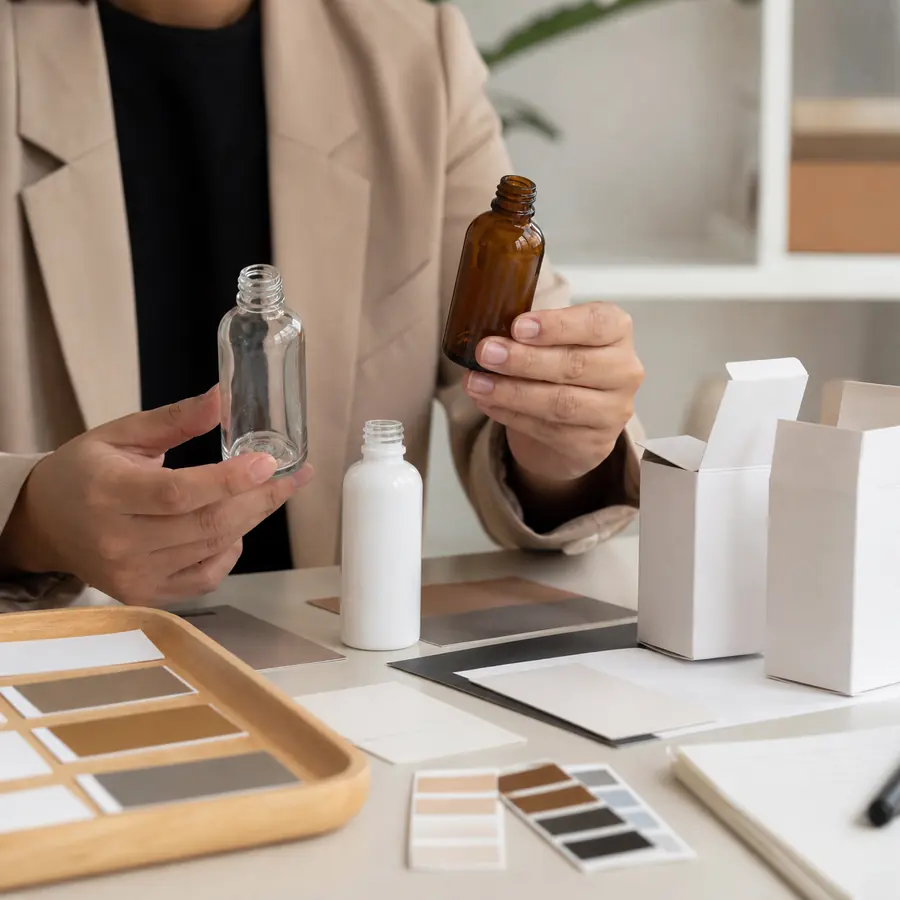
Explore the Product Knowledge hub for bottle fundamentals and the Packaging Buying Guides hub for selection and sourcing decisions.
Frequently Asked Questions
Is amber glass better than clear glass for cosmetics?
Not universally. Amber glass may reduce light transmission in parts of the spectrum, while clear glass provides greater product visibility. The appropriate choice depends on formula sensitivity, branding and intended exposure conditions. Buyers should compare the exact bottle specifications and evaluate the finished package rather than treating amber color alone as proof of better protection.
Does amber glass block UV light?
Amber glass may reduce transmission in certain ultraviolet and visible wavelength ranges, but it should not be described as blocking all UV light without supporting evidence. The actual performance depends on the selected glass and test conditions. Buyers should request relevant transmission data and confirm whether the finished packaging meets the formulation’s protection requirements.
Is frosted glass protective against light?
Frosting primarily changes the glass surface appearance and reduces direct visual clarity. It is not automatically a verified light-protection system. If a formulation requires protection from specific wavelengths, buyers should obtain suitable evidence for the exact frosted bottle and evaluate the actual product under its intended storage and use conditions.
Can clear bottles be spray coated?
Yes. Selected clear cosmetic glass bottles can be spray coated to create different colors, gradients and surface effects, subject to bottle geometry and project feasibility. Buyers should confirm the coating process, masking requirements, artwork compatibility and intended finish. Final color, coverage and assembled appearance should be approved using physical samples before bulk production.
Is colored glass the same as coated glass?
No. Integral colored glass contains color within the glass material, while coated glass receives an applied surface finish. The two constructions may differ in appearance, production requirements, surface durability and light transmission. Buyers should confirm the exact construction and approve physical samples rather than assuming visually similar bottles have equivalent performance.
Which bottle color is best for serum?
No single bottle color suits every serum. Clear glass may be considered when product visibility is important and stability requirements are met. Amber or other verified protective packaging may be considered when light exposure is a concern. Buyers should define the actual formula requirements, evaluate the selected bottle and closure, and approve the finished packaging configuration before production.
Conclusion
Clear, amber, colored, spray-coated and frosted cosmetic glass bottles offer different visual and branding possibilities, but appearance must not be confused with verified light protection.
For products where formula visibility is central to the brand experience, start by evaluating clear glass against the formulation’s stability requirements. For light-sensitive products, compare the documented performance of the selected glass and finished packaging configuration. For custom brand colors, confirm whether integral colored glass or a surface coating provides the required appearance and production feasibility.
The final decision should be supported by the actual formulation, exact bottle specification, intended closure and decoration, relevant stability evidence and approved physical samples.
FOLOVER PACK supports B2B cosmetic glass bottle sourcing, glass-color selection, coating, decoration and component coordination. Share your formulation type, target capacity, preferred glass color or finish, protection requirements, decoration references and planned order quantity to review suitable packaging options.