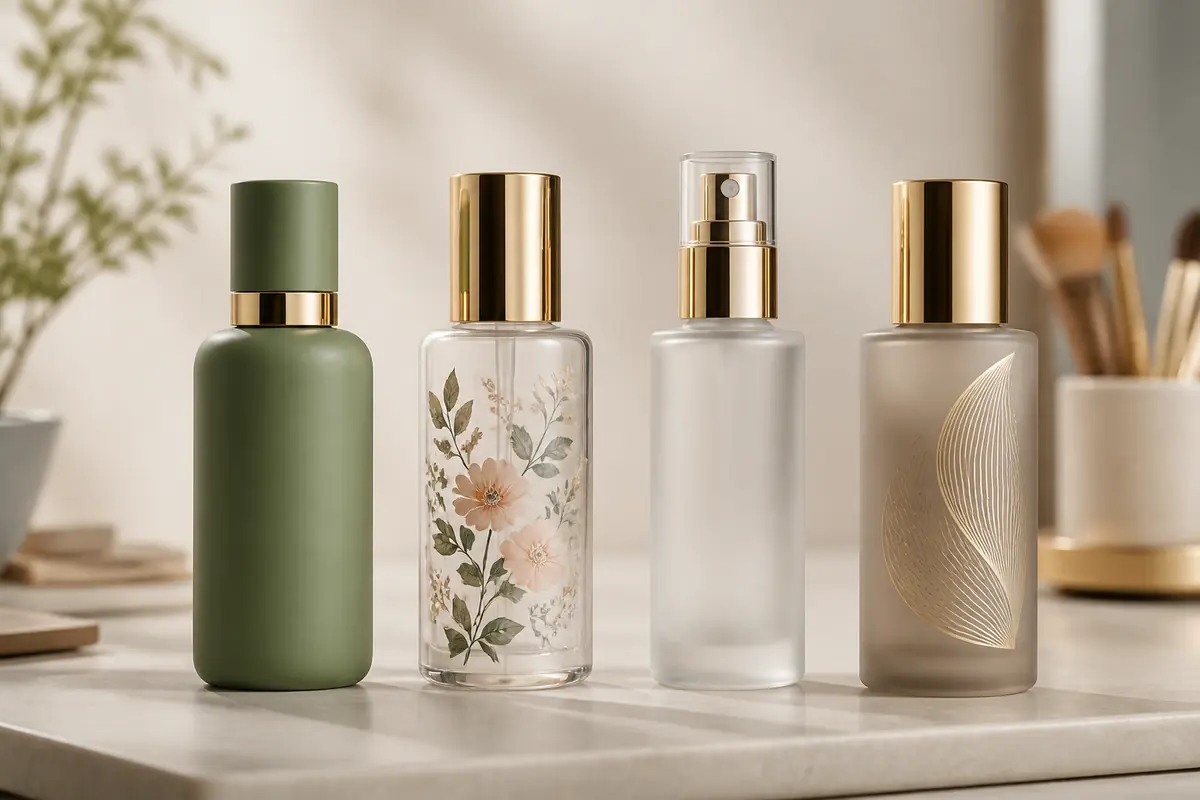

Frosted cosmetic glass bottles have a soft, diffused surface that reduces the sharp reflections of clear glossy glass. The important technical point is that “frosted” can describe different production routes, including a true glass-surface treatment or a matte-looking coating. Buyers should confirm which method is proposed, because appearance, decoration compatibility, handling behavior and inspection criteria may differ. Frosting alone must not be treated as proof of UV protection.
For procurement, “frosted bottle” is therefore not a complete specification. The purchase specification should identify the exact bottle, finish route, surface coverage, color or translucency direction, decoration sequence and approved physical reference.
What Does “Frosted Glass” Actually Mean?
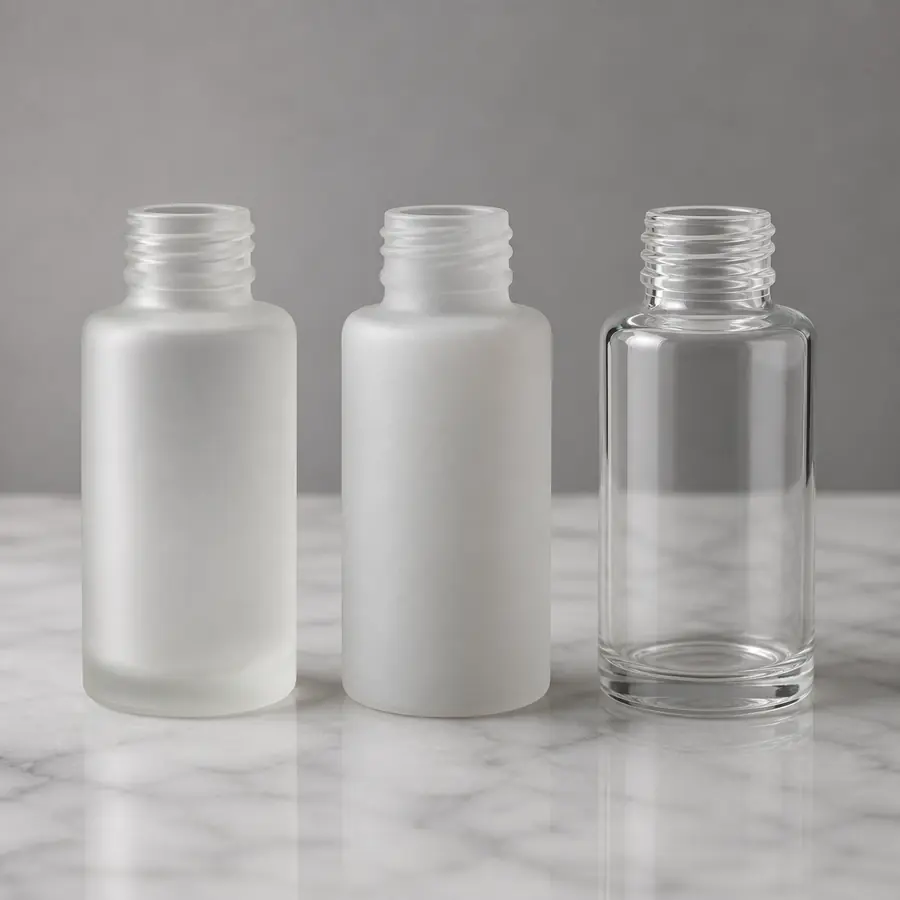
In packaging discussions, frosted glass usually refers to a translucent matte appearance. That visual result may come from treating the glass surface itself or applying a compatible coating that creates a frosted look. These routes can look similar in photographs but are not technically interchangeable.
Ask the supplier to identify the approved process for the selected bottle. The process should remain connected to the decoration sequence, physical sample and purchase specification. A design approved as true frosting should not silently change to a matte coating, or vice versa, without renewed review.
True Glass Frosting Versus Frosted-Look Coating
A glass-surface treatment changes the outer surface of the bottle, while a coating adds a separate decorative layer. The right choice depends on the desired appearance, available bottle, decoration plan, handling conditions and project economics. Neither method is automatically superior for every project.
Chemical etching is one possible route for treating a glass surface, but buyers should not assume that every truly frosted bottle uses the same chemistry or process. The U.S. National Institute for Occupational Safety and Health notes that hydrogen fluoride and hydrofluoric acid are used to etch, polish and frost glass and also identifies significant handling hazards associated with these chemicals. This is one reason chemical frosting should be treated as a controlled industrial process rather than a generic appearance label. The exact process used for a specific packaging project should be confirmed with the manufacturer. See the NIOSH technical information on hydrogen fluoride and hydrofluoric acid.
Frosted-look coatings can support controlled colors, opacity or coordinated visual effects, while a glass-surface treatment may retain a more direct material character. Exact chemical formulas, coating systems, process conditions and performance data are supplier-specific and should not be guessed. Buyers need a physical sample made with the intended process and a clear record of what was approved.
| Option | Best For | Main Advantage | Main Limitation | What Buyers Should Verify |
|---|---|---|---|---|
| Glass-surface frosting | Projects seeking a translucent matte effect created by changing the glass surface itself | The frosted effect is part of the treated glass surface rather than a separate decorative coating | Appearance and downstream decoration still depend on the exact process, bottle geometry and production control | Process route, coverage, uniformity, translucency and compatibility with printing or foil |
| Frosted-look coating | Projects requiring controlled color, opacity or a specific matte visual direction | Can provide additional flexibility in color and visual effect | It is an added decorative layer, so handling, adhesion and durability must be evaluated for the actual coating system | Coating system, coverage, color, decoration sequence, component contact points and physical sample approval |
Manufacturer Insight
At FOLOVER, we normally treat “frosted” as an approval package rather than a single finish name. The bottle, finish route, coverage, color or translucency, decoration sequence and assembled appearance should be reviewed together. If the bottle, coating route, artwork or component system changes after approval, the affected appearance and compatibility checks should be reopened instead of carrying the previous sample forward automatically.
Appearance: Diffusion, Transparency and Color
Frosting diffuses light and softens the view through the container. The degree of translucency, haze, surface uniformity and color interaction can change the final impression. A clear bottle with a matte surface may still reveal the product, air gap, dip tube or pipette, while an opaque coating can conceal much more.
The formula color also matters. A pale serum, dark oil or colored liquid may look different through the same bottle. Evaluate filled samples when product visibility is part of the design brief. A screen rendering can communicate direction, but it should not become the final reference for translucency or the interaction between the formula and the frosted surface.
Does Frosted Glass Block UV Light?
Frosting and UV protection are separate questions. A matte surface can scatter visible light, but that does not establish verified protective performance against ultraviolet exposure. Protection depends on factors such as glass composition, color, applied coating and tested spectral performance.
The dedicated answer on whether frosted glass blocks UV light should be used when light-sensitive formulas are involved. Buyers should request product-specific evidence or conduct appropriate formula and package stability evaluation instead of inferring protection from appearance.
Which Bottle Shapes Suit Frosting?
Frosting can be considered for round, square and specialty cosmetic bottles, but geometry affects visual uniformity and handling. Shoulders, bases, molded details, threads and recessed panels can appear different from broad body surfaces. Areas masked, supported or held during processing may also need review.
Inspect the complete bottle around its circumference, not only the front face. Transitions near the shoulder, neck and base can make local differences more visible, especially when the brand relies on a very clean matte appearance.
Frosting approval should also be kept separate from dimensional approval of the underlying bottle. For flaconnage used in cosmetic and perfumery applications, ISO 12818:2013 provides a published tolerance framework covering brimful capacity, height, diameter or width and verticality. It does not define frosting appearance, coating durability or decoration acceptance criteria, which still need to be established for the specific project.
Design Uses for Frosted Cosmetic Bottles
A frosted surface can create a soft, understated backdrop for skincare, serum, fragrance and treatment packaging. It can work with minimalist typography, restrained metallic accents, contrasting caps and natural color palettes. The effect can also help a bottle family feel coordinated when capacities or dispensing systems differ.
Frosting should still serve the brand hierarchy. If every surface, component and decoration is matte, the package may lose contrast. A glossy pump collar, clear window, crisp print or limited foil accent can provide a deliberate focal point without overcomplicating the system.
Printing and Hot Stamping on Frosted Surfaces
Screen printing or hot stamping may be possible on a compatible frosted or frosted-look surface. The underlying texture and process route can influence contrast, transfer and adhesion. Approve decoration on the actual surface rather than using a proof from clear glossy glass.
The overview of cosmetic glass bottle decoration methods shows how frosting relates to coating, printing and foil. For a metallic accent, the guide to hot stamping cosmetic packaging explains geometry, registration and approval considerations.
A common sourcing mistake is approving the bottle finish and artwork separately. The final decoration should instead be sampled on the selected frosted surface, because the substrate seen by the print or foil process is part of the decoration system.
Color Matching on a Matte Surface
A color reference communicates direction, but matte texture changes the way color and light are perceived. The same nominal color can look lighter, softer or less saturated than on a glossy surface. Surrounding components and formula visibility may also influence perception.
Use the process in the cosmetic bottle color matching guide: define the reference, produce a physical sample and approve it under agreed viewing conditions. Retain the approved physical reference rather than relying on a monitor image.
Surface Uniformity and Quality Checks
- Consistent matte appearance around the bottle
- Unexpected glossy spots, streaks or uneven areas
- Marks near the shoulder, base, thread or handling points
- Color and translucency against the approved physical sample
- Print or foil position, contrast and adhesion
- Contact marks from closures, components and packing materials
Define whether each acceptance point is visual, dimensional, functional or test-based. A visual inspection can identify uneven appearance, but it cannot by itself prove chemical resistance, abrasion durability, formula compatibility or long-term performance.
Common Failure Modes to Check Before Bulk Production
- Uneven frosting: the front panel looks acceptable but the shoulder, base or side shows inconsistent diffusion or glossy areas.
- Decoration mismatch: printing or foil approved on another surface does not produce the same contrast or transfer on the final frosted finish.
- Component rub marks: caps, collars, pumps, trays or partitions contact a visible surface during assembly or transport.
- Unexpected formula visibility: product color, air gap, dip tube or pipette is more visible through the frosted bottle than the rendering suggested.
- Uncontrolled process substitution: a sample approved with one frosting route is reproduced using a different surface process without renewed approval.
Physical Sample Approval
Review the sample as an assembled package, not only as an empty bottle. Compare the frosting route, coverage, texture, color or translucency, decorated artwork, closure finish and visible contact points. Where the formula affects appearance or compatibility, review the intended formulation under the planned storage and use conditions.
Record the approved bottle, finish process, color reference, artwork revision and component combination. The broader cosmetic packaging sample approval process can be used to separate visual approval from dimensional, functional and compatibility evidence.

Frosting and Product Compatibility
The package must still be evaluated as a system. Frosting does not change the need to confirm the bottle, closure, gasket, dip tube or pipette and formula compatibility. If a decorative layer could contact product during filling or use, that potential exposure should be evaluated for the exact packaging configuration.
Decorative approval also does not replace filled-pack testing. Formula stability, leakage, dispensing performance and decoration durability answer different questions and require different evidence.
For cosmetics marketed in the United States, FDA guidance treats containers and primary packaging materials as part of cosmetic manufacturing and control. FDA also notes that a cosmetic may be considered adulterated if its container is composed of a potentially harmful substance. This regulatory principle does not certify any particular frosted bottle or coating; it reinforces the need to evaluate the exact packaging configuration rather than relying on the appearance of the finish. See the FDA cosmetic GMP guidance and inspection checklist.
Handling, Cleaning and Filling-Line Considerations
A matte surface can show fingerprints, dust, rub marks or residues differently from glossy glass. Buyers should review how samples are handled, cleaned and moved through filling and assembly. The acceptable cleaning method depends on the actual surface treatment or coating, so a generic solvent or cleaning instruction should not be invented.
Ask the filling partner to review the final decorated bottle before launch. Guide rails, change parts, conveyors, labelers and manual handling can create contact points that were not present during a studio sample review. Where appearance is critical, use representative line trials or agreed handling checks and document the result.
Also review secondary packing after decoration. A surface that looks correct immediately after production can still pick up visible contact marks if bottles rub against components, dividers or each other during downstream handling.
Building a Consistent Bottle Family
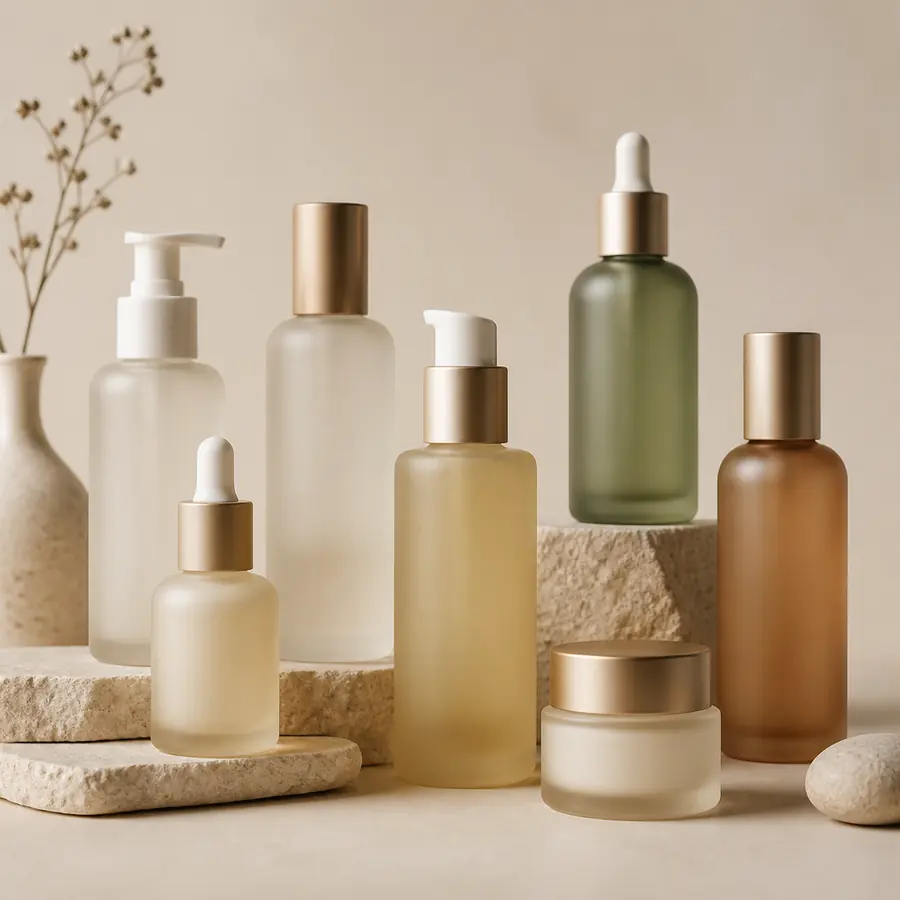
A frosted finish may unify a range that includes droppers, pumps, jars and treatment bottles, but consistency should be judged as a family rather than one unit at a time. Compare the degree of diffusion, color, decoration position and component finish across every format.
Different glass shapes can reflect and scatter light differently even when the same visual direction is requested. Approve each packaging format or clearly define the evidence that allows one approval to cover a coordinated range. Do not assume one bottle sample automatically governs every capacity and shape.
Buyer Specification Checklist
- Name the approved frosting or coating route.
- Confirm the exact bottle and required surface coverage.
- Review translucency with the intended formula where product visibility matters.
- Approve color and texture on a physical sample.
- Confirm printing or foil on the final frosted surface.
- Define the visual areas and defects that matter for inspection.
- Define any required durability or compatibility tests separately from visual approval.
- Review the assembled package for cap, pump, dropper and packing contact points.
- Record the bottle, process, color, artwork and component revisions.
- Do not claim UV protection without product-specific evidence.
Source and Customize Frosted Bottles
Start with cosmetic and skincare glass packaging and confirm the bottle structure before selecting the finish. FOLOVER’s decoration and finishing options can coordinate frosting or coating with printing and hot stamping, while custom packaging solutions connect the bottle, closure and outer package.
The skincare packaging guide supports the wider format decision. Browse Customization & Manufacturing and Packaging Technology for related production and technical guidance.
Conclusion
Frequently Asked Questions
What is a frosted cosmetic glass bottle?
It is a glass bottle with a soft matte, diffused appearance created by a confirmed surface treatment or a frosted-look coating.
Is frosted glass the same as matte coating?
No. They can look similar, but one treats the glass surface and the other adds a coating. Confirm which route is specified.
Does frosted glass protect formulas from UV light?
Not automatically. UV protection requires product-specific evidence; appearance alone is not sufficient.
Can frosted bottles be screen printed?
They may be printable when the surface and ink process are compatible. Approve printing on the actual frosted finish.
Can hot stamping be used on frosted bottles?
It may be possible, but foil transfer and adhesion depend on the exact surface, geometry and process. Test the final configuration.
How should frosted bottle samples be approved?
Review method, texture, color, translucency, uniformity, decoration and assembled appearance against a retained physical sample.