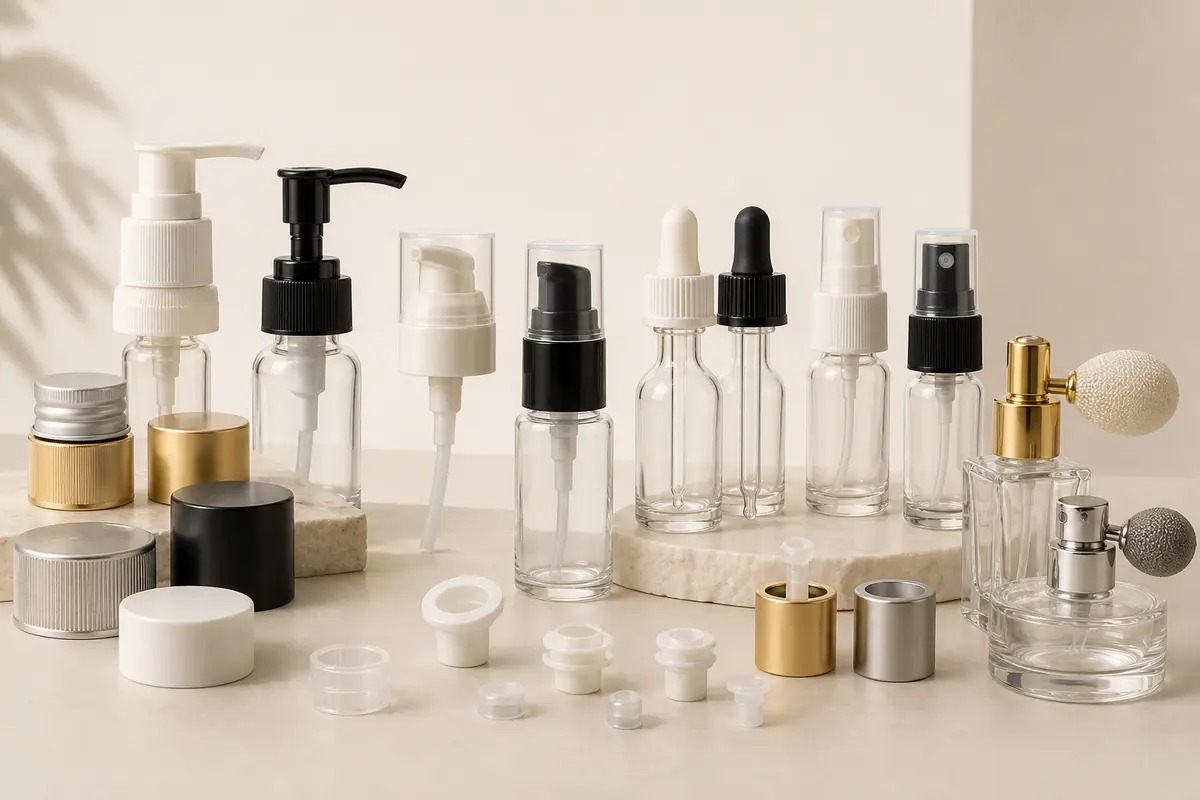
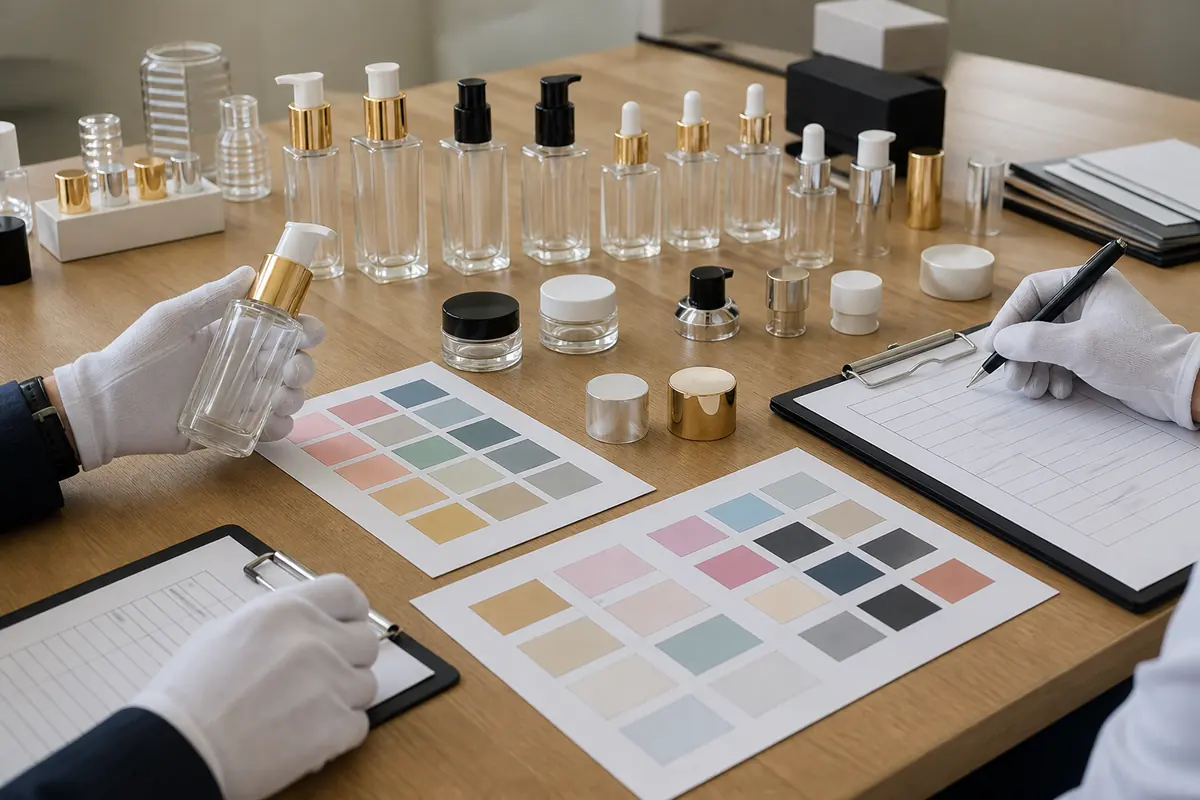
Cosmetic packaging sample approval is the controlled decision that freezes what may move into mass production. It is more than checking whether a bottle “looks good.” A useful approval identifies the exact bottle, closure, decoration, color, artwork and functional configuration; records what was reviewed; defines unresolved conditions; and retains an approved physical reference. Verbal approval or approval from photographs alone creates avoidable production risk.
For buyers, the central rule is simple: approve a defined packaging configuration, not an isolated sample image. A color sample may approve color without approving compatibility. A decorated bottle may approve artwork without approving the pump. A mold sample may confirm structure while packing or formula testing remains open. The approval record should make those boundaries explicit before production starts.
Evaluation and Formal Approval Are Different
Evaluation explores whether a sample is suitable. Formal approval confirms that a defined configuration is accepted for the next production stage. A buyer may evaluate several bottles, pumps and decoration directions before approving one final system.
The cosmetic packaging sample evaluation guide explains how to compare candidates. This article focuses on the later control point: recording the approved reference and preventing unreviewed changes before mass production.
Approval scope matters. “Sample approved” is too broad when different features are at different stages. A more useful decision identifies what is approved—such as bottle structure, coating color or artwork—and what remains pending, such as compatibility, leakage, dispensing or export packing.
Know Which Sample You Are Approving
“Sample” can refer to different things, so the approval record should name the stage. A stock sample can confirm general bottle quality or compatibility direction. A decorated sample can confirm color, printing or foil. A mold sample can review a newly developed structure. A pre-production sample can represent the intended production route more closely.
Do not let approval of one stage imply approval of every later stage. A clear stock bottle does not approve a custom coating. A decorated bottle does not prove formula compatibility. A mold sample may still require closure, decoration and packing review.
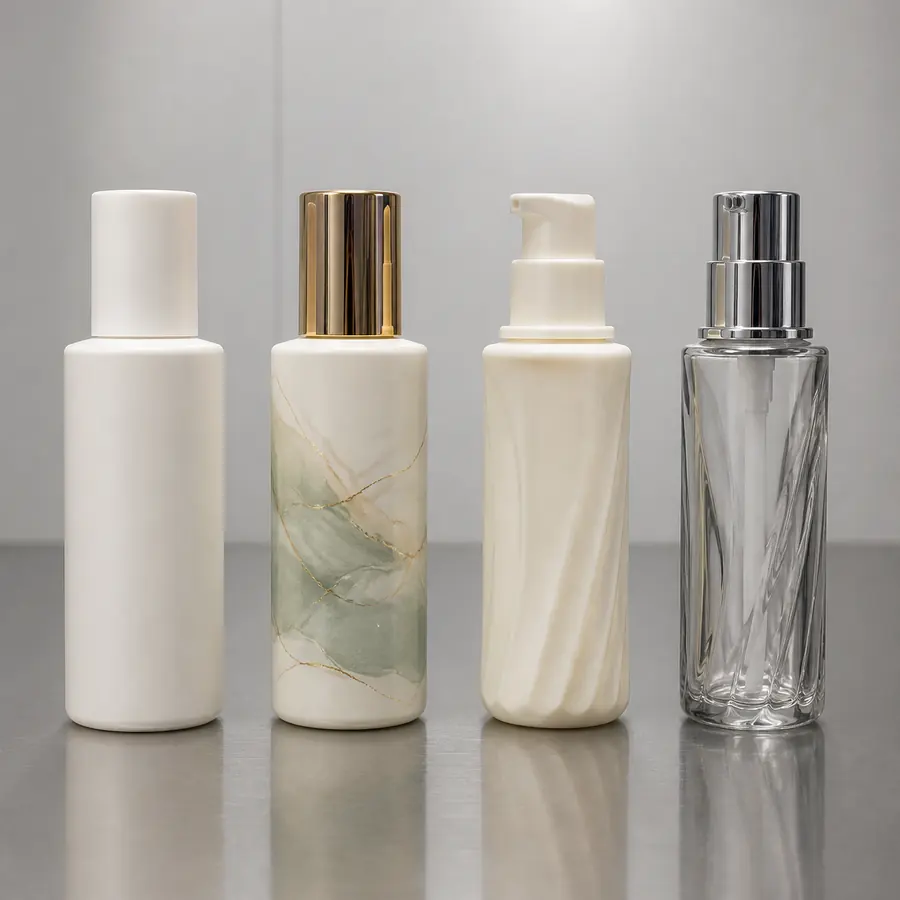
Approve the Structural Configuration
Record the exact bottle or jar, capacity where verified, neck or interface specification, pump or dropper, cap, collar, liner, gasket and any insert. The assembled package should be reviewed, not only individual components arranged beside each other.
Structural approval should include the orientation and fit that matter to use. It does not replace engineering drawings or product-specific tolerances. If the closure, dip tube, pipette or gasket changes after approval, the package should return to the relevant review step.
For glass bottles, measurement should also be separated from visual judgment. ISO 12818:2013, which remains current after ISO review, specifies standard tolerances for bottles used for pharmaceutical, cosmetic, perfumery and chemical products, including brimful capacity, height, diameter or width, and verticality. The standard can support a measurement framework, but it does not replace the current project drawing, closure interface or buyer-approved acceptance criteria.
Bottle-and-closure approval: final bottle and closure compatibility should be confirmed using the selected components and physical samples before bulk production. Similar appearance, capacity or bottle category does not establish neck, thread, crimp, sealing or dispensing compatibility.
Approve Visual Details
Visual approval may cover bottle color, coating, frosting, logo, print colors, foil, label position and the relationship between the bottle and closure. Review the package under agreed lighting and at normal viewing distance as well as close range.
Color references are directions until the physical sample is accepted. The cosmetic bottle color matching process explains why Pantone and screen files should lead to a retained sample. Decoration approval should also record the artwork revision and process sequence.
Where objective color comparison is useful, ISO/CIE 11664-6:2022 specifies the CIEDE2000 method for calculating color differences from CIELAB values. The standard defines a calculation method; it does not establish one universal ΔE00 acceptance limit for cosmetic bottles. Any numerical tolerance should be agreed for the actual project, surface and measurement method.
Viewing conditions also affect color decisions. ISO 3664:2025 specifies controlled viewing conditions for critical comparison of reflective and transmissive media in graphic technology and photography. It is not a cosmetic bottle approval standard, but it supports a useful approval principle: compare color and decoration under defined conditions rather than switching between warehouse lighting, office lighting and phone photographs.
Approve Functional Performance Separately
Appearance does not establish function. Depending on the package and formula, review may include closure fit, leakage, dispensing, actuation, dip-tube or pipette relationship, formula contact and handling. The appropriate tests and acceptance criteria must be defined for the project.
Use cosmetic packaging compatibility testing to plan the formula-package evidence. Do not sign off a full system based solely on empty-component appearance.
EU cosmetic safety guidance reinforces this distinction. The European Commission’s guidelines on Annex I of Regulation (EC) No 1223/2009 state that relevant characteristics of packaging in direct contact with a cosmetic formulation matter to finished-product safety and identify product-package interaction, barrier properties and migration as factors that may need evaluation. A visually approved bottle therefore cannot substitute for evidence generated with the actual formulation and packaging configuration.
Formula compatibility boundary: packaging compatibility should be evaluated with the actual formulation under intended storage and use conditions. Sample appearance, closure fit and decoration approval do not prove compatibility with every cosmetic formula.
Create a Golden Sample
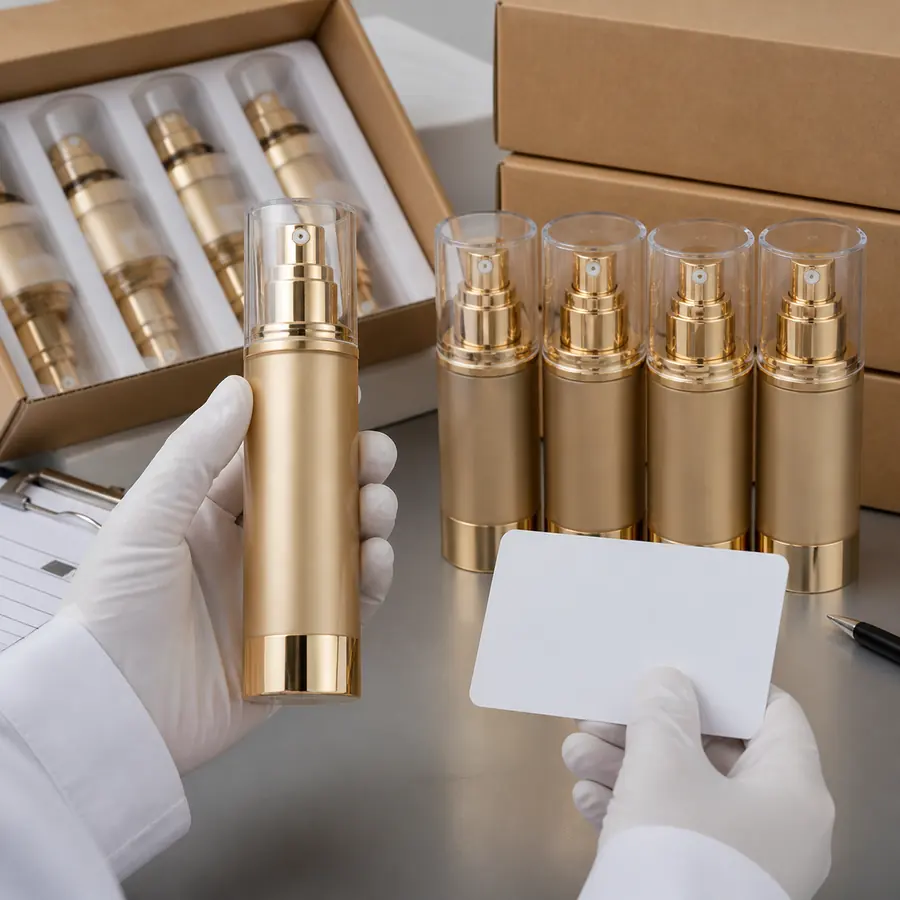
A golden sample is the retained physical reference used to communicate the accepted configuration and appearance. It should be linked to the correct artwork, color, component and process records. If several approval samples exist, clearly identify which one governs production.
The sample should be stored and handled so its condition remains meaningful. Photographs can support the record, but they do not replace the physical reference because lighting, compression and displays can distort color and surface appearance.
A golden sample should also have an identity that production and QC teams can trace. Useful identifiers can include the project or SKU, bottle reference, component references, artwork revision, decoration or color reference, approval date and status. The goal is not bureaucracy; it is preventing a visually similar but technically different sample from becoming the production standard.
Build a Clear Approval Record
| Approval Area | What to Record | Evidence to Keep | Typical Reapproval Trigger |
|---|---|---|---|
| Structure | Bottle, closure and component references | Drawing, assembled sample or confirmed component list | Bottle, closure, gasket, pump, dropper or interface change |
| Artwork | Revision, scale and decoration area | Approved artwork plus decorated physical sample | Logo, text, position, size or artwork revision |
| Color / finish | Reference, substrate and process | Physical sample and agreed comparison method | Coating, glass color, foil, ink or component color change |
| Function | Test method, condition and result | Test record linked to the tested configuration | Formula, closure, dispenser, gasket, pipette or dip-tube change |
| Packing | Assembly and protective packing configuration | Packing specification or approved packed sample | Carton, divider, tray, orientation or component packing change |
| Decision | Approver, date, status and limitations | Controlled written approval record | Any change affecting the approved scope |
Include open points rather than hiding them. “Color approved; compatibility test pending” is safer than a broad “approved” message that different teams interpret differently.
This emphasis on controlled records is also consistent with the FDA’s Cosmetic GMP Guidelines/Inspection Checklist. The FDA guidance calls for identification and control of primary packaging materials, use of approved materials, testing against acceptance specifications and records covering primary packaging materials and finished-product control status. It is guidance rather than a certification of an individual package, but it illustrates why an approval process should connect the physical sample to documented identity, status and evidence.
Manufacturer Insight
For FOLOVER projects, we recommend treating sample approval as configuration control rather than a single yes-or-no email. The bottle, closure, decoration, artwork revision, functional evidence, packing specification and open points should refer to the same current version. When one of these interfaces changes, the affected approval should be reopened before the revised configuration is treated as production-ready.
Why Verbal Approval Is Risky
A call or chat message can communicate urgency but may omit the sample stage, revision or conditions. If production teams cannot identify exactly what was approved, they may use the most recent file, the most convenient component or a similar-looking sample.
Convert the decision into a concise written record. Attach or reference the relevant drawing, artwork and sample identification. State whether approval is final, conditional or limited to one feature.
The most dangerous approval message is often not an obvious mistake but an ambiguous one: “Looks good, proceed.” It may be understood by the buyer as approval of color only while the production team reads it as approval of the complete configuration. Replace that ambiguity with a controlled statement of scope.
Conditional Approval and Open Points
Not every decision must wait until every workstream is complete, but the scope must be explicit. A buyer might approve the bottle color while keeping compatibility, carton marking or final pump performance open. Write those boundaries into the approval instead of using a single broad status.
Conditional approval should identify who owns each open point, what evidence is required and whether production may proceed before closure. If the open issue could affect the approved feature—for example, a pump change that alters the assembled appearance—define the necessary reapproval in advance.
Common Approval Failures Before Production
- Approving a photograph as the final color reference: lighting, white balance, compression and screen calibration can change perceived color.
- Approving the bottle before the closure is finalized: a later cap, pump or dropper change can alter fit, sealing, orientation and assembled appearance.
- Approving decoration without locking the artwork revision: production may use a newer or older file that looks almost identical but is not the approved version.
- Treating an empty package as proof of formula compatibility: appearance and mechanical assembly do not establish performance with the actual formulation.
- Using one SKU as the approval reference for an entire family: changes in size, curvature, decoration area or dispensing components can require format-specific evidence.
- Changing packing after decoration approval: new contact points, trays, dividers or component movement can introduce marks or abrasion not seen on the approval sample.
How to Compare Production With the Approved Sample
The golden sample is a reference, not a substitute for an inspection plan. Production review should identify which features are compared visually, which require measurement and which require functional or compatibility evidence. Sampling level and acceptance criteria must be agreed for the project rather than invented in a general article.
For lot-by-lot attribute inspection, the current ISO 2859-1:2026 provides sampling schemes indexed by acceptance quality limit (AQL). The standard supplies a statistical inspection framework; it does not establish one universal AQL, inspection level or defect classification for cosmetic packaging. Those decisions still need to be agreed for the specific project and defect risks.
Review representative units, not only the best sample selected for photography. Compare structure, color, decoration position, surface condition and assembly with the approved records. If a difference appears, isolate the affected material and determine whether it is within the agreed standard before shipment release.
Buyer action: before releasing bulk production or shipment, confirm that the inspection plan, golden sample, artwork revision and component references all point to the same approved packaging configuration.
Approval Across Multiple SKUs
A product family may share a visual system while using different bottle sizes, pumps or artwork. Approving one SKU does not automatically validate all others. Differences in curvature, decoration area, dip-tube length and component proportion can change both function and appearance.
Create an approval matrix that names each SKU and the references that apply to it. Shared elements may use one controlled standard, while format-specific features receive their own samples. This keeps the process efficient without transferring evidence beyond its real scope.
| Feature | May Be Shared Across SKUs | Often Needs SKU-Specific Confirmation |
|---|---|---|
| Brand color direction | Yes, as a common target or reference | Final appearance on different bottle sizes or surfaces |
| Logo artwork | Master artwork may be shared | Scale, position and printable area |
| Pump or dropper family | Possibly | Fit, dip-tube or pipette relationship and assembled height |
| Packing concept | General method may be shared | Divider, tray and carton dimensions for each format |
| Compatibility evidence | Only where configuration and conditions genuinely match | Different formula, bottle, closure or contact configuration |
When Reapproval Is Required
Reapproval should be considered whenever a change could affect structure, appearance, function or packing. Examples include a different bottle model, closure, gasket, pump, artwork revision, color, coating, foil, decoration sequence or component supplier. The scope of renewed testing depends on the change.
Do not repeat every test mechanically, but do not assume an old result covers a new configuration. Use a risk-based review that connects the change to the affected evidence.
A useful reapproval question is: what evidence depended on the item that changed? If only carton artwork changes, formula compatibility may not need to restart. If a pump, gasket or direct-contact component changes, the impact can extend to fit, sealing, dispensing and compatibility. Reapproval should follow the affected interfaces rather than a fixed checklist applied without judgment.
Approve the Complete Packaging System
A bottle may look correct while the assembled package reveals misalignment, color mismatch, cap interference or an unexpected dispensing relationship. Review the unit as it will be filled, closed, handled and presented.
The custom cosmetic glass bottle development process places approval between development and mass production. It should close the loop across structure, decoration, compatibility and packing—not operate as an isolated design sign-off.
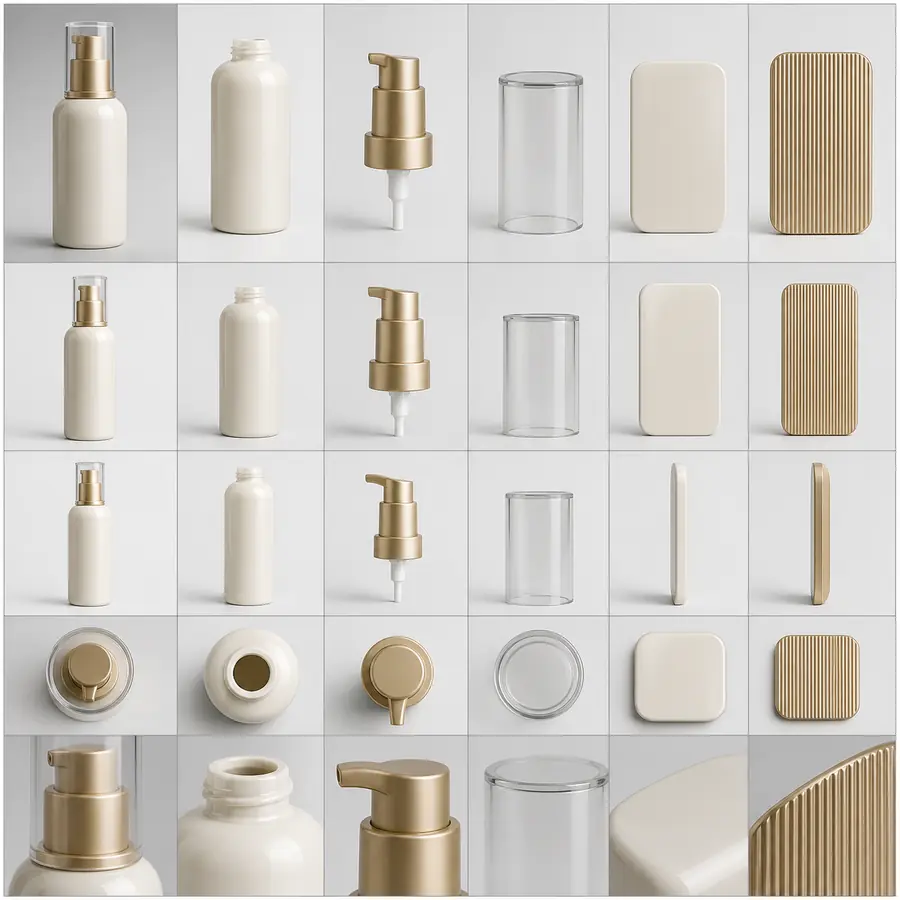
Sample Approval Checklist
- Identify the sample stage and exact configuration.
- Confirm bottle, closure and all functional components.
- Record artwork revision, colors, finish and decoration sequence.
- Review the complete assembled package.
- Separate visual approval from functional and compatibility evidence.
- List pending items and approval limitations.
- Identify the golden sample and retain it securely.
- Record approver, date and supporting documents.
- Define what changes trigger reapproval.
- Confirm which measurements, visual checks and functional criteria will be used during bulk inspection.
- For multi-SKU projects, identify which approvals are shared and which remain SKU-specific.
Coordinate Approval With the Supplier
For cosmetic and skincare glass packaging, start with the exact packaging structure and verified component references. FOLOVER’s custom packaging solutions can coordinate bottles, closures and decoration, while OEM and ODM packaging services support structured project development.
The skincare packaging guide supports early selection. Browse Customization & Manufacturing and Packaging Buying Guides for related procurement steps.
The supplier’s role is not simply to send a sample and ask whether it is acceptable. A controlled approval process should make it possible to identify which bottle, closure, artwork, decoration route and packing method the sample represents, and to communicate changes before they enter bulk production. Documentation or test reports should also be checked against the exact configuration rather than assumed to cover every bottle, closure or decoration variation.
Conclusion
Frequently Asked Questions
What is a packaging golden sample?
It is the retained physical reference that represents the accepted configuration and appearance for production comparison.
Can a photo be used for final color approval?
Photos can support documentation, but screen and lighting differences make a physical sample the stronger final color reference.
Does sample approval replace compatibility testing?
No. Visual and structural approval do not replace formula-package compatibility, leakage or dispensing evidence.
What should be recorded in a sample approval?
Record the sample stage, components, artwork revision, finish, decoration, tests, limitations, approver and date.
When is reapproval needed?
Reapproval is appropriate when a change could affect structure, appearance, function, compatibility or packing.
Should pumps and caps be approved with the bottle?
Yes. Review the complete assembled system because components can change fit, function and visual alignment.