

A Euro dropper bottle is a dispensing package commonly used for essential oils, concentrated cosmetic oils, aromatherapy blends, and other compatible liquids. The system typically combines a glass bottle with a press-fit insert—also called a reducer or orifice reducer—and a cap. When the bottle is tilted, liquid passes through the insert in drops rather than pouring freely from the open neck.
The insert does not guarantee one universal drop size or flow rate. Dispensing changes with the insert design, bottle neck, formula viscosity and surface behavior, temperature, fill level, tilt angle, and how the user handles the package. Buyers should therefore understand the mechanism and evaluate the exact assembled system rather than relying on appearance or nominal bottle capacity alone.
Main Parts of a Euro Dropper Bottle
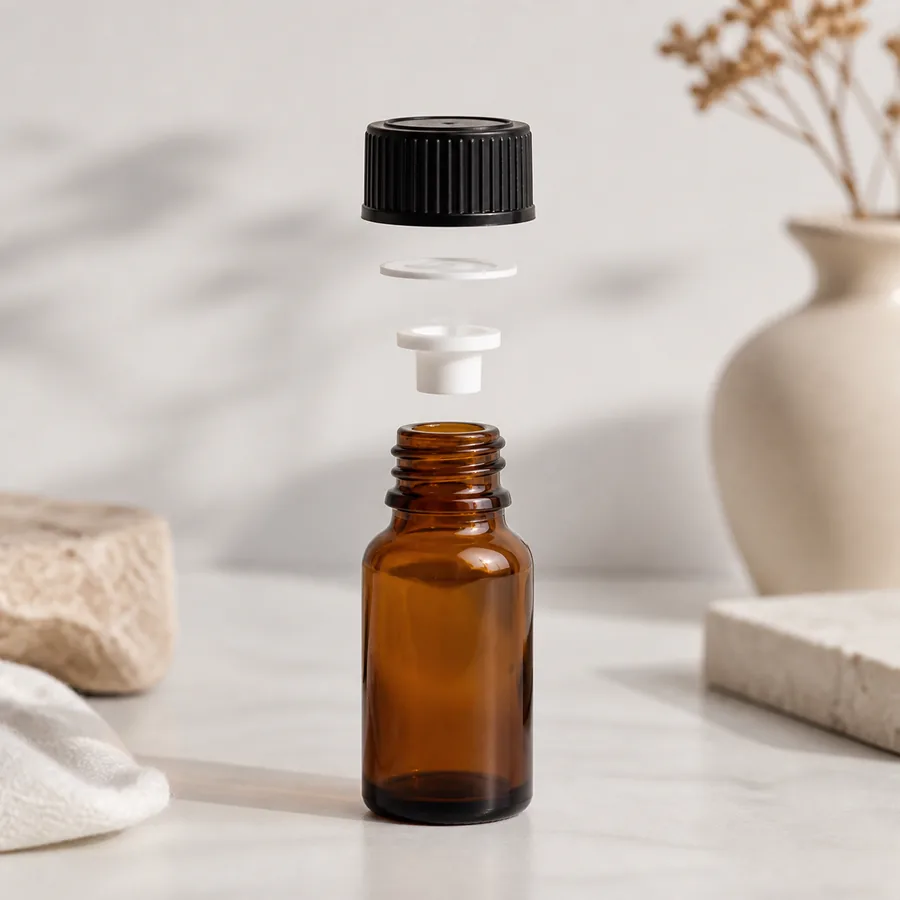
A complete Euro dropper package has several interfaces that must work together:
- Glass bottle: holds the product and provides the neck that receives the insert.
- Neck finish: defines the opening, retention area, sealing surface, and cap engagement.
- Dropper insert: fits into the neck and provides one or more controlled flow paths.
- Cap: closes the bottle and helps create the intended seal when correctly engaged with the selected system.
- Sealing interfaces: include the relevant contact areas among the bottle, insert, cap, and any liner or seal used by the selected system.
Important: A Euro dropper is an assembled bottle-and-insert system. The reducer should not be selected as an isolated accessory without matching the exact bottle neck and cap. A reducer that fits visually may still have unsuitable retention, flow, or sealing performance.
FOLOVER’s Euro dropper bottle category shows the relevant product family, while the Euro dropper bottle packaging guide provides a broader buyer-oriented path for selecting bottle sizes, glass colors, closures, and packaging configurations.
How the Euro Dropper Insert Controls Flow
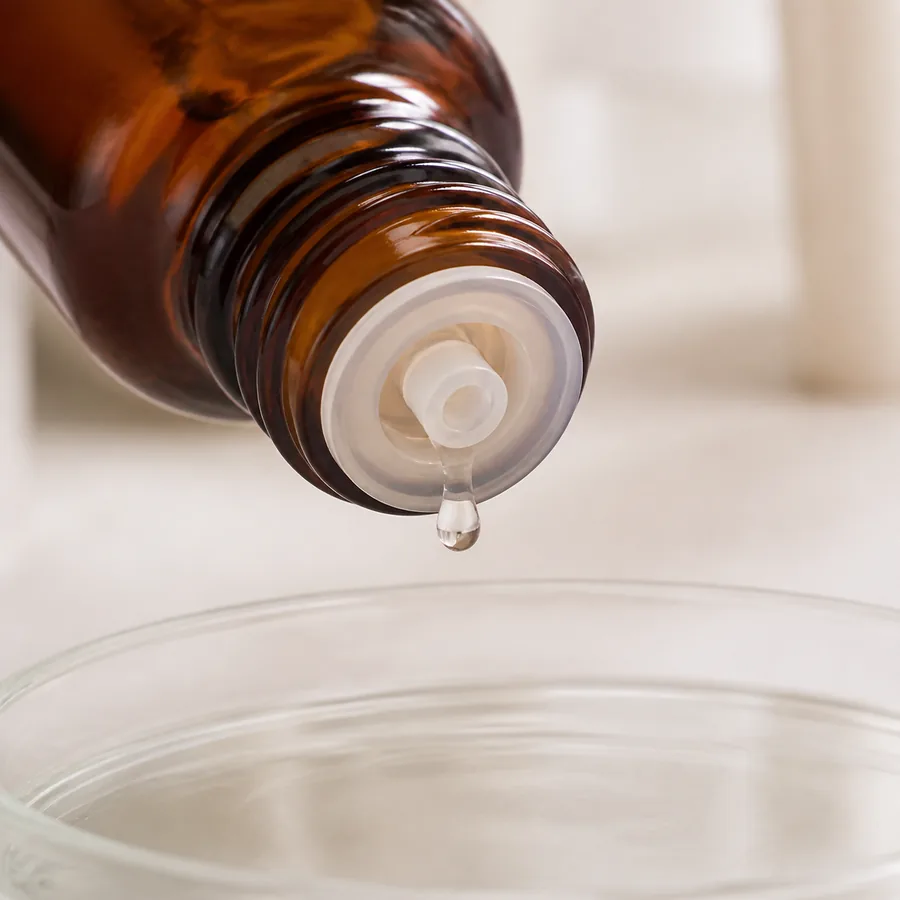
The basic mechanism uses gravity and controlled openings. When the bottle is tilted, liquid approaches the outlet in the insert. As liquid leaves, air must return to the bottle to replace the displaced volume. Many reducer designs manage liquid outflow and air return through separate or coordinated paths.
The interaction among these paths helps the package release drops instead of an unrestricted stream. However, the outcome is not determined by the insert alone. A thinner liquid may move differently from a more viscous oil; surface tension can affect whether a drop forms cleanly; temperature may change viscosity; and the user’s tilt angle or tapping motion can alter the result.
A Euro dropper is a dispensing aid, not automatically a calibrated measuring device. Buyers should not specify an exact volume per drop or assume identical dispensing performance across different formulations without supporting test data.
Manufacturer Insight: When the Dropper Does Not Dispense as Expected
When evaluating a Euro dropper system, FOLOVER PACK recommends checking the actual liquid and insert configuration before deciding that the outlet needs to be enlarged.
If the liquid flows too slowly, inspect the outlet and air-return paths for blockage, confirm that the insert is correctly seated, and compare dispensing behavior at the intended tilt angle. Formula viscosity and temperature should also be considered.
If the liquid pours too quickly or releases an uncontrolled stream, review the selected insert design, liquid properties, and dispensing orientation. A larger or smaller outlet is not automatically the correct solution because the liquid and air-return paths work together.
Where a different reducer design is required, the replacement insert should be evaluated with the original bottle neck and cap as a complete assembly before approval.
Euro Dropper vs Pipette Dropper
A Euro dropper remains installed in the bottle neck and dispenses when the user removes the cap and tilts the bottle. A pipette dropper is a removable closure assembly with a squeezable bulb and a glass or plastic pipette. The user squeezes and releases the bulb to draw liquid into the tube, then squeezes again to dispense it.
The principal difference is the dispensing action. A Euro dropper is considered when the product should be released directly from a fitted reducer, while a pipette dropper may be preferable when the user needs to withdraw liquid into a removable tube before application.
| Dispensing System | Best Considered For | Main Limitation | What Buyers Should Verify |
|---|---|---|---|
| Euro dropper | Compatible essential oils and cosmetic liquids intended for direct, drop-by-drop dispensing. | Drop formation and flow depend on the insert, formulation, tilt angle, and air-return behavior. | Insert retention, neck fit, cap sealing, material compatibility, and actual-formula dispensing. |
| Pipette dropper | Compatible facial oils and serums requiring manual liquid uptake and application through a removable pipette. | Dispensing depends on the bulb, pipette geometry, formulation, and user technique. | Closure fit, bulb material, pipette length, uptake, sealing, and actual-formula compatibility. |
For concentrated liquids intended to dispense directly from the bottle, a matched Euro dropper may provide a simpler user interaction without a removable pipette. For products requiring the user to draw up and apply liquid from a tube, a pipette system may be more appropriate. Neither option establishes a precise dose or universal formula compatibility.
The glass dropper bottle buying guide compares broader purchasing factors, while how pipette dropper systems work covers bulbs, pipettes, and wipers in more detail.
Common Glass Colors
Amber glass is widely associated with essential-oil and apothecary-style packaging. Clear glass gives full visibility of the liquid and can support a clean cosmetic presentation. Other colored or decorated finishes may be used when available for the selected bottle.
Glass color and verified protection must be treated separately. A dark appearance does not by itself prove a specific light-protection performance. If the formula is light-sensitive, the brand should define its protection requirements and evaluate the selected glass, finish, and completed package under intended storage conditions.
The U.S. FDA’s guidance on cosmetic shelf life and expiration dating identifies temperature changes, sunlight, and air exposure as factors that can affect cosmetic products over time. This supports evaluating the filled package rather than treating amber color alone as proof of formula stability.
Common Applications
Euro dropper bottles are commonly considered for essential oils, fragrance or aromatherapy blends, concentrated cosmetic oils, and other liquids intended to be released in small drops. Application suitability depends on the actual formula and use conditions.
For a compatible low-viscosity oil intended for direct drop-by-drop use, a Euro dropper may be a suitable starting point. For a more viscous formulation that does not dispense reliably through the selected reducer, buyers should evaluate an alternative insert or dispensing system rather than assuming that every Euro dropper will perform identically.
The package should not be described as suitable for medical or regulated dosing unless the exact product and applicable compliance evidence support that use.
The Essential Oil Bottles category provides related packaging options for buyers comparing amber glass, Euro droppers, caps, and other dispensing configurations for their intended application.
Why Insert and Neck Compatibility Matters
The insert normally relies on defined dimensions and retention features in the bottle neck. If the insert is too loose, it may move, leak, or come out during use. If it is too tight, insertion may damage the component or require excessive assembly force.
Two Euro dropper bottles with similar capacities and visible neck diameters may have different internal neck dimensions, retention features, or sealing surfaces. The appearance of the opening alone cannot establish compatibility with a replacement reducer.
Buyers should use component drawings or supplier specifications where available and confirm the assembled package through physical samples. The filling and assembly process must also be considered because an otherwise suitable insert may be damaged or incorrectly seated during installation.
Manufacturer Insight: Check Insert Retention Before Bulk Assembly
A practical failure mode occurs when a reducer appears correctly seated but lifts out with the cap during opening. This should trigger an investigation of the insert’s retention features, bottle neck, cap contact, and assembly conditions.
Increasing cap-tightening force is not automatically an appropriate correction. The cap may create additional interference with the insert without resolving the underlying retention mismatch.
FOLOVER PACK recommends approving the exact bottle, reducer, and cap combination through physical assembly and repeated opening and closing checks. If any component changes, the affected interfaces should be evaluated again before bulk production.
Cap and Seal Considerations
The cap protects the dispensing opening and contributes to the intended closed-package seal. Thread engagement, liner or sealing feature, cap depth, and contact with the insert must match the chosen system.
Overlooking the cap can create a package that dispenses acceptably when open but leaks or fails to close correctly. For example, an incompatible cap may contact the reducer incorrectly or fail to achieve the intended sealing contact even when it appears fully tightened.
Formula interaction also matters because essential oils and concentrated blends may affect some plastics, liners, inks, coatings, or elastomeric components. Packaging compatibility should be evaluated with the actual formulation under intended storage and use conditions.
Buyer action: Confirm the complete bottle, insert, and cap configuration before approving the closure. A cap that fits another bottle with the same nominal neck diameter should not automatically be treated as interchangeable.
What Buyers Should Check in Samples
Representative samples should be assembled using the intended bottle, reducer, and cap. Testing with the actual formula is important because water or a substitute liquid may not reproduce the same drop formation, wetting, leakage, or material interaction.
Sample checks should include:
- insert fit, retention, and assembly force;
- cap engagement and closed-package sealing;
- drop behavior at realistic tilt angles;
- dripping or residue around the outlet after use;
- leakage in relevant storage and transport orientations;
- formula contact with the insert, cap, liner, and decoration;
- repeatability across more than one assembled sample.
Sample approval should cover both dispensing performance and closed-package integrity. A bottle that releases suitable drops during use may still require further evaluation if the reducer moves during cap removal or the closed assembly shows leakage under intended handling conditions.
Physical Sample Approval
Before bulk production, record the exact bottle, reducer, and cap references together with the formulation used for evaluation and the agreed acceptance criteria.
Where the project requires decoration, approve the completed physical sample with the selected glass color, cap finish, artwork, and reducer installed. A change to the bottle neck, reducer design, cap structure, or formula may require renewed compatibility evaluation.

For category-level research, the Product Knowledge hub connects this definition with related bottle, closure, and dispensing articles.
Frequently Asked Questions
What is a Euro dropper?
A Euro dropper is a bottle system that uses a fitted reducer insert to help dispense compatible liquid as drops when the bottle is tilted.
How does a Euro dropper bottle dispense liquid?
Gravity moves liquid toward the insert outlet while an air-return path helps replace the liquid leaving the bottle. The exact flow depends on the system and formula.
Is a Euro dropper the same as a pipette dropper?
No. A Euro dropper uses a fixed insert and tilt-to-dispense action. A pipette dropper uses a removable bulb-and-pipette assembly.
Are Euro dropper bottles suitable for essential oils?
They are commonly used for essential oils, but the bottle, reducer, cap, and materials must be evaluated with the actual formula and intended use.
Can Euro dropper bottles leak?
Any package can leak if components are mismatched, damaged, incorrectly assembled, or incompatible with the formula. Relevant sample and transport testing is required.
Can Euro dropper bottles be customized?
Depending on the selected bottle, options may include color coating, frosting, printing, labeling, and coordinated caps. Feasibility must be confirmed for the exact project.
Conclusion
A Euro dropper bottle controls liquid flow through a fitted reducer rather than a bulb and pipette. Its usefulness depends on the bottle neck, insert, cap, sealing surfaces, formula, and user interaction working together.
For compatible liquids intended for direct drop-by-drop dispensing, a matched Euro dropper system may be a practical choice. When removable liquid uptake or a different application method is required, buyers should evaluate alternative dispensing systems. The final selection should be based on the actual formulation and approved physical samples rather than bottle appearance or assumed drop size.
FOLOVER PACK supports B2B Euro dropper bottle sourcing, component matching, and packaging customization. Share your preferred bottle capacity, glass color, actual formulation, intended dispensing method, closure requirements, and planned quantity to review suitable packaging configurations.