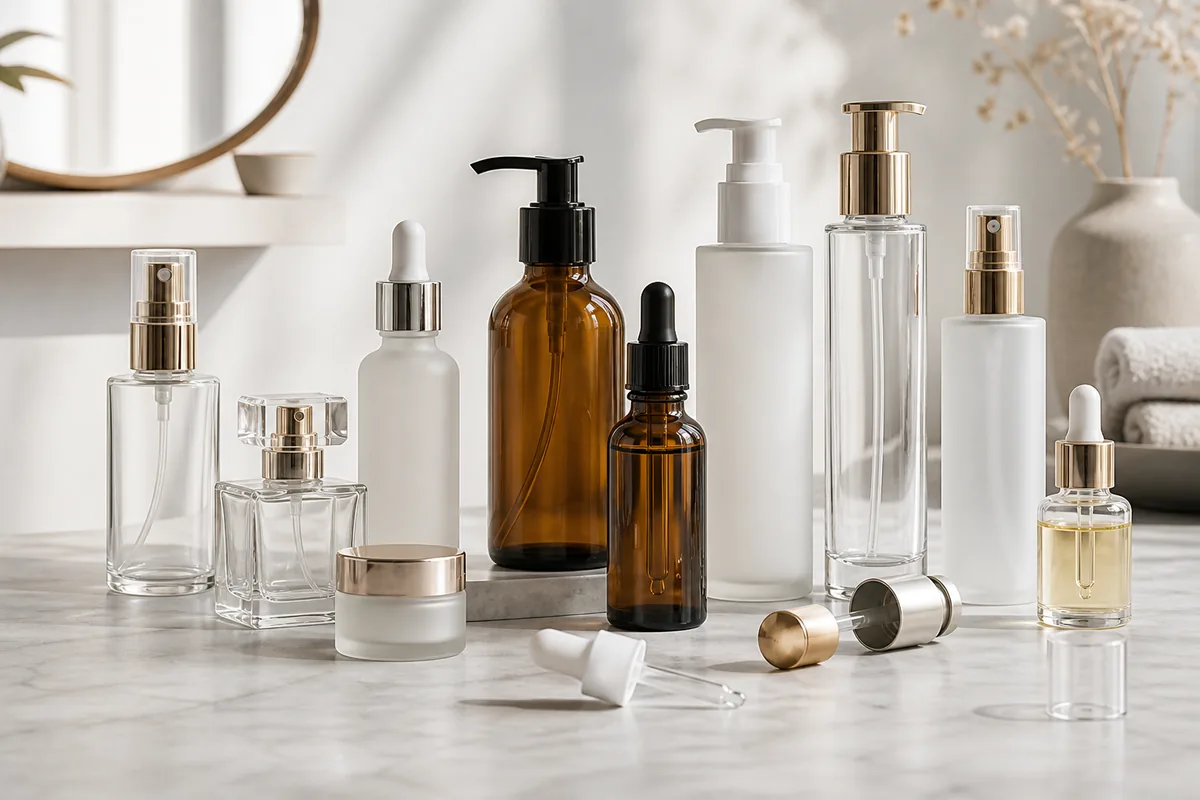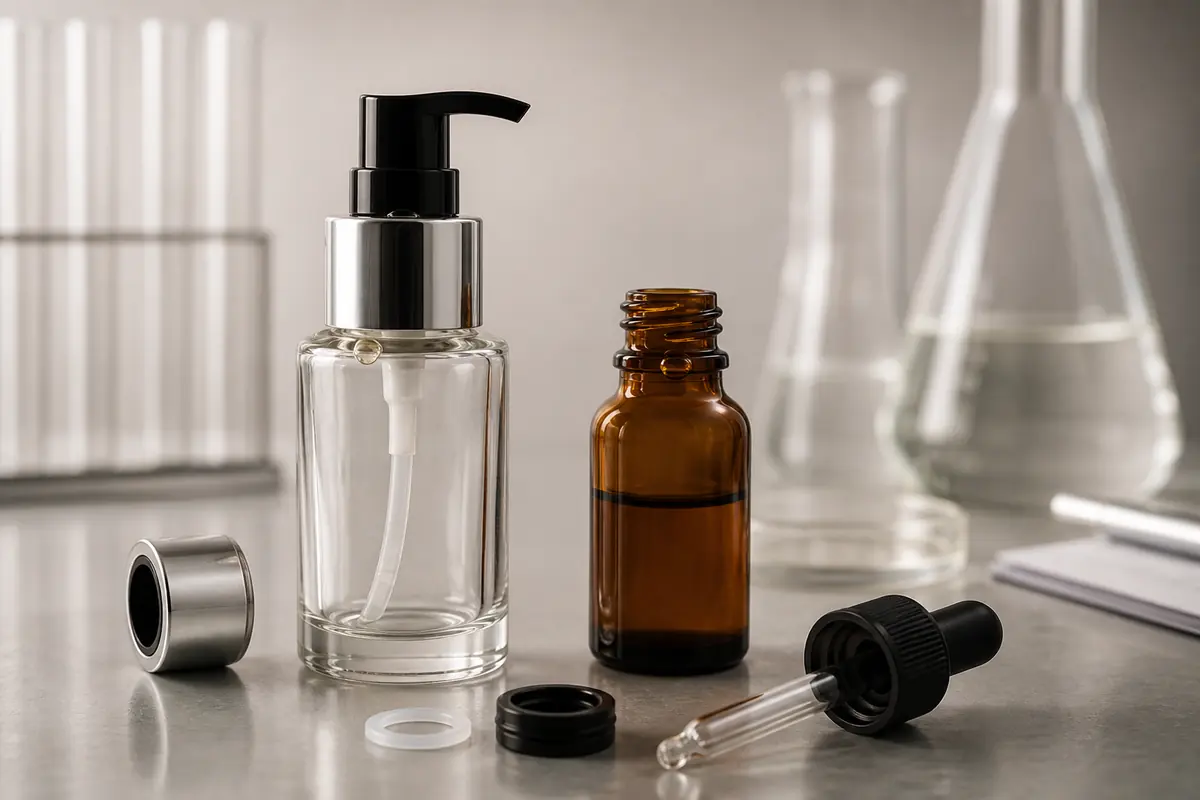
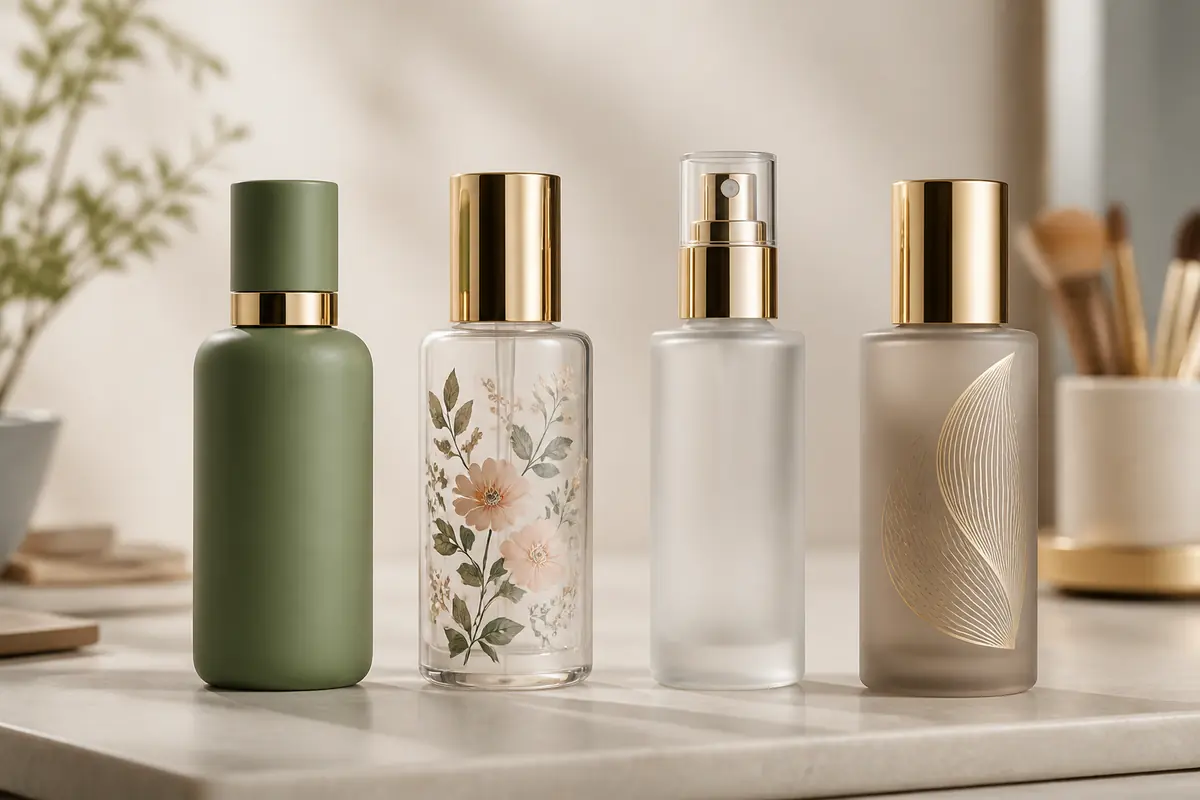
Cosmetic glass bottle decoration changes the color, texture and graphics of an existing bottle without changing its basic form. Spray coating, screen printing, hot stamping, frosting and applied labels offer different visual results, but each has limitations involving bottle geometry, surface preparation, adhesion, production consistency and sample approval.
For cosmetic brands and packaging buyers, the right decoration method depends on the required appearance, artwork, bottle shape, order quantity, handling conditions and manufacturing feasibility. A design should not be approved from a digital rendering alone. The final bottle, decoration and matching components should be evaluated together using physical samples before bulk production.
Spray Coating
Spray coating applies a finish to the bottle surface and can create transparent, translucent or opaque effects depending on the selected coating system. It can support full-color coverage, gradients, partial masking, matte or gloss finishes.
Spray coating is often a practical option when a brand wants to develop several bottle colors using an existing glass shape rather than commissioning a different glass-color formulation for each SKU. However, color development, masking requirements and production feasibility must be confirmed for the actual bottle.
Color references guide development but do not guarantee that the final coating will look identical to a paper reference or digital image. Glass color, coating formulation, surface texture, gloss and lighting can affect the perceived result.
Buyers should specify the target color, transparency, gloss, coated area and any surfaces that must remain uncoated. Approve the finished bottle against a physical reference before production.
Screen Printing
Direct screen printing transfers ink through a prepared screen onto the bottle surface. It can create logos, text and graphics without an applied label.
Screen printing is particularly useful when a brand needs a defined logo or graphic on a bottle with a suitable printable area. Each additional color and print position introduces registration requirements.
Curved surfaces, shoulders, ribs and abrupt shape changes can limit printing feasibility. Fine lines, small lettering and large solid areas should be evaluated against the actual bottle geometry rather than approved solely from an artwork file.
Buyers should confirm the printable area, artwork dimensions, color separation, registration and intended viewing direction. The planned guide to screen printing cosmetic glass bottles addresses artwork preparation and production considerations in greater detail.
Hot Stamping
Hot stamping transfers a metallic or colored foil effect onto a prepared surface. It is commonly considered for logos, decorative borders and selected graphic accents.
Its feasibility depends on the bottle shape, surface condition, artwork area, tooling and the compatibility of the foil with the underlying surface.
A successful hot-stamping result on clear glass does not establish that the same foil will perform identically on a coated or frosted bottle.
When hot stamping is applied over a coating, the complete decoration sequence should be evaluated. Buyers should approve the final color, metallic appearance, placement and adhesion on a finished physical sample. The planned article on hot stamping cosmetic packaging covers these decisions.
Frosting
Frosting creates a diffused, translucent appearance that changes how light passes through or reflects from a glass bottle.
The term describes more than one production route. A treatment that changes the glass surface differs from a coating formulated to produce a frosted appearance. These methods can differ in texture, translucency, decoration compatibility and durability.
Frosting can provide a consistent visual direction for skincare collections, particularly where a brand wants a softer surface appearance without using a fully opaque color.
However, frosting can also affect the visibility of the contents and the appearance of subsequent printing or metallic decoration.
Buyers should confirm which frosting process is proposed, the intended degree of translucency and whether further decoration will be applied. The planned guide to frosted cosmetic glass bottles distinguishes process, appearance and design use.

Labels and Applied Decoration
Pressure-sensitive labels, sleeves and other applied decorative elements can support detailed graphics, variable product information and designs that may be difficult to reproduce through direct printing.
Labels can be practical when a brand needs different artwork across multiple SKUs while maintaining the same underlying bottle.
Their performance depends on the label material, adhesive, bottle curvature, application method and intended exposure during filling, storage and use.
A label designed for a flat panel may wrinkle, lift or distort when applied around a curved or tapered bottle.
Buyers should confirm the available label area, application direction, edge position and resistance to relevant product or handling exposure. Label and sleeve materials may also affect material separation and recycling compatibility, which should be evaluated for the complete package and intended recycling system.
Colored Glass vs Surface Coating
Colored glass contains color within the glass body, while surface coating adds a colored layer after the bottle has been formed.
Surface coating may offer greater flexibility when developing different colors on an existing bottle. Colored glass can provide color through the glass itself without relying on an externally applied colored layer.
Neither method is universally preferable. Availability, appearance, production quantity, color development, decoration sequence and durability requirements differ between projects.
For a brand introducing several colors of the same serum bottle, coating an existing bottle may be a practical development route. If the project specifically requires color within the glass body, colored glass should be evaluated separately.
Buyers should compare samples using the same bottle shape and viewing conditions. Confirm the available manufacturing route, color reference, decoration requirements and project-specific commercial conditions before making the final selection.
Combining Multiple Decoration Processes
Cosmetic brands frequently combine spray coating with screen printing, frosting with hot stamping, or glass decoration with a separately finished cap or collar.
Process sequence matters because each operation can affect the surface condition, adhesion, color and appearance of subsequent decoration.
A coating approved on its own may behave differently after printing or hot stamping. Similarly, a metallic accent that performs acceptably on one prepared surface may not produce the same result on another.
Manufacturer Insight: Approve the Final Decoration Sequence
When developing a multi-process glass bottle, FOLOVER PACK recommends evaluating the completed decoration rather than approving coating, printing and hot stamping as independent samples.
For example, a bottle may require a colored coating, followed by logo printing and a metallic accent. If the coating system or process sequence changes after the original sample approval, the appearance and adhesion of subsequent decoration may also change.
The buyer should confirm the proposed process order, request a fully decorated physical sample and approve the final result before bulk production. The same process sequence and relevant material specifications should be retained for production reference.
The complete service scope is described on FOLOVER’s decoration and finishing page, while this article focuses on the technical considerations involved in selecting and approving decoration methods.

How Bottle Shape Affects Decoration
Bottle geometry directly affects the areas available for coating, printing, hot stamping and applied labels.
Flat panels can make artwork placement easier, while continuous curves may support wraparound designs but introduce additional alignment requirements. Shoulders, ribs, embossed areas and sharp transitions can limit tooling contact or create uneven decoration results.
Buyers should not assume that artwork approved on one bottle can be transferred directly to another bottle of the same nominal capacity.
The comparison of round and square perfume bottles explains how shape influences branding and production decisions.
Before approving artwork, obtain the selected bottle’s applicable drawing and confirm the printable or coated area using physical samples.
Color Matching and Physical Sample Approval
A Pantone reference can help communicate the intended color, but it does not guarantee identical appearance across glass coatings, printed surfaces, metal caps and other packaging materials.
Substrate color, gloss, opacity, surface texture and lighting influence how a finished color is perceived. Digital displays introduce additional variation.
Pantone’s guidance on color systems and visual comparison explains that color appearance can change between materials and that controlled viewing conditions are important when comparing physical color references.
For cosmetic glass packaging, buyers should provide the intended color reference and approve decorated bottle samples under agreed viewing conditions.
When a collection uses coordinated bottle, cap and collar colors, the complete component set should be evaluated together. Different materials and finishing processes may produce visible differences even when the same color reference is supplied.
Approval records should identify the bottle reference, coating or printing process, color standard, artwork revision and approved sample. Exact color tolerances should be established for the individual project rather than assumed from the Pantone code alone.

Decoration Durability and Adhesion Testing
Decoration durability should be evaluated against the actual handling and use conditions of the finished package.
Relevant checks may include adhesion, rubbing, abrasion, cap or carton friction, filling-line contact and exposure to the intended formulation.
For example, an alcohol-containing fragrance may come into contact with the bottle’s external decoration during filling or consumer use. A coating or printed surface should not be described as resistant to that formulation without appropriate evidence.
Buyers should identify the relevant exposure conditions, agree on the evaluation method and approve the results using the final decorated package.
A successful tape or rubbing check does not establish universal durability. Test conditions and acceptance criteria must be defined for the selected decoration system and intended application.
How Buyers Should Choose a Decoration Method
The most suitable cosmetic glass bottle decoration method depends on the design objective and the production requirements. The comparison below connects each option with its typical application, principal limitation and buyer verification requirements.
| Method | Best For | Main Limitation | What Buyers Should Verify |
|---|---|---|---|
| Spray coating | Broad color coverage, gradients, matte or gloss finishes on selected bottle shapes. | Color and surface appearance depend on the coating system, bottle geometry and production conditions. | Color reference, opacity, masking, surface appearance and handling performance. |
| Screen printing | Direct logos, text and graphics on suitable glass surfaces. | Printable area, fine detail and color registration depend on bottle geometry and process capability. | Artwork size, placement, registration, line detail and adhesion. |
| Hot stamping | Metallic or colored accents, logos and selected decorative details. | Surface condition, tooling and compatibility with underlying finishes can restrict application. | Design area, foil appearance, adhesion and complete process sequence. |
| Frosting | Soft, diffused glass appearance and translucent skincare packaging designs. | Different frosting methods produce different surface and durability characteristics. | Actual process, translucency, texture and compatibility with later decoration. |
| Applied label | Detailed graphics, variable information and multiple SKU artwork designs. | Adhesive performance, bottle curvature and label-edge appearance require evaluation. | Label material, application area, adhesion, curvature and relevant exposure conditions. |
Decoration Brief
- Identify the exact bottle and printable or coated area.
- Define the desired color, opacity, gloss, texture and graphic placement.
- Provide controlled artwork and color references.
- Confirm the complete process order when combining finishes.
- Describe filling, handling, formula and distribution exposure.
- Approve decorated physical samples before bulk production.
- Keep the approved sample and revision details for production comparison.
Artwork Preparation and Printable Area
Decoration artwork should be prepared for the actual bottle and manufacturing process rather than scaled directly from a flat packaging design.
The supplier needs the approved artwork file, intended colors, placement, orientation and any restrictions around shoulders, bases, seams or other difficult surfaces.
Fine lines, small gaps and large solid areas can behave differently during printing or stamping. A printable-area drawing establishes the proposed placement, while a physical sample confirms how the artwork appears on the finished bottle.
Buyers should review the bottle from the front, side and typical display angles. Confirm whether the closure orientation matters to the artwork and whether the final assembly can maintain the intended relationship.
From Decoration Sample to Mass Production
A hand-prepared development sample and a production run may involve different equipment settings, material batches and handling conditions. Before bulk production, compare initial production pieces with the approved physical sample for color, opacity, gloss, texture, artwork placement and registration.
Keep the approved bottle, coating, ink, foil and artwork specifications together with the sample approval record. If the bottle source, decoration material or process changes, assess whether the existing approval remains applicable and repeat affected checks where necessary.
Decoration Quality-Control Directions
Inspect production pieces against the approved physical sample for color variation, uneven coating, pinholes, contamination, printing defects, registration and visible surface damage. Where required, evaluate adhesion and resistance to relevant handling or product exposure using the agreed methods.
Include assembled bottles in the inspection: caps, collars, pumps and cartons may contact decorated surfaces and create marks not visible during inspection of an unassembled bottle. Define inspection lighting, viewing distance, sampling quantity and acceptance criteria in the project quality plan.
How Quantity, Cost and Lead Time Affect Method Choice
Different decoration methods involve different setup, tooling, masking, color-development and production requirements. These factors can affect the feasible order quantity, cost structure and development schedule.
A simple single-color print and a bottle requiring several coating, printing and hot-stamping operations should not be evaluated using the same production assumptions.
For smaller multi-SKU projects, buyers can investigate whether an existing bottle combined with selected decoration processes offers a suitable development route. The available options still depend on the supplier’s actual production arrangement and order requirements.
Request a project-specific quotation identifying the bottle, decoration process, artwork, required samples, inspection and packing requirements.
Exact MOQ, tooling charges, sample fees, prices and lead times must be confirmed for the selected bottle and decoration configuration.
Decoration and the Complete Packaging System
The decorated glass bottle should be reviewed together with its pump, dropper, cap, collar, jar lid and secondary packaging.
A metallic bottle accent may need to coordinate with plated components, while a matte coating can change the visual contrast of a glossy cap. Color differences between glass, plastic and metal can become more noticeable when the complete package is assembled.
Decoration must not cover or contaminate sealing surfaces, threads, crimp areas or other functional interfaces unless the process has been specifically designed and validated for those locations.
Confirm the masking boundaries and inspect decorated bottle necks before closure assembly. Where a cap or collar contacts the decorated surface during normal use, include that contact in sample evaluation.
Outer cartons and protective inserts can also affect decoration during shipping. Review how bottles are separated, restrained and removed from their packaging to reduce the risk of visible scuffing or abrasion.
Questions to Ask a Decoration Supplier
Before confirming a decoration order, ask which process is proposed, whether the selected bottle shape and artwork are feasible, and what surface preparation or tooling is required. Confirm how the supplier will reproduce the approved color and decoration sequence in bulk production.
Clarify the sample approval procedure, inspection criteria and production-change review process. Ask which changes to bottle source, coating, ink, foil or artwork would require additional sampling, and confirm the final scope in the quotation.
Browse cosmetic and skincare glass packaging before finalizing decoration around an unconfirmed bottle. The skincare packaging guide connects appearance with formula and dispensing decisions. Related content is organized in Packaging Technology and Customization & Manufacturing.
Conclusion
Cosmetic glass bottle decoration should be selected as a production system, not only a visual reference. Choose spray coating, screen printing, hot stamping, frosting or labels according to the bottle geometry, artwork, intended appearance, exposure conditions and manufacturing requirements.
For buyers developing a coordinated cosmetic packaging collection, the practical priority is to approve the fully decorated bottle together with its matching components. Confirm the final process sequence, retain approved physical samples and establish the production inspection requirements before bulk manufacturing.
FOLOVER PACK supports cosmetic glass bottle selection, decoration development and component coordination for B2B packaging projects. Share your selected bottle, artwork, color references, required finishes and project quantity to discuss suitable decoration options and sample development.
Frequently Asked Questions
Can cosmetic glass bottles be Pantone matched?
Yes, a Pantone reference can guide color development for cosmetic glass bottles. However, glass color, coating formulation, gloss, opacity and lighting can affect the final appearance. Buyers should approve decorated physical samples under agreed viewing conditions rather than assuming that a Pantone code guarantees identical results across different materials and finishes.
What is the difference between spray coating and colored glass?
Spray coating adds a colored surface layer after bottle formation, while colored glass contains color within the glass body. The available shades, appearance, production requirements and durability characteristics can differ. Buyers should compare actual samples and confirm the manufacturing route, decoration sequence and project-specific commercial conditions before selecting either option.
Can glass bottles be screen printed?
Yes, suitable glass bottles can receive direct screen printing for logos, text and graphics. The available printing area depends on bottle geometry and process capability. Buyers should confirm artwork dimensions, line detail, color registration, placement and adhesion using decorated physical samples of the selected bottle.
Is frosting permanent?
It depends on the frosting method. A treatment that changes the glass surface differs from a coating that creates a frosted appearance, and the two may have different durability characteristics. Buyers should identify the proposed process and evaluate the finished bottle under relevant handling, decoration and product-exposure conditions before approval.
Can hot stamping be applied over coating?
Hot stamping may be applied over a compatible coating when the selected materials and manufacturing sequence support the process. However, successful application on one coating does not establish compatibility with another. Buyers should evaluate foil appearance, adhesion, artwork placement and durability on the final coated bottle before bulk production.
Which decoration method is best for luxury cosmetic packaging?
The appropriate method depends on the brand’s intended appearance and the selected bottle. Spray coating can provide broad color coverage, screen printing supports direct graphics, and hot stamping creates metallic accents. Frosting and labels offer other design options. Buyers should compare manufacturing feasibility, handling requirements and fully decorated physical samples before approval.