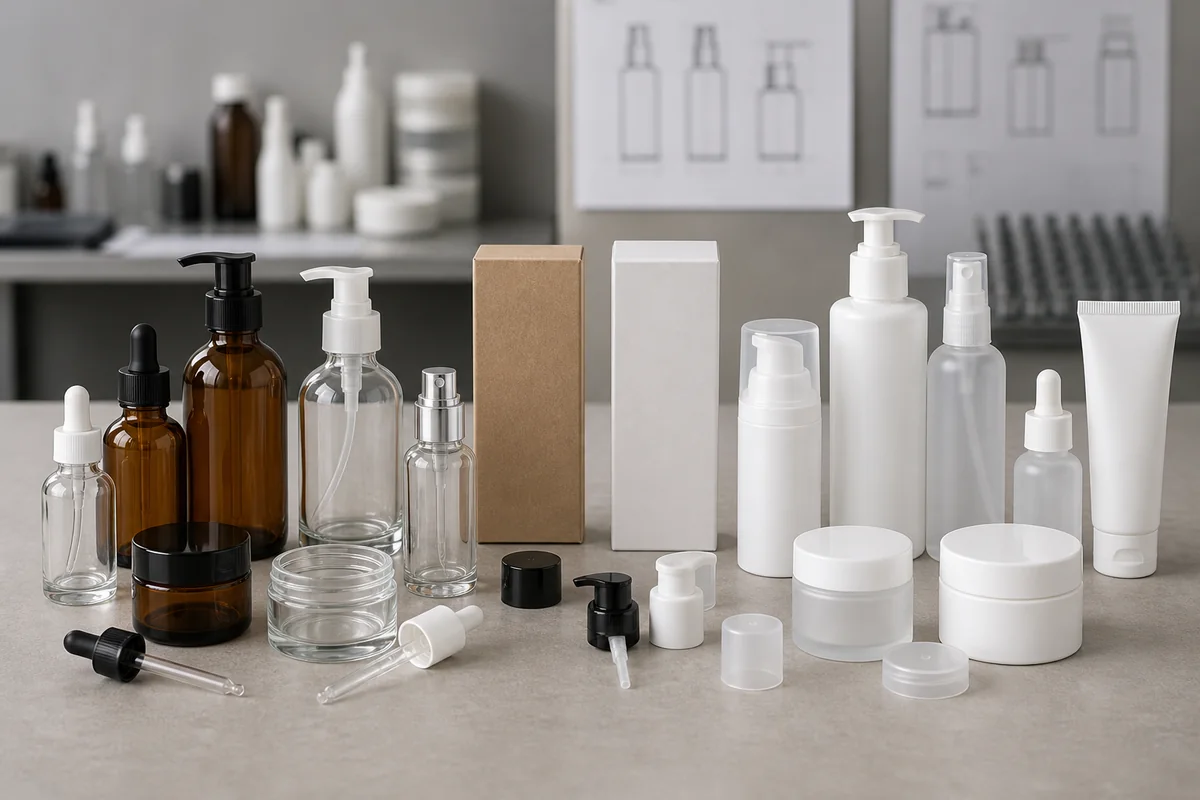

Cosmetic packaging compatibility testing matters because a bottle that looks correct can still leak, interfere with the formula, fail to dispense, or lose its decoration during storage and distribution. A finished cosmetic pack may combine glass, coatings, inks, collars, liners, pumps, springs, dip tubes, pipettes, bulbs, and adhesives. The formula and each product-contact component must be evaluated together under intended filling, storage, transport, and use conditions. A supplier demonstration using water or an empty-bottle fit check does not establish compatibility with the actual cosmetic formula.
The practical response is not simply to “test more.” Brands need a controlled evidence record linking the exact formula version, bottle and closure item codes, assembly method, exposure conditions, acceptance criteria, individual results, and change controls. This matters especially when a brand introduces a new formula, decorates an established bottle, changes a component supplier, or expands into new distribution channels.
Core viewpoint: Compatibility is a relationship among a specific formula, specific packaging components, a defined assembly process, foreseeable distribution and use, and agreed acceptance criteria. Change any node and the previous conclusion may need review.
Formulas Are Creating More Packaging Questions
Beauty formulas vary widely in viscosity, volatility, pH, solvent content, oil composition, surfactant behavior, particles, fragrance load, and sensitivity to light, oxygen, or contamination. Those characteristics can affect dispensing, sealing, materials, decoration, and the user experience. A pump that works with water during a supplier demonstration may not prime or dose the final lotion. A dropper that appears suitable may interact differently with an oil or active serum over time.
No general category label can prove compatibility. “Glass bottle,” “cosmetic pump,” or “oil-resistant gasket” does not identify a validated assembly. Although glass may be relatively resistant to many formulations, a product can contact the closure, liner, dip tube, pump flow path, pipette, or bulb. A change in formula viscosity may also affect dispensing without visibly changing the bottle. Buyers should assess the selected complete packaging system with the actual formula rather than extrapolate from another product’s test report.
The growing business importance of this discipline is tracked in the Packaging Trends & Insights hub, while test principles, interfaces, and failure mechanisms belong in the Packaging Technology hub.
Brands can review test structure in the cosmetic packaging compatibility testing guide. This article addresses why the discipline is becoming strategically important rather than prescribing one universal protocol.
Packaging Systems Have More Components and Interfaces
Each interface can fail differently. The bottle and closure must fit dimensionally and create the intended seal. A gasket or liner must remain suitable after formula exposure. A pump must prime and dispense the actual formula; its dip tube must suit the bottle geometry and target fill level. A decorative collar must not interfere with actuation, and a cap must protect the dispenser without scraping the finish. Final bottle and closure compatibility should be confirmed using the selected components and physical samples before bulk production.
The exact cause of leakage is often distributed across the system. It may involve tolerances, neck damage, seal compression, closure application, component mismatch, formula interaction, heat, orientation, or impact. The article Why Cosmetic Bottles Leak explains why a visible leak should not be diagnosed from one component alone.
Brands that source bottle and closure separately need strong interface control. Neck and closure dimensions should be based on verified drawings and production samples. The bottle and closure tolerances guide shows why nominal names and visual fit are not sufficient.
Failure Mode: A Similar-Looking Pump Is Not the Same Assembly
Consider a proposed supplier substitution: the replacement pump fits the bottle neck, but its liner material, internal flow path, or dip-tube geometry differs. The original leak and dispensing results cannot automatically be transferred to that pump.
Compare both controlled component specifications, assemble the candidate on the selected bottle, and evaluate it with the actual formulation. Look for loss of seal, changes in priming or dose, and visible material change over the defined exposure. Do not transfer prior compatibility approval solely because the two pumps look alike.
Premium Decoration Adds Functional Interfaces
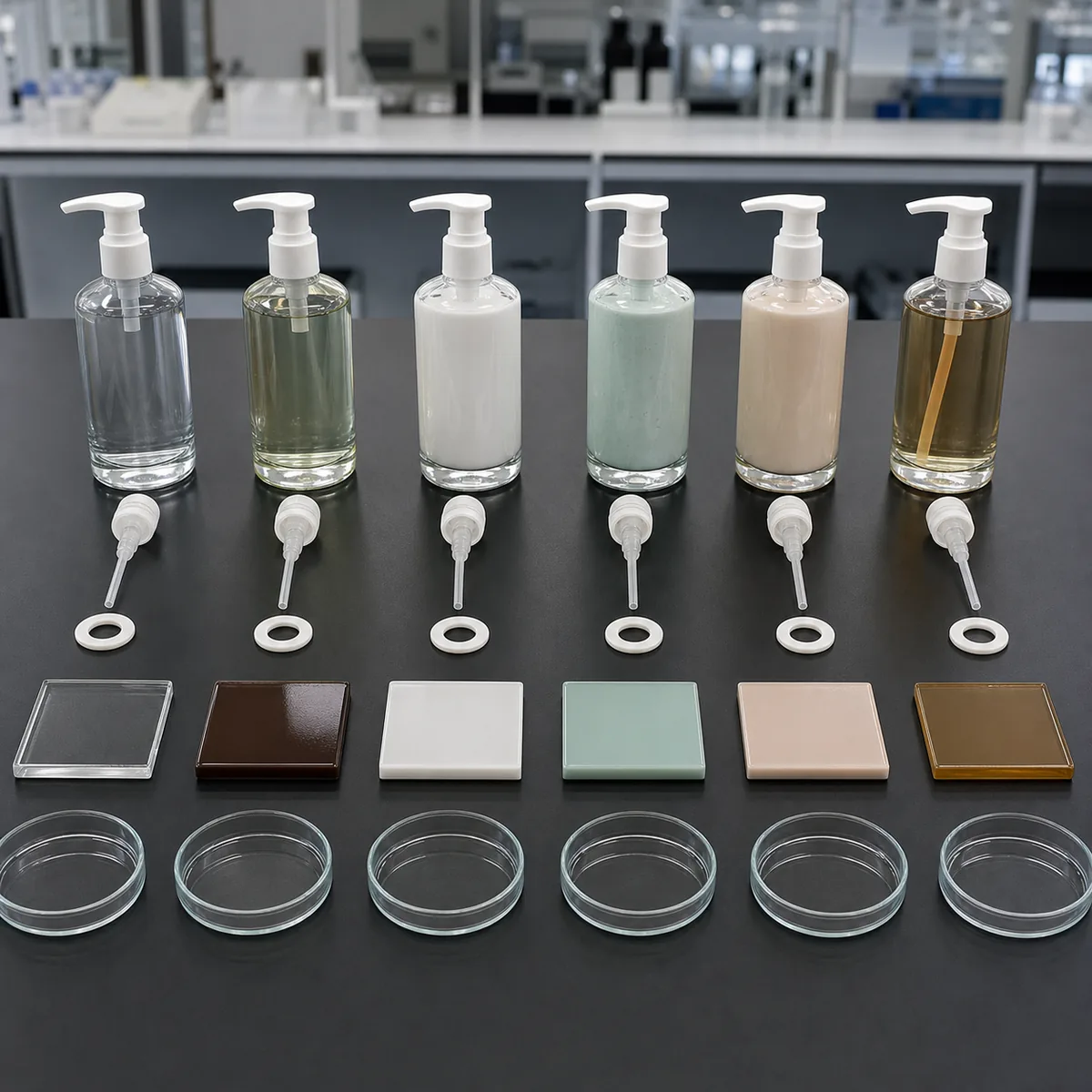
Decoration is often evaluated visually, but it also experiences filling, capping, wiping, packing, transport, consumer handling, and formula contact from spills or wicking. A coating may soften, discolor, lose adhesion, or mark under contact conditions. Printing or foil may abrade. A decorated neck may interfere with a collar. A cap may rub a shoulder finish.
Layered decoration can be particularly sensitive because the complete stack has to perform. A foil that adheres to one coating does not prove it will adhere to another color or curing system. A finish that survives dry abrasion may behave differently after formula exposure. Production-representative decorated samples should therefore be included where decoration is part of the final pack.
This is not an argument against premium finishing. It is an argument for making decorative durability part of compatibility evidence. A beautiful sample that cannot survive the intended filling and use cycle is not an approved package.
Global Distribution and E-Commerce Add Stress
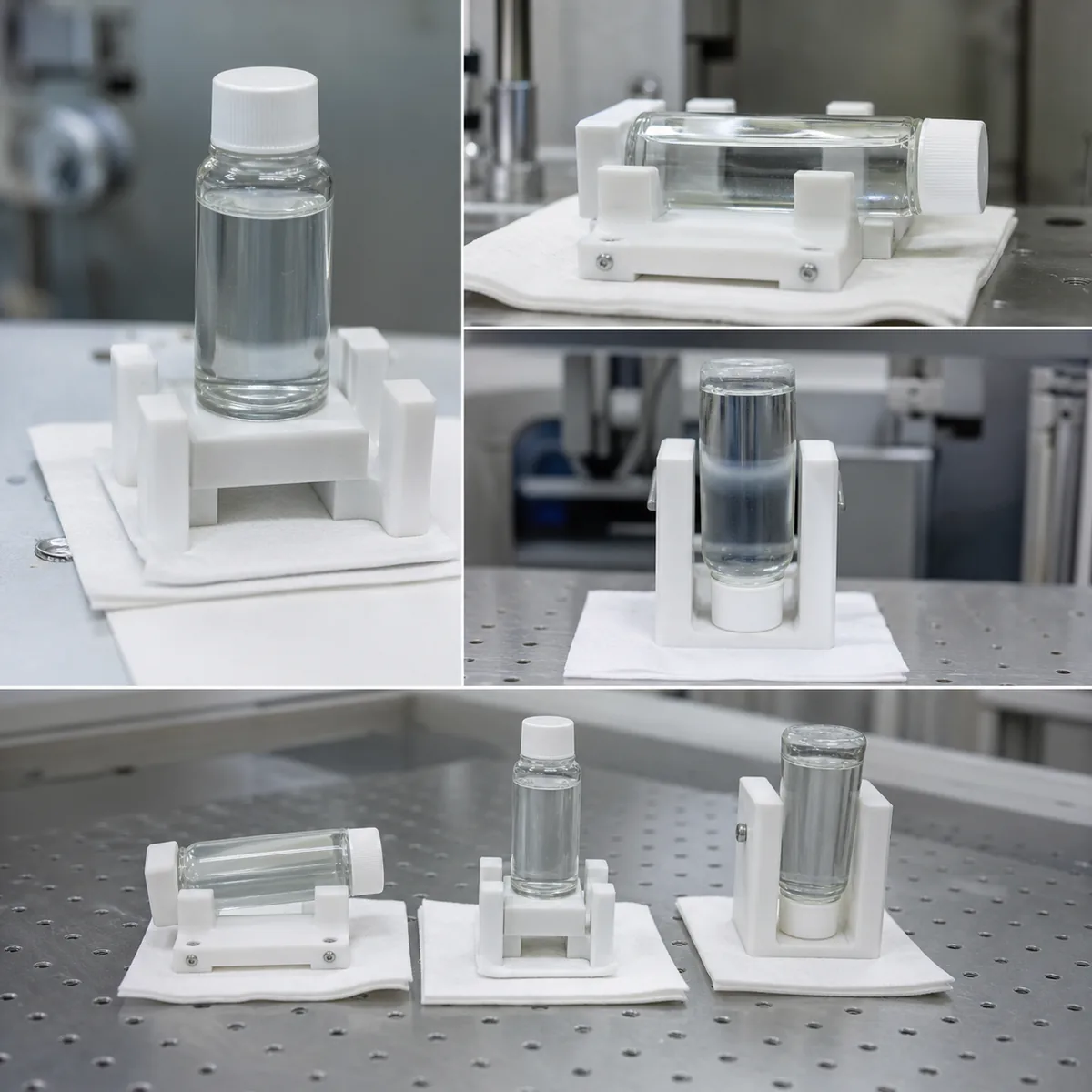
A package may leave the filling line upright and spend part of distribution sideways or inverted. It may experience vibration, impacts, compression, elevated or low temperatures, changes in pressure, repeated handling, and last-mile parcels. The relevant conditions vary by route, season, transport mode, secondary packaging, and market; a universal test setting should not be invented.
Compatibility testing becomes more important as brands sell through more channels because the complete packed product must tolerate foreseeable conditions. A formula-package combination that appears stable on a desk may leak after heat exposure changes seal behavior, or after vibration allows product to reach an interface continuously. A heavy bottle may damage adjacent components if not restrained. A pump cap may detach in a parcel.
The test program should begin with a documented distribution profile and specific failure questions. Packaging and logistics teams should review foreseeable bottle orientations, packed-product handling, and transport conditions alongside formulation specialists. Results should identify the tested orientation, sample and component lot, exposure, time point, and leak location where relevant.
For distribution testing of the packed shipping unit, ASTM D4169, Standard Practice for Performance Testing of Shipping Containers and Systems, describes a framework for evaluating shipping units against distribution hazards. It is not a chemical-compatibility standard and does not by itself validate a cosmetic formula or bottle closure.
Refillable Systems Increase the Evidence Boundary
Refill architecture adds repeated assembly, wear, residue, cleaning or replacement decisions, and possible user error. A dispenser retained across refills has a longer contact and use history than a single-use component. A cartridge must seat reliably each time. Threads and seals may be opened and closed repeatedly. Decoration on handling surfaces may face more abrasion.
The evidence must match the intended refill claim. If a brand specifies a number of refill cycles, the retained and replaced components should be assessed across a corresponding defined cycle model rather than checked only once. If only the decorative outer shell is retained and the product-contact cartridge is replaced, the testing boundary differs. The broader operating issues are discussed in refillable cosmetic packaging basics.
Brands should avoid unlimited durability or hygiene claims. Define the intended cycle, formula, cleaning instruction, retained parts, replaced parts, and likely misuse. The result is a specific use case, not a permanent endorsement of every refill behavior.
Supplier and Component Changes Can Invalidate Fit
A common compatibility failure occurs after the initial launch. A supplier changes a material, production location, subcomponent, mold, spring, gasket, coating, or process. Purchasing approves a similar alternative to protect supply. Artwork changes increase decoration coverage. The formula is reformulated. The bottle looks the same, so the team assumes the earlier test still applies.
Compatibility evidence is version-specific. A controlled change process should ask whether the change affects formula contact, dimensional fit, sealing, dispensing, decoration, assembly, distribution, or use. The answer determines whether document review, focused bridging tests, or broader revalidation is appropriate.
This is why procurement data matters to technical performance. Exact item codes, approved supplier sites, drawings, material declarations where applicable, and sample versions must be retrievable. A generic description such as “white lotion pump” cannot protect a validated system.
Regulatory and Safety Expectations Favor Better Evidence
In the European Union, Regulation (EC) No 1223/2009, Annex I, Part A, point 4, requires the cosmetic product safety report to address relevant packaging-material characteristics, particularly purity and stability.
The European Commission’s Annex I guidelines discuss potential release of substances from packaging into a formulation and possible product deterioration through contact.
In the United States, the FDA explains that cosmetic firms are responsible for marketing safe products and that it does not prescribe one universal set of tests for every cosmetic.
These sources support risk-based evidence; neither makes a generic supplier certificate a guarantee for the final product.
Regulations and guidance should be interpreted for the exact market by qualified professionals. Packaging testing does not replace a cosmetic safety assessment, good manufacturing practice, microbiological work, stability studies, or legal review. It supports them by documenting how the selected package behaves with the selected product under defined conditions.
Readers can use the cosmetic bottle closures guide to understand closure roles and review existing caps and closures. Selection still requires product-specific drawings, samples, and validation.
Testing Reduces Late-Stage Risk Only When Decisions Are Clear
A test without predefined acceptance criteria can postpone disagreement rather than reduce risk. If one bottle leaks after heat and orientation exposure, the team needs a recorded decision on that sample and an investigation of the failure location. If a pump stops priming or its delivered amount changes, the brand must decide what performance is acceptable for its actual formula and intended use. Those decisions belong in the protocol before results arrive—not in a retrospective explanation of why an unexpected outcome should count as a pass.
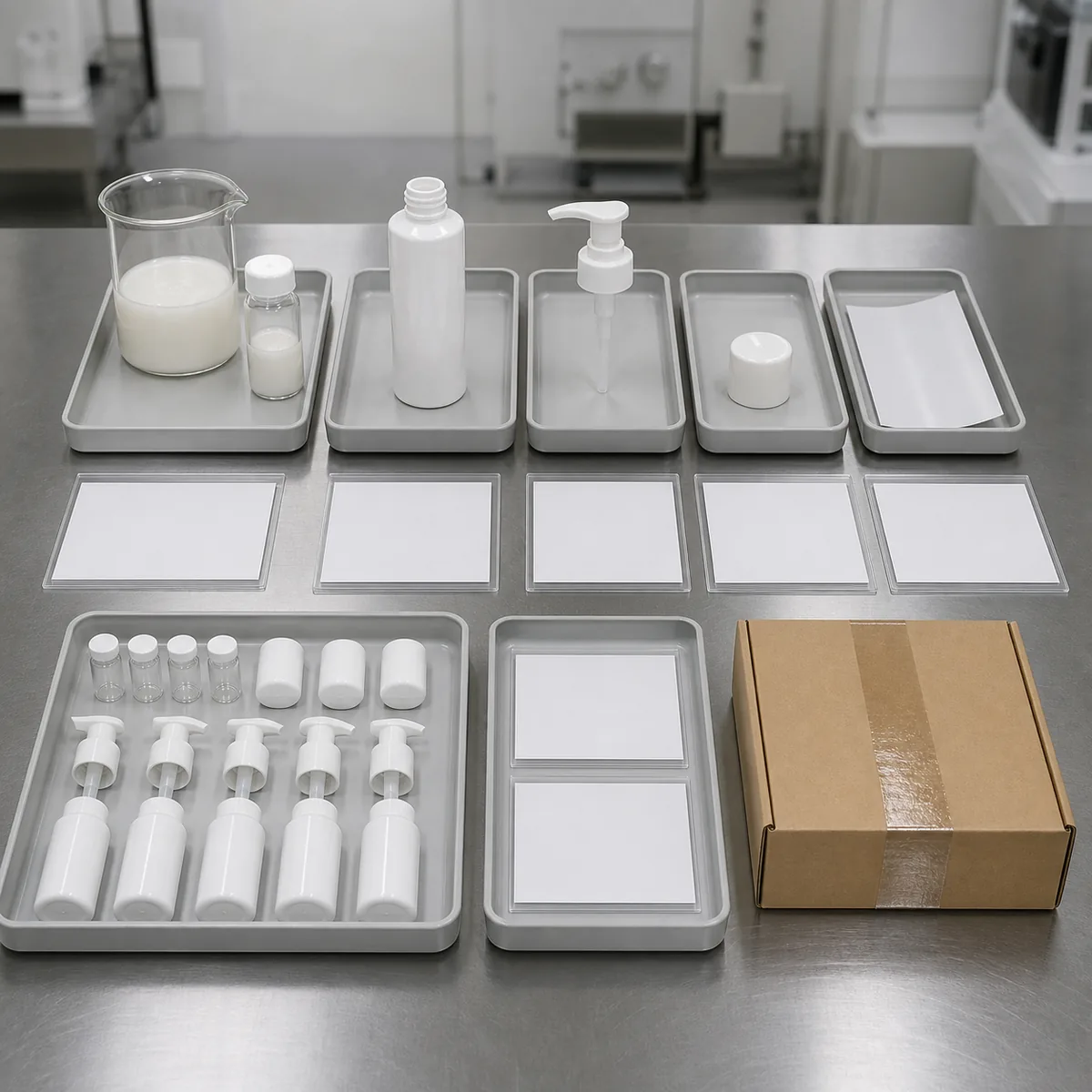
Use production-representative components and record the formula version, fill level, bottle and closure item and lot, application method, assembly setting where relevant, decoration version, exposure condition, orientation, time point, observation method, and sample identity.
Select temperatures, durations, sample quantities, limits, and methods for the product’s risk profile and market. There is no universal accelerated-storage condition that establishes compatibility for every cosmetic package. Compare findings with an appropriate baseline and investigate individual failures rather than relying only on averages.
Which Tests Answer Which Packaging Questions?
Agree on the failure being investigated before selecting a method. Heat exposure or a vacuum check alone cannot establish overall packaging compatibility. The following checks may be relevant; the exact conditions, measurements, sample plan, and pass/fail limits should be set by the brand and qualified testing partners for the finished product.
| Evaluation | Question It Can Address | What It Cannot Establish Alone | Buyer Action |
|---|---|---|---|
| Formula-contact storage, with suitable real-time and accelerated conditions | Changes in formula appearance, odor, mass, or contact-material condition; potential material interactions requiring further analysis. | A universal shelf life, absence of migration, or safety under every storage condition. | Use the actual formula and exact contact components; refer suspected migration or formula change to qualified analytical and safety specialists. |
| Seal and orientation checks, with pressure or vacuum exposure where justified | Leaks at the selected neck, liner, gasket, pump, or other interface under defined conditions. | Formula stability or reliable dispensing over the intended use period. | Record assembly conditions, fill level, orientation, leak location, and results for each sample. |
| Dispenser functional evaluation | Priming, delivered amount, residual pickup, and operation with the selected formula and bottle geometry. | Chemical compatibility of every internal component merely because the pump actuates. | Confirm the actual pump, dip tube or pipette, closure, and fill configuration together. |
| Decoration and handling evaluation | Coating, printing, or foil change after foreseeable formula contact, wiping, filling, and handling. | Durability of an untested color, coating, or process combination. | Approve the fully decorated physical sample and relevant exposure criteria. |
| Distribution evaluation of the packed product | Damage or loss of containment during defined handling and transport stresses. | Long-term formula and contact-material compatibility. | Match the protocol to the actual shipper, route, and distribution channel. |
Manufacturer insight: A “pass” should be written as a bounded statement: this formula version, in these exact component versions, assembled by this defined process, met these criteria under these exposures. That sentence is far more useful than a green cell labeled compatible.
Build a Compatibility Evidence Graph
An evidence graph connects every conclusion to its inputs. It can be maintained in a controlled spreadsheet, product-lifecycle system, quality platform, or another suitable record. The tool is less important than the relationships:
| Evidence node | Minimum identity | Why it matters |
|---|---|---|
| Formula | Name, version, batch, key physical profile | Prevents transferring results after an unreviewed reformulation |
| Primary pack | Bottle/jar item, drawing revision, lot, supplier/site | Defines the dimensional and material article tested |
| Closure/dispenser | Complete BOM or controlled item, revision, lot | Captures seals, contact path, fit, and function |
| Decoration | Process stack, artwork/color version, sample lot | Connects appearance and durability to the final system |
| Assembly | Method, equipment/settings where relevant, operator controls | Separates component suitability from assembly variation |
| Exposure | Condition, orientation, duration, distribution/use rationale | Defines what environment the conclusion covers |
| Acceptance | Pre-agreed functional, visual, leakage, or safety-related criteria | Makes the decision consistent and auditable |
| Change trigger | Formula, supplier, material, geometry, process, market, or claim change | Shows when evidence must be reviewed or renewed |
What Beauty Brands Should Institutionalize
- Create cross-functional ownership across formulation, packaging, quality, regulatory, filling, procurement, and logistics.
- Freeze the formula and packaging versions used for each study.
- Define foreseeable storage, distribution, handling, and use conditions for the target markets.
- Set acceptance criteria before reviewing results.
- Use production-representative components and decoration whenever possible.
- Record individual samples and failures rather than reporting averages alone.
- Investigate mechanisms; do not fix every leak by changing only the visible component.
- Create change triggers and bridging-test rules before post-launch substitutions occur.
- Retain reference samples and controlled documentation for repeat orders.
FOLOVER PACK can help coordinate selected glass containers, pumps or droppers, closure matching, decoration references, component information available for the project, and production-representative packaging samples. The brand, formulator, and qualified testing or regulatory partners should define the actual formulation, test protocol, acceptance criteria, safety assessment, and destination-market requirements. A supplier’s fit check or sample review is not a substitute for a completed compatibility study.
Frequently Asked Questions
Is cosmetic packaging compatibility testing legally required?
Requirements vary by market and product. EU cosmetic safety documentation includes relevant packaging-material characteristics, and responsible companies need adequate safety evidence. Brands should obtain market-specific regulatory advice; one generic test is not a universal legal solution.
Can a supplier compatibility certificate replace brand testing?
Supplier information can support material selection, but it usually cannot prove performance with the brand’s exact formula, complete pack, filling process, distribution route, and use conditions. The evidence boundary should be reviewed carefully.
When must a compatibility study be repeated?
Review it when the formula, bottle, closure, contact material, supplier, manufacturing site, decoration, assembly process, fill level, distribution profile, intended use, or claim changes. The extent of retesting depends on the change and prior evidence.
Does passing a leakage test prove full compatibility?
No. Leakage is one outcome. Compatibility can also involve dispensing, material change, swelling, corrosion, discoloration, odor, formula stability, decoration durability, residue, user handling, and other project-specific criteria.
Conclusion: Compatibility Is a Living Evidence System
Cosmetic packaging compatibility testing matters because a change in formula, closure, decoration, transport route, refill design, or supplier can change how the same-looking package performs. A defensible approval is tied to the exact formula, component revisions, assembly, exposures, and agreed limits—not simply to a bottle type or an earlier “pass.”
Buyer decision: Approve a package only after the complete selected assembly has been evaluated with the actual formulation under intended storage and use conditions. When a component or process changes, review which prior evidence remains applicable and identify any required targeted retesting before bulk-production approval.
For a packaging review with FOLOVER PACK, share the bottle model, formula type and viscosity, chosen closure or dispenser, decoration, target order quantity, and intended markets. We can discuss component coordination and production-representative samples; final product safety and compatibility validation remain with the brand and its qualified partners.
Related Blog Articles
- Cosmetic Packaging Compatibility Testing
- Bottle and Closure Tolerances and Compatibility
- Cosmetic Packaging Compliance Basics
Primary sources: EU Cosmetic Products Regulation, Annex I; FDA: Product Testing of Cosmetics; FDA: Microbiological Safety and Cosmetics; European Commission: Guidelines on Annex I; ASTM D4169: Shipping Containers and Systems.