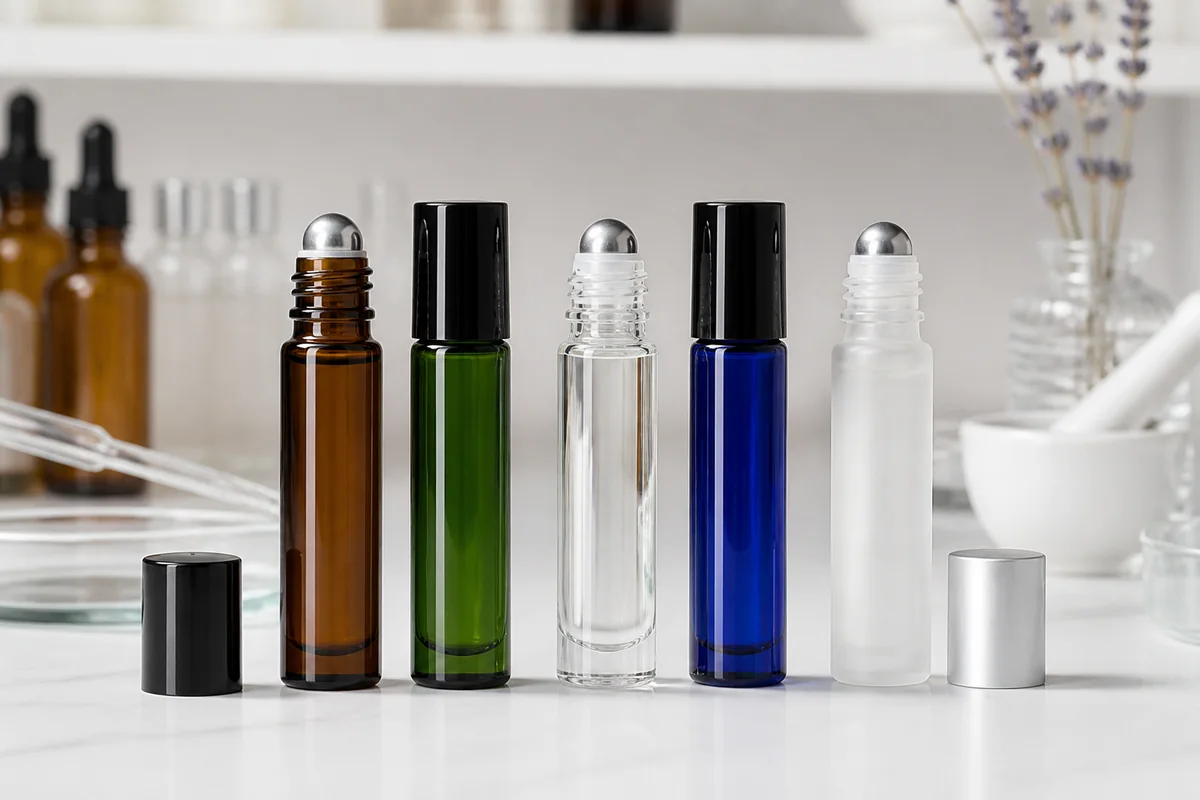
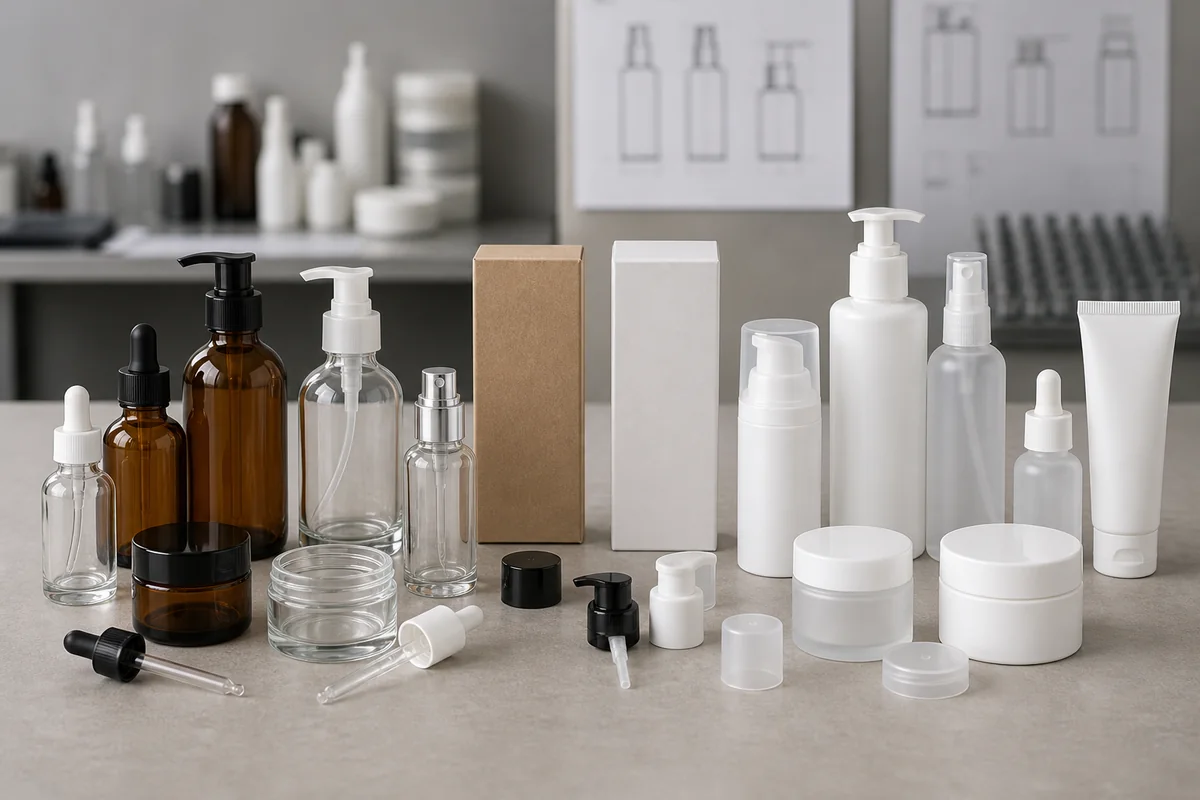
Glass vs plastic cosmetic packaging should be compared as complete, filled packaging systems, not judged by material alone. Glass can deliver rigidity, a distinctive tactile finish and a viable long-life container for some projects; plastic can reduce container weight and support impact-resistant or integrated dispensing formats. Neither choice guarantees lower environmental impact, formula compatibility or real-world recyclability.
For buyers, the practical question is which specific bottle, closure, decoration and transport pack meets the same product requirements with verifiable trade-offs in the intended market. For the broader context, see whether glass cosmetic packaging is sustainable as a complete system.
Direct Answer
Neither glass nor plastic is universally the more sustainable cosmetic packaging material. Glass may be appropriate when rigidity, established glass recovery or a validated reuse system matters. Plastic may be appropriate when low weight, impact resistance, squeezability or integrated dispensing is essential. Buyers should compare complete packages that meet the same functional requirements, using evidence for the actual configuration and destination market.
FOLOVER Manufacturer Insight
FOLOVER PACK specializes in custom glass cosmetic packaging and can coordinate bottles, jars, pumps, droppers, caps, decoration, samples and export-oriented protection. That experience is useful for defining a credible glass configuration and testing it against the project brief. It does not justify claiming that glass is automatically superior to every plastic alternative.
A serious comparison should use verified specifications from both candidate supply chains. FOLOVER can support the glass side with available drawings, component matching, decoration options, physical samples and quality controls. The brand should combine those inputs with plastic supplier data, filling tests, logistics information, market recovery evidence and an appropriate lifecycle method where an overall environmental claim is intended.
Before approving a glass option, FOLOVER recommends fixing the selected bottle and neck finish, matching the actual pump, dropper or cap, and checking the assembled pack with the intended formula. The procurement risk is comparing a complete plastic dispenser against an empty glass bottle and adding the glass closure, protective packing and decoration costs only after the material decision. Compare both finished configurations at the same approval stage.
Start with the same functional unit
A fair comparison begins with what the packaging must deliver, not with two empty containers that merely look similar. A useful functional unit might be “one sellable 30 ml serum package that protects and dispenses the formula through its intended shelf life and distribution route.” That definition brings the bottle, closure, dose, product loss, decoration, carton and shipment conditions into scope.
If a glass dropper bottle is compared with a plastic airless bottle, the packages do not dispense in the same way. If the plastic pack improves evacuation for a sensitive formula, or the glass pack supports a refill system used repeatedly, that functional difference matters. Conversely, comparing a heavy luxury glass bottle with the lightest possible plastic bottle may exaggerate weight differences if the two products target different consumer experiences and performance requirements.
Lifecycle assessment uses defined system boundaries and comparable functions. The European Commission’s Environmental Footprint methods assess environmental impacts across the lifecycle and multiple impact categories, rather than ranking materials by weight alone. Buyers do not need a full LCA for every early concept, but should use consistent functions, transparent assumptions and comparable evidence. A full comparative environmental claim requires more than this screening exercise.
Material production: different inputs, no automatic conclusion
Container glass is produced through high-temperature melting and forming. Plastic packaging begins with polymer feedstock production followed by processes such as injection molding, extrusion blow molding or injection stretch blow molding, depending on the resin and design. Both routes consume energy and materials; actual impacts depend on plant technology, energy mix, recycled input, yield, container design and production scale.
It is risky to publish a generic claim that one material “uses less energy” or has a fixed carbon advantage. An industry-average dataset may not represent the selected supplier, color, resin, recycled content or manufacturing region. An LCA result also depends on allocation rules, transport, end-of-life assumptions and the impact categories chosen. Carbon is important, but water use, resource use, emissions, litter risk and product loss may change the conclusion.
The buyer should request product-specific weight and recycled-content evidence, identify the manufacturing location, and document the data year and source. If supplier-specific lifecycle data are unavailable, communicate narrower attributes instead of turning a screening estimate into a public superiority claim.
Material weight and transport efficiency
Plastic containers are commonly lighter than functionally similar glass containers, although the exact ratio varies widely. Lower unit weight can reduce the mass moved between component manufacturing, filling, warehousing and distribution. Plastic packages may also require less separation against impact and may support denser packing for some shapes. These are real potential advantages, but they must be calculated for the final pack.
Glass weight is not only the nominal bottle weight. Protective dividers, molded trays, stronger cartons and lower pack density may add to the logistics system. At the same time, protection should not be dismissed as waste: preventing breakage avoids losing the bottle, formula, dispenser, secondary packaging and replacement shipment. A transport comparison should include damage results, not merely freight mass.
Ask each supplier for measured component weight, assembled filled-pack weight, units per shipper, units per pallet and the proposed protective pack. Do not assume a freight or carbon saving until both pack-outs have been compared on the same route.
For both materials, lightweighting must preserve required performance. Thin glass can face manufacturability or strength limits; thin plastic walls can affect paneling, deformation, permeability, top load or consumer handling. The planned guide to lightweight cosmetic glass bottles will address how reduction changes design and validation rather than treating lower grams as an unconditional benefit.
Recyclability depends on format and market
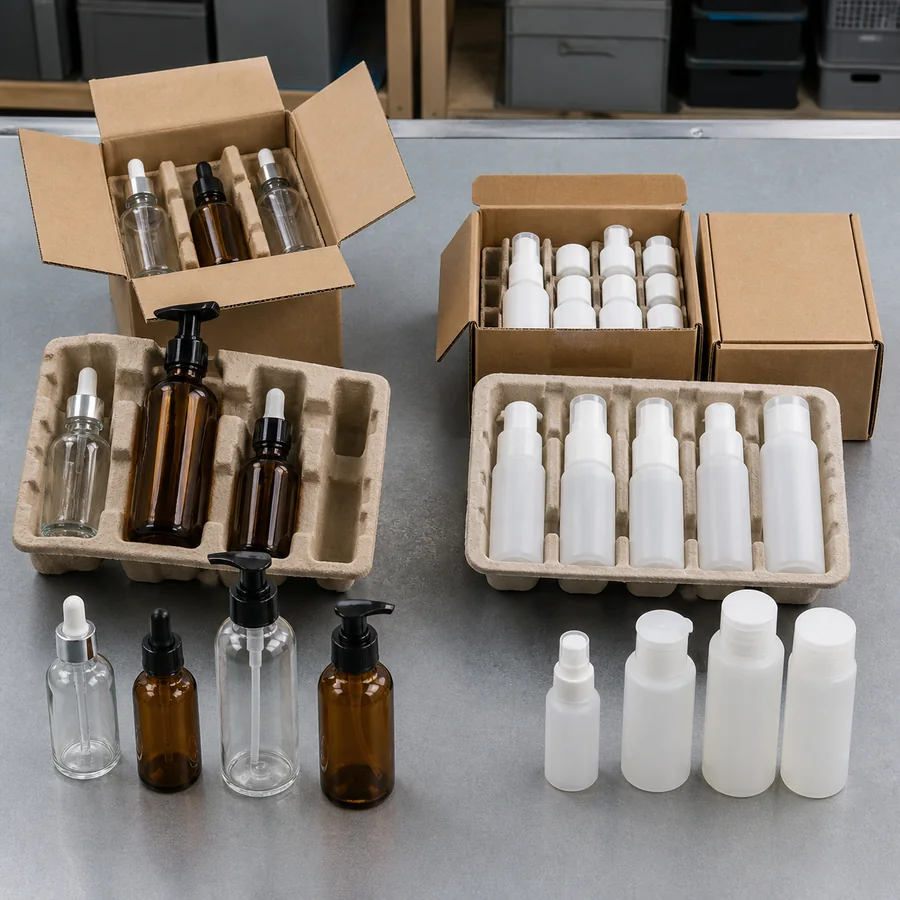
Glass has established recycling pathways in many markets, especially for accepted container formats and colors. Plastics follow resin- and format-specific routes: some bottles have established collection streams, while small components, pigmented parts, pumps, multilayer structures or uncommon resins may be difficult to capture or sort. Neither “glass” nor “plastic” is a complete recyclability statement.
Real-world recovery depends on collection access, consumer behavior, size, color, labels, coatings, residual formula, sorting technology and demand for the recovered material. A technically recyclable bottle may still be landfilled or incinerated where the appropriate system is unavailable. A bottle accepted locally may be separated from a closure that follows another route.
For products marketed in the United States, the US FTC Green Guides summary advises qualifying recyclable claims when suitable facilities are unavailable to at least 60% of consumers or communities where the product is sold. This is US marketing guidance, not an international recycling rate or a claim that 60% of cosmetic packs are recycled.
For multi-market brands, substantiate recyclability for the exact pack and destination rather than using one universal symbol or slogan.
Recycled content is material-specific evidence
Both glass and plastic packaging may incorporate recycled input when the material, quality requirements, supply and manufacturing process allow. For glass, recycled furnace input is commonly described as cullet. For plastics, terminology may distinguish post-consumer, post-industrial, mechanically recycled, chemically recycled or other defined sources. Those categories should not be blended without explanation.
More recycled content is not automatically equivalent to a better complete package. The percentage must refer to the exact component and production scope, and it should be supported by suitable supplier evidence. Recycled input can affect color, clarity, odor, mechanical properties, regulatory evaluation or processing, depending on the material and intended use. A closure can also have a different percentage from its bottle.
Buyers should record the claimed percentage, definition, calculation basis, component, supplier, manufacturing period and evidence. If the specification changes, the claim must be reassessed. Recycled content does not prove recyclability, and recyclability does not prove recycled content.
Product protection can outweigh a material shortcut
A cosmetic package first has to protect and dispense the product. Glass can provide a rigid, dimensionally stable vessel and useful barrier performance for many applications, subject to the exact composition, closure and formula. Plastic can offer impact resistance, squeezability, design integration and, with suitable structures, useful barrier performance. Neither material can be approved from appearance alone.
Compatibility depends on formula ingredients, viscosity, headspace, neck finish, sealing geometry, gasket, pump path, dip tube or pipette, storage temperature, light exposure and intended duration. Plastic may interact with formulas through mechanisms that require testing; glass packages still contain closures, liners and decoration that can become the limiting component. The relevant package is the entire contact and dispensing system.
A thread size or nominal neck designation alone does not establish sealing: the selected closure, liner or gasket, neck geometry and dip tube or pipette must be checked on physical samples.
Product waste is part of the environmental outcome. Leakage, evaporation, poor evacuation, breakage, pump failure or formula degradation can discard far more value than a small component saving. The skincare packaging guide helps define functional requirements before a material decision is treated as sustainable.
Dispensing, breakage and formula loss
Glass is brittle and can break under impact, although container geometry, glass distribution, handling and protective packaging influence actual risk. Plastic is generally more impact resistant but can deform, scratch, stress crack or lose dimensional control under unsuitable conditions. A generic drop-test result cannot be transferred between designs, materials or filled products.
The dispenser often determines product evacuation and user behavior. A well-matched pump or airless system may reduce residual product for one formula, while a simple dropper may provide suitable dose control for another. Airless systems can be complex and multi-material; droppers and pumps can also combine multiple polymers, metal and elastomers. The comparison must include the closure, not only the vessel.
Run filled compatibility, leakage, dispensing, evacuation and transit tests under intended conditions. Record acceptance criteria before testing. If one option requires a substantially larger secondary pack or produces more rejects, include that evidence rather than assuming the nominally lighter or more recyclable vessel wins.
Record failures by component: an under-compressed seal may leak, an incorrectly cut dip tube may leave excessive product behind, and an incompatible pump path can alter dose or operation. Final bottle and closure compatibility should be confirmed using the selected components and physical samples before bulk production.
Reuse and refill potential
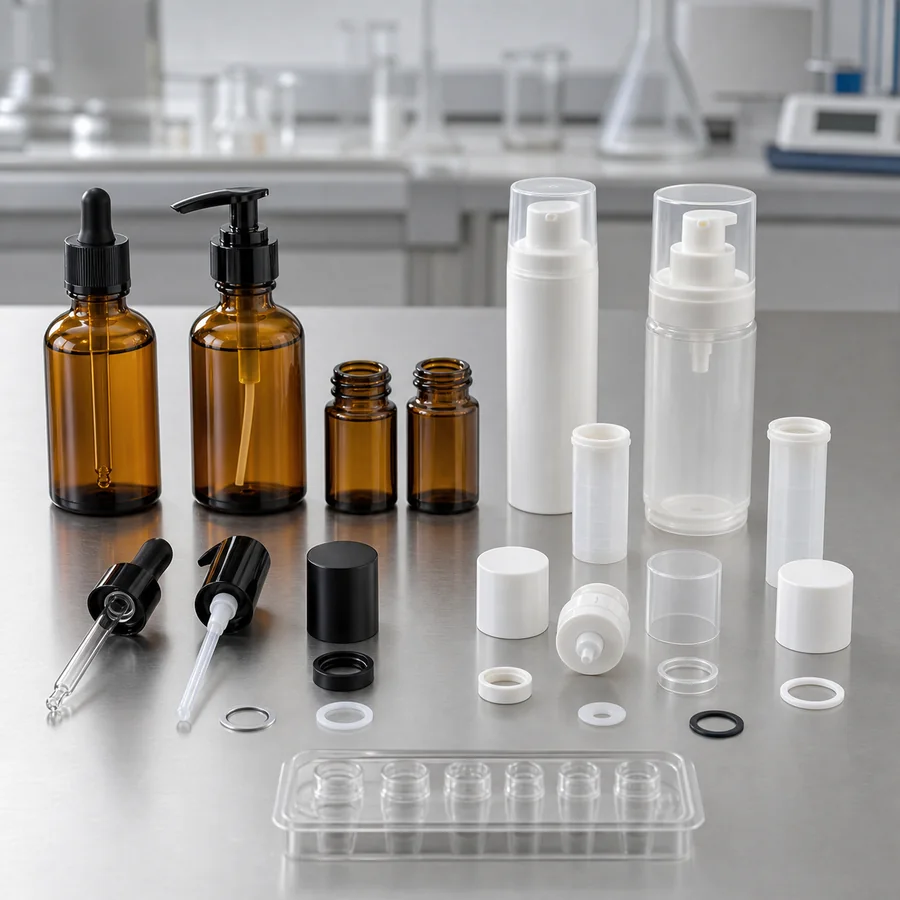
Both glass and plastic can be designed for reuse or refill, but durability and refillability are not synonyms. A credible system needs an available refill product or return route, compatible repeated assembly, appropriate cleaning or handling, clear instructions and performance over the intended number of uses. The refill pack itself, replacement components and reverse logistics also belong in the system boundary.
A heavier glass outer bottle may justify its initial material burden if it is genuinely retained and repeatedly used under a functioning system. A durable plastic outer pack may also support repeated use with lower initial weight. Which performs better depends on actual reuse, refill packaging, transport, washing where applicable, loss and replacement—not a promotional rendering.
A 2024 European Commission JRC lifecycle study compared single-use and multiple-use packaging in food-service and beverage scenarios and found that results varied with the case and impact category; return behavior, reuse count and washing also mattered. Its findings illustrate why scenario assumptions must be recorded, but its figures and break-even points must not be transferred directly to cosmetic refill systems.
Decoration and multi-material complexity
Glass can be colored, frosted, coated, printed, hot stamped, labeled or combined with decorative collars. Plastic can be colored in the resin, coated, metallized, labeled, sleeved, printed or molded with multiple layers or parts. These options influence appearance, identification, separation and recovery. The effect is process- and market-specific.
A minimally decorated glass bottle is not equivalent to a fully coated heavy glass bottle. A simple plastic bottle with a compatible closure is not equivalent to a multilayer airless package with metalized components. Buyers should compare the actual commercial decoration and dispensing assembly rather than idealized base materials.
For glass, approve the actual bottle, cap and decorated physical sample together: the same color specification can look different across coated glass, printed ink, plastic and metal parts.
Design simplification can help both sides: fewer unnecessary components, separable parts where users and systems can act on them, controlled color and coverage, right-sized labels, and clear disposal instructions. The planned guide to reducing cosmetic packaging material without sacrificing function will address this as an engineering task rather than a visual cleanup exercise.
FOLOVER can coordinate glass bottle decoration and finishing options such as coating, screen printing and hot stamping. Decoration feasibility and final color must be approved on a physical sample; do not assume a coating or metallized finish leaves a local recycling pathway unchanged. Check its effect with the destination-market recovery system.
Brand positioning and consumer expectations
Glass often communicates premium weight, clarity, permanence and traditional material value. Plastic can communicate portability, convenience, safety in wet environments and modern dispensing. These perceptions affect purchase and use, but they should not be confused with measured environmental performance.
A luxury brand may use a heavy glass base to create a deliberate tactile experience. If that feature is commercially essential, the sustainability strategy might focus on weight moderation elsewhere, refill design, decoration simplification or secondary-packaging reduction. A travel or salon product may favor plastic because impact resistance and low weight prevent loss and improve handling. Material choice should support the product proposition honestly.
Environmental claims must remain specific. The FTC Green Guides summary cautions against broad “green” or “eco-friendly” claims and requires a clear comparison basis for source-reduction claims. If a new bottle is lighter than a named previous model, state the measured difference, what was weighed and which components were included; do not infer a lower overall carbon footprint from bottle weight alone.
When glass may make more sense
Glass may be the stronger candidate when the formula and closure system are compatible, rigid premium presentation is central, the market has an effective glass recovery route, breakage can be controlled, and the weight is proportionate to the value delivered. It may also support a validated refill or long-life outer-pack design, depending on the system.
Glass can be attractive when transparency, color, surface decoration or perceived permanence matters and the brand can manage protective packaging and logistics. The available cosmetic and skincare glass packaging range provides a commercial starting point, but every bottle, closure and formula combination still requires project-specific verification.
Do not choose glass solely because consumers associate it with sustainability. Confirm unit weight, component construction, decoration, recycled-content evidence if claimed, transit performance and local end-of-life guidance.
When plastic may make more sense
Plastic may be the stronger candidate when low weight, impact resistance, squeezability, travel use, integrated dispensing or high shipment density is critical. It can reduce the need for breakage protection in some routes and can support designs that would be difficult or inefficient in glass.
The plastic decision still needs specificity. Resin, color, additives, layer structure, label, closure, pump and product residues can affect collection and recycling. A lightweight pack is not automatically recyclable, and an accepted resin code does not guarantee that the complete format will be captured and processed.
Brands should request exact material and component data, test formula compatibility and dispensing, and verify local end-of-life instructions. If a comparative environmental claim is planned, it needs a clear reference configuration and competent evidence—not an assumption that lower weight proves lower overall impact.
Glass vs plastic cosmetic packaging comparison table
| Decision factor | Glass packaging tendency | Plastic packaging tendency | What the buyer must verify |
|---|---|---|---|
| Unit weight | Often higher; varies with geometry and glass distribution | Often lower; varies with resin, wall and structure | Measured complete-pack weight and performance |
| Transport | May need more impact protection | May improve shipment density and breakage resistance | Route, pack-out, pallet use and damage data |
| Barrier and compatibility | Useful for many formulas, but closure remains critical | Highly resin- and structure-dependent | Filled compatibility and shelf-life program |
| Recyclability | Established pathways in many markets for accepted containers | Format, resin, color and local stream are decisive | Exact configuration and destination infrastructure |
| Recycled content | Cullet may be used subject to product and process conditions | Availability and suitability vary by resin and application | Component-specific percentage, definition and evidence |
| Refill/reuse | Rigid outer pack may support reuse | Durable low-weight systems are also possible | Actual refill route, use count and complete system |
| Decoration | Many surface options; coverage can affect recovery | Many molding and surface options; complexity can affect recovery | Final materials, separability and local treatment |
| Product loss | Breakage and closure performance require control | Deformation, permeability and dispensing require control | Leakage, evacuation, transit and shelf-life results |
| Cost and MOQ | Glass price depends on bottle, finish, closure, decoration and packing | Plastic price depends on resin, tooling, format, closure and volume | Quote like-for-like assembled packs; confirm supplier-specific minimums and tooling scope |
| Use-case fit | Rigid bottles and jars where handling and closure performance are validated | Squeezable, lightweight or integrated-dispensing formats where validated | Actual formula, intended use, filling line and complete assembly |
The table is a screening tool, not a universal score. Each row can change with a different bottle, resin, supplier, formula or market. An evidence-led sustainable cosmetic packaging scorecard should preserve those conditions rather than hiding them behind one unexplained total.
A buyer method for comparing real configurations
First, write one functional brief for both candidates. Include fill volume, formula, dosage, use environment, shelf life, filling conditions, distribution route, target market, consumer handling and required brand cues. Second, freeze the exact bottle, closure, label, decoration, carton and transport configuration for each option.
Third, collect comparable data: component weights, material definitions, recycled-content evidence, production locations, units per carton and pallet, protection materials, test results and local collection assumptions. Fourth, test compatibility, sealing, dispensing, evacuation and transit. Fifth, model realistic single-use or refill scenarios without inventing reuse rates.
Finally, compare more than carbon. Record material use, logistics, product protection, recovery, litter risk where relevant, water or washing in reuse systems, and data confidence. Assign owners to evidence gaps. Use the FOLOVER packaging products overview to define the glass system, then obtain equivalent controlled data from every alternative supplier.

Worked Buyer Scenario
Illustrative decision scenario, not a FOLOVER customer case or test result: a brand is comparing two 50 ml skincare formats. Option A is a glass bottle with a pump, paper label, carton and protective divider. Option B is a plastic airless pack with cap and a smaller carton. Both must deliver the required dose, protect the actual formula over its intended shelf life and withstand the same e-commerce route.
The buyer first obtains actual component and shipper weights, plastic resin specifications, glass-and-closure specifications, quoted minimums and complete pack prices. Physical samples are then evaluated for filled compatibility, dose, evacuation, leakage and transport protection. A lighter Option B may reduce shipment mass, while Option A may meet a brand requirement for a rigid glass presentation. Neither observation demonstrates a lower lifecycle impact. The decision changes if testing reveals leakage, formula loss, additional protective packing or an operating refill system; any environmental comparison must use the measured results rather than assumed breakage rates or refill cycles.
Pre-Selection Checklist
Before selecting a material or approving bulk production, obtain and confirm the following for each candidate packaging system:
- Approved packaging specification: Complete component list, material identification, bottle dimensions, closure configuration, decoration requirements and target filled-pack weight.
- Supplier quotation: Complete assembled-pack cost, component-specific MOQ, tooling requirements where applicable, protective packing and freight assumptions.
- Physical sample approval: Selected bottle and closure samples evaluated with the actual formulation for compatibility, sealing, dispensing, evacuation and intended storage conditions.
- Distribution validation: Agreed carton configuration, units per shipper and pallet, transport-test requirements and acceptance criteria for breakage, leakage or deformation.
- Environmental evidence: Component-specific recycled-content documentation where claimed, destination-market recycling guidance and the assumptions supporting any comparative lifecycle assessment.
- Refill system approval: If refillability is claimed, verify the available refill format, repeated assembly performance, cleaning or handling requirements and realistic reuse assumptions.
- Bulk-production reference: Retain approved component specifications, decorated samples, test records and an agreed change-control procedure for subsequent orders.
Frequently Asked Questions
Is glass more eco-friendly than plastic?
Not universally. Glass and plastic have different production, weight, protection, reuse and recovery profiles. The result depends on the exact commercial packages, route, use pattern and market infrastructure. A general material preference is not a lifecycle conclusion.
Is plastic lighter than glass?
Plastic cosmetic containers are commonly lighter than functionally similar glass containers, but the exact difference varies. Compare the complete filled-pack system, including closures, cartons, dividers and damage performance.
Can both glass and plastic cosmetic packaging be recycled?
Some formats can be recycled where suitable collection and processing exist. Acceptance depends on glass color and decoration or plastic resin, color and format, plus closures, labels, residues and local infrastructure. Check the exact configuration and market.
Which material is better for refillable packaging?
Both can support refill systems. The better option depends on durability, refill design, consumer participation, cleaning or handling, replacement rate, refill-pack burden and logistics. Refillability needs an actual available system, not just a reusable-looking container.
Does packaging weight affect carbon footprint?
Weight can affect material use and transport, but it is not the only variable. Manufacturing inputs, pack density, route, product protection, recycled content, reuse and end-of-life assumptions also influence lifecycle results.
Should luxury brands always use glass?
No. Glass can provide premium tactile and visual qualities, but luxury positioning can also be achieved with well-designed plastic or mixed systems. The material should fit formula protection, use, logistics, brand value and substantiated sustainability goals.
Official Sources Reviewed
The following official resources support the comparison method and marketing-claim boundaries. The JRC packaging-monitoring data mainly reflect food and beverage packaging across surveyed EU countries; they are context, not cosmetic-bottle weight, breakage or recycling rates. No supplier-specific performance or lifecycle figure is asserted for the glass or plastic candidates in this article.
Conclusion
Choose glass or plastic cosmetic packaging by comparing complete configurations that meet the same product requirements. Glass may be appropriate for a validated rigid, decorated or reusable packaging system; plastic may be appropriate when low weight, impact resistance or integrated dispensing is essential. Neither material should receive a sustainability claim without evidence for the actual package and intended market.
For a glass-packaging RFQ, share your formula type, target fill, proposed closure, decoration, destination market and planned shipping route. FOLOVER PACK can help define the glass option and coordinate component matching and physical samples for comparison with independently specified alternatives. Request a Quote.