
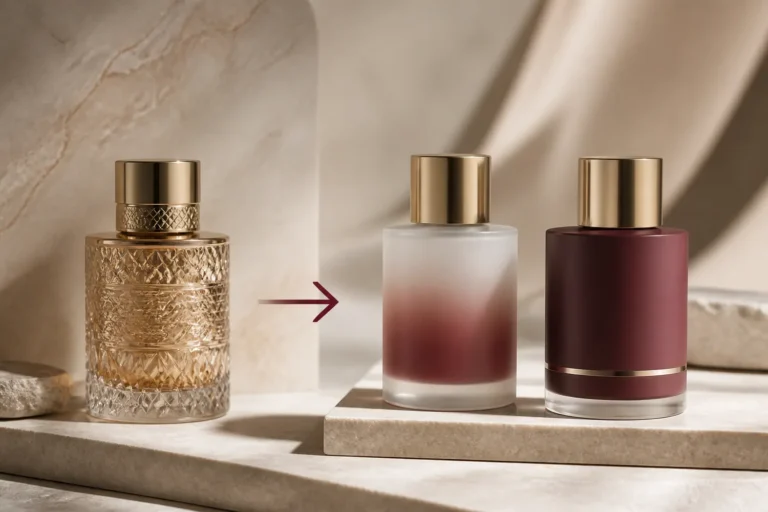
Why Beauty Brands Are Simplifying Bottle Decoration
Simplified bottle decoration concentrates brand identity into fewer controlled cues while reducing interaction, variation, and change-control risk.
Packaging Trends & Insights examines changes in beauty packaging design, sourcing, production, and buyer priorities without treating every new idea as a universal direction. Readers will find analysis of refill systems, lightweighting, standardized and modular platforms, decoration choices, material reduction, e-commerce requirements, traceability, premium presentation, supply-chain changes, and evolving expectations in cosmetic and fragrance markets. Articles distinguish observed developments from verified facts, consider practical trade-offs, and connect market signals to packaging performance, manufacturing, compliance, logistics, cost, and user experience. The category avoids predictions that cannot be supported and does not replace project-specific technical evaluation. For brands, packaging buyers, designers, sourcing teams, and product developers, these insights help assess which developments may be relevant, frame better strategic questions, compare short-term fashion with longer-term operational change, and decide what should be researched, sampled, tested, or monitored before influencing a packaging program.

Simplified bottle decoration concentrates brand identity into fewer controlled cues while reducing interaction, variation, and change-control risk.

Compatibility testing is becoming more important as formulas, component interfaces, decoration, distribution, refill use, and supplier changes become more complex.
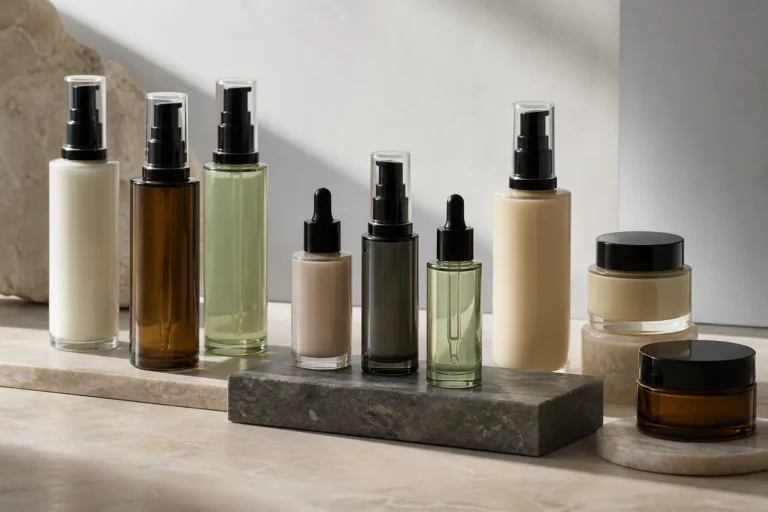
Standardized packaging platforms control hidden interfaces and evidence across SKUs without forcing every beauty product into the same container.

Refillable beauty packaging can retain a premium pack and support repeat purchase, but only a closed operational loop turns refillability into real behavior.
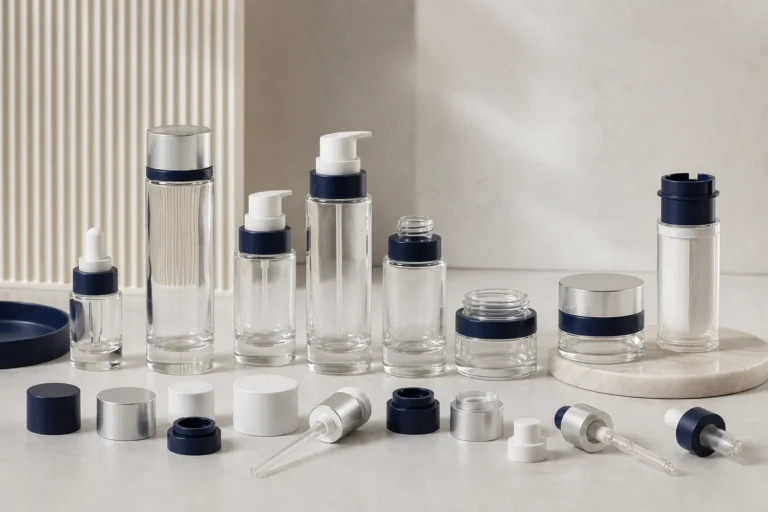
Modular cosmetic packaging uses controlled interfaces and component families to create several validated configurations without treating every part as universally interchangeable.

Premiumization and lightweighting are not opposite material targets; they are a design-allocation decision across the complete cosmetic packaging system.

Heavy glass can still serve premium packaging, but brands increasingly require every extra gram to produce defensible perceptual or functional value.
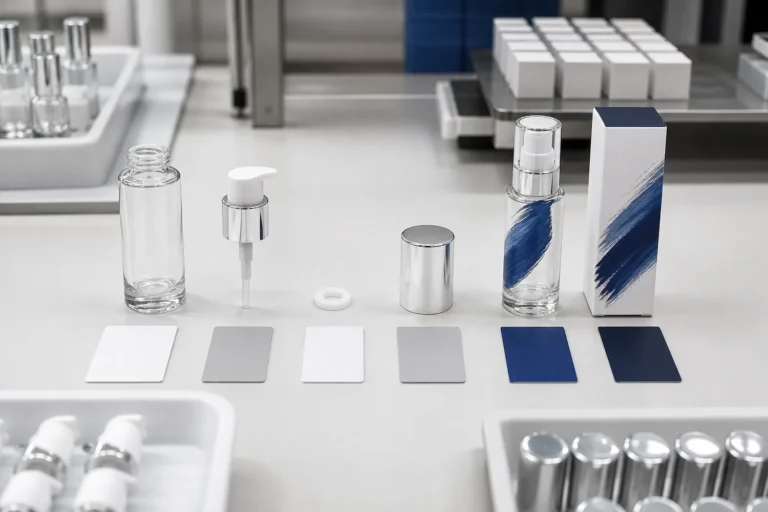
Cosmetic packaging traceability connects a finished pack to its exact components, suppliers, lots, approvals, documents, and changes so investigations can reach a bounded decision.
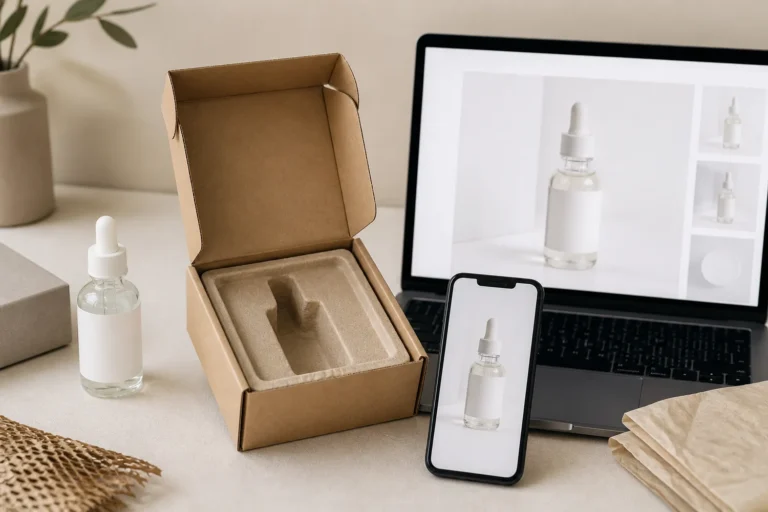
E-commerce requires cosmetic packaging to perform across thumbnails, product pages, parcel distribution, unboxing, and customer review images—not only on a shelf.
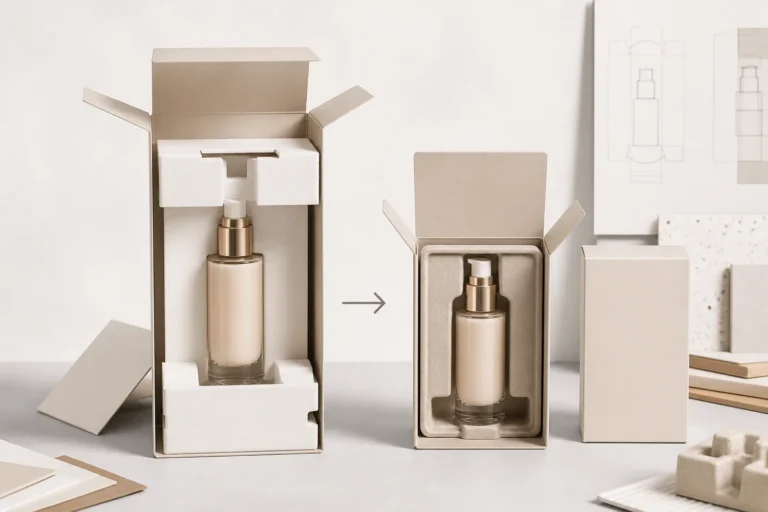
Beauty brands are reducing secondary packaging by removing non-functional volume and layers while preserving verified protection, information, and handling performance.
FOLOVER PACK’s packaging resources are designed to help brand owners, sourcing teams, and product developers evaluate cosmetic packaging with clearer technical and purchasing criteria.
Our content covers bottle selection, dispensing systems, closure compatibility, decoration, sampling, and custom development. For an actual packaging project, these factors should be reviewed as a complete system rather than as separate components.
If you already have a formula type, target capacity, bottle style, dispensing requirement, decoration direction, or reference sample, FOLOVER can help review the proposed packaging configuration and identify the key details that should be confirmed before sampling or bulk production.
Looking for cosmetic or perfume packaging?
Send us your bottle style, quantity, customization needs, and destination for project review and quotation.