
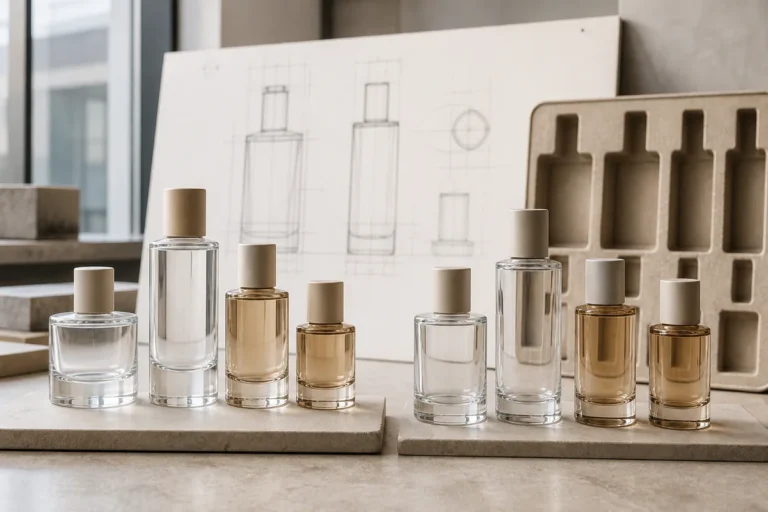
Lightweight Cosmetic Glass Bottles: How Material Reduction Changes Packaging Design
A technical buyer guide to reducing cosmetic glass weight without losing required function, appearance or transport performance.
A technical buyer guide to reducing cosmetic glass weight without losing required function, appearance or transport performance.

Premiumization and lightweighting are not opposite material targets; they are a design-allocation decision across the complete cosmetic packaging system.

Heavy glass can still serve premium packaging, but brands increasingly require every extra gram to produce defensible perceptual or functional value.

A balanced buyer guide to the benefits, trade-offs and evidence needed to evaluate glass cosmetic packaging as a complete packaging system.
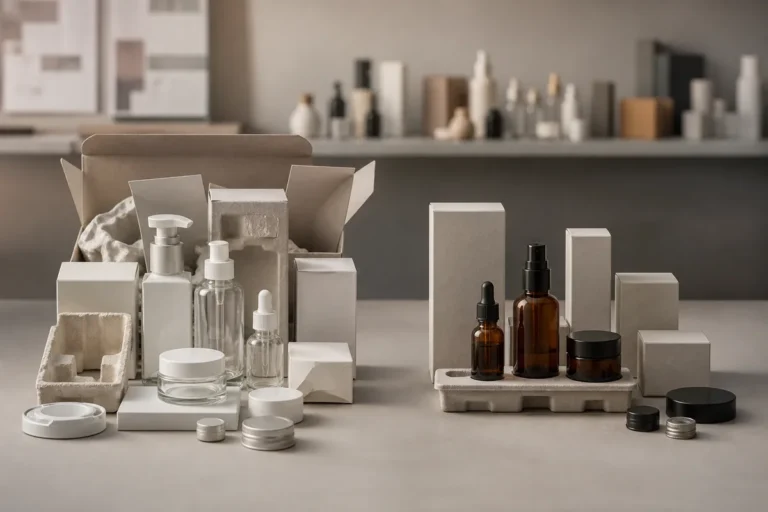
A practical buyer framework for reducing cosmetic packaging material while preserving compatibility, dispensing, protection and commercial performance.

Stock cosmetic glass bottles can gain distinctive color, graphics, components, and presentation without changing their fundamental glass geometry.

See how cosmetic glass bottle export packing uses project-specific wraps, dividers, trays, cartons and pre-shipment inspection.

Compare clear, amber, colored, coated and frosted glass bottles for cosmetics, including branding and formula-protection considerations.
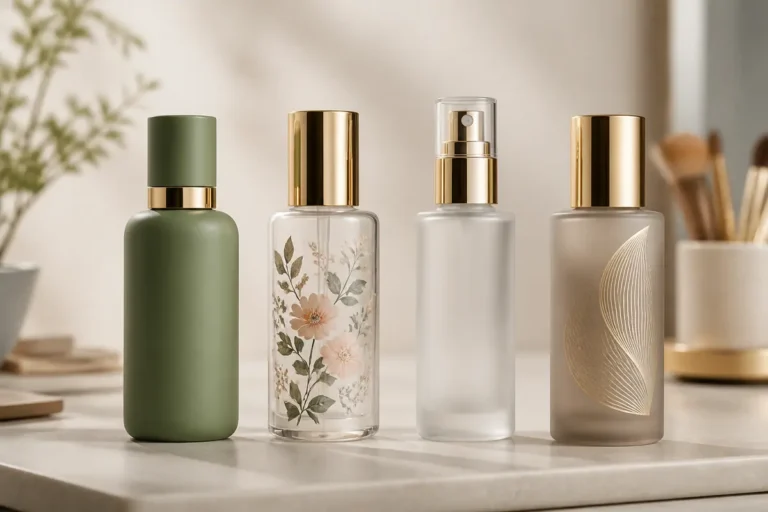
Compare cosmetic glass bottle decoration methods and learn how bottle shape, color approval, process order and durability affect production decisions.