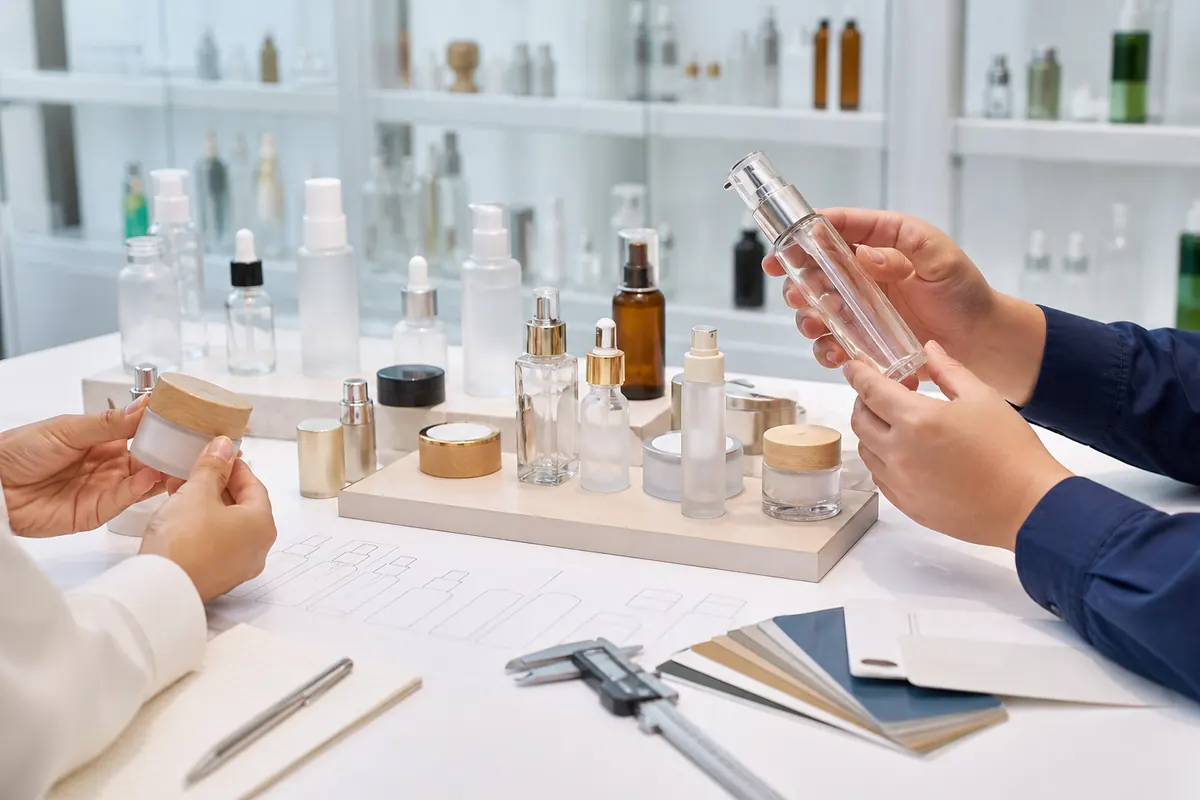
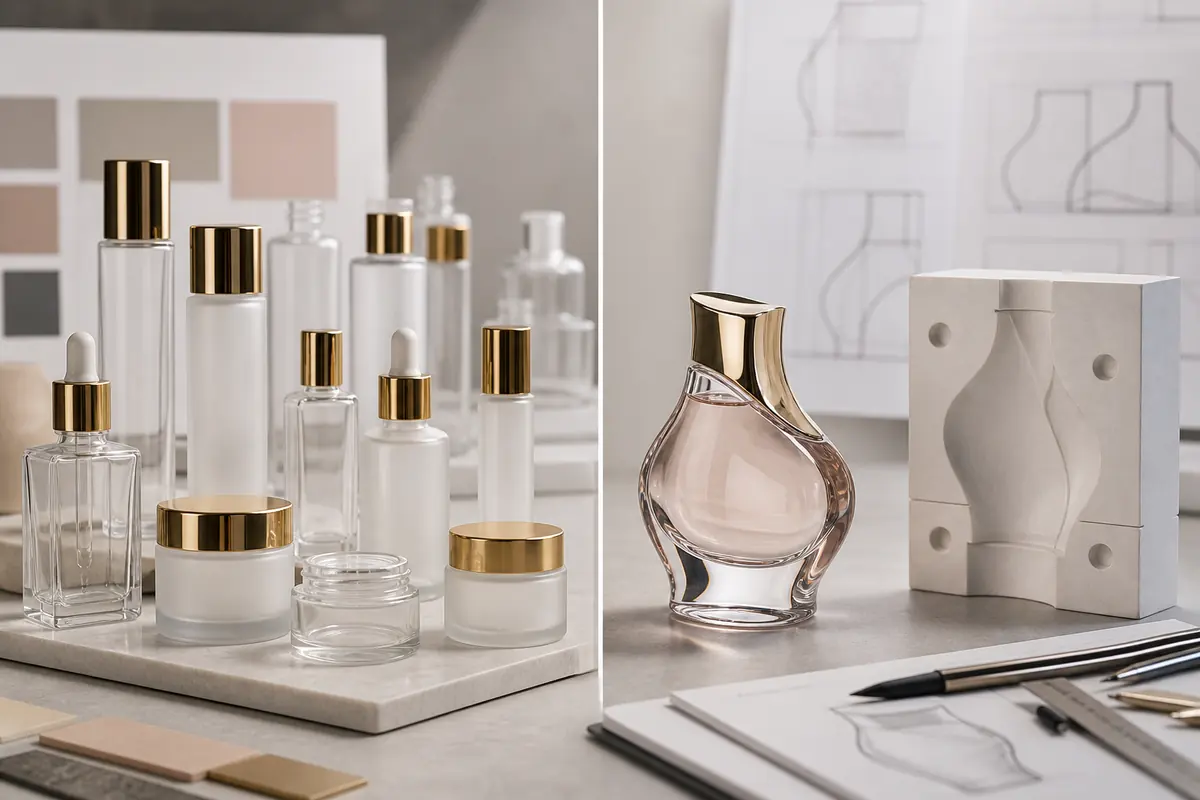
Stock cosmetic bottles and custom molds support different launch strategies. Stock packaging uses an existing bottle structure and can still be differentiated through closures, color, decoration and secondary packaging. A custom mold creates a new bottle geometry and gives the project more control over structural differentiation, but it also adds tooling, sampling and revision exposure.
In the packaging projects we review at FOLOVER, the first question is usually not whether a custom mold looks more distinctive. It is whether the brand actually needs a new bottle structure to meet a defined functional or long-term branding requirement. If an existing bottle can meet the structural, closure and filling brief, a stock bottle plus coordinated decoration is usually the lower-risk starting point. Custom tooling becomes more appropriate when the bottle geometry itself creates value that an existing structure cannot provide.
What Is a Stock Cosmetic Bottle?
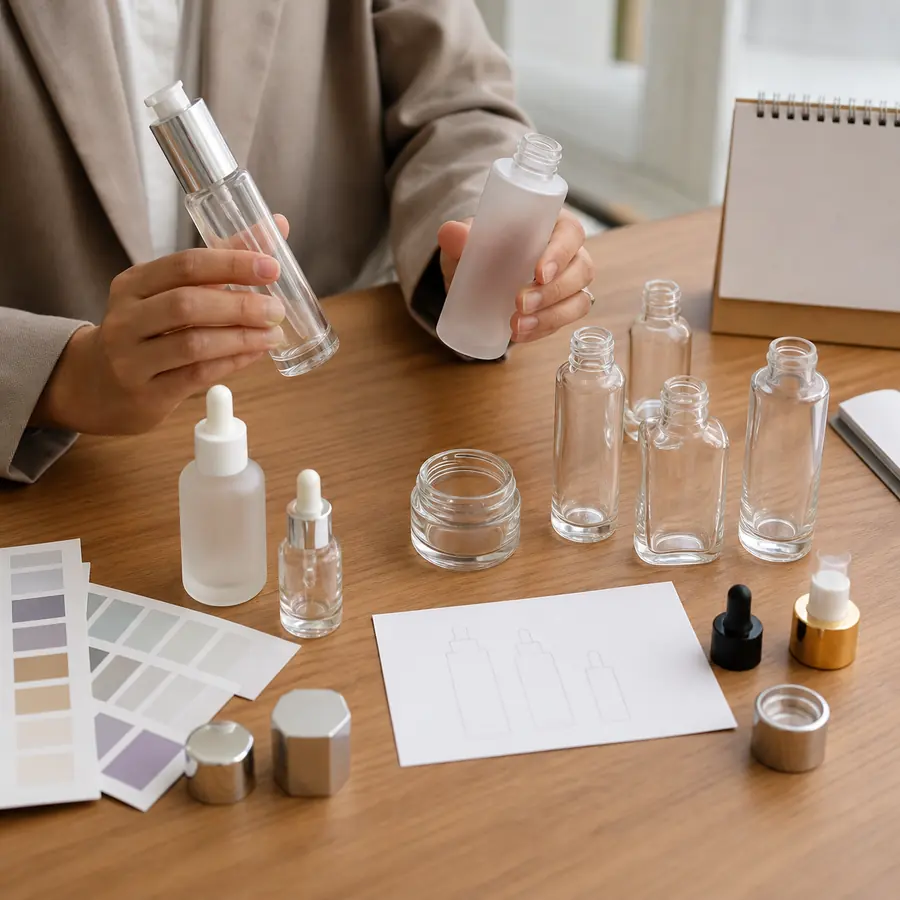
A stock cosmetic bottle is made from an existing production mold or established bottle design. The brand selects a suitable capacity and neck, then develops the package through compatible pumps, droppers or caps plus coating, frosting, printing, hot stamping, labels or secondary packaging. Because the bottle structure already exists, the project can focus earlier on sample evaluation, formula compatibility and visual differentiation.
Stock does not mean that every package will look the same. Color, finish, closure, artwork and carton design can create a coherent brand system. Buyers should still confirm current availability, repeat-order availability, component fit and decoration feasibility for the exact model. Browse the approved cosmetic and skincare glass packaging category to evaluate established bottle directions before assuming new tooling is necessary.
What Is a Custom Mold Bottle?
A custom mold bottle starts with a new structural concept rather than an existing glass geometry. Development may include drawings, 3D communication, feasibility review, tooling, prototypes or samples, revisions and approval before mass production. It can support a distinctive silhouette, proportions, molded logo, texture or geometry that standard bottles cannot provide.
Custom tooling is not merely a decoration method. It changes the bottle structure and introduces decisions about the neck, base, shoulder, glass distribution, mold release, visible parting lines, closure relationship and manufacturing stability. The intended closure interface and other critical packaging constraints should therefore be defined before tooling is finalized. The end-to-end custom cosmetic glass bottle process shows where mold development fits within the wider packaging program.

Stock Bottles vs Custom Molds: Decision Table
| Decision Factor | Stock Bottle Route | Custom Mold Route | What Buyers Should Verify |
|---|---|---|---|
| Structural starting point | Existing bottle geometry | New project-specific geometry | Whether new geometry solves a verified functional or long-term branding requirement |
| Development work | Selection, components, decoration, samples and testing | Design, feasibility, tooling, samples, components, decoration and testing | Which decisions must be frozen before samples or tooling begin |
| Differentiation | Mainly color, decoration, closure and secondary packaging | Structure plus color, decoration and components | Whether structural uniqueness adds enough value to justify additional development |
| Revision exposure | Usually concentrated in artwork, finish and component choices | Structural changes can affect tooling, samples, closures, filling and packing | Tooling ownership, revision rules, sample approval and responsibility for later changes |
| Closure coordination | Existing neck provides a starting point, but compatibility still requires verification | Closure interface should be defined before tooling is finalized | Thread or crimp structure, sealing geometry, assembly, tube or pipette length and formula performance |
| Repeat ordering | Depends on continued availability of the selected model and components | Depends on tooling, production arrangements and approved components | Repeat-order availability, tooling terms and component continuity |
| Typical strategic fit | Market testing, shorter development path, flexible SKU programs | Signature structure, verified functional requirement or durable proprietary shape | Expected volume, launch schedule, future SKUs and the business value of structural uniqueness |
Development Time
A stock-bottle project removes one major development stage: creating new bottle tooling. When a suitable model is available, the project can move from bottle selection into closure matching, decoration development and physical sample approval. Availability, artwork, color approval, components, compatibility work and production planning still affect the final schedule.
A custom mold adds structural feasibility review, tooling, glass sampling and possible revision cycles before the package is ready for bulk approval. For that reason, buyers should compare development sequences rather than relying on a generic lead-time number. The useful planning question is which approvals are still open and which change could force an earlier stage to be repeated.
Tooling Cost and Revision Exposure
Stock bottles avoid new structural tooling for the bottle, although decoration screens, fixtures, color samples or secondary-packaging tools may still be required. A new bottle mold introduces project-specific tooling cost and commercial terms. Exact mold fees, ownership, storage, maintenance, modification rules, sample rounds and revision allowances should be confirmed in the quotation or development agreement rather than inferred from an industry-wide price range.
The important question is not only the initial tooling cost. Buyers should consider what happens if the capacity, neck, base, embossing, closure or other structural requirement changes after tooling begins. A structural revision can affect bottle samples, closures, filling assumptions, artwork and cartons. The guide to the true cost of custom cosmetic packaging helps teams include development and coordination costs instead of comparing unit price alone.
Manufacturer Insight: Freeze the Interfaces Before Tooling
A custom shape should not enter tooling while key interfaces are still moving. Before a bottle drawing is treated as ready for mold development, the project should define the intended closure system, required filling volume, major decoration areas and any structural feature that affects assembly or packing. A late change to the neck or bottle geometry can create a revision chain across the mold, samples, components, artwork and carton.
For many projects, this is the strongest reason to evaluate a stock structure first: it allows the team to validate the packaging system before investing in proprietary geometry.
MOQ and Production Economics
MOQ should be evaluated at the complete-pack level rather than as one universal bottle number. The glass bottle, coating or printing process, pump or dropper, cap, accessory and carton can each have different production minimums. Stock packaging may reduce structural development, but it does not automatically mean that every decoration or component can be produced at the same minimum quantity.
Compare the first order with the expected program. A lower-volume market test often favors an established bottle structure because the brand retains more flexibility. A stable program with repeat demand may justify investment in a proprietary shape when that structure creates genuine long-term value. The custom packaging MOQ guide explains why bottle, finish, closure and carton minimums should be reviewed together.
Brand Differentiation
A custom mold can create a recognizable silhouette before decoration is applied, which is valuable when structural identity is central to the brand. It may also support molded details and a coordinated family of proportions. However, structural uniqueness does not guarantee good branding. A difficult shape, weak bottle-to-cap relationship or restricted decoration area can reduce usability and visual coherence.
Stock bottles can achieve strong differentiation through disciplined design. A distinctive coating, restrained printing, well-proportioned closure and consistent secondary packaging may communicate a premium position more effectively than a new shape with unresolved details. Buyers should evaluate the complete package at shelf distance, in hand and alongside the planned SKU family rather than approving the bottle body in isolation.
Structural Flexibility
New tooling gives the project more control over proportions, base, shoulder, panel areas and molded brand elements, subject to glass-forming feasibility. This freedom is useful when an existing model cannot meet a defined functional or visual requirement. It also increases the number of dimensions and interfaces that must be specified, sampled and approved.
For cosmetic and perfumery bottles, dimensional control is not limited to the nominal capacity shown in a catalog. ISO 12818:2013, Glass packaging — Standard tolerances for flaconnage, covers characteristics including brimful capacity, height, diameter, width and verticality for flaconnage used in fields including cosmetics and perfumery. ISO 8106:2004 describes a gravimetric method for determining glass-container capacity, while ISO 9008:1991 specifies a method for evaluating bottle verticality.
Technical reference: these standards are useful when defining how bottle characteristics can be specified or measured, but they should not be converted into one universal tolerance value for every cosmetic bottle. The applicable drawing, specification limits and acceptance criteria still need to be confirmed for the selected bottle and project.
Stock structures limit geometry choices but provide an established starting point. A brand can often change the apparent proportions with cap height, collar design, coating boundaries, labels and cartons. Start with the required function, then decide whether the remaining limitation genuinely justifies a structural program.
Closure Compatibility
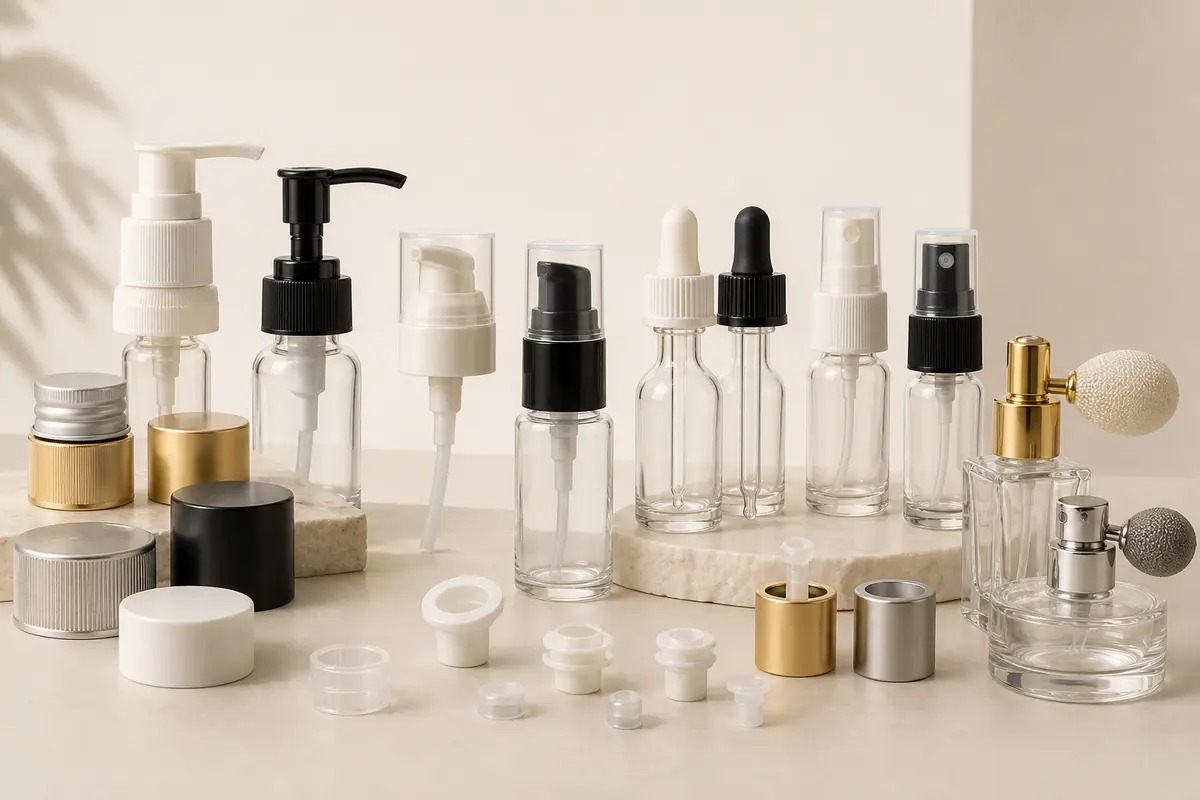
An established neck system may simplify the search for pumps, droppers or caps, but compatibility is never guaranteed by a nominal neck description, capacity or visual similarity. Buyers should confirm the actual thread or crimp structure, sealing geometry, component dimensions, assembly, tube or pipette length and formula performance on the exact bottle.
For a custom mold, the intended closure interface should be defined before tooling is finalized. A late neck change can affect the bottle drawing, mold, cap relationship, fill line and carton. Brimful capacity and the intended filling level should also be reviewed on the final bottle configuration rather than assumed from a rendering or nominal capacity alone.
Compatibility boundary: neither a stock bottle nor a custom mold proves closure or formula compatibility. Final bottle and closure compatibility should be confirmed using the selected components and physical samples before bulk production. Packaging compatibility should also be evaluated with the actual formulation under intended storage and use conditions.
Physical Sample Approval Before Bulk Production
- Approve the exact bottle geometry and neck configuration, not a visually similar bottle.
- Assemble the selected pump, dropper, sprayer or cap on the actual bottle.
- Check dip-tube or pipette length where applicable.
- Review the intended fill level and bottle capacity requirements on physical samples.
- Approve coating color, frosting, printing, hot stamping and other decoration on the actual bottle surface.
- Check the completed bottle, closure and carton as one packaging system.
- Evaluate the actual formulation under the intended storage and use conditions before bulk production.
When Stock Packaging Makes More Sense
- The brand needs a shorter development path.
- The first order is intended to test demand or validate a new SKU.
- Several SKUs must launch with coordinated bottle structures.
- Budget is better directed to formula, decoration, closures or market development.
- An existing bottle already meets the structural and compatibility brief.
- The brand expects its product range or artwork system to evolve.
A common stock-bottle scenario is a brand that has already identified a workable capacity and dispensing system but wants stronger visual differentiation. In that situation, coating, printing, hot stamping, closure coordination and secondary packaging should normally be evaluated before new bottle tooling.
Stock packaging is also useful when future flexibility matters. Before confirming the model, however, buyers should ask about repeat-order availability and the continuity of the selected closures and accessories. A successful first sample does not by itself guarantee a long-term sourcing program.
When a Custom Mold Makes More Sense
- A signature bottle shape is intended to become a long-term brand asset.
- No available bottle meets a verified structural or functional requirement.
- Expected demand can support tooling and additional development work.
- The project has time for feasibility review, glass sampling and possible revision.
- Closure, filling, decoration and packing constraints can be defined early.
- The team can approve drawings and physical samples before bulk production.
A custom mold is justified when the structural difference serves a clear purpose. “We want something unique” is a useful creative starting point, but it is not a complete development brief. The design should explain what the new geometry improves and which interfaces must remain controlled during development.
One frequent failure mode is starting tooling while the closure or bottle proportions are still being reconsidered. Another is approving a 3D rendering without checking how mold release, parting lines, decoration areas, the actual closure and secondary packaging affect the finished pack. Those issues are much less expensive to resolve before tooling and physical sample approval.
The Hybrid Strategy: Stock Structure Plus Custom Decoration
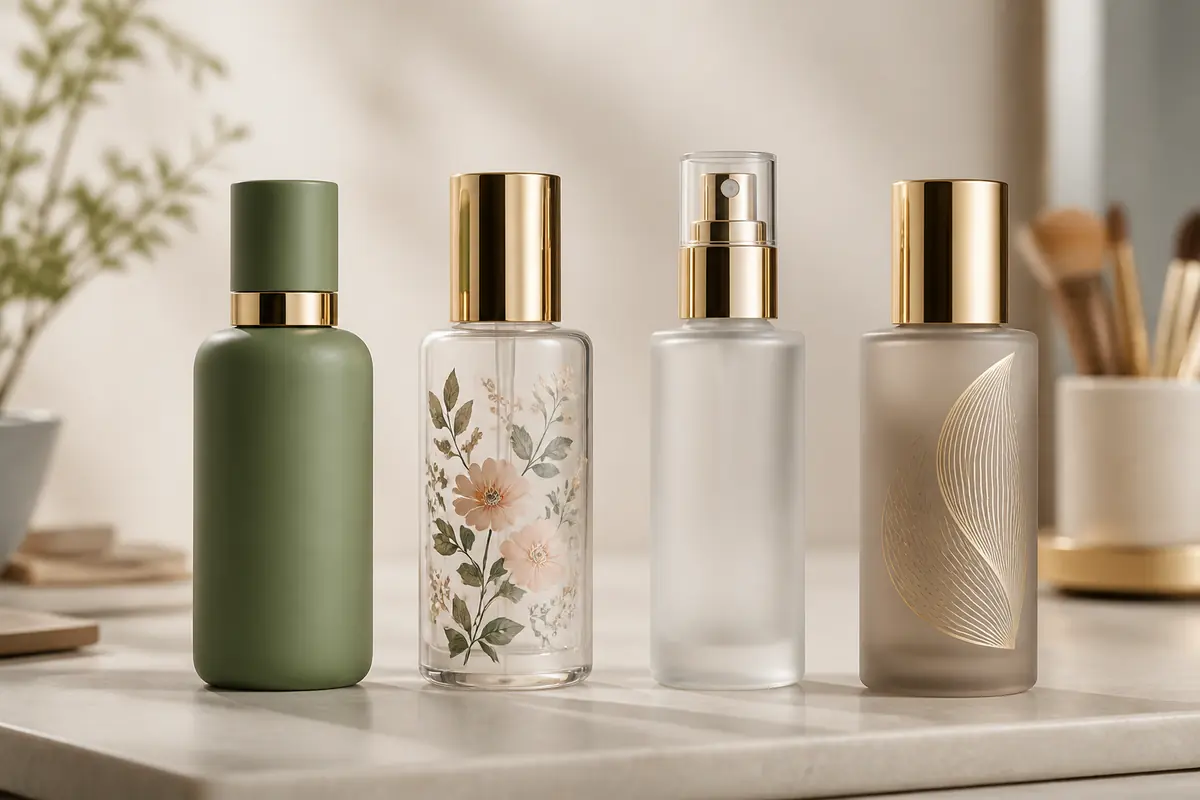
Many brands use an established bottle as the technical foundation and build distinction through a coordinated decoration system. Coating can change color and opacity, frosting can soften surface appearance, printing can carry detailed brand information, and hot stamping can add metallic accents. A custom cap, collar or carton may further change the presentation without replacing the bottle mold.
This route is especially useful when the bottle already satisfies the structural brief but the brand requires a stronger visual identity. The processes should still be developed as a system: coating color, artwork position, closure color and secondary packaging can look correct separately but inconsistent when assembled together. Physical sample approval is therefore more useful than approving each component from digital artwork alone.
The article on glass bottle decoration methods explains the differences buyers need to consider before combining finishes.

Use a Weighted Decision Instead of One Headline Number
Rank the project priorities—launch timing, structural uniqueness, first-order risk, long-term volume, closure availability, decoration, future SKUs and development budget. Weight those factors according to the business case, then compare both routes against the same brief. This prevents one attractive rendering, one low tooling quote or one short-term price comparison from deciding the entire program.
Include the consequences of failure in that comparison. A stock model can become a poor choice if repeat availability is uncertain. A custom mold can become a poor choice if the closure interface changes after tooling starts. A bottle can also fail as a commercial package when the structure looks good but the intended dispenser, fill level, decoration or carton has not been validated on the actual assembled pack.
Common Decision Failures
- Selecting a stock bottle before checking repeat availability: confirm whether the model and key components can support the planned program, not only the first sample order.
- Choosing a closure by appearance: nominal neck descriptions and visual fit do not replace assembly and sealing evaluation on the exact bottle.
- Starting custom tooling before freezing the closure interface: a late neck change can affect multiple downstream elements.
- Approving decoration only from a rendering: confirm the actual coating, print, hot stamping and component relationship on physical samples.
- Evaluating the bottle without the complete pack: bottle, closure, filling requirements, decoration and packing should be reviewed as one system.
Buyer Decision Checklist
- Is structural uniqueness essential, or would decoration and component coordination achieve the brand objective?
- What quantity is realistic for the first launch and the longer-term program?
- What schedule remains for feasibility review, sampling, compatibility work and revisions?
- Has the exact closure system and intended formula been identified?
- Has repeat availability been checked for the selected stock bottle and key components?
- Which tooling ownership, storage, sample and revision terms require written confirmation?
- Will the bottle structure support future SKUs and repeat orders?
- Have the final decoration, assembled components and physical samples been approved?
- Can the completed package be inspected and packed reliably?
Where FOLOVER Can Support the Decision
FOLOVER PACK supports existing bottle selection, custom mold development, decoration, component matching and OEM/ODM packaging projects. Our packaging work combines bottle sourcing and selection with coating, printing, decoration, inspection, component matching and final packing, which allows the bottle, closure and decoration to be reviewed as one project rather than as disconnected parts.
Use custom bottle development when a proprietary structure is justified, the skincare packaging guide to frame product and formula needs, and custom packaging solutions when bottle, closure, decoration and outer packaging need coordinated review.
Related manufacturing articles are grouped under Customization & Manufacturing, while commercial selection guidance is available in Packaging Buying Guides.
Conclusion
For many projects, the strongest middle path is an established bottle combined with coordinated decoration and components. Whichever route is selected, approve the exact assembled packaging system and physical samples before bulk production.
Frequently Asked Questions
What is a stock cosmetic bottle?
A stock cosmetic bottle uses an existing bottle structure or production mold rather than newly developed geometry. It can still be customized through compatible closures, coating, frosting, printing, hot stamping, labels and secondary packaging. Buyers should confirm model availability, decoration feasibility and the exact bottle-and-closure combination before treating it as production-ready.
What is a custom bottle mold?
A custom bottle mold is project-specific tooling used to produce a new bottle geometry. Development normally includes a defined structural brief, feasibility review, drawings, tooling, physical samples and approval before mass production. The intended closure interface and other critical packaging constraints should be defined before tooling is finalized.
Is a custom mold necessary for premium packaging?
No. Premium presentation can come from bottle proportions, coating, artwork, closure design and a coherent packaging system without creating a new bottle mold. Custom tooling is more appropriate when proprietary geometry provides a verified functional or long-term brand benefit that an existing bottle cannot provide.
Does a custom mold increase MOQ?
There is no universal MOQ relationship that applies to every project. Bottle production, decoration, closures, accessories and cartons can have different minimums. Buyers should confirm the exact production minimums and commercial terms for the selected packaging configuration rather than assuming that stock always means low MOQ or custom always means high MOQ.
Can stock bottles still look unique?
Yes. An established bottle can support a distinctive packaging system through coordinated coating, frosting, printing, hot stamping, labels, closures and cartons. Structural uniqueness is only one form of differentiation, so the completed decorated package should be evaluated before deciding that a new mold is necessary.
Which option is faster?
A stock bottle generally removes structural tooling from the development sequence, so it can provide a shorter route when a suitable model is available. Decoration, closure selection, samples, compatibility work and production planning still require approval. A custom mold adds feasibility, tooling, glass sampling and possible revision stages, so the final schedule should be confirmed for the actual project.