
Custom Perfume Bottle Design is not mainly about adding unusual shapes, heavy glass or more decoration. For a B2B fragrance project, the bottle geometry, neck and atomizer, collar, cap, decoration, artwork, carton and approval references need to work as one reproducible packaging system. A strong concept should support the brand while remaining practical to quote, sample, assemble, decorate, pack and repeat.
The safest sequence is to define the brand and user brief first, freeze the critical component interfaces early, then approve the assembled physical package before bulk production. Exact dimensions, neck specifications, spray performance, decoration limits, formula compatibility and commercial terms remain project-specific and should be confirmed against the selected components and samples.
Translate Brand Positioning Into a Brief
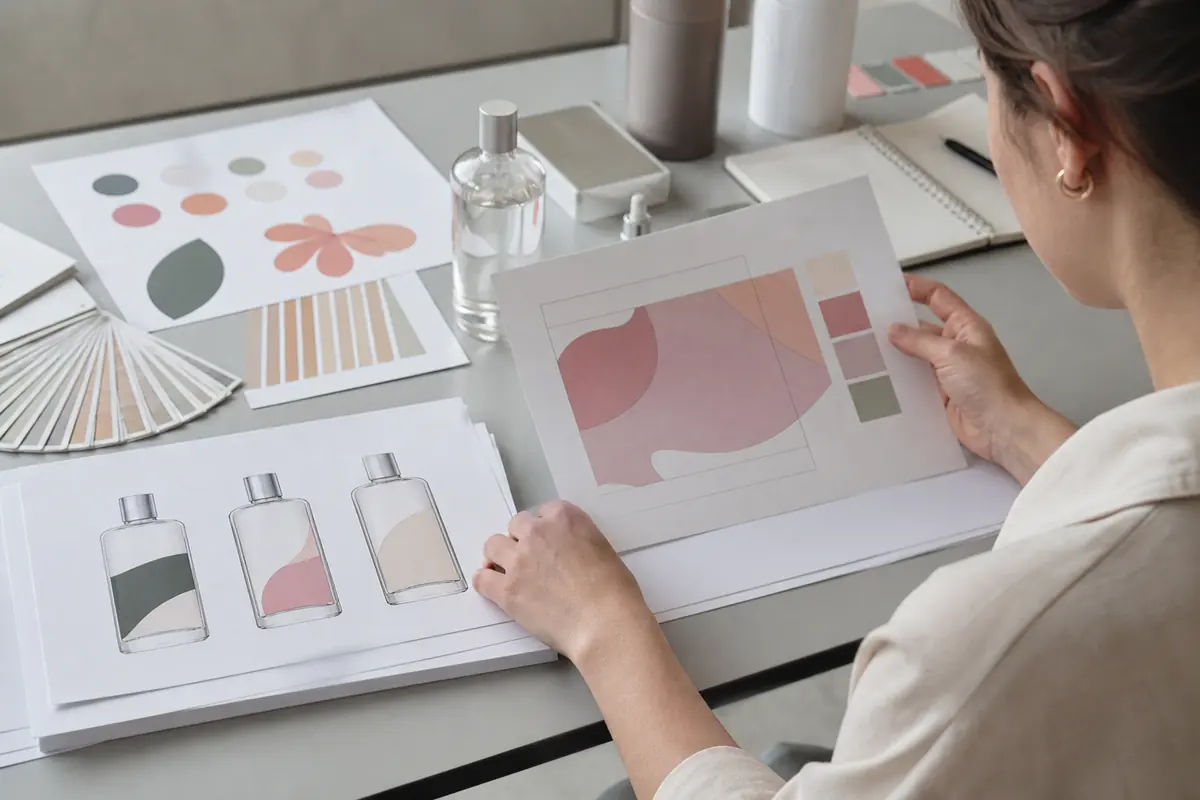
Start with a specific fragrance position rather than a vague request for a “luxury” bottle. Define the target customer, sales channel, intended price position, capacity range, handling experience and brand assets that must stay consistent across future SKUs. Then convert those decisions into supplier-ready information: bottle reference, dispensing preference, cap direction, finish, artwork, color references, sample stages and approval owner.
Develop the Shape and Silhouette
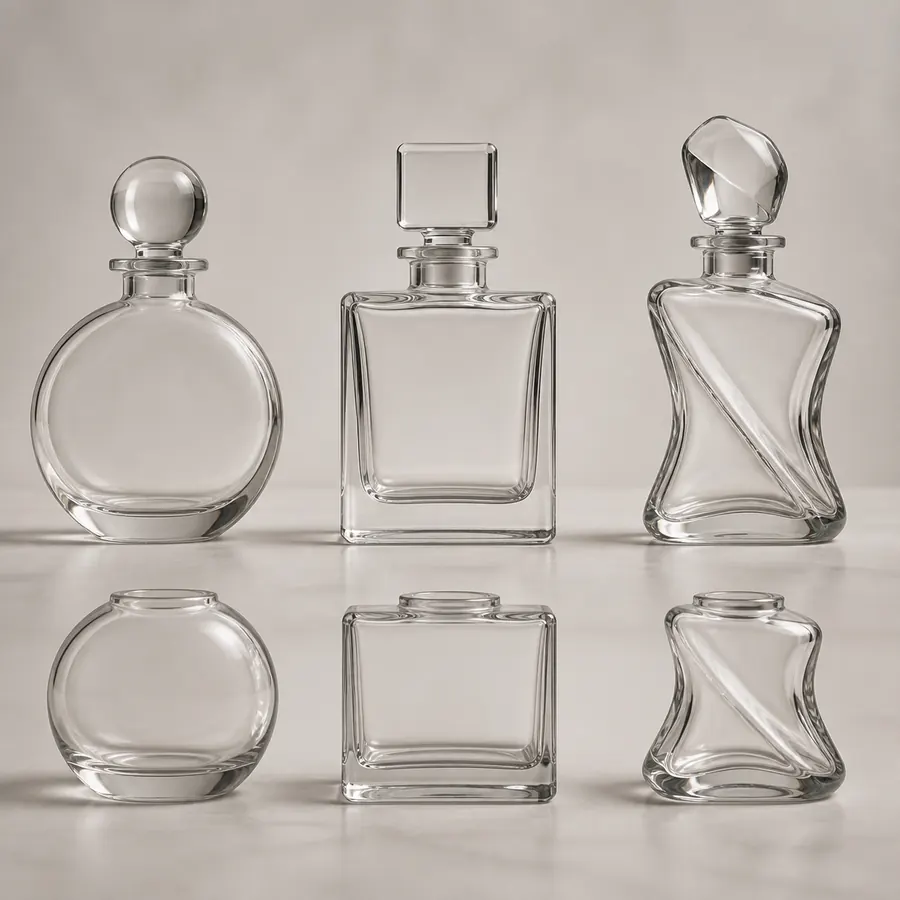
Plan view, shoulder shape, base geometry, edge treatment and width-to-height proportion do most of the work in creating recognition. Compare concepts at the intended scale and from more than one angle. Very tight curves, abrupt transitions or unusually small printable areas may also restrict decoration placement, component alignment or secondary packaging, so the shape should be reviewed as part of the complete system.
Use Base and Weight Deliberately
A heavier base can change balance and visual depth, but more glass is not automatically more premium. Extra mass affects handling, case weight and freight, and it must still look proportionate to the cap and atomizer. Buyers should judge the assembled package rather than the empty bottle alone.
Confirm Neck and Atomizer Early
The bottle neck, sealing geometry and atomizer form a critical functional interface. Do not select a pump only because the nominal size or appearance looks compatible. Neck finish, crimp or screw structure, sealing interface, pump construction, collar, actuator, cap clearance and the intended fragrance should be evaluated together. Final bottle and closure compatibility should be confirmed using the selected components and physical samples before bulk production.
Manufacturer Insight
FOLOVER recommends freezing the bottle neck, atomizer, collar and cap stack before final artwork and decoration approval. A late component change can alter assembled height, cap clearance, visible gaps or alignment even when the bottle itself has not changed.
Design the Cap as an Assembly
The cap is more than an outer shell. Its insert, internal clearance, fit with the collar, removal behavior, weight and finish all affect the final package. A cap can look correct in a rendering but still sit too high, contact the actuator or feel loose once assembled. Approve it on the exact bottle-and-atomizer configuration whenever possible.
Coordinate Collar and Transition
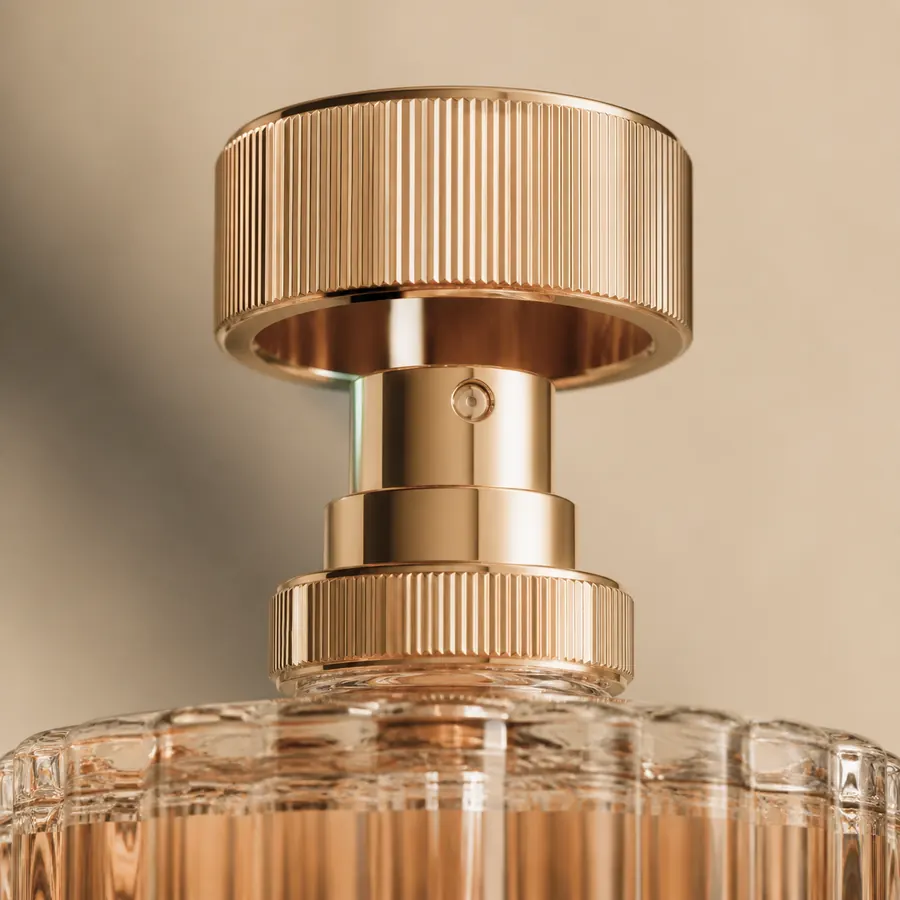
The collar is the visual bridge between glass, atomizer and cap. Small differences in diameter, height, finish or alignment are easy to notice, so these parts should be specified as a coordinated set. For multi-SKU lines, a proven atomizer-and-collar platform can also reduce the number of new interfaces that need to be revalidated.
Select Decoration by Surface
Coating, frosting, screen printing, hot stamping, labels and other finishes should be selected according to the real bottle surface and artwork. Curved shoulders, sharp edges, narrow faces and complex transitions may reduce usable decoration area or make alignment harder. When several finishes are combined, approve the final process sequence and appearance on a representative physical sample rather than from a flat artwork file alone.
Manufacturer Insight
Keep the approved bottle sample, color or finish reference, final artwork revision and component list together. If the bottle, coating, ink, cap finish or artwork changes later, identify which approvals must be repeated instead of assuming the previous sample still represents the new configuration.
Control Logo Scale and Placement
Logo size and position should follow the real printable area, not simply the largest space visible in a rendering. Dimension the artwork and check alignment on a physical bottle, especially on round, faceted or strongly curved surfaces. Branding also has to leave room for destination-market information before decoration is locked.
Regulatory design note: ISO 22715:2006 covers cosmetic packaging and labelling and is currently listed by ISO as a published, confirmed standard. In the EU, Regulation (EC) No 1223/2009, Article 19, requires specified information on the container and packaging in indelible, easily legible and visible lettering. In the United States, the FDA cosmetics labeling requirements include placement and legibility rules; ingredient declarations generally use lettering at least 1/16 inch high, with a 1/32 inch provision for packages with less than 12 square inches of available surface. Buyers should confirm the exact rules for the product, market and pack format before artwork approval.
Design the Carton Around the Bottle
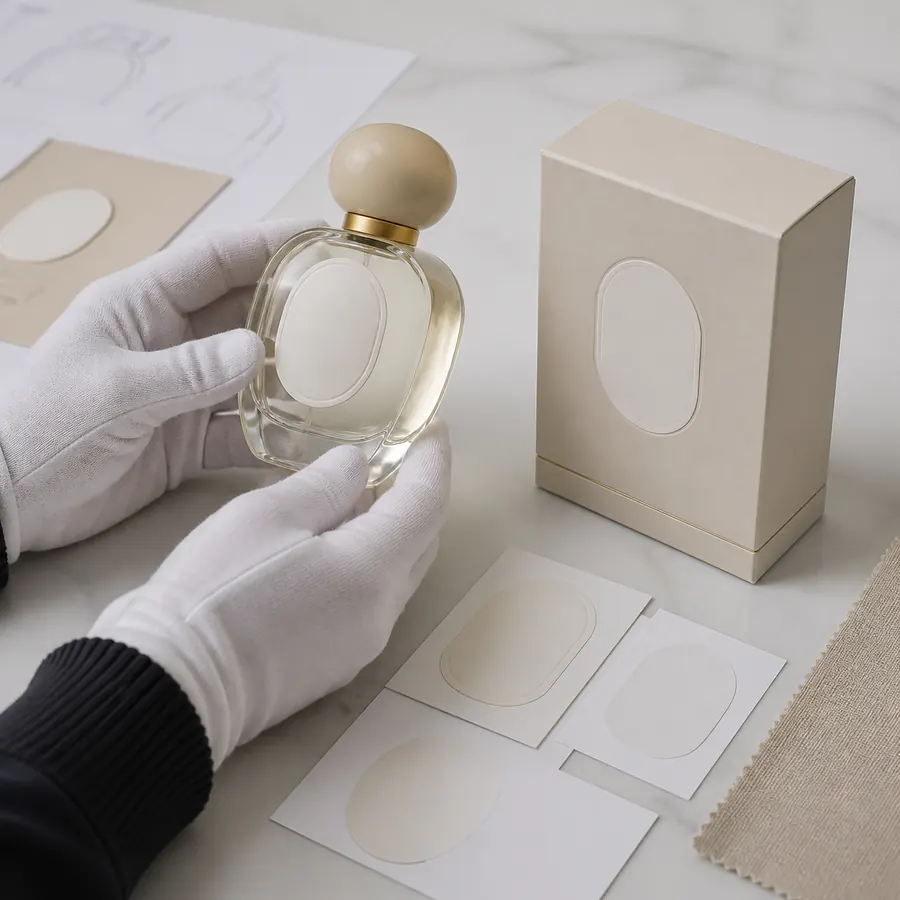
The carton should be developed around the final assembled bottle, not nominal bottle dimensions alone. Check cap and collar height, insert fit, orientation, opening sequence and contact with decorated surfaces. Decide early which information belongs on the bottle and which can sit on the outer pack so late compliance changes do not crowd the decoration.
Prototype in Stages
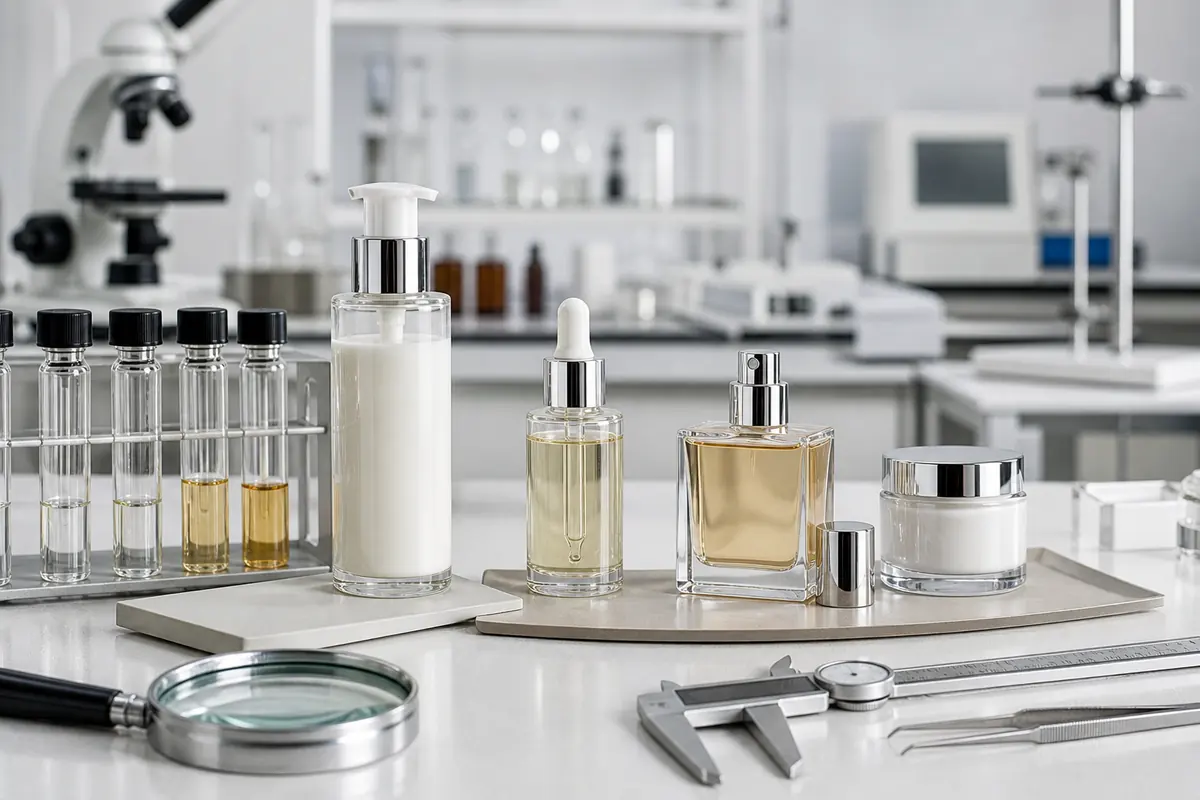
Different samples answer different questions. A structural bottle sample confirms scale and geometry; component samples confirm fit; a decorated sample confirms finish and artwork; and a complete assembled reference confirms how the bottle, atomizer, collar, cap and carton work together.
What to Check on Physical Samples
- Confirm the selected bottle neck and atomizer assemble correctly.
- Check sealing and spray behavior with the intended fragrance and selected components.
- Confirm cap clearance, collar alignment and assembled appearance.
- Approve color, coating, printing, hot stamping and component finishes on physical references.
- Check artwork position and legibility on the actual bottle geometry.
- Review carton and insert fit with the fully assembled package.
Plan Quality Criteria
“Looks good” is not a repeatable quality specification. Before production, define which characteristics are controlled by drawing, which are controlled by an approved sample and which require a functional check. Avoid promising perfect uniformity; use practical acceptance references for the exact project.
| Design Area | What Buyers Should Approve | Main Risk if Left Open | Approval Evidence |
|---|---|---|---|
| Bottle geometry | Shape, target capacity and key dimensions | Late changes affect components, artwork or carton fit | Drawing plus physical bottle sample |
| Atomizer, collar and cap | Exact component combination | Fit, sealing, clearance or alignment problems | Complete assembled sample |
| Decoration | Color, finish, logo position and process combination | Visual mismatch or poor reproducibility | Decorated sample plus final artwork |
| Carton and insert | Fit, orientation and protection | Movement, scuffing or late redesign | Assembled pack-out reference |
Avoid Common Development Errors
The most avoidable problems come from approving parts in isolation or changing a critical interface too late.
- Selecting the bottle before the dispensing system: the atomizer, collar and cap still need to work as one assembly.
- Approving only a render: a render cannot prove color, tactile feel, cap fit, spray behavior or decoration registration.
- Changing components after artwork approval: a different collar, cap or bottle geometry can change visible alignment.
- Using one color reference across different materials without samples: glass, plastic and metal finishes may not appear identical.
- Starting custom tooling before the system is defined: closure, filling, decoration and secondary packaging requirements should already be considered.
Key takeaway: A custom perfume bottle succeeds when the brand idea can be reproduced as a stable physical system. Distinctive shape matters, but component compatibility, decoration approval and complete-package sampling should be resolved before bulk production.
Connect Design Choices to Related Packaging Decisions
Design quality improves when the visual brief is connected to adjacent technical and commercial decisions. Review how to choose a perfume bottle, the anatomy of a perfume bottle, how perfume atomizers and spray pumps work, and luxury cosmetic packaging design. These guides support planning but do not replace project-specific drawings, samples or tests.
For wider planning, use the perfume packaging guide, review perfume and cosmetic bottle caps, and compare custom packaging solutions. Suitable formats can be reviewed through perfume glass bottles. The final combination still requires confirmation on the selected components.
What Buyers Should Put in the Design Brief
- Target customer, market, channel and intended positioning
- Fragrance type and any formulation considerations relevant to the package
- Required capacities, bottle family and future SKU plan
- Preferred bottle shape or reference
- Exact atomizer, collar, cap or other component interface to validate
- Color, finish, decoration and artwork priorities
- Destination-market labeling space and information requirements
- Carton, insert, packing and presentation requirements
- Sample stages, approval owners and acceptance references
- Commercial quantities and timing confirmed separately for the project
Use Samples as Decision Evidence
Physical samples reveal scale, weight, reflection, color, tactile feel, fit and assembly behavior that a rendering cannot establish on its own. Keep the approved sample, drawing, component list and artwork revision connected. If the bottle, atomizer, cap, decoration or formula changes, identify which earlier approvals need to be repeated; do not extend one compatibility, spray or decoration result to a different configuration without evidence.
FOLOVER Packaging Resources
FOLOVER organizes design and sourcing guidance under Packaging Design & Branding and Packaging Buying Guides. Buyers can use these resources to narrow the design direction, prepare supplier-ready information and identify which interfaces require physical validation. Availability, MOQ, lead time, tooling, compatibility and performance must be confirmed for the selected project rather than inferred from a general article.
Related Blog Articles
Frequently Asked Questions
What should be decided first in a custom perfume bottle design?
Start with the target customer, positioning, capacity range and dispensing system before finalizing decorative details. The bottle neck, atomizer, collar and cap form a critical assembly, so buyers should stabilize those interfaces early and develop the visual details around a system that can be sampled and reproduced.
Should the atomizer be selected before the cap and decoration?
The atomizer should be selected together with the bottle neck before the cap stack and final decoration are frozen. Pump, collar and cap choices affect assembled height, alignment and clearance. Confirm the final combination using the selected components and physical samples.
Can a perfume bottle design be approved from a 3D rendering?
A rendering is useful for proportion and visual direction, but it cannot confirm glass feel, exact color appearance, atomizer performance, cap fit, decoration registration or carton contact. Physical samples should be used for characteristics that depend on material, assembly or manufacturing.
How should a brand choose between a stock perfume bottle and a custom mold?
A stock bottle is often more practical when development speed and lower structural complexity are priorities. A custom mold becomes more relevant when proprietary geometry is central to the brand system and the project can support tooling and validation. Exact tooling and commercial terms should be confirmed for the specific project.
What decoration should be tested on a physical sample?
Final color, coating, frosting, printing, hot stamping or multi-process combinations should be approved on the selected bottle when appearance matters to the launch. Material, curvature and process sequence can change the result, so physical references are more reliable than screen colors alone.
What should be approved before bulk production?
Approve the selected bottle, atomizer, collar, cap and decoration as an assembled system, together with final artwork and the relevant carton or insert. Check function with the intended fragrance and keep the approved drawings, samples and component references connected so the production configuration is clear.