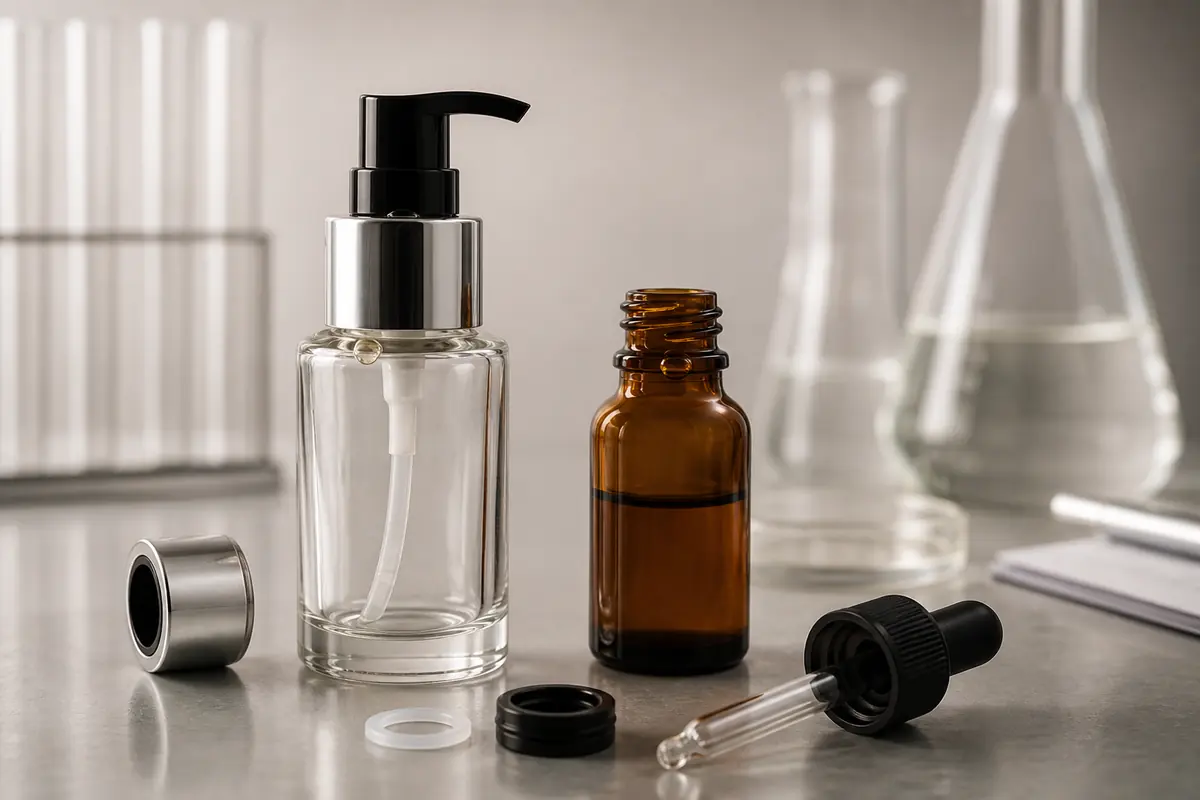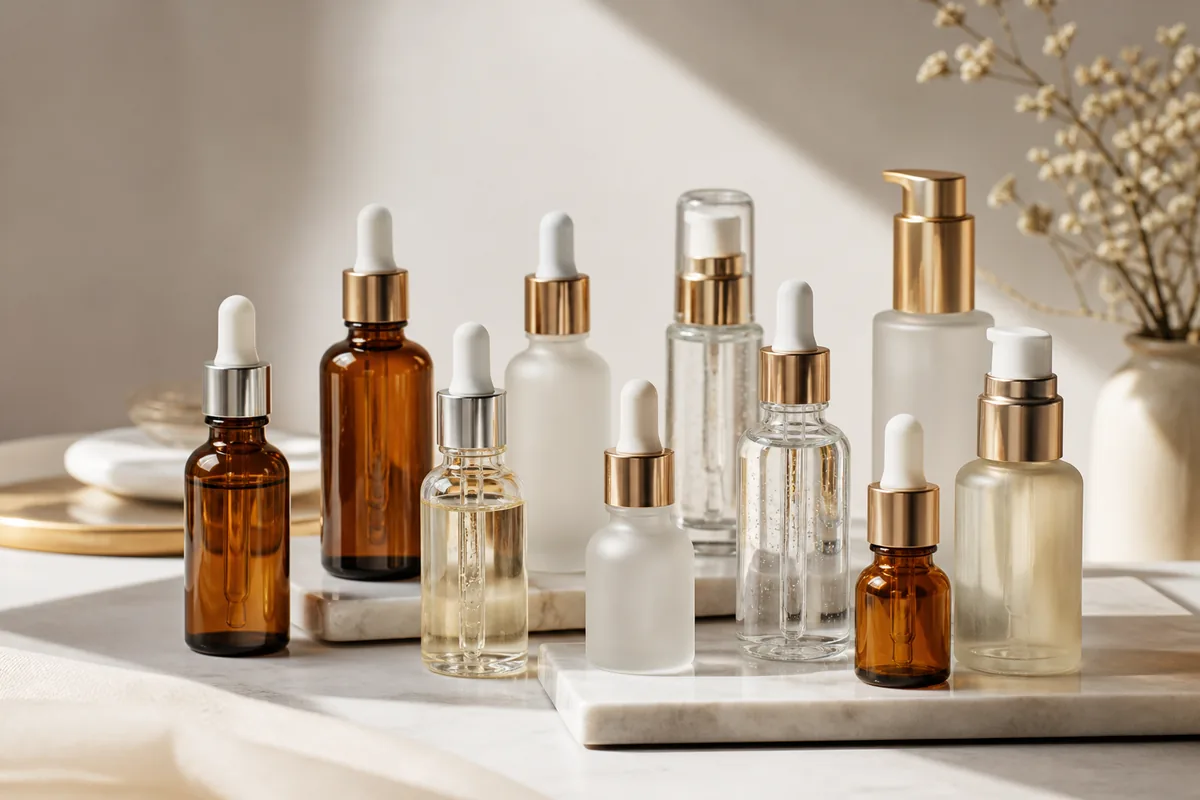
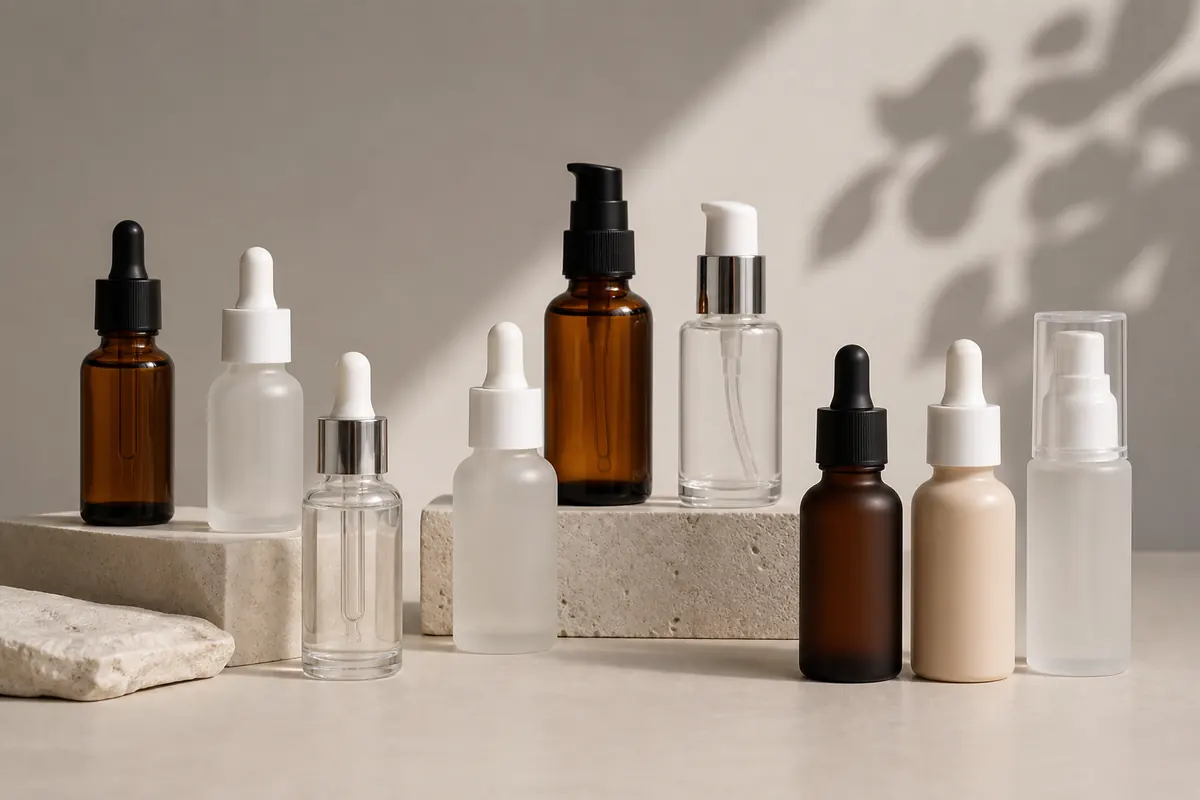
Serum Packaging Design should begin with the formula and dispensing experience, not with bottle decoration. A successful serum package connects glass geometry, pump or dropper selection, internal component fit, closure appearance, artwork and secondary packaging around the way the product is filled, dispensed and used.
For B2B buyers, the main task is to convert that design direction into a repeatable packaging specification. Exact bottle and closure compatibility, pump output, pipette or dip-tube length, formula interaction, decoration performance and commercial terms remain project-specific. They should be confirmed using the selected components, drawings and physical samples before bulk production.
| Design Decision | Main Question | Common Risk | What Buyers Should Verify |
|---|---|---|---|
| Formula and dispenser | How should the serum be withdrawn and applied? | Choosing a dispenser by appearance alone | Actual formula with the selected pump or dropper |
| Bottle and closure | Does the complete assembly fit and function? | Assuming similar-looking components are interchangeable | Exact bottle, neck and closure combination |
| Pipette or dip tube | Can the component reach and withdraw product correctly? | Estimating length from external bottle height | Supplier drawing and assembled physical sample |
| Color and decoration | Does the visual system remain clear on the actual bottle? | Approving from digital artwork only | Decorated physical sample and final artwork |
| Bulk-production approval | Does the approved reference represent the final configuration? | Changing bottle, closure or formula after testing | Final component list, sample and artwork revision |
Begin With Formula and Use
Formula behavior should define the first packaging decisions. Viscosity, flow, sensitivity, intended dose and application method can all affect whether a particular dispenser is practical. A low-viscosity serum and a thicker treatment product may require different dispensing approaches even when the brand wants both SKUs to share the same visual language.
Start the brief with the actual product rather than a preferred bottle photograph. Share representative formula information, intended use and dispensing expectations with the packaging supplier, then evaluate the selected configuration with the actual formulation under intended storage and use conditions.
Manufacturer Insight
FOLOVER recommends separating visual consistency from functional standardization. Two serum SKUs can share bottle proportions, color language and graphics without being forced to use the same dispenser. When formula behavior differs, preserving the brand system may require different functional components.
Compare Dropper and Pump Systems
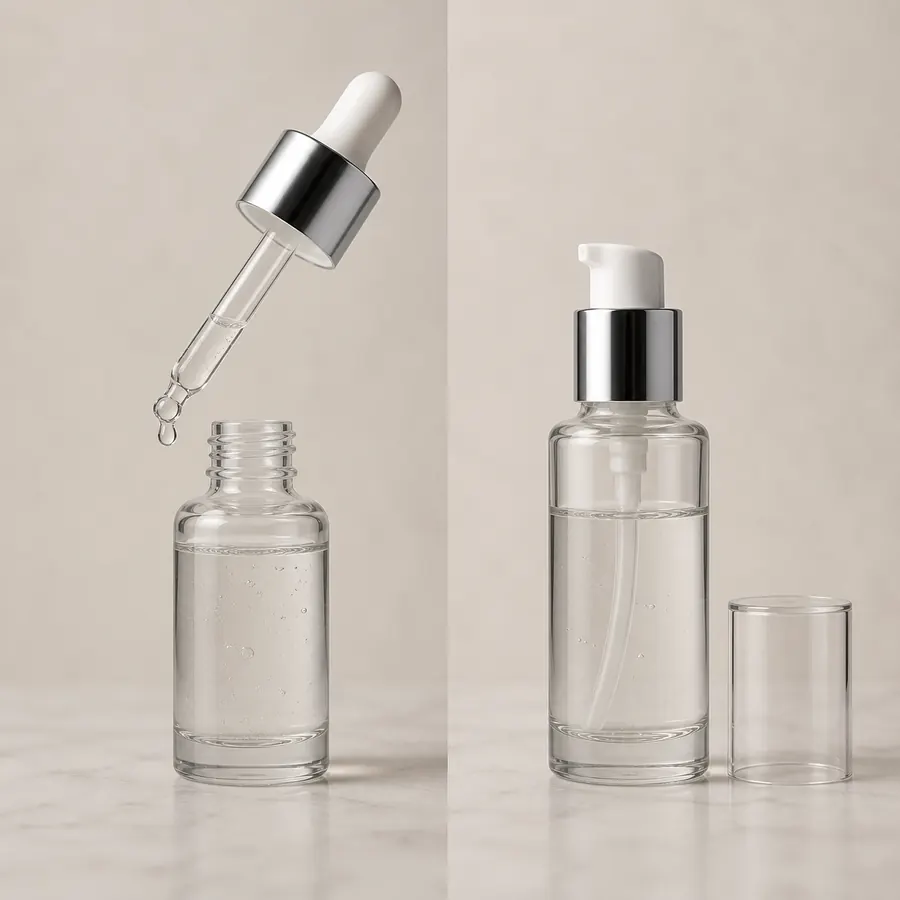
Droppers can support visible, user-controlled dispensing and are commonly associated with concentrated skincare treatments. Pumps can provide repeated actuation without requiring the user to remove a pipette from the bottle. Neither system is universally better; the correct choice depends on the formula, expected dose, user experience and bottle configuration.
For droppers, buyers need to review the bulb, collar, pipette and bottle interface as one system. For pumps, actuator structure, bottle neck, dip tube and formula behavior should be considered together. Exact output or dose should never be assumed from the dispenser category alone because it varies by component specification.
For a deeper technical comparison, review how glass dropper systems work and how cosmetic pumps work.
Choose Capacity and Proportion
Capacity influences more than fill volume. It also affects bottle height, label area, closure proportion, carton dimensions and how multiple SKUs appear together. Buyers planning a serum family should compare capacities at actual scale rather than assuming one design can simply be enlarged or reduced without changing its visual balance.
The assembled package matters more than the bare bottle. A tall pump, large collar or dropper bulb can significantly change the final silhouette. Review the selected bottle with its actual closure before freezing artwork and carton dimensions.
Select Clear, Amber or Decorated Glass
Clear, amber, colored, frosted and coated glass create different relationships between formula visibility and brand presentation. Clear glass exposes the fill and internal dispensing components. Amber or colored glass changes visibility, while frosting or coating can create a more controlled visual surface.
Do not treat glass color alone as proof that a formula receives sufficient light protection. When light sensitivity matters, the packaging decision should be supported by the formula owner’s stability or compatibility requirements and evaluated using the actual package and formulation.
Design Closure Color and Geometry
The bulb, collar, actuator and cap should be designed as part of the bottle silhouette. Diameter, height, finish and color influence brand appearance, while the internal structure determines whether the component can actually function with the selected bottle.
Final bottle and closure compatibility should be confirmed using the selected components and physical samples before bulk production. Compatibility can depend on neck finish, thread or crimp structure, sealing geometry, gasket where applicable, closure construction, pipette or dip tube, bottle dimensions, formula characteristics and dispensing requirements.
Manufacturer Insight
A closure should not be approved only because its exterior matches the brand design. Similar-looking droppers or pumps may use different neck interfaces, internal structures or component lengths. Freeze the functional bottle-and-closure combination before final artwork and carton approval.
Choose Label or Direct Decoration
Labels offer flexibility for artwork changes and smaller product families, while screen printing, coating, frosting and hot stamping can create a more integrated bottle surface. The correct choice depends on artwork area, bottle curvature, required appearance, quantities and the number of approval processes the project can reasonably manage.
Adding more decoration also creates more variables to control. Color, registration, logo position, surface finish and interaction between different processes should be approved on the actual bottle. Buyers comparing decoration routes can review cosmetic glass bottle decoration methods.

Balance Premium and Clinical Signals
Serum packaging often has to communicate both treatment credibility and brand character. Clean typography, controlled color, precise component alignment and a disciplined dispensing system can communicate a more clinical direction, while surface finish, metallic accents and tactile details can shift the presentation toward sensorial or luxury positioning.
The design should not imply product performance that the packaging itself cannot establish. Separate visual language from formula or efficacy claims, and make sure required label information remains readable within the available artwork area.
Build Consistency Across a Serum Line
A serum family does not need every SKU to use identical components. Consistency can come from shared bottle proportions, typography, logo position, closure color language or carton structure while formulas use different dispensing systems where necessary.
Map the range before locking the first SKU. A simple component matrix showing bottle, capacity, closure, color, decoration and carton for each product can reveal unnecessary variation and help buyers decide which differences are functional and which are purely decorative.
Key takeaway: Standardize the visual system where possible, but do not standardize a dispenser across different formulas until the exact bottle, closure and dispensing requirement has been validated.
Test With the Actual Formula
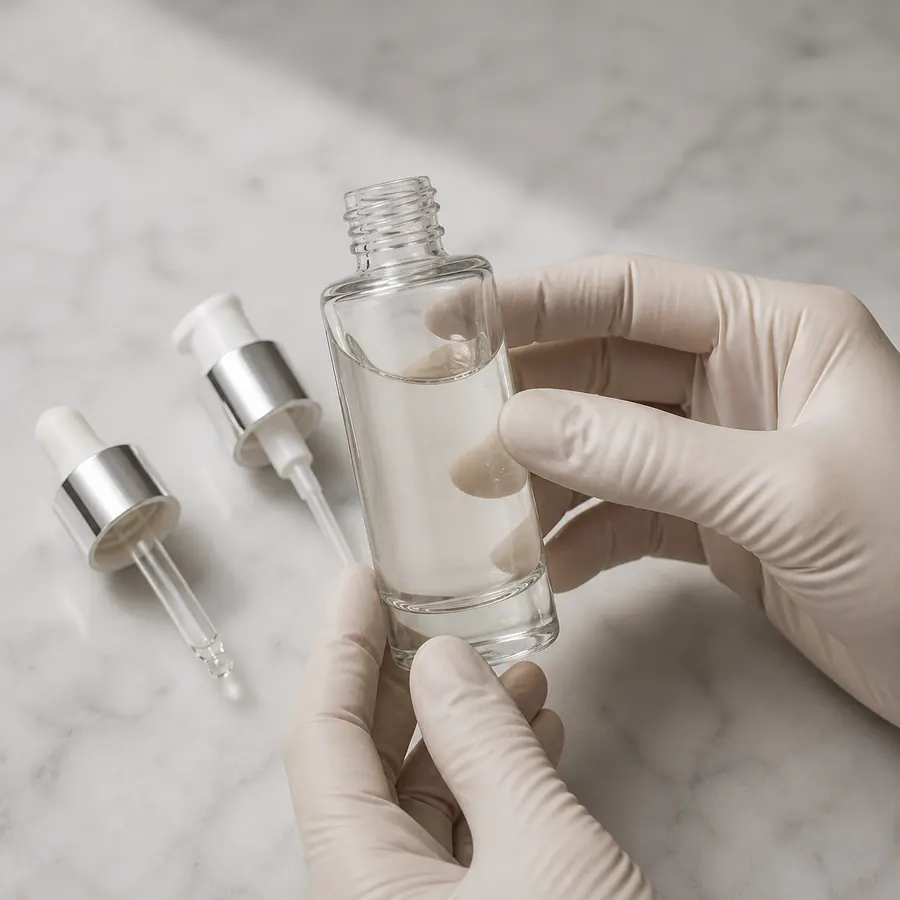
Packaging compatibility should be evaluated with the actual formulation under intended storage and use conditions. Water can be useful for basic assembly or dispensing demonstrations, but a water test cannot establish compatibility with the commercial serum.
Depending on the project, buyers may need to observe sealing, dispensing behavior, visible changes, residue, component interaction and user operation over the defined test period. The exact protocol should reflect the formulation, components and destination-market requirements rather than relying on one universal test.
What to Evaluate With the Actual Serum
- Assembly and sealing of the selected bottle and closure
- Dispensing behavior with the intended pump or dropper
- Whether the selected internal component reaches the intended withdrawal position
- Visible interaction between formula, glass and dispensing components
- User handling through opening, dispensing and reclosing
- Filled appearance when formula color or transparency affects the design
Check Pipette or Dip-Tube Fit
Pipette and dip-tube length should be selected from the internal geometry of the exact bottle and dispenser system, not estimated from the external bottle height. Base thickness, shoulder geometry, closure engagement and the dispenser structure can all affect the required internal component length.
An incorrect component can reduce usable withdrawal, interfere with assembly or create inconsistent dispensing. Buyers should use supplier drawings and assembled samples for the selected configuration. For more detailed technical guidance, see dropper bottle pipette length and cosmetic pump dip tube length.
Approve Artwork and Assembly
Artwork approval should happen on the final packaging structure whenever possible. Curved bottle walls, narrow printing areas, collars and small labels can change how text and graphics appear at actual size. A digital artwork file confirms design intent, but it does not replace a decorated physical sample.
Labeling space also needs to remain practical. ISO 22715:2006 covers cosmetics packaging and labelling. For the EU market, Regulation (EC) No 1223/2009, Article 19, sets labeling requirements for cosmetic containers and packaging. U.S. buyers can also consult the FDA Cosmetics Labeling Guide. Exact requirements depend on the product and destination market, so artwork should be reviewed against the applicable rules before approval.
Avoid Common Serum Packaging Mistakes
Most avoidable problems begin when appearance is approved before the functional system is settled. Choosing a bottle from an image, assuming a similar pump will fit, estimating a pipette from external height or delaying formula testing can all force changes after artwork or cartons have already been developed.
The safest sequence is to resolve the critical functional interfaces first, then approve decoration and secondary packaging around the configuration that will actually be purchased.
Connect Design Choices to Related Packaging Decisions
Design quality improves when teams connect visual choices with technical and sourcing decisions. Review how to choose serum bottles, serum bottles explained, cosmetic dropper systems, and packaging for lotions and emulsions. These guides address related decisions but do not replace project-specific samples or testing.
For wider planning, use the Serum Bottles and custom packaging solutions. Suitable product formats can be reviewed through serum bottles. The exact bottle, closure and decoration combination still requires verification for the selected project.
What Buyers Should Put in the Design Brief
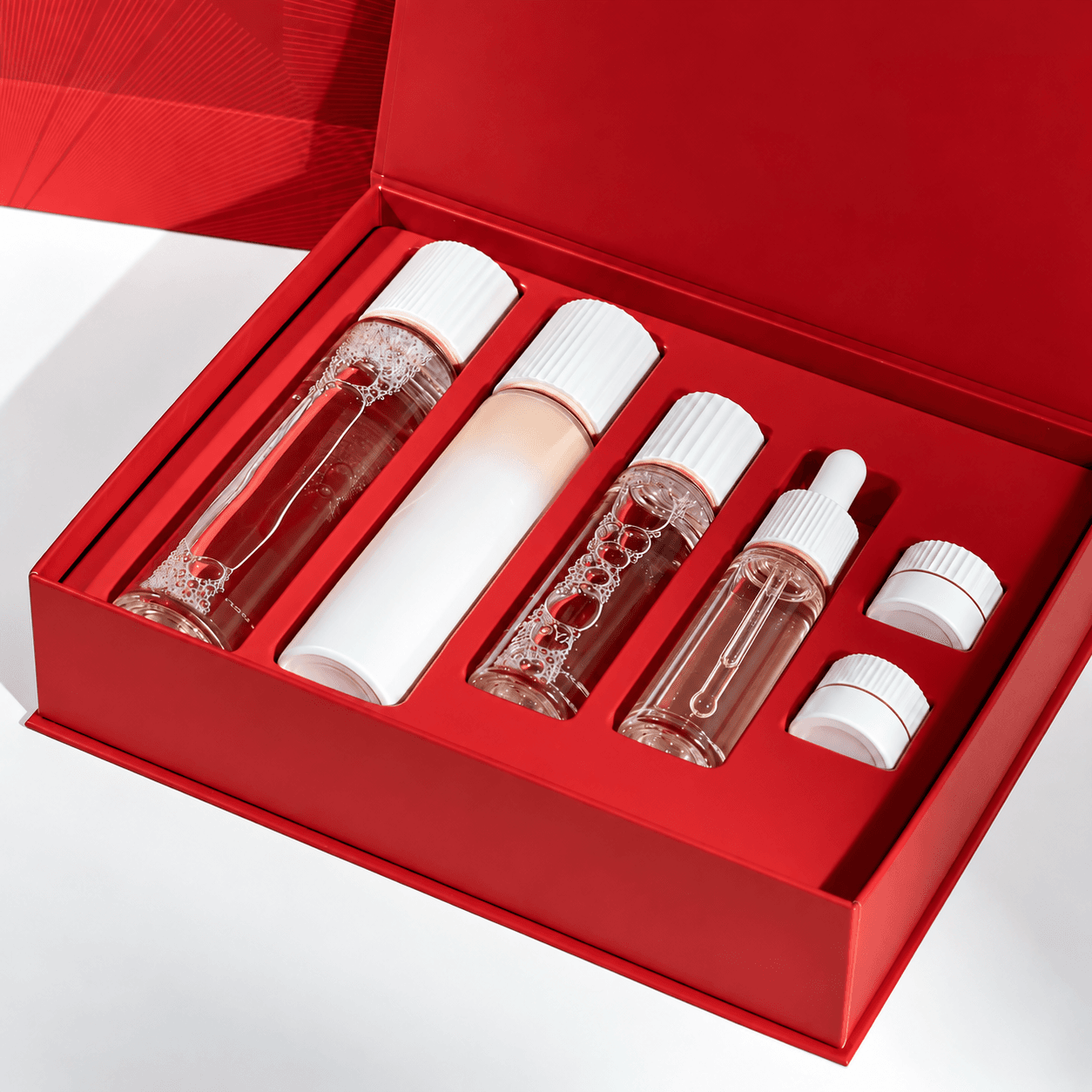
- Target customer, market, channel and intended positioning
- Actual formula characteristics and dispensing expectations
- Required capacities, bottle family and future SKU plan
- Preferred pump or dropper direction and the exact interface to validate
- Color, glass finish, decoration and artwork priorities
- Required labeling space for the destination market
- Carton, insert, packing and photography requirements
- Formula compatibility and dispensing evaluation requirements
- Sample stages, approval owners and retained approval references
- Commercial quantities, MOQ and timing confirmed separately for the final configuration
Use Samples as Decision Evidence
Physical samples reveal scale, reflection, color, tactile feel, component fit and dispensing behavior that a rendering cannot establish. A practical sequence may begin with available bottle and closure samples, move to decorated samples and finish with a representative filled and assembled reference.
Keep the approved sample, drawing, component list and artwork revision connected. If a bottle, closure, pipette, dip tube, formula, color or decoration changes, identify which earlier approvals need to be repeated. Do not extend one compatibility or dispensing result to a different configuration without evidence.
Manufacturer Insight
When reviewing serum packaging samples, record the exact bottle and dispensing components represented by the sample. A visually approved sample is useful only when the purchasing specification can identify the same configuration for bulk production.
FOLOVER Packaging Resources
FOLOVER organizes design and sourcing guidance under Packaging Design & Branding and Packaging Buying Guides. Buyers can use these resources to narrow the visual direction, prepare supplier-ready information and identify the interfaces that require physical validation. Availability, MOQ, lead time, tooling, compatibility and performance must be confirmed for the selected project rather than inferred from a general article.
Related Blog Articles
Frequently Asked Questions
Should a serum use a dropper or a pump?
Neither system is automatically better. Droppers support user-controlled dispensing, while pumps can provide repeated actuation without removing a pipette from the bottle. The correct choice depends on the actual formula, desired dose, user experience and bottle configuration. Test the selected dispenser with the intended serum before bulk production.
Can the same pump or dropper be used across several serum SKUs?
Only when the selected component works with each bottle and formula requirement. Visual consistency does not prove compatibility. Neck finish, sealing geometry, pipette or dip-tube length, bottle dimensions and formula behavior should be checked for every configuration that will be purchased.
How should pipette or dip-tube length be selected?
Use the internal geometry of the exact bottle and dispenser system rather than estimating from external bottle height. Base thickness, closure engagement and component construction can affect the required length. Final fit should be confirmed from supplier drawings and assembled physical samples.
Can water testing prove serum packaging compatibility?
No. Water may help with basic assembly or dispensing demonstrations, but it cannot establish compatibility with the commercial formulation. Packaging compatibility should be evaluated with the actual serum under the intended storage and use conditions defined for the project.
Should clear or colored glass be used for serum packaging?
The choice depends on formula presentation, brand direction and any verified protection requirements. Clear glass emphasizes the product and internal components, while amber, colored, frosted or coated glass changes visibility and appearance. Do not infer formula protection from glass color without supporting stability or compatibility evidence.
What should be approved before serum packaging enters bulk production?
Buyers should confirm the bottle, closure, pump or dropper configuration, internal component fit, formula compatibility plan, color or finish, decoration, artwork and secondary packaging. Keep the approved samples, drawings, component references and artwork revisions together so the production reference remains traceable.