
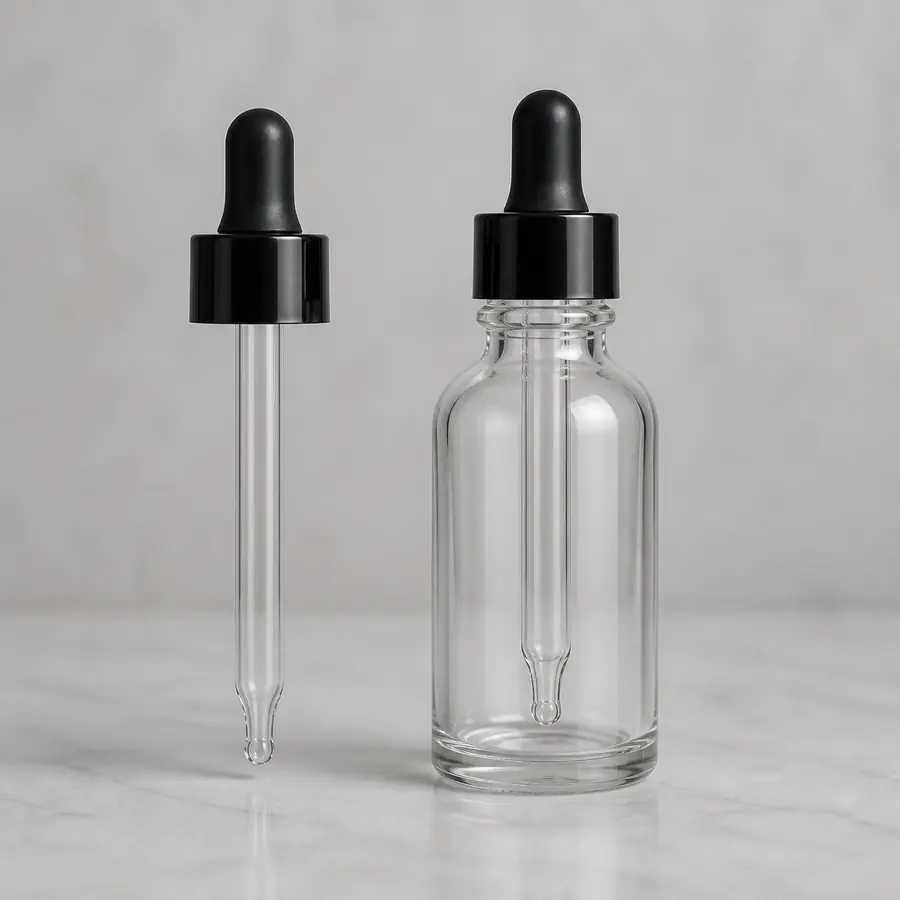
The correct dropper bottle pipette length must be matched to the bottle’s internal depth, the final closure seating position and the intended product pickup. A pipette that is too short can leave more formula inaccessible. One that is too long may contact the base, sit under stress or interfere with closure seating. Nominal bottle capacity does not determine the answer.
For B2B packaging approval, the correct length is the one that allows the selected dropper to operate consistently in the fully assembled bottle. Buyers should confirm the installed tip position, suitable bottom clearance and dispensing performance using physical samples with the actual formulation before bulk production.
What Determines Dropper Pipette Length?
Pipette length begins with the complete assembly, not a loose bottle measurement. Important references include the bottle’s internal depth and base shape, the height at which the closure seats on the neck, the pipette connection inside the closure and any change created by a wiper. The pipette outside diameter and tip form must also suit the intended system.
A practical measurement starts by identifying the final closure seating position and the distance from the installed pipette connection to the bottle’s internal base. The selected pipette must occupy this available space without creating unacceptable contact or leaving excessive product inaccessible.
Buyers should distinguish the pipette’s nominal overall length from its installed reach. The portion secured inside the bulb or closure, the connection structure and the final seating position can affect how far the tip extends into the bottle. Confirm the measurement reference points with the component supplier before approving a drawing.
The article on how glass dropper systems work explains the bulb, closure, pipette and optional wiper as a complete dispensing package. This guide stays focused on length selection and validation.
For broader component-selection considerations, see the cosmetic bottle closures and dispensing guide.
Why Bottle Capacity Alone Is Not Enough
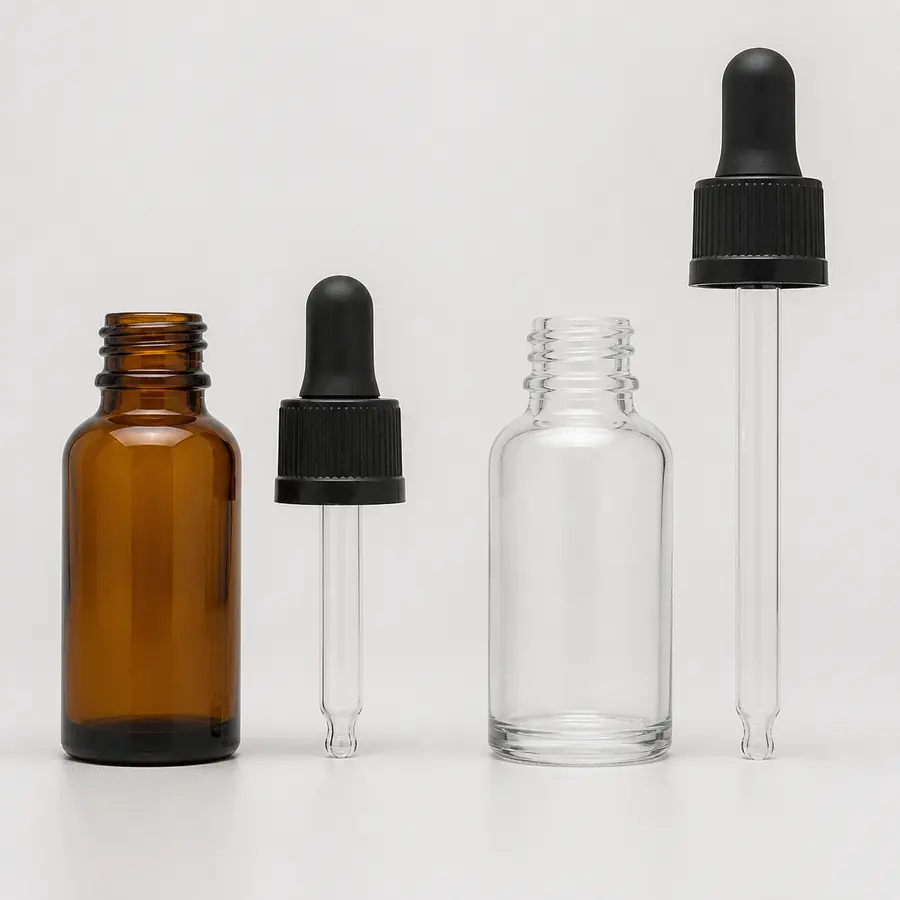
Two bottles can hold the same stated volume while having different heights, shoulders, wall profiles and base thicknesses. Their necks may also seat closures at different positions. A pipette selected only as “for a 30 ml bottle” can therefore be too short or too long when transferred to another design.
Even when two bottles share a nominal capacity and neck designation, their internal geometry and final closure seating positions may differ. Matching the neck specification alone does not confirm that the installed pipette length is appropriate.
Use the approved bottle and dropper drawings when available, then verify physical samples. The glass dropper bottle buying guide covers capacity, color and sourcing choices, but those commercial characteristics do not replace geometry matching.
What Happens if the Pipette Is Too Short?
A short pipette may lose access to product as the fill level decreases. The user may need to tilt the bottle, and more formula can remain below the tip. Uptake may become inconsistent near the end of use.
However, poor uptake can also involve the bulb, air leakage, immersion or formula behavior, so tube length should be evaluated within the complete system. A longer pipette is not automatically the correct solution.
When troubleshooting, buyers should compare the installed tip position with the remaining product level, then test whether the bulb can draw and release the formulation normally. The intended consumer use should determine whether the remaining product and pickup behavior are acceptable.
The planned answer on why a dropper does not fill completely addresses this broader troubleshooting question.
What Happens if the Pipette Is Too Long?
An overlong pipette may touch the bottom before the closure is fully seated. Continued tightening can place stress on the tube or its connection. The pipette may sit at an angle, scrape against a wiper or make assembly inconsistent.
A long pipette can contribute indirectly to sealing problems if it prevents normal closure seating, but length alone is not proof of the cause of leakage. The neck finish, sealing interface, closure structure and selected components must also be evaluated.
Manufacturer Insight: Check Closure Seating Before Changing Pipette Length
When a dropper closure cannot reach its intended seated position, the pipette’s contact with the bottle base should be investigated before changing the closure or applying additional tightening force.
Compare the empty closure assembly with the complete pipette assembly on the same bottle. If the closure seats normally without the pipette but cannot seat correctly with it installed, inspect the pipette’s installed reach, connection and base contact. This comparison can help isolate a possible mechanical interference, although it does not establish the cause of every sealing problem.
FOLOVER PACK recommends confirming the revised configuration using assembled physical samples rather than shortening a pipette solely from a nominal bottle-height measurement.
Should the Pipette Touch the Bottle Bottom?
There is no universal instruction that every pipette should touch or should never touch the base. The decision depends on bottle geometry, tip shape, closure seating, glass variation and intended pickup. Hard contact can create stress or prevent the closure from seating. Excessive clearance can increase residual product.
Bottom clearance is the distance between the installed pipette tip and the relevant internal base surface when the closure is fully seated. Its acceptable range must be established for the selected bottle and dropper assembly.
A universal clearance of 1–2 mm should not be applied to every dropper bottle. Without verified component drawings, dimensional variation and physical validation, a fixed numerical recommendation could result in an incorrect specification.
Define the intended position with the supplier and validate several assemblies. The approved clearance should accommodate the selected tip geometry, normal assembly and bottle variation while providing acceptable product pickup.
| Pipette Position | Potential Effect | What Buyers Should Verify |
|---|---|---|
| Excessive bottom clearance | Reduced access to product at lower fill levels. | Residual product, uptake consistency and intended consumer use. |
| Hard contact with the base | Possible pipette stress, displacement or closure-seating interference. | Installed tip position, normal closure seating and assembly condition. |
| Approved system-specific clearance | Balances product access with the mechanical requirements of the selected assembly. | Representative physical samples, dimensional variation and filled-package performance. |
Straight vs Angled Pipette Tips
Some pipettes use different tip forms, but the available option and its purpose must be confirmed for the exact component. An angled tip may change how the opening approaches a surface or how drops release. It does not automatically solve an incorrect length.
Tip geometry can also affect how the pipette approaches the bottle base. Buyers should confirm the final installed position and observe product pickup with the selected tip rather than assuming that straight and angled alternatives are interchangeable.
Do not substitute tip form or manually alter a glass pipette without verified production instructions.
Formula Viscosity and Product Pickup
Formula properties affect how product enters, coats and leaves the pipette. A water-like serum, facial oil and thicker formulation can show different uptake and release even with the same geometry. Viscosity is only one factor; surface tension, air bubbles and suspended ingredients may also matter.
For a more viscous formulation, extending the pipette closer to the bottle base may not resolve slow filling, incomplete uptake or poor release. The pipette’s internal diameter, tip opening, bulb characteristics and formulation behavior may also require evaluation.
Glass and plastic pipettes should not be treated as interchangeable solely because they share a nominal length. The selected material, outside diameter, internal bore, connection and tip geometry must be compatible with the intended assembly. Material-specific dimensional or thermal behavior should be assessed against actual component specifications rather than assumed from a generic material comparison.
Packaging compatibility should be evaluated with the actual formulation under intended storage and use conditions. The independent testing laboratory QACS describes cosmetic packaging compatibility testing as a material- and packaging-specific evaluation that considers the interaction between cosmetic formulations and their packaging components.
This broader compatibility assessment is separate from confirming pipette length. A mechanically correct pipette can still require additional evaluation of its contact materials and dispensing performance with the final formula.
The serum bottles overview compares dropper and pump directions. For the wider bottle-and-formula selection process, use the Serum Bottles. Buyers can browse verified serum and essential oil droppers and pumps, droppers and bottle accessories, but the actual formula must be tested.
How a Wiper Affects Pipette Fit
Where a bottle system includes a wiper, the pipette must pass through its opening during insertion and withdrawal. The wiper can remove external product, but it also adds an interface that affects alignment and force.
A pipette that is long enough but rubs heavily or catches during return is not an approved fit. Confirm that the wiper belongs to the exact neck and dropper system.
Buyers should evaluate pipette diameter, wiper opening, insertion and withdrawal behavior together. Do not assume that changing pipette length will correct interference caused by an incompatible wiper or incorrectly matched closure.
How to Handoff the Approved Pipette Specification
Once a configuration passes testing, record more than a general bottle size. Identify the bottle reference, closure and bulb assembly, pipette specification, tip form, optional wiper and relevant drawing revisions. Keep the approved physical sample or photographs tied to the same record. This makes it possible to distinguish an intentional update from an unreviewed substitution during production.
The validation record should also identify the formula or representative material, fill level, sample quantity and observations used for approval. If the buyer approved a certain clearance and closure seating condition, those characteristics should remain visible in the handoff. A supplier change, revised bottle base or alternative closure can alter installed pipette position even when the nominal capacity remains unchanged.
For quality review, compare multiple assemblies rather than choosing the best-looking example. Glass, closure and assembly variation can change the actual relationship at the base and wiper. The goal is a repeatable operating range across representative units, not a perfect result from one hand-built sample.
Pipette Specification Handoff Checklist
- Approved bottle reference and applicable drawing revision.
- Selected closure, bulb, pipette and optional wiper specifications.
- Defined pipette-length measurement reference points and approved installed tip position.
- Required bottom clearance and closure-seating condition for the selected assembly.
- Approved tip geometry, pipette diameter and relevant dispensing requirements.
- Physical sample reference and recorded formula-testing observations.
- Agreed procedure for reviewing component substitutions or dimensional changes before bulk production.
How to Validate the Final Length
Final length approval should combine dimensional inspection with functional evaluation of the fully assembled package. A drawing establishes the intended configuration, but the selected components must also demonstrate acceptable performance on physical samples.
- Identify the exact bottle, closure, bulb, pipette and optional wiper.
- Assemble several samples and confirm normal closure seating.
- Inspect tip position, bottom clearance and any side contact.
- Fill with the actual formula or an approved representative material.
- Test uptake, holding and release across repeated cycles.
- Observe movement through the wiper and residue around the neck.
- Evaluate performance at lower fill levels and note residual product.
- Repeat affected checks after any bottle, closure, pipette or formula change.
Testing with a representative material may support preliminary mechanical evaluation, but it does not replace final compatibility and dispensing assessment using the actual formulation.

Organize technical topics through the Packaging Technology hub and sourcing frameworks through Packaging Buying Guides. Keep a configuration record that identifies the approved bottle, closure, pipette, wiper and sample revision.
Conclusion
For B2B buyers, the most reliable approach is to approve the bottle, pipette, closure and optional wiper as one packaging system before bulk production.
FOLOVER PACK can support glass dropper bottle selection, component matching and sample evaluation for cosmetic packaging projects. Share your selected bottle reference, formulation type, dispensing requirements and available component specifications to discuss suitable packaging options.
Frequently Asked Questions
How long should a dropper pipette be?
A dropper pipette should suit the assembled closure position and bottle depth while maintaining the clearance required by the specific system. Its nominal length alone does not establish the final installed reach. Buyers should confirm measurement reference points, closure seating and tip position, then evaluate product pickup and release with the selected physical samples.
Should the pipette touch the bottom?
Not as a universal rule. Hard contact and excessive clearance can both be undesirable, so the intended position must be validated. A pipette that presses against the base may create mechanical interference, while excessive clearance may increase residual product. The acceptable position depends on the selected bottle, tip geometry, closure and intended dispensing performance.
Can one pipette length fit different bottle sizes?
Yes, but only if the assembled internal geometry is compatible and physical testing confirms acceptable performance. Different bottle capacities can have similar internal depths, while bottles with the same nominal capacity may require different pipette lengths. Buyers should verify each bottle-and-dropper combination rather than approving one pipette length for an entire product range automatically.
Does bottle capacity determine pipette length?
No. Bottle height, internal base shape, neck geometry, closure seating and pipette connection determine the required installed position. Capacity alone does not provide these measurements. Buyers should use the selected bottle and dropper specifications to establish a preliminary length, then confirm the final configuration through physical assembly and filled-product evaluation.
Can a long pipette cause leakage?
A long pipette can contribute to leakage if it contacts the bottle base and prevents the closure from reaching its intended sealing position. However, leakage has multiple possible causes, including neck, gasket and closure incompatibility. Buyers should investigate the complete assembled system before attributing a leakage problem to pipette length or changing the approved specification.