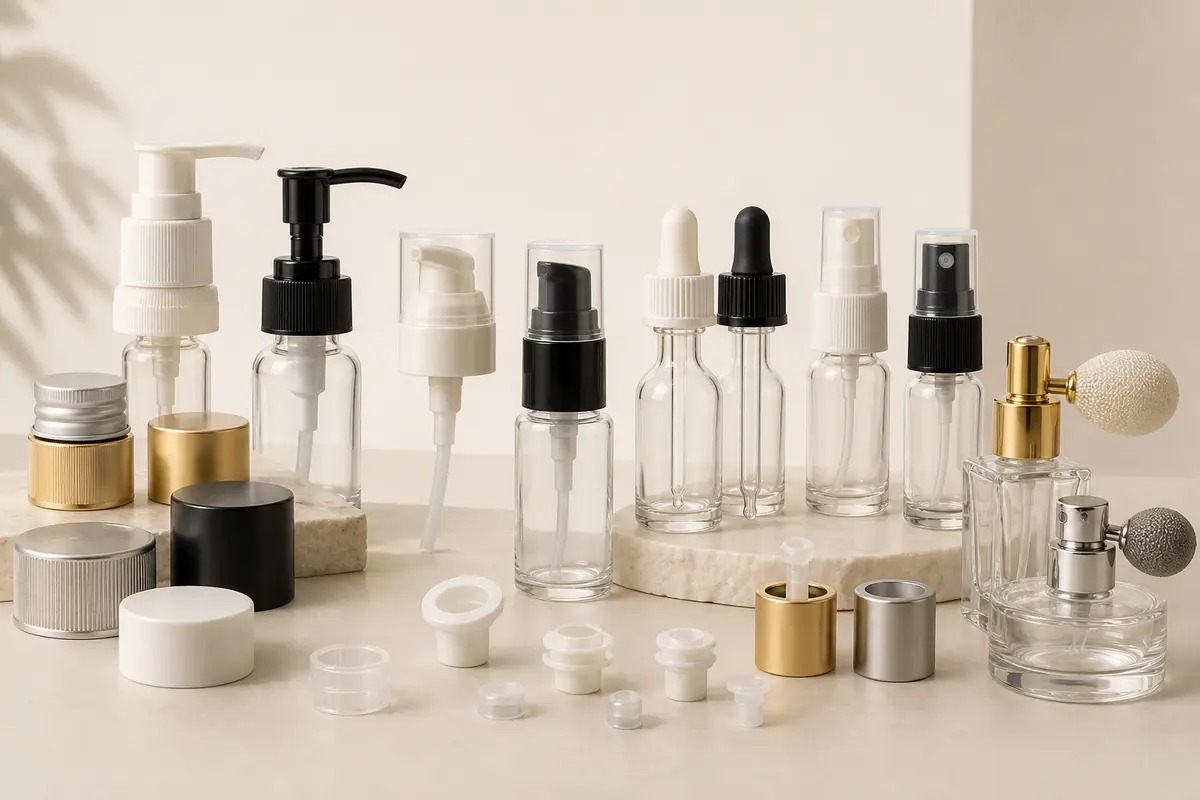

A consistent cosmetic packaging system across multiple SKUs does not mean forcing every product into the same bottle, closure or decoration. It means locking the brand elements that should remain recognizable, standardizing components only where functional compatibility allows, and controlling the variations that genuinely need to change by formula, capacity, dispensing method or SKU.
For B2B buyers, the system should also be purchasable and repeatable. Bottle references, closures, colors, decoration, artwork, cartons and approval samples need to remain connected to each SKU. Exact compatibility, MOQ, lead time, dimensions, dispensing performance and commercial terms remain project-specific and should be confirmed against the selected components and physical samples before bulk production.
| System Element | Usually Stable | May Vary by SKU | What Buyers Should Control |
|---|---|---|---|
| Brand identity | Logo behavior, typography hierarchy, overall visual language | Product name, formula claim and SKU identifier | Master artwork rules and approved SKU files |
| Bottle family | Shape language and proportion logic | Capacity or container type | Exact bottle reference for every SKU |
| Closures | Exterior design language where practical | Pump, dropper, sprayer, cap or internal component | Physical compatibility for each bottle and formula |
| Color and decoration | Brand palette and process rules | SKU color, printed copy or accent treatment | Physical color and decoration samples |
| Secondary packaging | Carton hierarchy and visual system | Dimensions, copy, inserts and regulatory information | Final assembled pack and artwork revision |
Define Core Brand Elements
A multi-SKU system needs a small number of recognizable elements that survive changes in formula, capacity and dispensing format. These may include bottle proportion, logo position, typography, color logic, closure appearance and carton hierarchy. If every SKU changes all of these elements at once, the range may look like unrelated products rather than one brand family.
Separate the brand rule from the individual product specification. The brand rule may say that all skincare products use the same typography and logo zone; the purchasing specification still needs to identify the exact bottle, closure, finish, decoration and artwork for each SKU.
Key takeaway: Consistency should come from a controlled visual and component system, not from forcing technically different products into identical packaging.
Separate Stable and Variable Elements
Stable elements create recognition. Variable elements help buyers and consumers distinguish formulas, functions or capacities. A practical packaging matrix should therefore show which decisions are locked across the range, which options may be selected from an approved family and which elements are unique to a specific SKU.
For example, a brand may keep bottle shape language, typography and logo position stable while allowing bottle capacity, dispenser type and accent color to change. The matrix should be decided before artwork proliferates across multiple SKUs, because informal exceptions become difficult to control once samples and purchase orders are already in progress.
Manufacturer Insight
FOLOVER recommends defining three statuses for each packaging element: fixed, approved option and SKU-specific. This makes supplier discussions clearer than simply asking for a “consistent range,” and it helps purchasing teams identify where a substitution would change an already approved system.

Choose a Shared Bottle Family
A shared bottle family can reduce unnecessary structural variation while keeping the range visually connected. Buyers should compare capacity options, decoration area, bottle proportions, neck configuration and the functional requirements of every planned SKU before deciding how much can genuinely be standardized.
Do not assume one container type should serve every formula. A serum, toner, lotion and cream can belong to the same brand system while using different primary containers because dispensing and product-access requirements differ. The shared system may therefore come from geometry, color and graphics rather than one identical bottle.
Practical Multi-SKU Architecture Example
A skincare range could use related glass proportions, the same typography and a controlled color palette across serum bottles, toner bottles, lotion bottles and cream jars. The serum may require a dropper or pump, the toner may require a sprayer or controlled-flow closure, and the cream may use a jar and lid. The visual language can remain consistent while the functional packaging changes where the formula requires it.
Standardize Closures Carefully
Shared caps, pumps, droppers or sprayers can simplify appearance and purchasing only when the selected components are technically suitable for each configuration. Exterior similarity does not prove interchangeability.
Compatibility may depend on neck finish, thread or crimp structure, sealing geometry, gasket where applicable, closure construction, dip tube or pipette, bottle dimensions, formula characteristics and dispensing requirements. Final bottle and closure compatibility should be confirmed using the selected components and physical samples before bulk production.
Manufacturer Insight
Standardize the visible closure language only as far as the functional system allows. Two SKUs may use visually coordinated pumps while requiring different internal configurations. Buyers should therefore record the complete bottle-and-closure reference for each SKU rather than purchasing by cap color or exterior shape alone.
Use Proportion as the Connecting Rule
When bottle types or capacities differ, proportion can still connect the range. Similar relationships between shoulder, body, base and closure can create a family resemblance without mechanically scaling one bottle drawing up or down.
Review the planned range at actual scale. A cap that looks balanced on a small serum bottle may appear undersized on a larger lotion bottle, while a tall actuator can change the visual relationship between otherwise related containers. Approve the complete assemblies rather than comparing bare glass only.
Create a Decoration Grammar
A decoration grammar defines how the brand uses coating, frosting, screen printing, hot stamping, labels and color across the range. It should answer practical questions: where the logo sits, which surfaces can change by SKU, which finish is common to the range and which decorative element is reserved for differentiation.
Physical approval matters because the same color reference may appear differently on coated glass, plastic, metal and printed paper. For important brand colors, keep the approved physical reference connected to the final artwork and component specification. The detailed approval process is covered in cosmetic bottle color matching.
More decoration combinations also create more sample and approval combinations. A range with five bottle colors and three logo processes is not one decoration decision; it is a matrix of configurations that must be controlled.
Plan Future SKUs Early
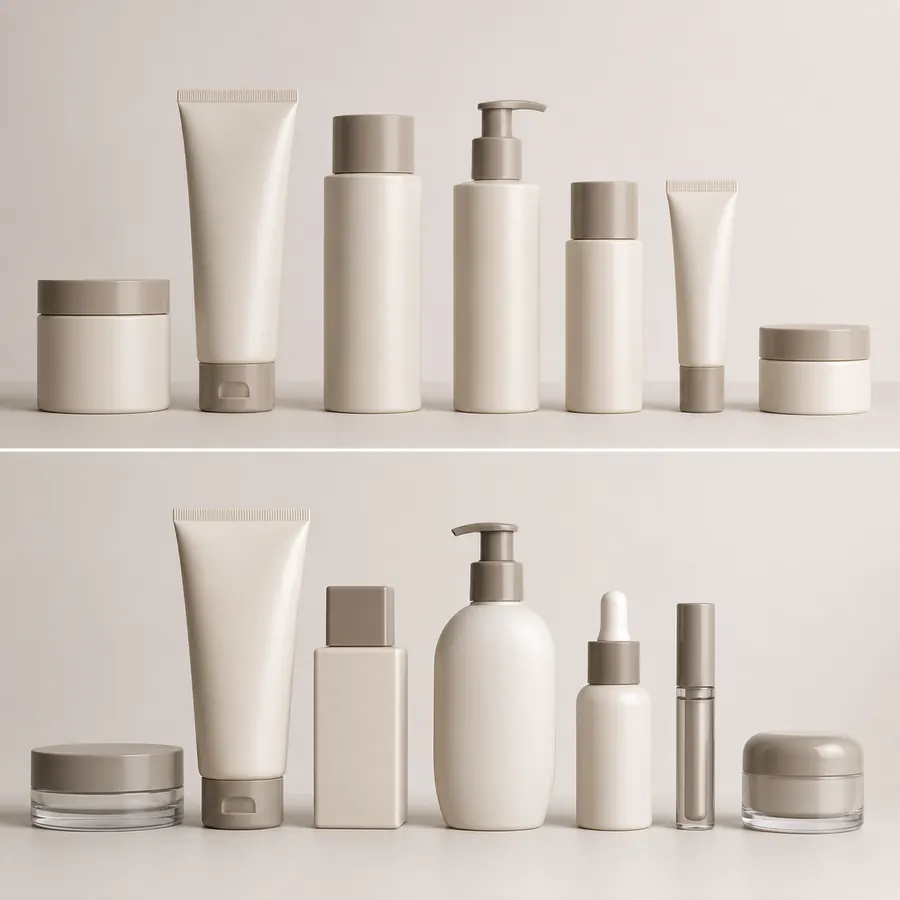
A packaging system should leave room for products that do not exist yet. Before freezing colors, naming rules and bottle families, map the likely next capacities, formula types and dispensing formats. This helps reveal whether the first launch is creating a scalable architecture or a set of one-off decisions.
Future planning does not mean purchasing every component in advance. It means avoiding design rules that become difficult to extend—for example, a color system with no room for additional variants or a bottle choice that has no suitable capacity progression for the planned range.
Connect Architecture to Inventory
Packaging standardization can reduce the number of component references buyers need to forecast, but it does not eliminate inventory risk. Bottle, closure, decoration and carton requirements should be planned separately because MOQ and production conditions can differ by component and process.
A shared bottle may improve purchasing efficiency, but a custom color or unique closure can still create its own MOQ and stock exposure. Compare system architecture with the full packaging cost rather than considering bottle price alone. The custom cosmetic packaging cost guide explains why component, customization and downstream costs should be evaluated together.
Manufacturer Insight
For multi-SKU RFQs, provide projected quantity by individual configuration rather than only one total project quantity. Suppliers need to understand how many units share the same bottle, closure, finish and artwork before MOQ, sampling and production planning can be evaluated accurately.
Design Variant Navigation
Customers should be able to distinguish product function, formula or size without losing the master brand. Color coding can help, but it should normally work together with clear product names, typography and other visual identifiers rather than carrying the entire navigation system by itself.
Review the range on shelf, in e-commerce thumbnails and in group photography. A differentiation method that works on a full-size carton may disappear when the product is viewed as a small online image.
Control Artwork Versions
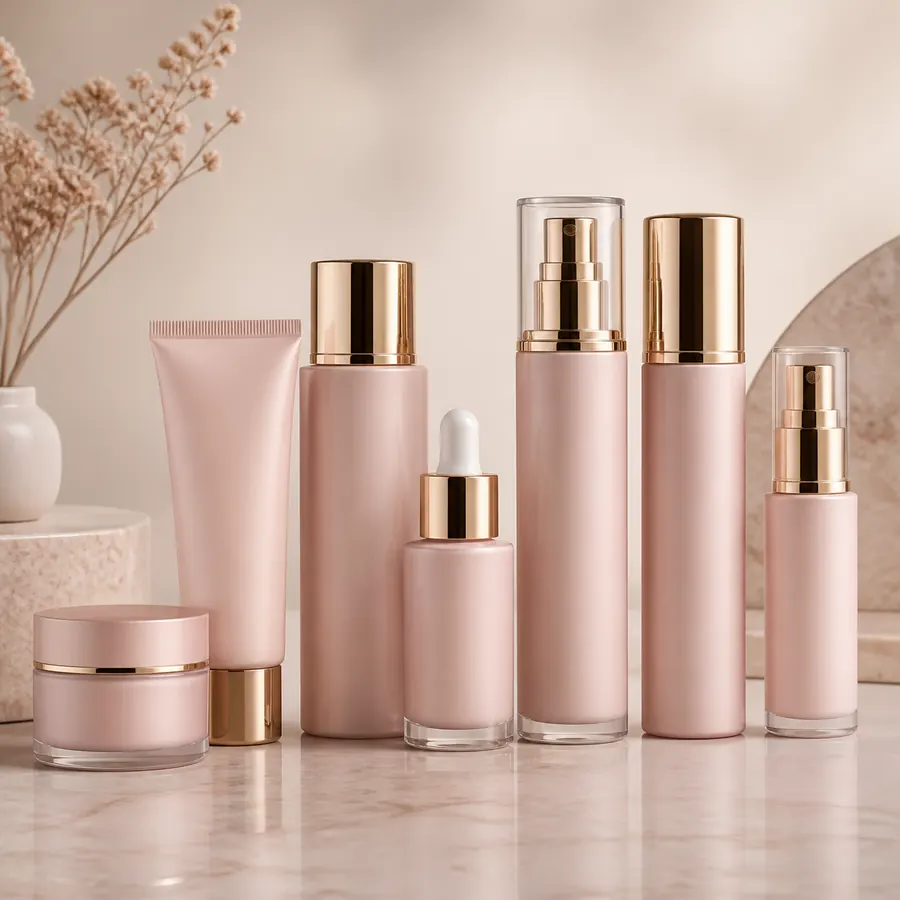
Multiple SKUs multiply the chance of using the wrong copy, color, capacity statement or component reference. Each artwork should have a unique file identity, clear revision status and an approval record connected to the corresponding SKU.
Do not use one “master artwork” file as evidence that every variant has been checked. Formula declarations, nominal content, product names and market-specific information can differ. For EU cosmetic products, Regulation (EC) No 1223/2009, Article 19, specifies information that must appear on cosmetic containers and packaging. Exact labeling requirements still depend on the product and destination market.
For brands using GS1 identification, SKU and pack changes should also be reviewed against the official GS1 GTIN Management Standard, which provides rules for identifying trade items when factors such as formulation, net content, primary brand or pack configuration change.
Avoid Common System Problems
Multi-SKU systems usually fail through uncontrolled exceptions rather than one dramatic design error. One product receives a different cap because of availability, another uses a new coating because the preferred shade was not frozen, and a third carton is approved before the final bottle assembly is confirmed. Individually these decisions may look reasonable; together they weaken the system.
Use the system matrix as a change-control tool. When one SKU needs an exception, record whether that change affects compatibility, artwork, color, carton dimensions, sampling or purchasing references elsewhere in the range.
Use a Launch Checklist
A staged launch helps purchasing teams verify each SKU without losing sight of the overall system. The goal is not to create more paperwork; it is to make sure the physical configuration being purchased is the same configuration that design, compatibility and artwork approvals refer to.
- Confirm the exact bottle reference for every SKU.
- Confirm the selected closure and dispensing system for each bottle.
- Verify bottle-and-closure compatibility using the selected components.
- Confirm formula-specific packaging requirements separately.
- Approve bottle, closure and decoration colors on physical samples.
- Approve final artwork revision for every individual SKU.
- Confirm carton and insert fit around the final assembled package.
- Record which components are shared and which are SKU-specific.
- Keep approved samples and component references linked to the purchase specification.
Connect Design Choices to Related Packaging Decisions
Design quality improves when teams connect the main topic with adjacent technical and commercial decisions. Review premium cosmetic packaging design, cosmetic packaging shape and proportion, standardized packaging platforms, and modular cosmetic packaging systems. These guides address different parts of the same system and are planning resources rather than substitutes for project-specific drawings, samples or tests.
For wider planning, use the skincare packaging guide. Suitable product formats can be reviewed through cosmetic and skincare glass packaging. These pages support selection and development, but the exact bottle, closure and decoration combination still requires verification.
What Buyers Should Put in the Design Brief
- Target customer, market, channel and intended positioning
- Initial SKU list and expected future range extensions
- Product type, formula considerations and dispensing preference for each SKU
- Required capacities and preferred bottle-family logic
- Exact closure, pump, sprayer, dropper or lid interface to validate
- Which components must remain common across the range
- Which elements may vary by SKU
- Color references, finish and decoration priorities
- Artwork naming and revision-control method
- Carton, insert, packing and photography requirements
- Sample stages, approval owners and retained approval references
- Commercial quantity by configuration rather than project total only
Use Samples as Decision Evidence
Physical samples reveal scale, weight, reflection, color, tactile feel, fit and assembly behavior that a rendering cannot establish. For a multi-SKU program, the challenge is deciding which approvals can legitimately represent several SKUs and which configurations need their own sample.
What to Evaluate Across the Range
- Representative bottle proportions at actual scale
- Each distinct bottle-and-closure combination
- Formula-sensitive dispensing configurations
- Each important color or surface-finish reference
- Artwork placement on different bottle shapes or capacities
- Carton and insert fit for different assembled dimensions
- Overall visual consistency when the complete range is viewed together
Do not release all SKUs simply because one representative pack passed review. If bottle geometry, closure, formula, internal component, decoration process or carton structure changes, identify which approval needs to be repeated.
FOLOVER Packaging Resources
FOLOVER organizes design and sourcing guidance under Packaging Design & Branding and Packaging Trends & Insights. Buyers can use these resources to develop multi-SKU packaging rules, prepare supplier-ready component matrices and identify where physical compatibility or sample approval is still required.
Availability, MOQ, lead time, tooling, color, compatibility and commercial terms must be confirmed for the exact project rather than inferred from a general article.
Related Blog Articles
Frequently Asked Questions
Should every SKU in a cosmetic range use the same bottle?
No. A consistent packaging system does not require every product to use identical primary packaging. The brand can standardize proportion, typography, color logic and closure language while allowing different bottles or jars where formula, capacity, dispensing or product-access requirements make them necessary.
Can the same pump, dropper or cap be used across multiple SKUs?
Only when the selected component is compatible with each bottle and product requirement. Exterior appearance alone does not prove interchangeability. Neck finish, sealing geometry, closure construction, dip tube or pipette, bottle dimensions, formula characteristics and dispensing requirements should be confirmed for each configuration.
How should colors be managed across multiple packaging components?
Use defined color references for communication, then approve the appearance on the actual glass, plastic, metal or paper substrate. The same reference can appear different across materials and finishes, so buyers should keep approved physical samples connected to the relevant component and artwork specification.
How can brands reduce packaging complexity across many SKUs?
Start by separating necessary functional variation from decorative variation. Reuse bottle families, closure language, typography, decoration rules or carton architecture where practical, but keep SKU-specific components where formula or dispensing needs require them. A component matrix makes unnecessary variation easier to identify.
Can one approved sample represent an entire multi-SKU range?
Not automatically. A representative sample can confirm shared visual rules, but different bottle-and-closure combinations, formulas, internal components, decoration processes or carton structures may require separate evaluation. Buyers should define which approval applies to which exact configuration.
What should buyers freeze before bulk production?
Buyers should confirm the bottle, closure, formula-dependent dispensing configuration, color or finish, decoration, artwork revision and secondary packaging for every SKU. Shared and SKU-specific components should be clearly identified, with approved samples and component references linked to the final purchasing specification.