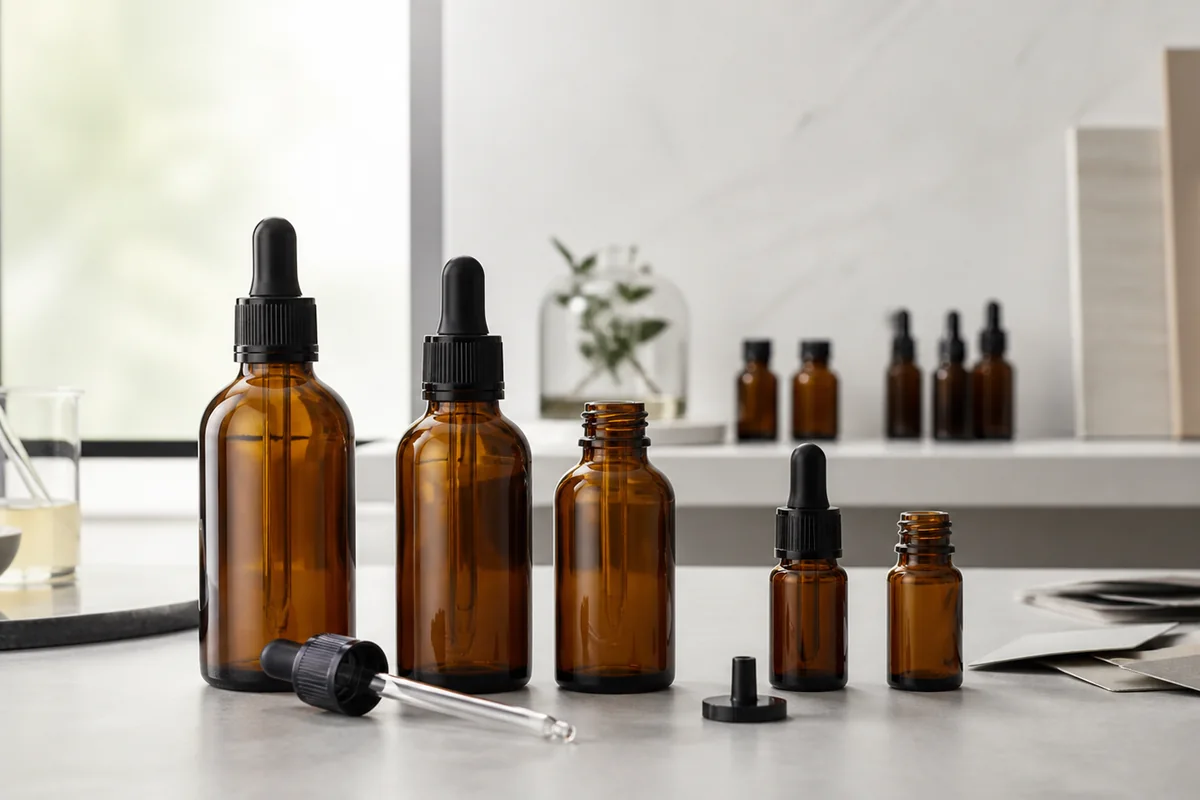
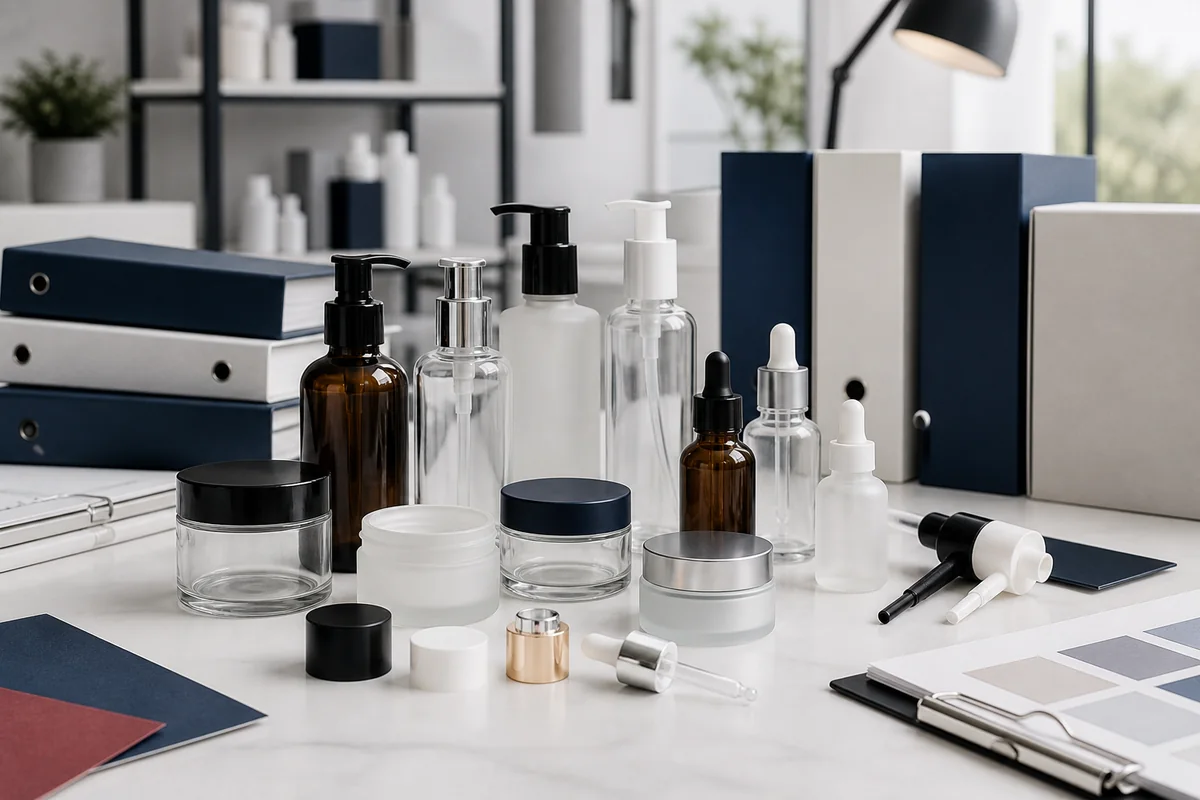
U.S. cosmetic packaging compliance requires buyers to assess the finished cosmetic, its container and closure system, material suitability, labeling, and the applicable responsibilities under U.S. law. The FDA does not provide a universal approval certificate for cosmetic glass bottles, jars, pumps or droppers. A supplier declaration or laboratory report can support a defined packaging decision, but it cannot establish compliance for the entire finished cosmetic product.
For a new packaging project, identify the intended formulation, bottle, closure, dispensing components, decoration and U.S. distribution requirements before requesting supplier documents. Evaluate the complete packaging system rather than treating the glass container and its accessories as unrelated purchasing items.
This guide provides practical procurement and packaging-development information, not legal advice. The Regulations & Compliance hub and Packaging Buying Guides resources provide related guidance for market-specific and sourcing decisions.
The Core Buyer View: “FDA-regulated” describes duties and enforcement, not a packaging approval stamp
The better buyer question is not “Is this bottle FDA approved?” but “Which U.S. requirement applies to the selected packaging, what does the supplier evidence actually cover, and what must be verified before the finished cosmetic is placed on the market?”
Buyers should distinguish packaging-material information, formula compatibility, labeling requirements and finished-product safety responsibilities. Evidence should be linked to the exact commercial packaging configuration rather than accepted as a general approval of every bottle, pump or decoration option.
How FDA regulates cosmetics
The Federal Food, Drug, and Cosmetic Act (FD&C Act) prohibits the introduction or delivery for introduction into interstate commerce of cosmetics that are adulterated or misbranded. The FDA regulates cosmetics through statutory requirements, inspections and enforcement authority, while businesses involved in manufacturing, distributing and marketing cosmetics retain their applicable legal responsibilities.
Under Section 601 of the FD&C Act, adulteration can involve harmful substances, contamination, insanitary manufacturing conditions or packaging materials that may render the cosmetic injurious to health. Section 602 addresses misbranding, including false or misleading labeling, missing required information and deceptive container presentation.
The FDA explains that these requirements apply to packaging and components as well as finished cosmetic products. Its guidance on adulterated and misbranded cosmetics provides the relevant legal definitions and explains how packaging may affect compliance.
For B2B packaging buyers, the practical starting point is product classification. A product marketed solely as a cosmetic may be subject to different requirements from a product that is also classified as a drug because of its intended use or claims. Packaging suppliers should not independently determine the final regulatory classification of a customer’s formulation.
Buyer action: Confirm the intended product classification, U.S. distribution responsibilities and applicable packaging requirements with the brand’s regulatory team. Obtain component information relevant to those requirements before approving the commercial packaging configuration.
Where packaging fits
Cosmetic packaging can affect product safety, contamination, stability, dispensing, labeling and the accuracy of the finished product’s presentation.
For example, a glass serum bottle may be supplied with a plastic pump, an internal spring, a gasket, a dip tube and a decorative cap. The glass body may have limited interaction with a particular formulation, while other components can introduce different contact materials, sealing conditions and dispensing behavior.
A report covering the glass bottle alone does not automatically establish the suitability of the complete assembly.
Review the commercial packaging as one system. The Cream Jars and cosmetic bottle closure guide help buyers identify the container, sealing and dispensing variables that should be considered during packaging development.
Packaging compatibility should be evaluated with the actual formulation under intended storage and use conditions. Final bottle and closure compatibility should be confirmed using the selected components and physical samples before bulk production.
FOLOVER Manufacturer Insight: The approved packaging system matters more than an individual bottle specification
When coordinating cosmetic glass packaging and accessories, FOLOVER PACK recommends identifying the complete assembly before finalizing component sourcing.
A glass bottle may retain the same appearance while a replacement pump introduces a different gasket, dip tube or internal material. If the buyer approves the bottle first and selects the dispensing components later, the original material information and compatibility evaluation may no longer cover the final assembly.
The practical sequence is to confirm the intended formulation and bottle, select the actual closure system, identify relevant formula-contact components, and evaluate the assembled samples before bulk-production approval.
FOLOVER can assist with bottle selection, component coordination, physical sample confirmation and available supplier documentation. Finished-product safety conclusions remain with the appropriate responsible businesses and qualified professionals.
FDA-regulated is not FDA-approved
The FDA generally does not approve cosmetic products or ingredients before they are marketed, with the exception of color additives that require premarket approval under applicable provisions.
Similarly, there is no general FDA premarket approval program that certifies cosmetic glass bottles, jars, pumps or caps as universally compliant for every formulation and intended use.
When a packaging supplier describes an item as “FDA approved,” buyers should request the underlying documentation and clarify what the statement actually means.
The document may concern a particular material, a food-contact application, a laboratory test or another regulatory matter. None of these automatically establishes approval of a complete cosmetic packaging system.
FDA facility registration and cosmetic product listing under MoCRA are also not product approval programs. The FDA’s explanation of its authority over cosmetics distinguishes regulatory oversight from premarket approval.
Buyer action: Ask suppliers to identify the exact document, applicable requirement, covered material and tested item. Avoid describing a bottle as FDA certified or FDA approved unless a specific, legally applicable FDA approval actually exists and the statement accurately reflects its scope.
Cosmetic packaging differs from food-contact packaging
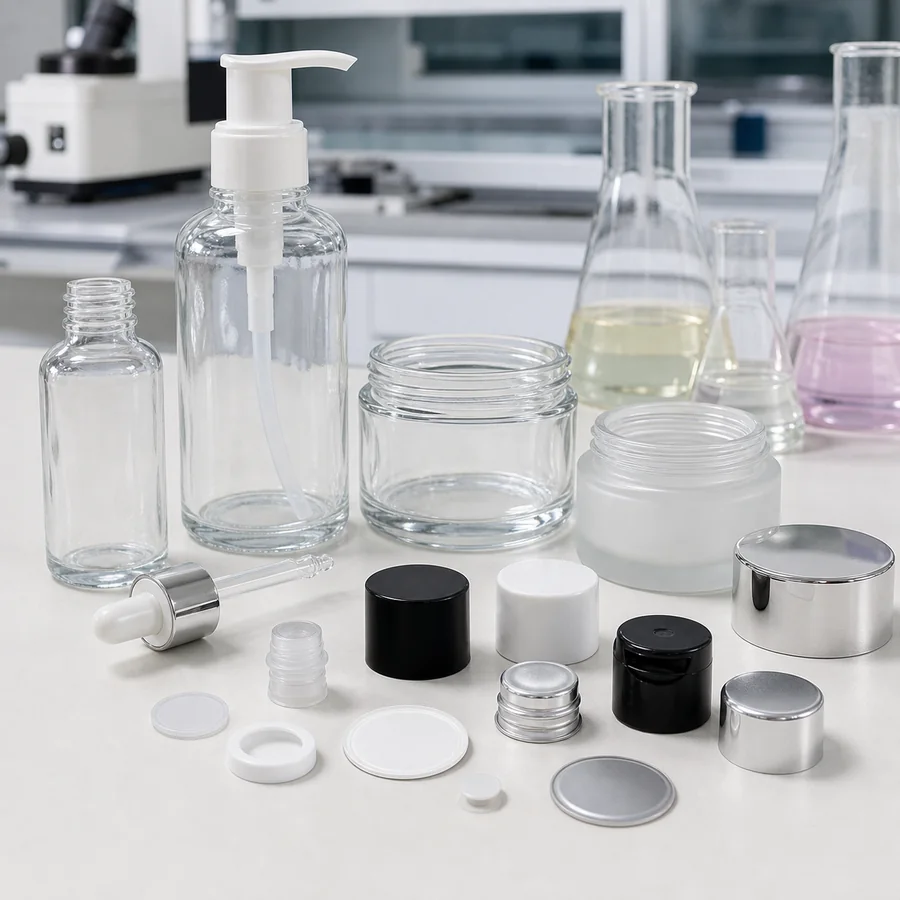
Food-contact material information may help answer specific questions about packaging composition or relevant substance exposure. However, food-contact suitability does not automatically establish compatibility with a cosmetic formulation or compliance with every applicable cosmetic requirement.
A material evaluated for contact with a particular food type under defined conditions may behave differently when exposed to a cosmetic containing oils, fragrances, alcohol or other formulation ingredients.
The actual contact materials, intended storage conditions and foreseeable product use must be considered.
Buyers comparing cosmetic cream jars should assess the selected jar, liner, lid and other relevant components together with the finished formulation.
A food-contact report may provide supporting information where its material identity and testing scope are relevant. It should not be presented as a mandatory universal FDA cosmetic packaging certificate.
Buyer action: Request the original document rather than a simplified “food grade” statement. Confirm the material, test scope, conditions of use and whether additional formulation-specific compatibility evaluation is necessary.
Closures, pumps and droppers belong in the review
The glass container is only one part of a cosmetic packaging system. Pumps, droppers, caps, liners, gaskets and dispensing components may introduce different materials and functional risks.
A bottle body report cannot establish the suitability of a pump spring, dip tube, elastomer seal, dropper bulb or liner unless the stated scope explicitly includes the relevant component and material.
For example, a replacement pump may have the same nominal neck specification as the previously approved component but use a different gasket or internal construction. Visual similarity and nominal neck size alone do not establish material or functional equivalence.
Buyers should review the selected cosmetic bottle closures as identifiable components rather than treating every accessory as one interchangeable product category.
When evaluating glass serum bottles with pumps or droppers, the procurement file should identify the selected bottle and dispensing components, relevant formula-contact materials, supplier information and approved physical samples.
| Packaging component | Main buyer concern | Relevant supporting evidence | What buyers should verify |
|---|---|---|---|
| Glass bottle or jar | Container suitability and possible interaction with the intended formulation. | Product specification, available material information and relevant compatibility evidence. | Exact bottle version and applicability of the evidence to the finished formulation. |
| Pump or dispensing closure | Formula-contact materials, sealing and dispensing performance. | Component specification, available material information and relevant functional evaluation. | Actual pump construction, bottle interface and assembled-sample performance. |
| Gasket, liner or dip tube | Material compatibility, contamination risk and sealing behavior. | Material identification and relevant supplier or project-specific test information. | Exact component material, supplier and contact with the formulation. |
| Dropper and bulb assembly | Formula-contact suitability, sealing and intended dispensing function. | Component specifications and relevant material or compatibility evidence. | Selected pipette, bulb, collar, sealing arrangement and assembled physical samples. |
The appropriate supporting evidence depends on the actual packaging configuration and intended application. This table is a procurement review framework, not a list of mandatory FDA certificates for every component.
Decorations and container presentation matter
Glass coloring, spray coating, screen printing, hot stamping, labels and adhesives can introduce additional materials and approval requirements.
A declaration or laboratory report for an undecorated glass bottle should not automatically be treated as evidence covering every finished decoration or accessory.
Decoration approval also involves a separate labeling decision. Under Section 602 of the FD&C Act, false or misleading labeling and deceptive container presentation can contribute to misbranding.
The FDA’s summary of cosmetic labeling requirements explains the applicable federal labeling framework, including requirements under the FD&C Act and the Fair Packaging and Labeling Act.
For example, a bottle’s decoration should not obscure required information or create a misleading impression of the quantity or nature of the finished cosmetic. The exact labeling requirements depend on the product, container, retail presentation and applicable regulations.
Coordinate regulatory artwork approval with physical decoration approval. Labeling versus packaging compliance should remain a separate decision stream.
FOLOVER PACK can coordinate bottle decoration, artwork placement and physical sample review. The brand’s responsible regulatory team should approve the finished cosmetic’s labeling content and product claims.
Buyer action: Confirm the selected decoration materials and approved artwork version. Review final colors, printing, coating and component appearance on physical samples before bulk production. Request additional material information where the decoration changes the scope of the original supporting evidence.
MoCRA changes the context but does not create a bottle certificate
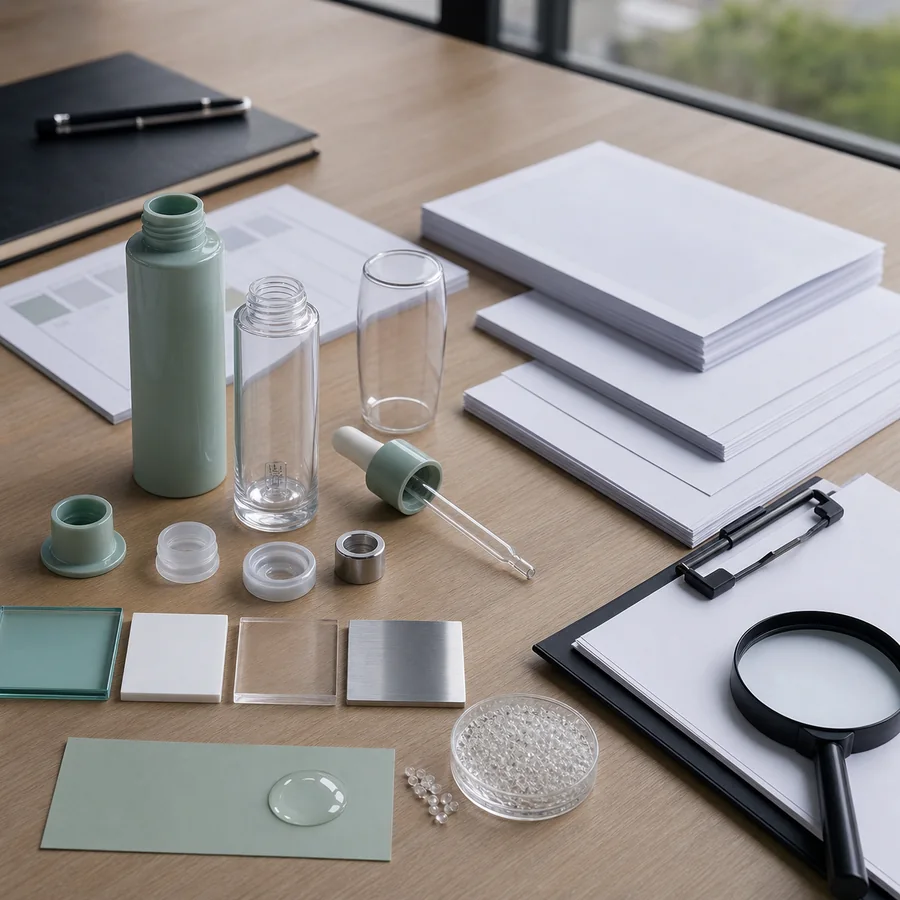
The Modernization of Cosmetics Regulation Act of 2022 (MoCRA) expanded the FDA’s authority over cosmetics and introduced additional requirements for the relevant businesses and cosmetic products.
These include cosmetic product safety substantiation, facility registration, product listing, serious adverse event reporting and certain labeling requirements, subject to applicable provisions and exemptions.
Under MoCRA, the responsible person must ensure that adequate substantiation of safety exists for a cosmetic product and maintain supporting records. Relevant packaging information may contribute to that assessment when the container or its components could affect the safety of the finished formulation.
However, MoCRA does not establish a universal FDA certification program for cosmetic glass bottles, jars, pumps or droppers.
What should packaging suppliers provide under MoCRA?
Packaging suppliers should provide accurate information relevant to the selected components and the buyer’s product-safety assessment. Depending on the packaging configuration and project requirements, this may include:
- Approved bottle, jar, closure and dispensing-component specifications.
- Available material identification and supplier declarations for relevant components.
- Information about formula-contact materials and the selected sealing system.
- Available product-specific laboratory reports where relevant to the buyer’s assessment.
- Approved physical samples and agreed compatibility or functional evaluation records.
- Decoration specifications, component traceability and relevant change notifications.
These are potential supporting records for packaging development and safety review, not a universally prescribed MoCRA certificate package.
MoCRA does not automatically require every cosmetic packaging supplier to provide a specific heavy-metals test, USP test or standardized FDA packaging declaration. Testing and documentation should be selected according to the actual material, intended formulation, applicable requirements and identified safety concerns.
Who is responsible for registration, listing and safety substantiation?
MoCRA establishes facility registration requirements for covered cosmetic product manufacturing and processing facilities, and product listing obligations for responsible persons, subject to applicable exemptions.
A business that only manufactures or supplies empty packaging is not automatically subject to cosmetic product facility registration solely because it produces bottles, jars or closures. Its actual activities and legal role must be assessed.
The responsible person for cosmetic product listing is defined by the applicable statute. Packaging suppliers should not claim that a bottle manufacturing or material report fulfills the finished cosmetic’s listing or safety-substantiation responsibilities.
FDA also explains that facility registration and product listing are not approval programs and that it does not issue certificates verifying compliance with those registration or listing requirements.
Consult the FDA MoCRA overview and its cosmetic product registration and listing guidance for the applicable requirements, exemptions and current implementation information.
Buyer action: Identify the business responsible for the finished cosmetic’s MoCRA obligations. Request the packaging information needed for its safety assessment, but do not treat supplier declarations, registration numbers or product listing records as FDA approval of the packaging or finished cosmetic.
State-level requirements may add another layer
Federal FDA requirements are not always the only legal considerations for cosmetics sold in the United States.
State laws may establish additional requirements concerning certain chemical substances, labeling, packaging materials or environmental claims. Their application depends on the product, relevant substances, packaging configuration and destination state.
For a cosmetic brand selling into multiple U.S. states, the regulatory team should identify which state-level requirements apply to its actual products and packaging.
A requirement applicable to one state, material or product category should not automatically be presented as a nationwide FDA requirement.
Buyer action: Identify the intended U.S. sales markets and assign responsibility for reviewing relevant state requirements. Request material or packaging evidence from suppliers according to the actual regulatory scope rather than asking for a generic nationwide compliance certificate.
Request documents that answer real questions
Useful packaging records may include component specifications, material declarations, supplier traceability information, relevant laboratory reports, decoration specifications and compatibility evaluation results.
The value of each document depends on whether it addresses the selected commercial component and the specific question being evaluated.
The cosmetic packaging documents guide explains the differences between a Technical Data Sheet (TDS), Safety Data Sheet (SDS), Certificate of Analysis (COA), supplier declaration and laboratory test report.
These documents serve different purposes. A material declaration should not be renamed as a test certificate, and a test report should not be presented as evidence of broader legal compliance than its actual scope supports.
For example, if a buyer is evaluating a glass serum bottle with a pump, the relevant information may need to identify the actual pump, gasket, dip tube and other formula-contact materials. A generic bottle specification cannot answer every question about the assembled dispensing system.
Evidence to retain: Component code, approved specification, supplier identity, document issuer, relevant test or declaration scope, document date and applicable packaging version. Record unresolved evidence gaps separately rather than marking the complete package as approved.
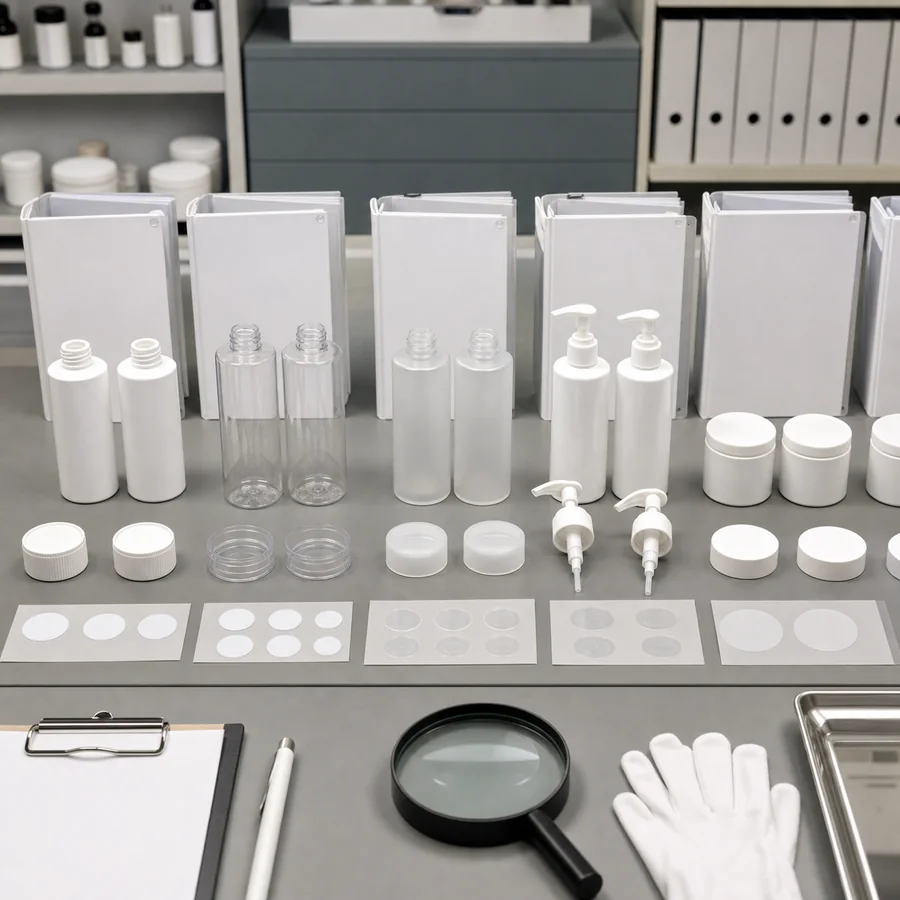
Control supplier and package changes
A change to a pump supplier, resin grade, gasket, pigment, coating, bottle structure or formulation may affect the evidence supporting a previously approved packaging configuration.
Consider a skincare brand that has approved a glass serum bottle with a specific treatment pump. During purchasing, a replacement pump is proposed because it has a similar appearance and nominal neck size.
The replacement may use a different internal material, sealing component or dip-tube configuration. The original pump’s declaration and compatibility evaluation should not automatically be applied to the new component.
The buyer should identify the affected parts, request relevant information from the replacement supplier and determine whether additional physical sample evaluation or formulation compatibility testing is needed.
This is an illustrative procurement scenario, not a documented FOLOVER customer incident or evidence that a particular pump failed an FDA compliance assessment.
Use a versioned cosmetic packaging compliance file to connect the approved component list, supplier documentation, physical samples and change history.
Buyer action: Establish supplier change-notification requirements before bulk production. Approve replacement components only after the affected technical, material and regulatory questions have been resolved.
Replace common misunderstandings with better questions
Several common purchasing assumptions can lead to incomplete packaging reviews. Instead of collecting more generic certificates, buyers should ask questions that identify the actual evidence gap.
| Common assumption | What buyers should ask instead | Required next action |
|---|---|---|
| “The bottle is FDA approved.” | Which requirement and packaging component does the available document address? | Review the original evidence and use accurate claim wording. |
| “The material is food grade.” | Does the existing evidence apply to the actual cosmetic formulation and contact conditions? | Identify any additional compatibility or material-evaluation requirements. |
| “The glass bottle report covers the complete package.” | Are the selected pump, gasket, cap and decoration included in its documented scope? | Request information for components not covered by the existing report. |
| “The supplier has completed FDA registration.” | Which business, facility or product is subject to the applicable registration or listing requirement? | Confirm the relevant legal role and distinguish registration from approval. |
| “The previous sample passed testing.” | Does the tested configuration match the final commercial packaging and formulation? | Review the effect of component, supplier and formulation changes before production release. |
The foundational cosmetic packaging compliance basics article explains the broader evidence and responsibility framework. Where a legal interpretation is uncertain, buyers should obtain qualified regulatory advice instead of relying on an unsupported supplier claim.
Build an Approval Matrix Instead of a Certificate Folder
A certificate folder shows which documents have been collected. An approval matrix connects each document to a specific packaging decision, the component and version it covers, the responsible reviewer and any unresolved requirements.
This distinction matters because an authentic supplier report may still be irrelevant to the selected commercial bottle, closure or decoration.
| Decision area | Evidence package | Approval gate | Reassessment trigger |
|---|---|---|---|
| How FDA regulates cosmetics | Product classification, applicable legal requirements and U.S. distribution responsibilities. | Confirm the responsible businesses and relevant requirements before final packaging approval. | Changes to the product’s intended use, classification or applicable requirements. |
| Where packaging fits | Approved bottle, closure and component specifications, formula-contact information and relevant compatibility evidence. | Review the selected packaging system with the actual formulation before bulk-production approval. | Changes to the formulation, bottle, closure, sealing materials or intended use. |
| FDA-regulated is not FDA-approved | Original supplier documents, relevant regulatory basis and accurate statements of document scope. | Confirm the evidence supports the specific claim before accepting the supplier’s declaration. | Changes to the covered component, supporting evidence or applicable requirement. |
| Cosmetic packaging differs from food-contact packaging | Material identification, relevant existing test information and formulation-specific compatibility evaluation where needed. | Confirm that evidence is applicable to the selected cosmetic packaging and intended use. | Changes to formula composition, contact materials or intended storage conditions. |
| MoCRA changes the context but does not create a bottle certificate | Relevant packaging specifications, supplier information and available evidence required for the finished-product safety assessment. | Confirm the packaging information requested by the responsible product-safety reviewer. | Changes to the finished formulation, packaging configuration or relevant regulatory requirements. |
| Decorations and container presentation matter | Approved artwork, decoration specifications, physical samples and relevant material information. | Confirm physical decoration and regulatory artwork approval before production release. | Changes to printing, coating, artwork, labeling or commercial packaging presentation. |
Use one approval record for each meaningful decision rather than creating a separate approval for every document. Several records may support one packaging decision, while a single report may address only one material or test condition.
Suppliers should identify the selected items and provide accurate, appropriately scoped information. Buyers should connect that information to the approved packaging configuration. The relevant regulatory, safety and quality professionals should review the decisions within their respective responsibilities.
Record conditional approvals explicitly so that purchasing and production teams know which formulation, component version, supplier and decoration were actually evaluated.
Buyer Compliance File Checklist
- Define the finished cosmetic, intended use, U.S. distribution markets and responsible legal entities.
- Confirm the selected bottle, closure, sealing components, decoration and component suppliers.
- Identify direct, indirect and reasonably foreseeable contact with the actual formulation.
- Match each specification, declaration and report to the exact component and approved packaging version.
- Separate applicable legal requirements from customer specifications and internal quality criteria.
- Confirm which packaging information is required for the finished-product safety assessment.
- Evaluate the selected bottle and closure system using physical samples before bulk production.
- Approve the final artwork, decoration and assembled packaging configuration.
- Record unresolved evidence gaps, responsible reviewers and required follow-up actions.
- Establish supplier change-notification requirements and retain the final approval records.
How to Review a Supplier Document
Start by checking the document title, issuer, component code, material, supplier, relevant manufacturing source, applicable testing or declaration basis and issue date.
Determine whether the document covers the actual commercial item being purchased. A report for an undecorated glass bottle may not cover the selected coating, while information for one pump material should not automatically be applied to a replacement component.
Both scope and currency matter. A recent report for the wrong component does not resolve the buyer’s question, and an older document should be reviewed for relevant material, supplier or regulatory changes before it is accepted.
Record the buyer’s conclusion separately: what the document supports, which limitations remain and whether additional supplier clarification, testing or qualified regulatory review is required.
Frequently Asked Questions
Does one certificate prove a cosmetic package is compliant?
No. A supplier certificate or declaration supports only the materials, components and requirements within its stated scope. Complete U.S. cosmetic packaging compliance depends on the finished product, packaging configuration, intended use and applicable legal responsibilities. Buyers should identify the exact items covered by each document and obtain additional evidence where the existing information does not support the required approval decision.
Does a glass bottle report cover its pump, cap and decoration?
Only if the report explicitly covers those components and materials within its documented scope. A glass bottle report does not automatically establish the suitability of a separately supplied pump, gasket, cap or decorative finish. Buyers should identify the selected components, review the available supplier information and request further evidence where the existing report does not cover the final packaging configuration.
Does a passing test guarantee legal compliance?
No. A laboratory report provides evidence for the tested sample, substances, method and conditions. It does not automatically establish compliance with every applicable U.S. cosmetic product, packaging or labeling requirement. Buyers should confirm the report’s applicability to the selected commercial component and obtain qualified regulatory or safety review where the required legal conclusion remains uncertain.
When should the file be reassessed?
The file should be reassessed when relevant changes affect the formulation, packaging component, material, supplier, color, decoration, manufacturing process, intended use or applicable regulatory requirements. Buyers should identify the affected documents, determine whether existing evidence remains applicable and complete any required supplier confirmation, testing or approval before accepting the revised packaging configuration.
Can the packaging supplier approve the finished cosmetic?
A packaging supplier can provide product specifications, available material information, relevant declarations, agreed testing evidence and physical samples within its actual service scope. Finished-product safety substantiation, legal labeling approval and market-placement responsibilities remain with the appropriate responsible businesses and qualified professionals. Buyers should clarify these responsibilities and obtain the required packaging information before approving the final commercial configuration.
Official Sources Used
U.S. cosmetic regulations and their implementation may change. The following official FDA resources provide the legal and regulatory context for the packaging-development and procurement decisions discussed in this guide. Buyers should confirm the current requirements applicable to their actual product and business role.
- FDA key terms: adulterated and misbranded cosmetics — Explains the FD&C Act’s requirements concerning cosmetic composition, packaging, labeling and relevant legal responsibilities.
- FDA authority over cosmetics — Explains the distinction between FDA regulation and premarket approval, including the relevant exception for color additives.
- FDA MoCRA overview — Describes the Modernization of Cosmetics Regulation Act of 2022 and its requirements concerning cosmetic product safety, registration, listing and other regulatory responsibilities.
- FDA cosmetics registration and listing — Explains facility registration, cosmetic product listing, applicable exemptions and the distinction between registration or listing and FDA approval.
- FDA summary of cosmetic labeling requirements — Provides information on federal cosmetic labeling requirements and the regulatory treatment of misleading labels and container presentation.
Conclusion
U.S. cosmetic packaging compliance should be evaluated using the actual finished-product requirements and the selected commercial packaging configuration, not a generic FDA certificate request.
Before bulk production, buyers should confirm the bottle, closure, dispensing components, formula-contact materials, decoration and available supporting evidence. Any unresolved safety, labeling or regulatory questions should be reviewed by the appropriate responsible professionals.
FOLOVER PACK can assist with cosmetic glass packaging selection, component matching, decoration coordination and available product-specific documentation. These services support the buyer’s packaging-development process without replacing the finished cosmetic’s legal or product-safety responsibilities.
If you are developing cosmetic packaging for the U.S. market, share your intended application, preferred bottle or jar, closure requirements, formulation considerations, decoration and required supporting documents. FOLOVER can review the relevant packaging options and clarify which component information and physical samples can be supplied for further evaluation.