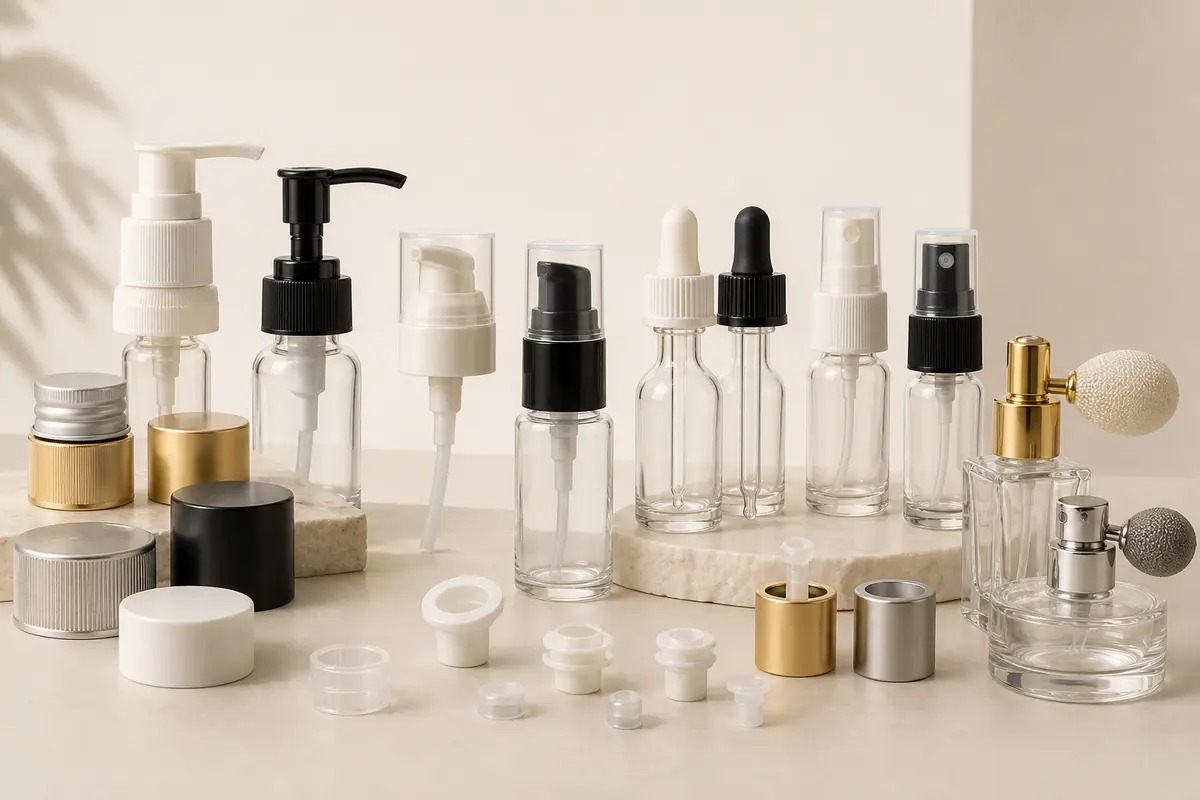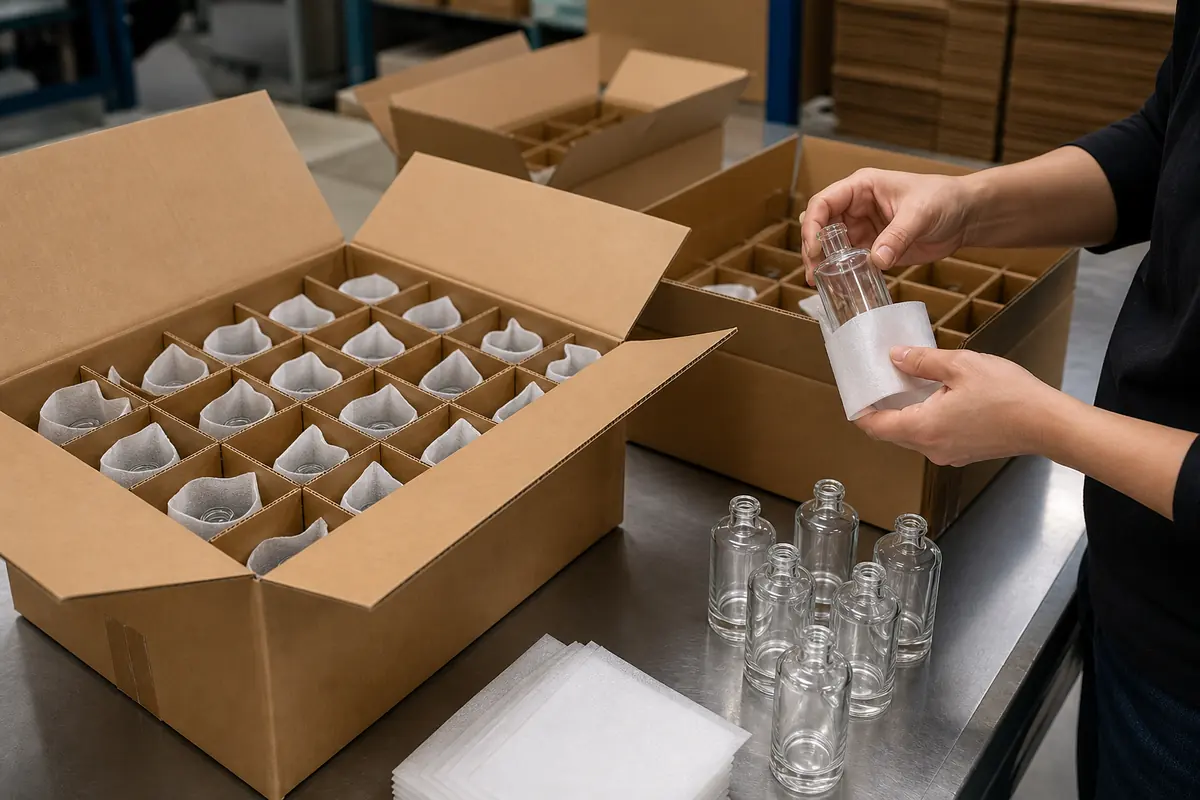
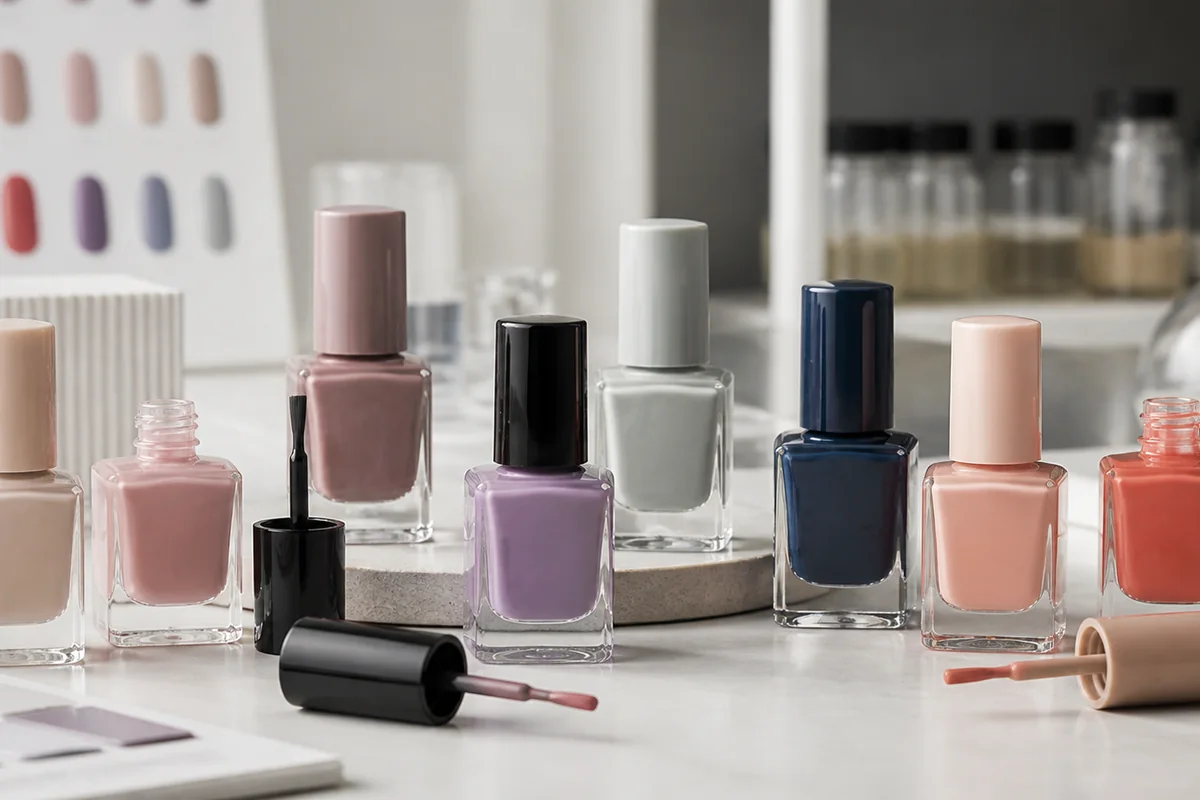
Nail Polish Bottle Packaging decisions affect dispensing, sealing, production consistency and the way the finished product applies in use. The correct package cannot be selected from appearance or a component catalog alone. It should be evaluated as a complete system in which the formula, bottle, neck, cap, stem, brush, decoration, filling process, distribution conditions and user behavior interact.
This guide gives B2B packaging buyers a practical framework for defining requirements, comparing samples and approving the final assembly. It complements FOLOVER’s Packaging Applications resources and Product Knowledge content while keeping the decision focused on the exact formula and project conditions. Product-specific dimensions, neck finish, tolerances, formula-contact materials and performance should be confirmed through current drawings, supplier documentation and physical samples rather than assumed from a similar pack.
The Core Buyer View: Nail polish performance is a three-part metering system
The neck and wiping zone influence what remains on the stem and brush, brush geometry controls how the formula is placed on the nail, and formula rheology affects pickup, release and leveling. Because these three elements interact, a good-looking brush in a compatible-looking bottle can still produce inconsistent application.
This changes the sourcing question from “Which component looks suitable?” to “Under which documented conditions does this complete package remain acceptable?” For buyers, that means approving the bottle, cap, stem and brush as one package and validating the assembled system with the representative formula before bulk production.
| Decision Factor | Why It Matters | Main Failure Risk | What Buyers Should Verify |
|---|---|---|---|
| Bottle Geometry | Influences stability, brush access and usable product near the base | Brush cannot reach remaining formula or internal geometry traps product | Internal depth, shoulder and base profile at different fill levels |
| Neck & Wiping Zone | Guides the stem and contributes to wiping and sealing | Excess formula on the stem, neck contamination or poor closure fit | Neck drawing, stem clearance, sealing geometry and assembled samples |
| Stem & Brush | Controls pickup, coverage and application behavior | Overloading, insufficient pickup or poor near-empty access | Stem length, brush geometry and application with the representative formula |
| Cap & Closure | Provides the application handle and forms part of the sealing system | Loosening, leakage, torque change or internal component mismatch | The complete cap, insert, stem and bottle assembly under repeated use |
| Decoration | Must tolerate filling, handling and formula-adjacent contact | Coating marks, print damage or deterioration around high-contact areas | Physical decorated samples after filling, wiping and repeated handling |
Define the application result before choosing parts
Nail polish packaging should begin with the desired coat, control and user routine rather than with a stock bottle. Color lacquers, treatment products and effect-heavy formulas can require different pickup and release behavior. The decision should consider formula rheology, pigments or suspended effects, target coverage, expected brush strokes and drying behavior. Buyers can use the Nail Polish Bottles as a related route for the broader bottle, brush and customization selection process.
A common failure is selecting the bottle and brush before application trials. Instead, define what an acceptable application looks like and compare candidate assemblies under consistent conditions. Record the formula batch, component identities, evaluation conditions and agreed acceptance criteria so that the approved sample becomes a reproducible reference rather than an isolated successful demonstration.
From a procurement perspective, suppliers should distinguish confirmed specifications from general recommendations. Request drawings and material information for critical parts, identify which characteristics are controlled, and establish when a component or process change requires review. This is especially important when bottle production, decoration, filling and final assembly involve different parties.
Manufacturer Insight: At FOLOVER, we normally treat the bottle, cap, stem and brush as one approval assembly. A change to a critical component after sample approval should not automatically be assumed to produce the same application or sealing result.
Select bottle shape for stability and brush access
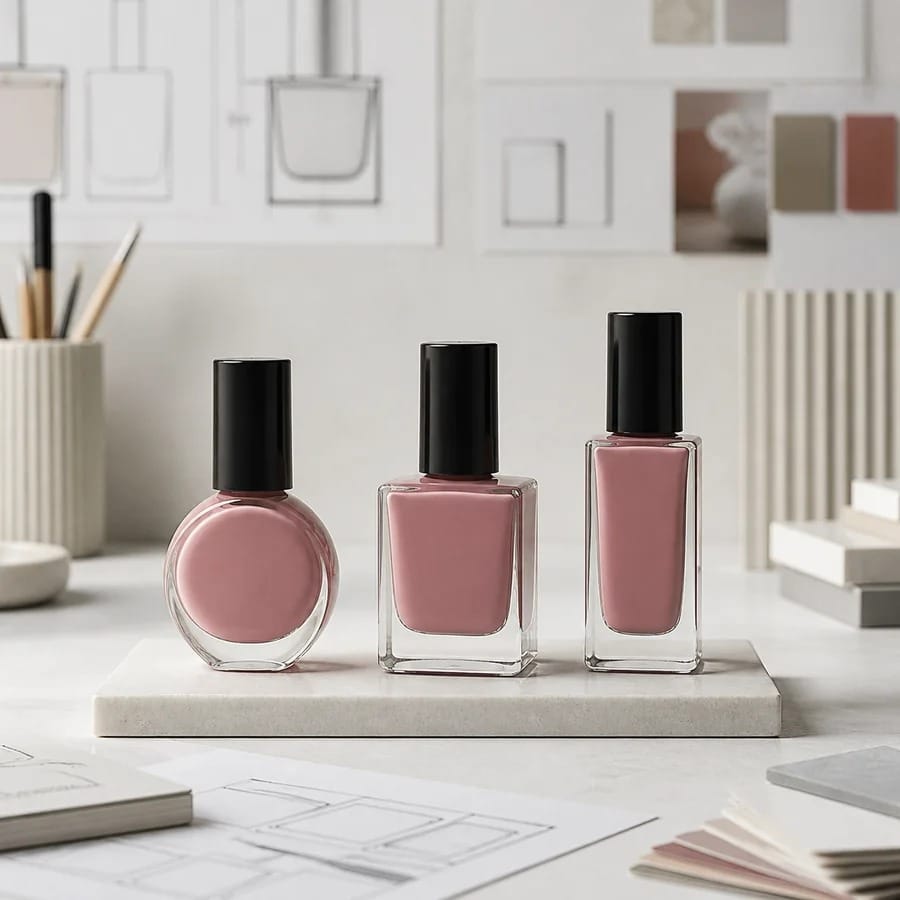
A broad base can support standing stability, while internal corners, shoulder geometry and base profile influence where formula remains as the fill level drops. Exterior shape also affects decoration area, carton density and handling during filling. For bottle selection, buyers should consider external footprint together with the internal geometry that the brush actually needs to access. Buyers can use the cosmetic bottle closure guide when the closure system is being evaluated alongside the bottle.
A common failure is judging bottle usability only when the bottle is full. The practical corrective action is to evaluate repeated brush access at several fill levels and confirm that the applicator can reach usable product without excessive tilting, scraping or repeated attempts.
From a procurement perspective, do not approve bottle shape only from exterior dimensions or product photography. Internal depth, shoulder profile and base geometry should be checked using production-intent samples because two bottles with similar external proportions may behave differently with the same stem and brush.
Treat the neck as a metering zone
The nail polish bottle neck does more than hold the cap. It guides the stem, forms part of the sealing interface and can influence how excess formula is removed during withdrawal. Bore geometry, sealing surfaces, thread or closure interface, stem clearance, concentricity and glass variation therefore need to be considered together. Buyers can use nail polish bottles to shortlist bottle formats before the final brush and closure system is approved.
A common failure is treating neck finish as only a cap-fit question. A cap may engage with a bottle while stem guidance, wiping behavior or sealing geometry is still unsuitable. The selected bottle and closure drawings should therefore be reviewed together with the actual stem and brush assembly.
From a procurement perspective, visual similarity or a nominal neck description does not establish interchangeability. Final bottle and closure compatibility should be confirmed using the selected components and physical samples before bulk production.

Match stem length to bottle geometry
A stem should position the brush close enough to the usable bottom area without forcing the applicator against the glass base. It also needs to clear the shoulder and remain aligned during withdrawal. Bottle depth, internal base profile, cap engagement, stem attachment and brush length therefore need to be evaluated as one geometry. Buyers can review relevant perfume and cosmetic bottle caps when selecting compatible cap structures.
A common failure is specifying stem length only from nominal external bottle height. External height does not define the internal usable depth or final brush position once the cap, stem and brush are fully assembled.
For approval, assemble the selected bottle, cap, stem and brush and observe access as the fill level decreases. Exact stem length should remain configuration-specific; it should not be copied from another bottle simply because capacity or exterior height appears similar.
Engineer brush geometry for the formula
Fiber material, bundle density, width, cut, flexibility and tip geometry influence how much formula the brush carries and how it releases during application. A wider brush may improve coverage for one formula but overload another, while a low-loading brush can require unnecessary repeated strokes. Buyers can use the broader caps and closures range when coordinating the complete component system.
There is no universally “premium” brush specification for every nail polish. The relevant question is whether the brush produces the intended pickup, spread and coat with the production-intent formula. Application comparisons should therefore use the same formula and controlled sample conditions rather than relying on visual comparisons between empty components.
From a procurement perspective, brush material and geometry should be documented as part of the approved component set. If the brush, stem or formula changes, repeat the relevant application checks before treating the revised combination as equivalent.
Buyer implication: A brush that works well with one formulation should not automatically be transferred to another. Formula viscosity, suspended pigments or effects and the target application result can change the required pickup and release behavior.
Coordinate cap design and closure fit
The decorative cap is also the user’s application handle and may contain the internal insert that connects to the stem. External shape and finish influence grip, while internal engagement, alignment and sealing determine whether the complete assembly remains functional through repeated opening and closing. For another example of why a decorative container and closure need to be evaluated together, see FOLOVER’s cosmetic glass jar construction guide.
A common failure is approving the decorative outer cap while treating the insert, stem and brush as separate accessories. The complete cap, insert, stem and brush assembly should be checked on the selected bottle. For continuous-thread systems, ASTM D2063/D2063M-24 provides a current method for measuring torque retention of packages with continuous-thread closures under predetermined conditions. It is a test-method reference, not a universal nail-polish torque specification.
From a procurement perspective, application and removal criteria should be established for the exact bottle-and-cap system rather than copied from another package. At FOLOVER, we normally recommend retaining the complete approved bottle, cap, stem and brush assembly as the physical production reference.
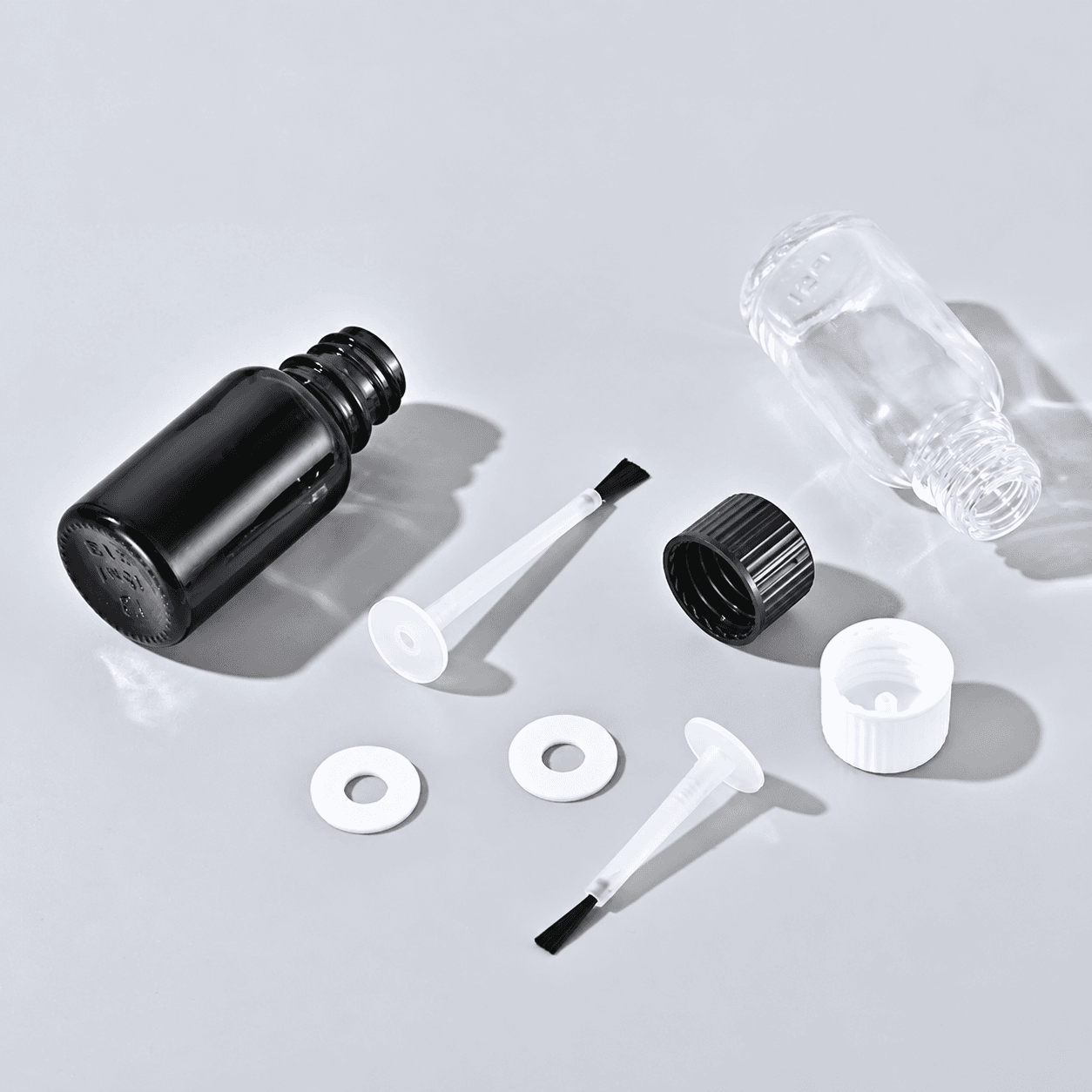
Account for volatile solvent behavior
Conventional nail lacquer can contain a substantial volatile-solvent phase, making closure integrity and formula-contact material selection especially important. A 2025 peer-reviewed review of nail polish composition describes formulations reported in the literature as approximately 70% solvents, alongside film-forming polymers, resins, plasticizers, pigments and suspending agents. This is a published composition reference, not a specification for every nail formula, so packaging decisions should be based on the actual formulation used in the project. Buyers can also review cosmetic bottle neck finishes when assessing the neck-and-closure interface.
A common failure is relying only on a short inverted-leak check. Gradual solvent loss may appear as changed viscosity or application behavior before obvious external leakage becomes visible. Depending on the project, filled-package observations can include package mass, formula behavior, closure condition, odor change and brush application over a defined evaluation period.
The U.S. FDA Nail Care Products guidance notes that some nail products contain ingredients that can catch fire and discusses solvents used in some nail polishes. This FDA guidance addresses product safety and regulatory context rather than packaging compatibility. For buyers, the packaging implication is to identify the real formula and intended storage and use conditions before approving sealing materials and the complete package.
Manufacturer Insight: For solvent-containing nail products, FOLOVER normally recommends evaluating the filled package rather than relying only on an empty fit check. A closure can appear mechanically correct while formula exposure, storage or repeated opening reveals a different result.
Design decoration for repeated solvent-adjacent handling
Formula can contact the neck or cap during use, and users may wipe the bottle with material contaminated by nail lacquer or remover. Coating, screen printing, hot stamping and other decoration should therefore be evaluated under realistic handling rather than approved only from artwork or a freshly decorated empty bottle. Buyers can use the existing glass bottle tolerances guide when considering how bottle variation and assembled components interact.
A common failure is treating an initial decoration sample as complete durability proof. Final color, logo, coating and print should be approved on physical decorated bottles, then reviewed again after relevant filling, repeated handling and formula-adjacent wiping. Exact adhesion grades, abrasion cycles or universal solvent-resistance claims should not be assumed without project-specific evidence.
From a procurement perspective, decoration requirements should be locked together with the actual bottle and cap configuration because surface process, component color and handling area can influence the finished result. FOLOVER’s decoration and finishing options provide the relevant sourcing path for coating, frosting, printing, hot stamping and related bottle-finishing requirements.
Run production-representative filling and assembly trials
Lab-filled samples may identify obvious package problems but may not reproduce issues introduced during actual filling and assembly, such as neck contamination, incorrect component insertion, cap misapplication or stem damage. The process trial should therefore recreate relevant filling, insertion, capping, inspection and packing conditions. Buyers can use the existing compliance for decorated cosmetic bottles guide when reviewing documentation for a decorated configuration.
A common failure is waiting until the first bulk-production lot to evaluate assembly behavior. Before bulk production, use traceable production-intent components and document the assembly settings and inspection points that materially affect the final package.
From a procurement perspective, a hand-assembled sample that works well is not automatically a production-approved package. The approved bottle, cap, stem, brush and decoration configuration should be linked to the same project record, and relevant changes should trigger review before production continues.
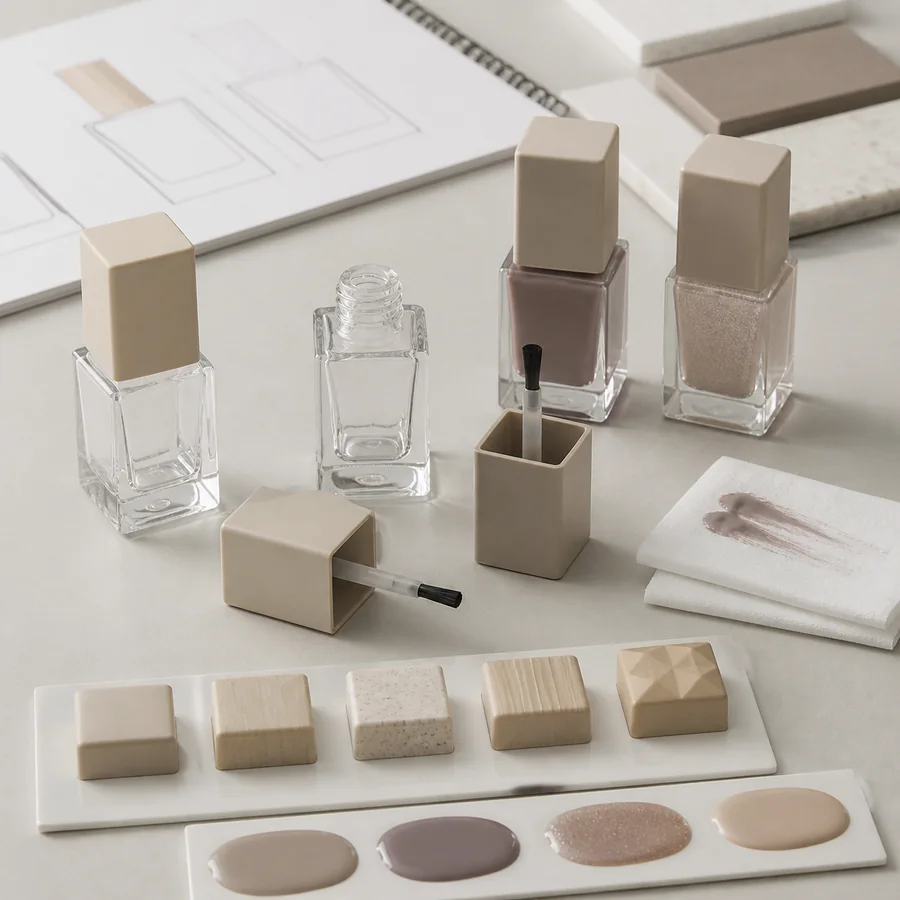
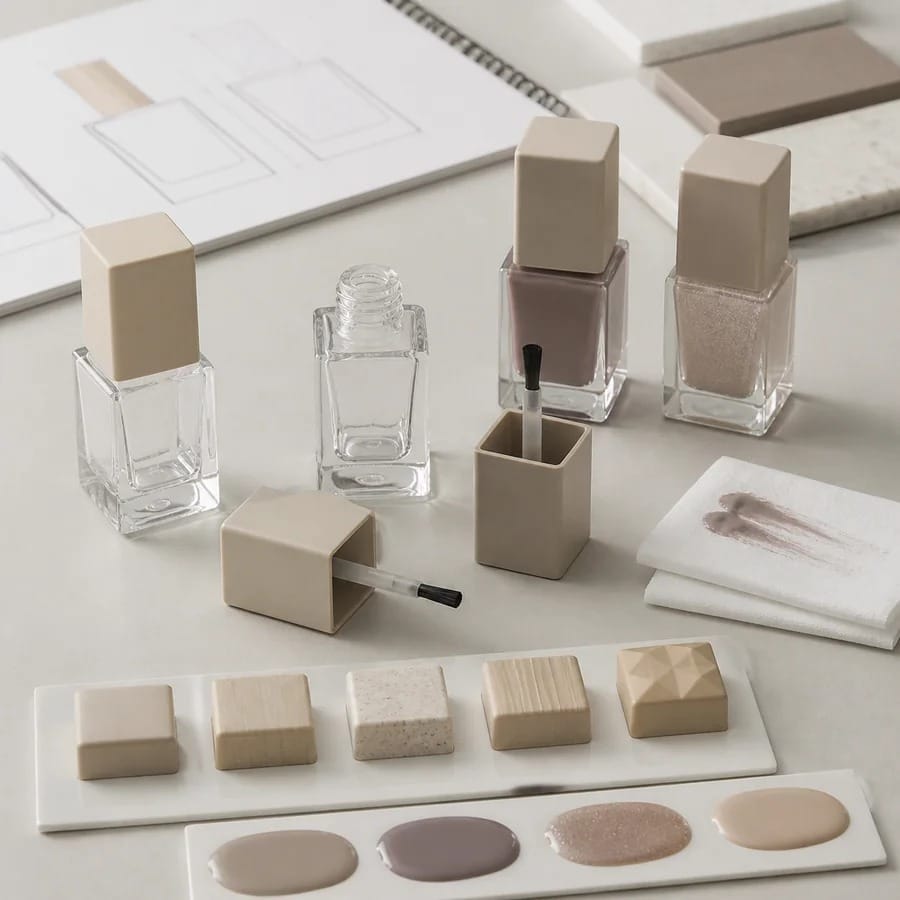
Nail polish bottle application and compatibility testing for buyer evaluation.
Approve the system with application evidence
The final decision should combine sealing, fit, solvent-loss observations, application quality, ergonomics, decoration and repeated-use behavior. A retained approval sample should represent the agreed bottle, cap, stem, brush and decoration rather than one visually selected component. Approval records should identify the formula batch or representative formula, component configuration and conditions used for the evaluation.
Formula-contact materials also require attention. Where a rubber or rubber-like sealing component is used, ASTM D471 provides a standardized method for comparing the effect of liquids on rubber and rubber-like materials. ASTM states that accelerated testing provides comparative data and may not correlate directly with every real service condition. For nail polish packaging, this means a generic “solvent-resistant” material description should not replace evaluation of the actual sealing material with the representative formula.
Final bottle and closure compatibility should be confirmed using the selected components and physical samples before bulk production. Packaging compatibility should be evaluated with the actual formulation under intended storage and use conditions. If the formula, formula-contact material, critical bottle or closure dimensions, brush, stem, supplier or assembly process changes after approval, determine whether partial or full revalidation is required.
Buyer Approval Checklist
- Define the intended formula, application result, fill volume, user, destination market and expected storage conditions.
- Identify the bottle, neck, cap, insert, stem, brush and formula-contact materials in the approved assembly.
- Request current drawings or specifications for critical components rather than relying only on product names or appearance.
- Compare production-intent assemblies instead of combining unverified bottle, cap and brush parts from separate sources.
- Evaluate brush pickup, wiping, coverage and near-empty access with the representative formula.
- Check filled packages under relevant storage orientations and observe leakage, package mass, closure condition and formula behavior.
- Verify decorated samples after filling, repeated handling and realistic formula-adjacent wiping.
- Confirm production-representative filling and assembly where those operations can influence package performance.
- Retain the approved physical sample and require review when critical materials, dimensions, suppliers or processes change.
How to Structure the Sample Evaluation
Begin with a screening round to compare plausible bottle, cap, stem and brush combinations. Use this stage to remove assemblies with obvious fit, access, wiping, sealing or application problems. A short screening test is useful for eliminating poor options, but it should not be presented as proof of long-term compatibility.
Move the strongest candidates into filled evaluation using the representative formula and production-intent components. Record the formula batch, component identity, test condition, inspection date and agreed acceptance criteria. Depending on the project, observations may include leakage, package mass, formula viscosity or application behavior, closure condition, brush pickup, near-empty access, decoration and repeated-use performance.
If a result is close to an acceptance limit, investigate the mechanism before increasing order quantity. Do not average away a serious outlier without determining whether it came from component variation, assembly, formula interaction or the evaluation method.
Frequently Asked Questions
Can packaging be approved from an empty sample?
An empty sample can confirm appearance, basic fit and handling, but it cannot establish formula compatibility, solvent retention, long-term sealing, brush application or decoration durability. Final approval should use the intended or representative formula with the selected production-intent assembly under documented conditions.
Is a supplier’s standard component specification enough?
No. It is a useful starting point, but it does not replace system testing. Performance depends on the exact formula, bottle, neck, cap, sealing materials, stem, brush, filling and assembly process, storage environment and use pattern. Buyers should use supplier specifications to define what must then be verified on the complete package.
What should trigger revalidation?
Changes to the formula, formula-contact material, critical bottle or closure dimensions, brush or stem, supplier, tooling, decoration system, filling process or assembly settings can affect performance. The project team should define which changes require partial or full revalidation before mass production.
How should buyers compare two visually similar packages?
Compare controlled drawings, component materials, assembled samples, filled test observations, application quality, residual product access, decoration, logistics and change-control requirements. Similar appearance does not establish equivalent fit, sealing or application performance.
How should nail polish cap torque be evaluated?
There is no universal torque value that should be copied across all nail polish packages. For continuous-thread systems, the correct application and removal criteria depend on the selected bottle and closure. Where appropriate, ASTM D2063/D2063M can provide a method for evaluating removal-torque retention, while the buyer still defines project-specific acceptance limits for the actual package.
Should nail polish packaging be tested with the actual formula?
Yes. Solvents, viscosity, pigments and other formulation characteristics can change application behavior and may affect formula-contact components. Packaging compatibility should be evaluated with the actual or representative formulation under intended storage and use conditions before bulk production.
Conclusion
The neck and wiping zone influence what reaches the brush, brush geometry controls placement, and formula rheology determines how the product loads and releases. Bottle geometry, closure sealing, stem length, decoration and production assembly then determine whether that application performance remains acceptable through filling, transport and repeated use.
For B2B buyers, the strongest approval is not a visually attractive component set but a documented, production-intent package evaluated with the representative formula. Build the shortlist from verified bottle and component information, approve physical decorated samples, and validate the actual filled assembly before bulk production.