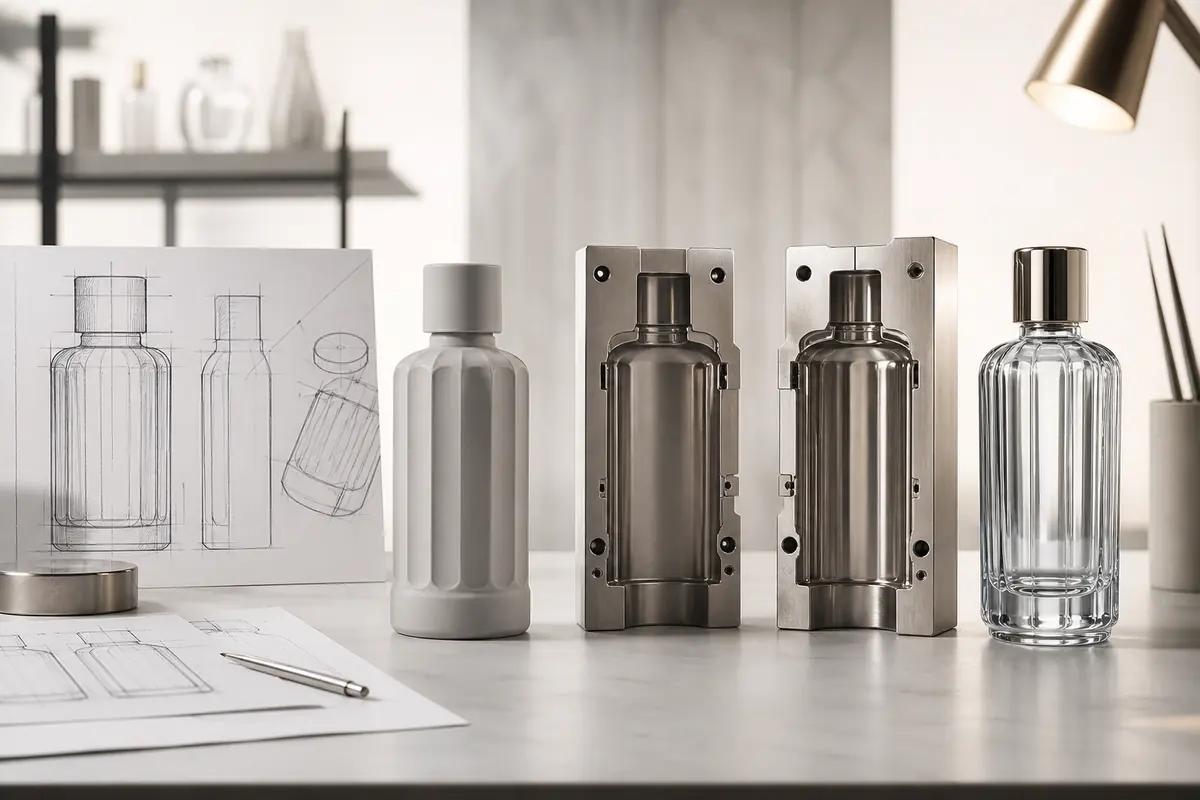
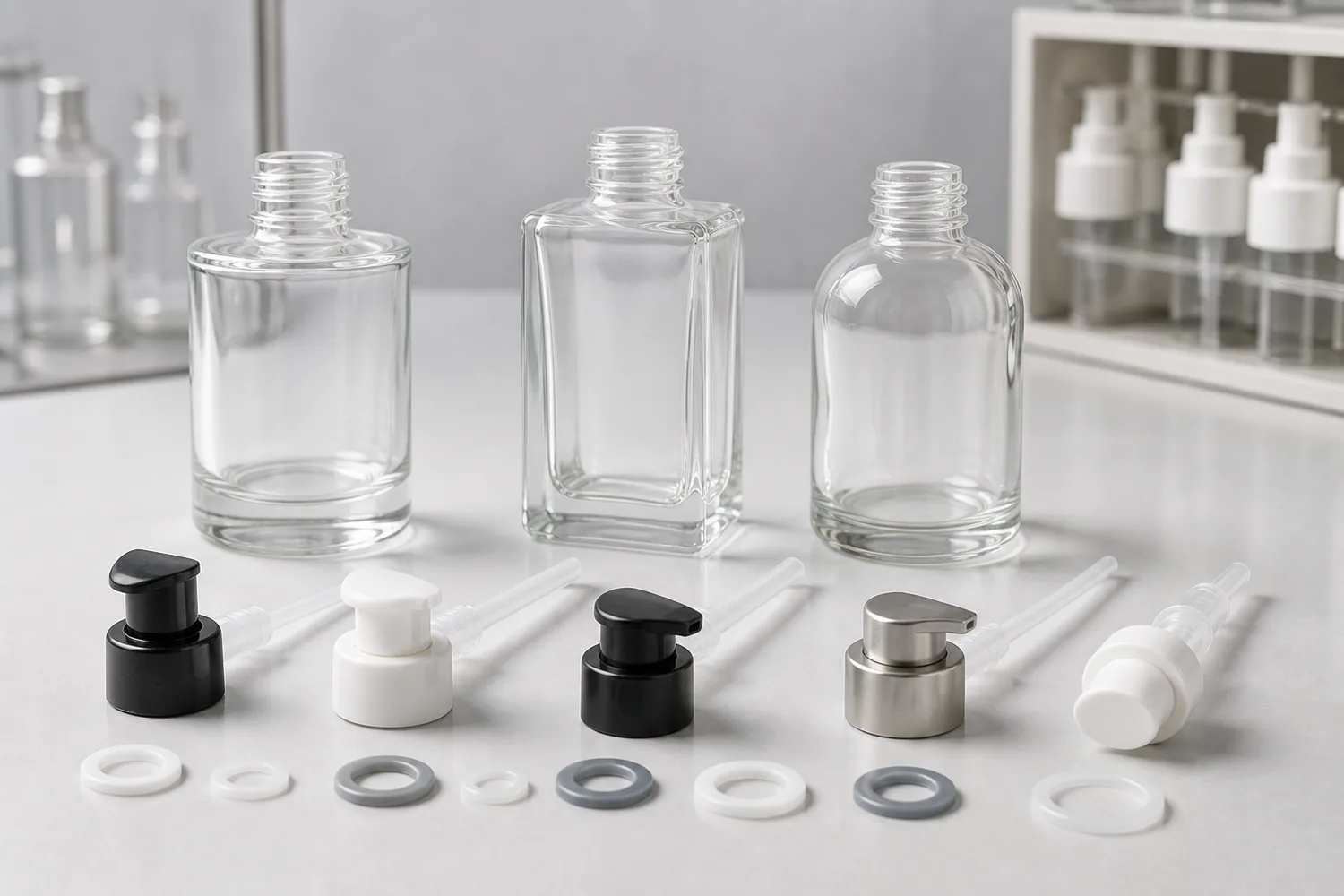
Yes. One cosmetic pump can fit different glass bottles, but a shared nominal neck size does not guarantee compatibility. The pump must match each bottle’s neck finish, sealing surface, gasket, dip-tube requirements, and intended formulation. A pump that screws onto two bottles may still leak, dispense inconsistently, or fail during filling and transport.
For cosmetic brands developing several serum or lotion bottle sizes, using one pump platform can simplify sourcing and maintain a consistent appearance. The practical solution is to approve each bottle-and-pump combination separately, even when the same pump mechanism can be used across the collection.
Neck finish is the first gate, not the final answer
A nominal neck size, such as 24/410, is a useful starting point for selecting compatible components. However, it does not establish that every bottle and pump with the same nominal designation will work together.
The thread profile, finish height, sealing land, bottle opening, closure structure, and manufacturing tolerances must also be considered. A pump may engage with the bottle threads while failing to compress its gasket correctly.
The cosmetic bottle neck finish guide explains the differences between common bottle interfaces. Buyers should compare the selected bottle and pump specifications before approving a shared dispensing system.
Manufacturer Insight: When selecting a pump for several glass bottles, FOLOVER PACK recommends confirming the exact bottle and closure combination rather than relying on a common neck designation. The same nominal neck size can be used for initial component screening, but final compatibility should be confirmed using the selected components and physical samples before bulk production.

Why a pump that screws on may still leak
Many lotion pumps rely on a gasket or liner compressed against the bottle’s sealing surface. The closure must travel far enough to establish the intended seal without damaging the components or placing excessive stress on the glass finish.
If the closure reaches a mechanical stop before the gasket is properly compressed, the pump may feel tight while the sealing interface remains incomplete. Excessive tightening can also distort components or damage the bottle neck.
Application torque should therefore be established for the selected assembly. A tightening setting approved for one bottle should not automatically be applied to another bottle simply because both have the same nominal neck size.
A flush collar or apparently secure fit is not proof of sealing performance. Buyers should check gasket contact, assembly stability, leakage, and the finished appearance together.
Dip tube length changes the functional fit
Even when the bottle neck and pump closure are compatible, the dip tube may require a different length for each glass bottle.
A tube that is too short may stop drawing product while usable formulation remains in the bottle. A tube that is too long can press against the base, bend excessively, obstruct its inlet, or interfere with correct pump seating.
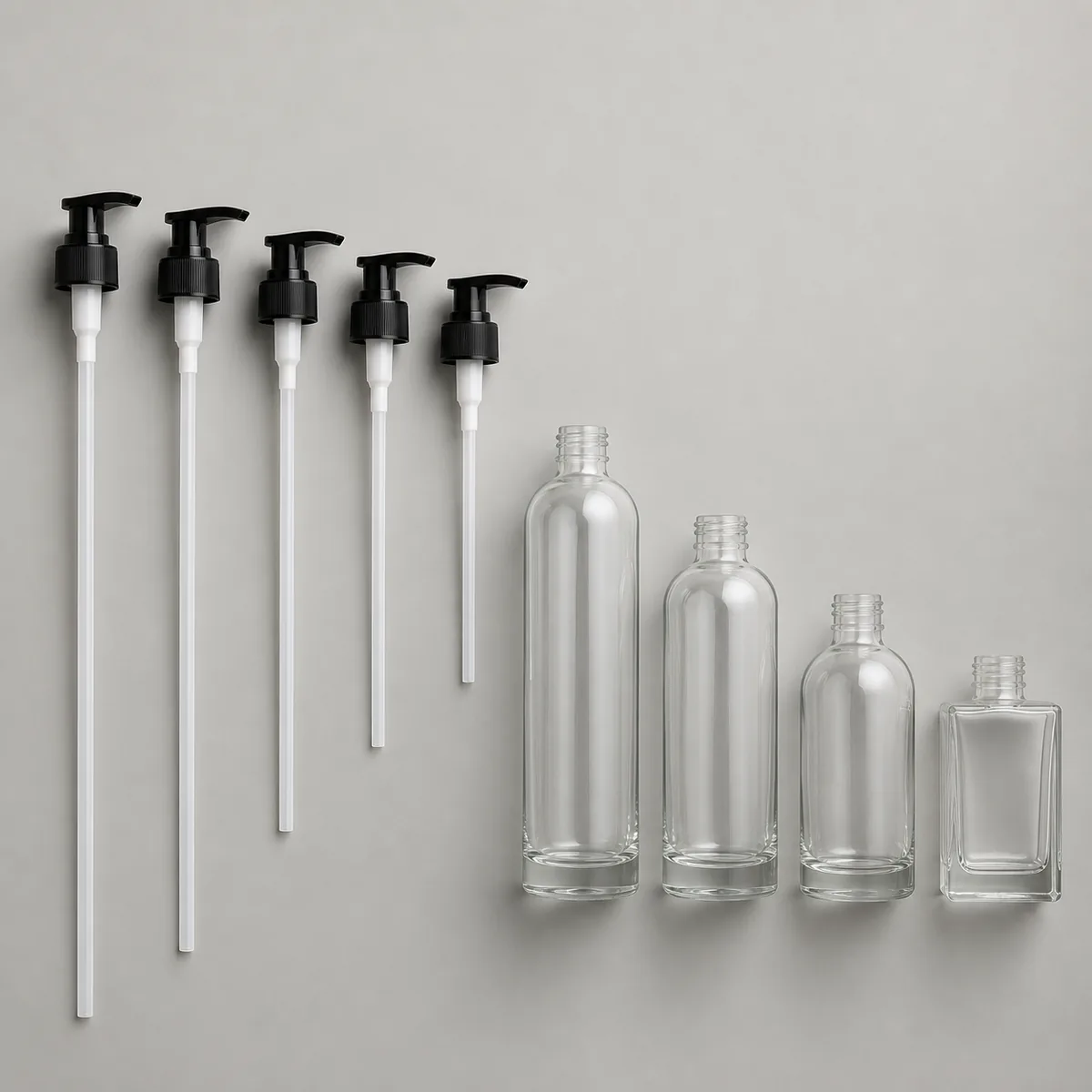
For a collection using the same pump mechanism across different bottle heights, buyers can standardize the pump while specifying a separate dip-tube length for each bottle.
For example, a short serum bottle and a taller lotion bottle may accept the same approved pump assembly at the neck but require different tube cuts because their internal dimensions differ. This is an illustrative configuration, not confirmation that any two particular bottles are interchangeable.
The dip tube length guide explains the relevant bottle geometry, residual product, and dispensing considerations.
Formula behavior can turn a mechanical fit into a functional failure
A pump that dispenses water successfully may not perform the same way with a serum, lotion, oil-based formulation, or suspension.
Formula viscosity, particulates, surface behavior, and interaction with the pump’s internal materials can affect priming, dispensing consistency, recovery, and clogging.
The pump mechanism may also contain different gasket materials, springs, valves, pistons, and other formula-contact components. Two pumps with the same exterior appearance may therefore behave differently with the same formulation.
Buyers should evaluate packaging compatibility with the actual formulation under intended storage and use conditions. Water testing may be useful for initial mechanical screening, but it cannot establish compatibility with the finished cosmetic product.
The article on how cosmetic pumps work explains the internal dispensing mechanism and the relationship between pump structure and product delivery.
A four-layer interchangeability matrix
Before approving one pump for multiple bottles, evaluate each proposed combination across four separate requirements. Passing the neck-fit check alone is not sufficient.
| Evaluation | Potential failure | What buyers should verify |
|---|---|---|
| Neck interface | Thread mismatch, incomplete engagement, or incorrect sealing geometry. | Compare controlled specifications and assemble the exact bottle and pump. |
| Assembly and sealing | Insufficient gasket compression, excessive tightening, or closure instability. | Check gasket contact, assembly conditions, leakage, and component condition. |
| Dip tube and formula | Blocked tube inlet, residual product, poor priming, or inconsistent dispensing. | Confirm bottle-specific tube length and test the actual formulation. |
| Production and transport | Cross-threading, closure loosening, delayed leakage, or assembly variation. | Evaluate production-representative samples and relevant distribution conditions. |
A pump may pass all four requirements with one bottle but need a different dip tube, gasket, or closure configuration for another. The purchasing specification should identify the approved combination rather than describe the pump as universally compatible.
Representative samples and tolerances
Testing one bottle with one pump confirms only that the selected individual components assembled under those conditions. Production bottles and closures can vary within their permitted dimensional tolerances.
Where relevant, sample evaluation should account for variation between production batches, tooling cavities, and component suppliers. Particular attention should be given to combinations near the relevant dimensional limits.
The guide to bottle and closure tolerances explains why components that individually meet their specifications may still create assembly problems when their dimensional variations combine.
Minimum Controlled Evaluation
- Confirm the exact bottle and pump item codes, specifications, and component materials.
- Check the neck finish, thread engagement, sealing surface, and intended gasket.
- Confirm the dip-tube length and assembled pump position for each bottle.
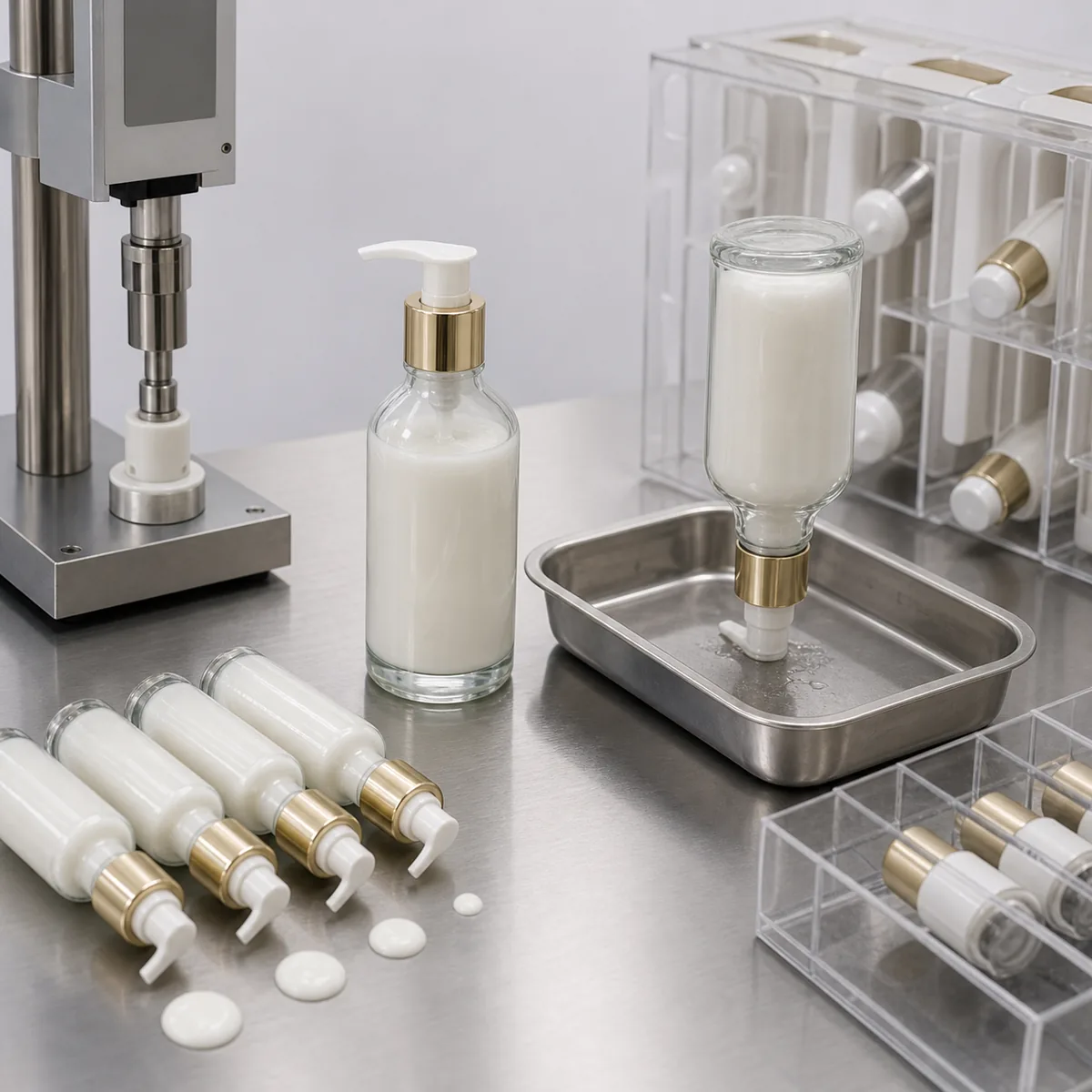
- Evaluate sealing and tightening using representative physical samples.
- Test priming, dispensing consistency, and residual product with the actual formulation.
- Evaluate leakage under relevant storage orientations and intended use conditions.
- Check the assembled and packed product under appropriate transport and handling conditions.
For distribution testing, the International Safe Transit Association (ISTA) provides testing procedures for packaged products under different distribution conditions. The appropriate procedure should be selected according to the actual shipping configuration and distribution environment. A bottle-and-pump assembly should not be described as ISTA tested unless the relevant testing has been completed and documented.
How to manage a shared-pump platform
For a multi-SKU skincare collection, the purchasing team should maintain an approved pairing record identifying each bottle, pump, gasket, dip tube, formulation, and assembly method.
For example, one pump mechanism may be approved for two lotion bottle sizes while each bottle uses a different tube specification. This allows the brand to maintain a consistent dispensing design without treating the finished pump assemblies as identical.
Buyers comparing cosmetic lotion pumps should confirm which components can be standardized and which require bottle-specific specifications.
Common mistakes buyers can prevent
- Assuming that identical nominal neck sizes guarantee compatibility.
- Checking thread engagement without evaluating gasket compression and sealing.
- Using the same dip-tube length for bottles with different internal geometry.
- Approving dispensing performance using water instead of the actual formulation.
- Testing only upright storage without considering relevant handling and transport conditions.
- Approving one manually assembled sample without considering production variation.
- Replacing an approved pump with a visually similar component without renewed compatibility review.
Scale the approval from sample bench to filling line
Hand assembly can conceal problems that become visible during automated production. An operator may adjust a pump’s position or tightening force manually, while a production line applies a controlled assembly process across many units.
For projects involving multiple bottles and a shared pump platform, the filling partner should confirm that the selected combinations can be assembled consistently using the intended equipment.
Check for cross-threading, inconsistent closure height, glass contact, dip-tube interference, and leakage after assembly. Where production volume and project risk justify it, use a line-representative trial before approving bulk production.
Receiving controls for an approved pairing
Once a bottle-and-pump combination is approved, incoming inspection should confirm the correct component identity and the characteristics that affect compatibility.
These may include the bottle neck specification, gasket condition, dip-tube length, pump construction, and relevant assembly requirements.
A change in bottle supplier, closure geometry, gasket material, pump mechanism, or tube specification may require renewed evaluation. The extent of testing should reflect the affected interfaces and the actual formulation.
Separate three meanings of “same pump”
In cosmetic packaging procurement, “same pump” can refer to three different arrangements:
- Same appearance: Pumps share the same visible actuator and collar design but may have different internal or closure components.
- Same mechanism: Pumps use a common dispensing mechanism but may require different dip tubes or closure configurations.
- Same complete assembly: The entire pump, closure, gasket, and dip-tube configuration is identical.
Buyers should specify which arrangement is required. Standardizing the visible design may be sufficient for a coordinated skincare collection, while using an identical complete assembly across different bottles requires separate compatibility approval for every intended combination.
The Packaging Q&A section provides further answers to common packaging questions, while Product Knowledge covers component structures and selection considerations.
Buyer conclusion
One cosmetic pump can serve different glass bottles when the exact bottle, closure, gasket, dip tube, and formulation have been evaluated together. A common neck designation is a useful starting point, but it is not sufficient evidence of interchangeability.
For a multi-SKU collection, standardize the pump mechanism and appearance where practical, while maintaining bottle-specific component specifications and approval records. Final compatibility should be confirmed with physical samples before bulk production.
FOLOVER PACK supports cosmetic bottle selection, pump and closure matching, component coordination, and sample evaluation. Share your selected bottle drawings or physical samples, formulation type, dispensing requirements, intended order quantity, and filling-line conditions to discuss a suitable packaging configuration.
Frequently asked questions
Can a 24 mm pump fit every 24 mm bottle?
No. A nominal diameter does not fully define thread profile, finish height, sealing land, closure travel, gasket compression, or tolerances. Confirm drawings and test the exact assembly.
Does dip tube length matter if the neck fits?
Yes. An unsuitable tube can leave product behind, bend or block at the base, interfere with seating, or draw air. Each bottle geometry may need its own controlled cut length.
Can pumps from different suppliers be substituted?
Only after comparison and validation. Similar appearance or description does not prove identical materials, closure geometry, output, sealing, or formula behavior.
What is the fastest responsible compatibility check?
Use drawings to reject obvious non-matches, then assemble representative samples with the intended gasket and tube, fill with the formula, and run risk-based functional and leakage checks. A desk fit alone is not approval.