
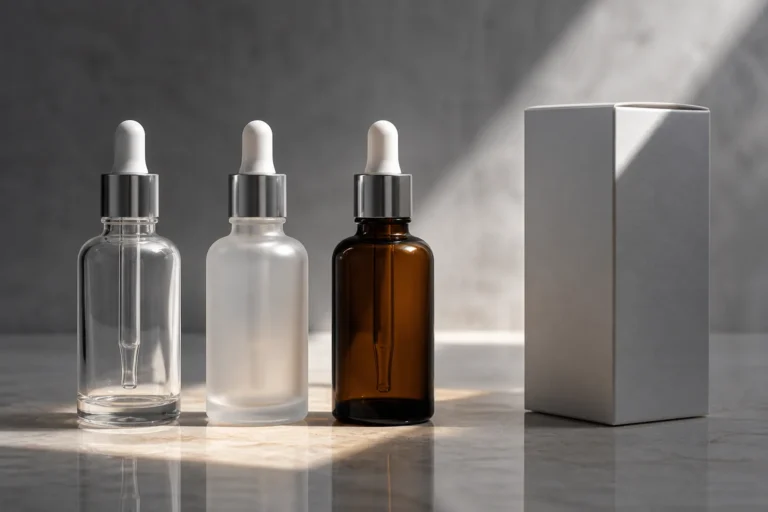
Does Frosted Glass Block UV Light?
Frosted appearance does not prove UV protection. Separate design specifications from transmission evidence and finished-product stability validation.
Frosted appearance does not prove UV protection. Separate design specifications from transmission evidence and finished-product stability validation.
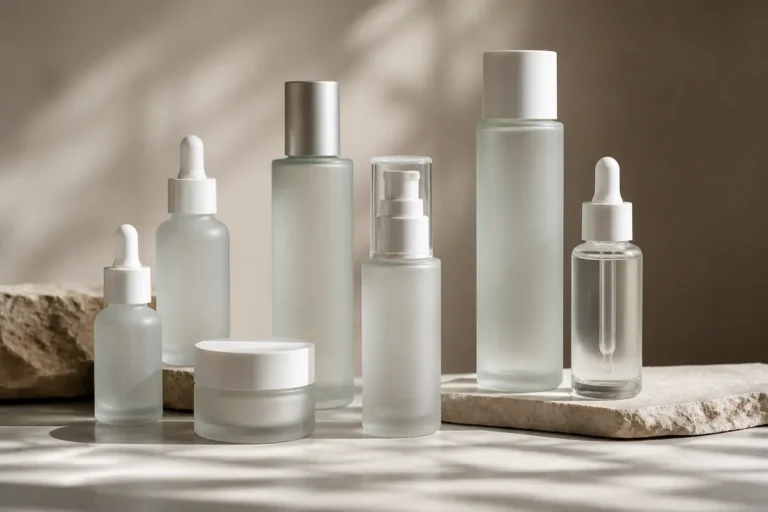
Learn how frosted cosmetic glass bottles differ by process, appearance, decoration compatibility and physical sample approval requirements.

Compare clear, amber, colored, coated and frosted glass bottles for cosmetics, including branding and formula-protection considerations.
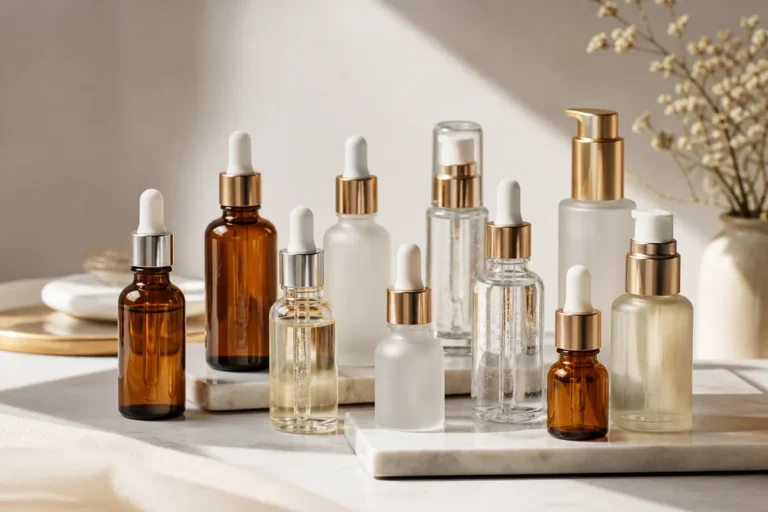
Learn how serum bottles differ by glass, capacity, neck finish, dropper or pump system, decoration and formula compatibility.
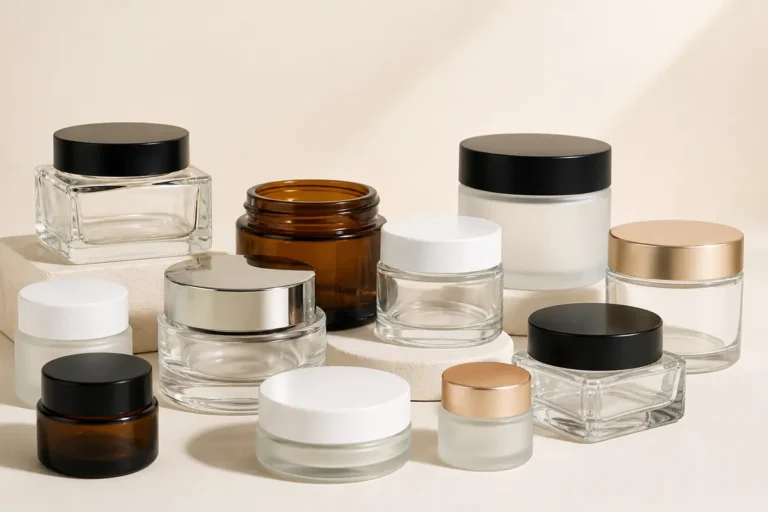
Understand cosmetic glass jar types, sizes, lids, liners, finishes and common uses, with practical compatibility and sample checks.

Understand the material, proportion, closure and decoration decisions that make luxury cosmetic packaging coherent and manufacturable.
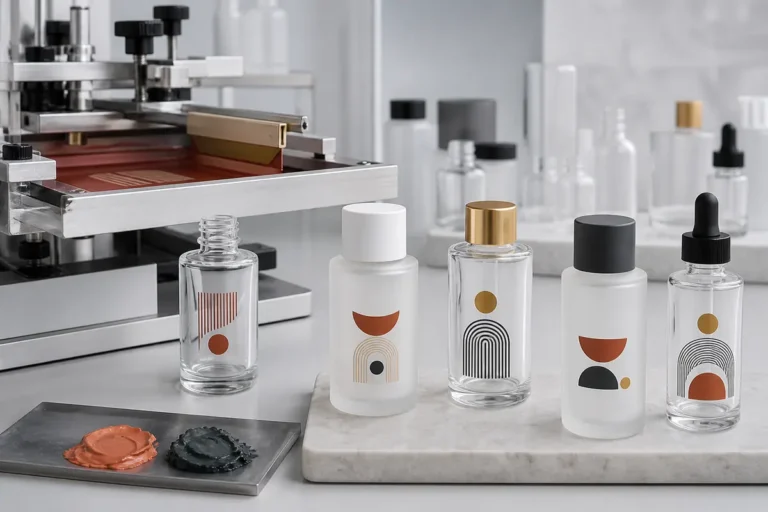
Plan screen printing on cosmetic glass bottles by reviewing artwork, bottle geometry, color, registration, coated surfaces, durability and samples.

Compare glass dropper bottle sizes, colors, pipettes, closures, formula fit, sealing risks, and sample checks before bulk production.

Premiumization and lightweighting are not opposite material targets; they are a design-allocation decision across the complete cosmetic packaging system.