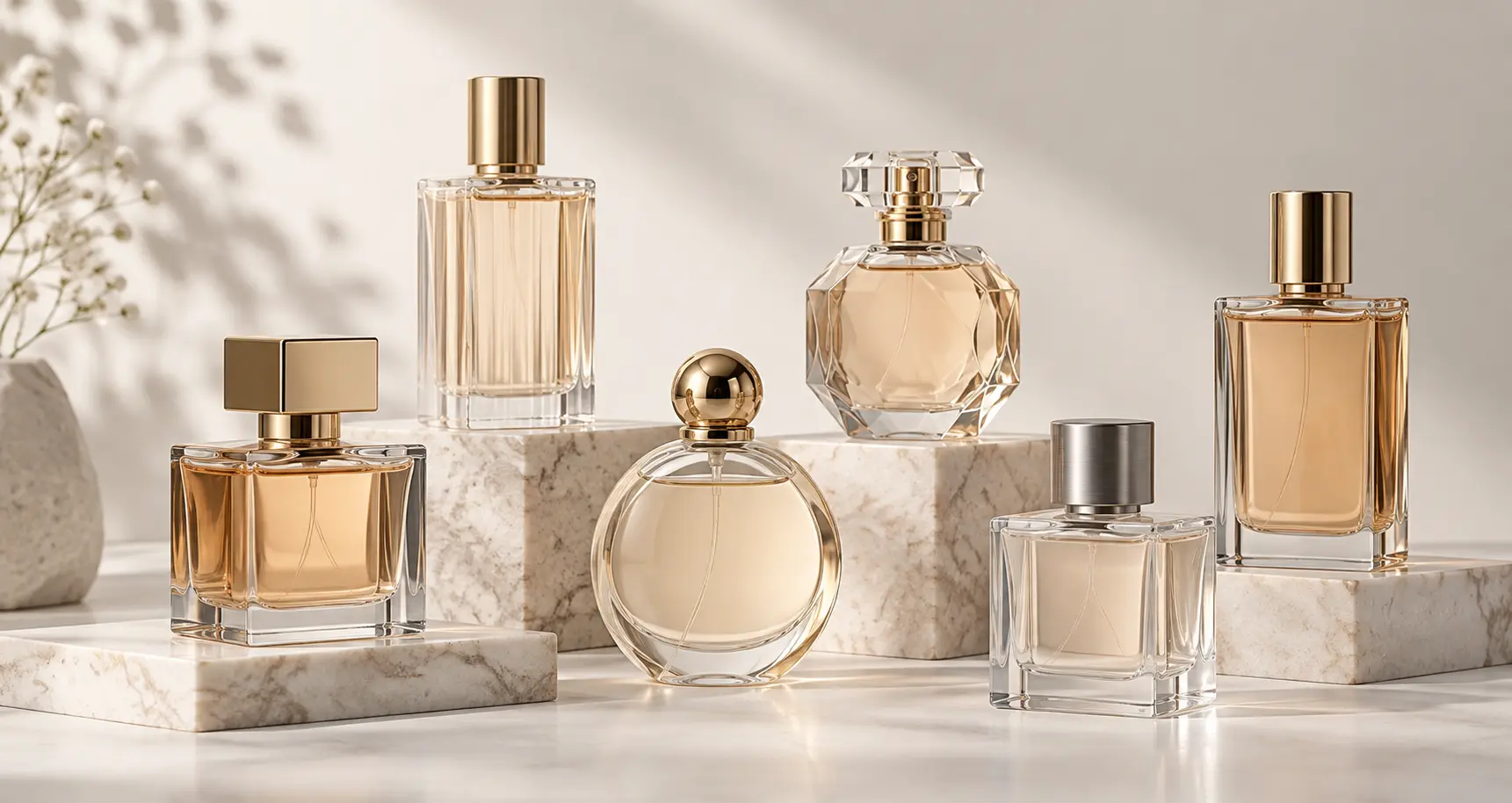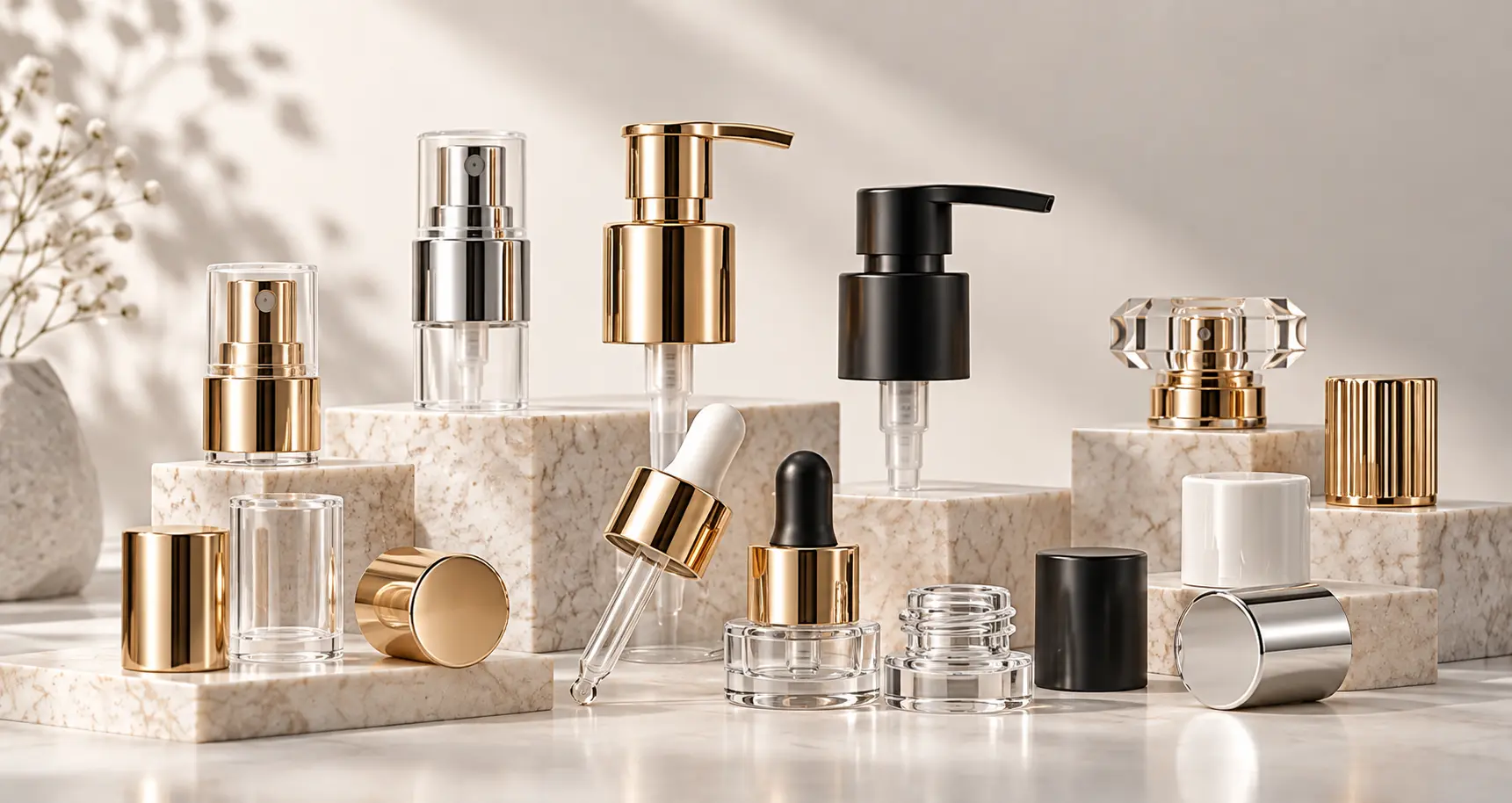

Put the same fragrance into a roller bottle and a spray bottle, and the user handles it differently before the formula itself has changed. A rollerball puts liquid directly on the skin through a rotating ball. A spray pump meters the liquid and breaks it into a mist.
For someone buying perfume, that mostly changes the application. For a brand developing the package, it reaches much further back: the roller or pump assembly, bottle opening, filling method, finished dimensions, decoration and sample checks all change with the dispensing format. Bottle appearance matters, but it is not the first decision.
Rollerball or Spray Perfume: Which Should You Choose?
For personal use, a rollerball makes sense when you want to place fragrance on a small area such as the wrists or neck. A spray is the more natural choice when you want a mist distributed over a wider area. Neither format, on its own, tells you which fragrance is stronger, lasts longer or is less likely to leak.
| What Matters | Rollerball | Spray |
|---|---|---|
| Application | Direct contact with the skin | Atomized mist |
| Main components | Bottle, roller ball, housing or fitment, and cap | Bottle, pump, actuator, spray insert, dip tube and cap or collar where applicable |
| Typical product role | Perfume oils, targeted application and compact formats | Travel sprays, everyday fragrances and full-size perfume products |
| Main compatibility check | Ball, housing, bottle opening and intended formula | Neck finish, pump fixation, dip tube, spray insert and intended formula |
| What to evaluate | Ball movement, liquid transfer, cap fit and leakage | Spray pattern, dose, component fit, cap alignment and leakage |
What Actually Sits Inside Each Package?
A Rollerball Is a Small Component System
A glass rollerball package is not simply a bottle with a metal or glass ball pushed into the top. The ball sits in a housing or fitment, that assembly fits the bottle opening, and the cap closes over the completed applicator. If one part changes, the rest of the combination may need to be checked again.
The ball also needs to rotate freely enough to transfer the liquid without becoming loose in the housing. That is why ball material alone is a poor way to specify a roll-on package. Bottle opening, housing geometry, cap and formula all belong in the same review.
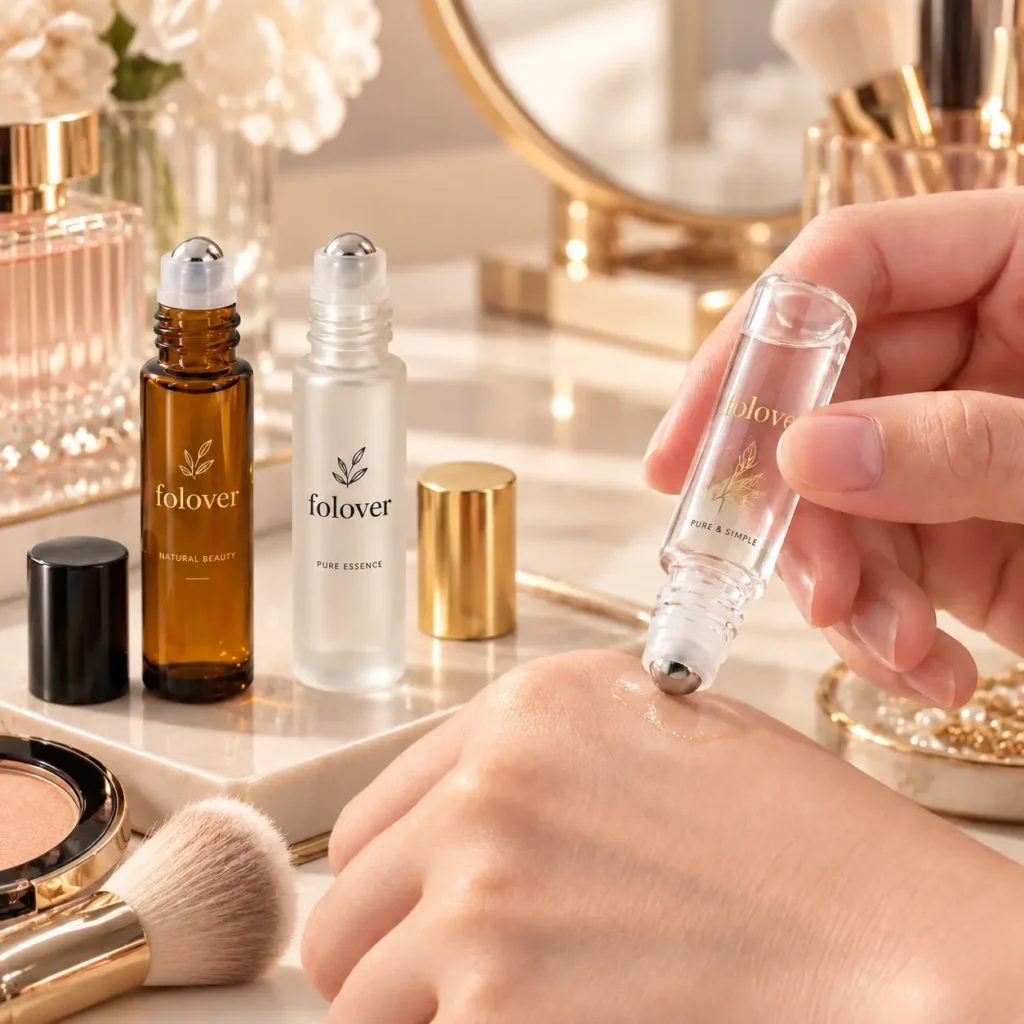
FOLOVER’s glass roll-on bottle collection covers selected 5 ml, 10 ml, 20 ml and 30 ml formats in clear, amber and frosted glass. Depending on the model, stainless-steel or glass roller balls can be combined with different cap materials and finishes. These are model-specific options rather than a promise that every bottle accepts every roller or cap.
One example is the ROL-008-20, a 20 ml frosted glass roll-on perfume bottle with a wooden cap and screw-neck construction. The product can be reviewed with stainless-steel or glass roller-ball options. A bottle like this provides a different packaging direction from a clear slim roll-on with a metal or plastic cap, even though both use the same basic roll-on dispensing principle.
A Spray Adds More Interfaces to Match
A spray bottle introduces a different set of parts. The pump has to match the bottle neck and fixation method. The dip tube has to suit the bottle’s internal height and shape. The actuator and spray insert control how the liquid leaves the package, while the collar and outer cap affect the completed assembly where those components are used.
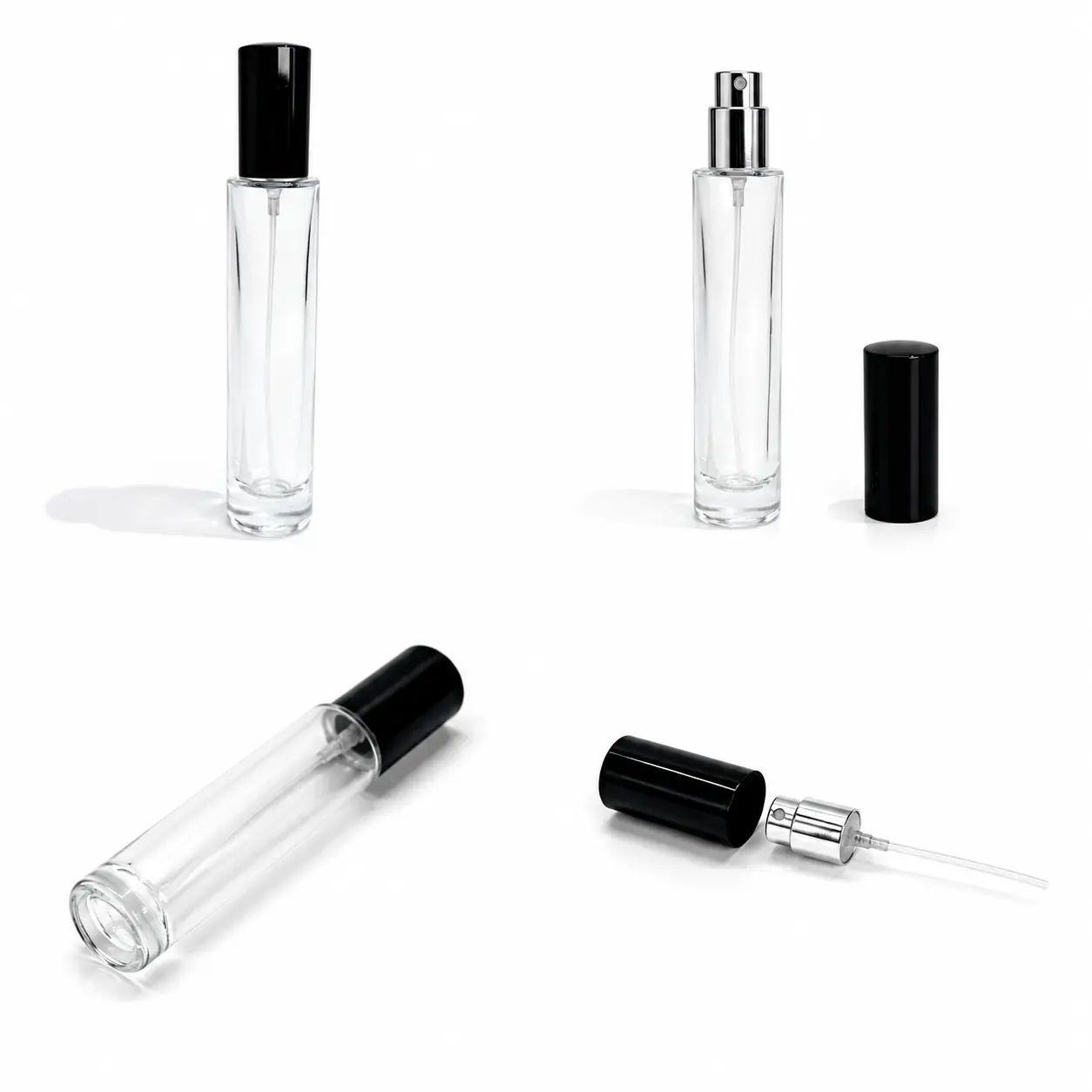
FOLOVER’s round perfume bottle collection includes selected 10 ml, 15 ml, 30 ml, 50 ml and 100 ml formats across compact, cylindrical and larger fragrance-bottle profiles. Several of these products use crimp-neck spray systems rather than threaded fine-mist closures.
RPB-008-15 is one example. It is a 15 ml glass perfume spray bottle with a crimp neck, sprayer, inner component and outer cap. Its listed dimensions are 23 × 23 × 126 mm (W × D × H, including cap), with a height of 94 mm without the cap. Those measurements belong to this specific model and should not be used as a standard specification for every 15 ml perfume bottle.
If the bottle is going into a carton, tray or travel set, work from the approved assembled package rather than nominal capacity alone. Also confirm exactly what a drawing means by “without cap,” because different component stages can change the dimension that matters for a fitted insert or secondary carton.
FOLOVER also supplies separate fine mist sprayers for compatible threaded bottle systems. Current product examples include 18/410 and 28/410 screw-neck sprayers with dip tubes, with specifications varying by model.
These threaded sprayers should not be treated as replacements for the crimp sprayer used on the 15 ml perfume bottle above. Crimp, screw and other fixation systems use different bottle interfaces. The selected bottle neck and dispensing component should be matched first, then checked as an assembled physical sample.
Manufacturer Insight
The most useful question is not whether FOLOVER has a spray pump or a roller ball that looks similar to the reference component. The useful question is whether the selected bottle opening, dispensing assembly, cap and filling process work together. A visual match is not a component specification.
Bottle Size, Glass and Decoration: What Actually Changes?
Capacity Is Not a Physical Dimension
A 10 ml or 15 ml label tells you how much liquid the package is intended to contain. It does not tell you how tall the finished pack will be, how wide it is, how heavy the glass is or how much straight surface remains for printing.
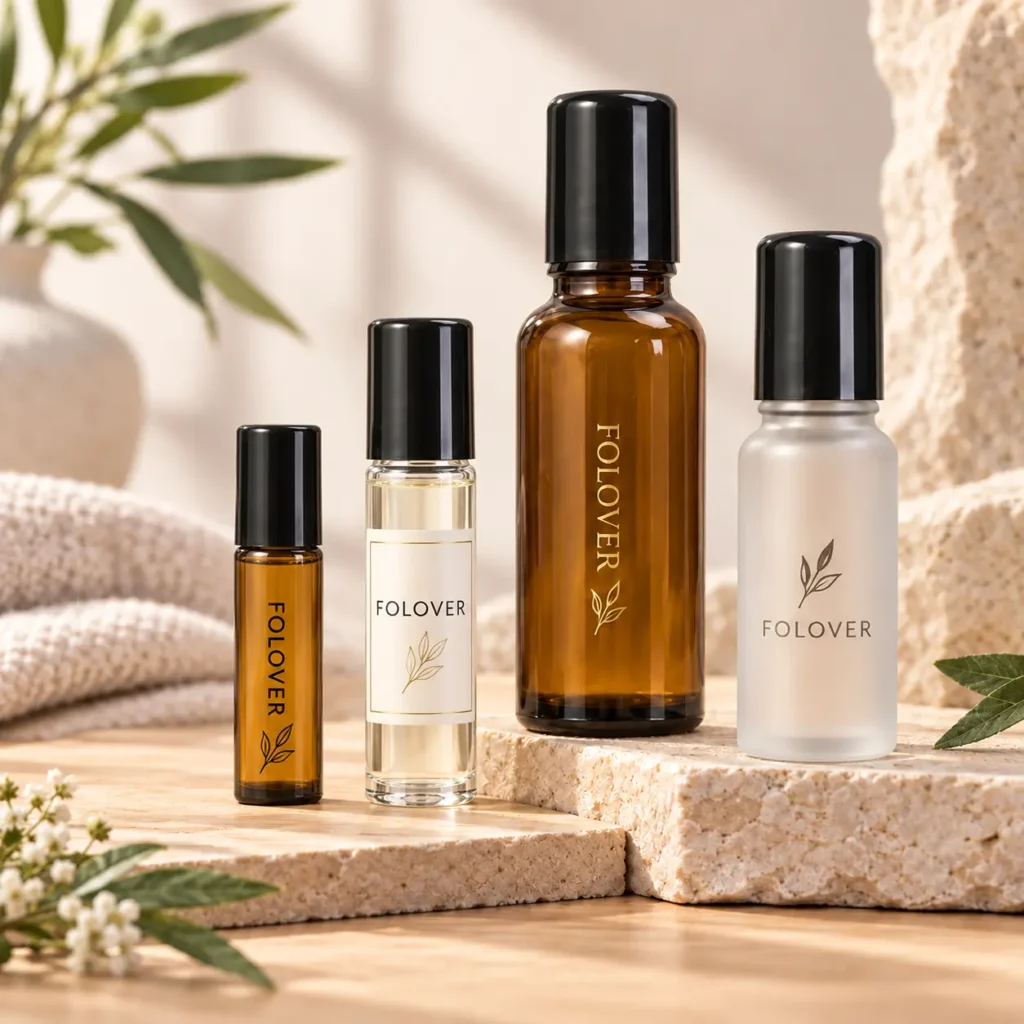
Base thickness, shoulder shape, wall construction and closure height can make two bottles with similar fill volumes look and pack very differently. This is also why the 10 ml roll-on and 15 ml spray discussed in this article should not be used as a literal size comparison. They are separate packages illustrating different component structures.
For carton design, gift sets and label layout, the useful numbers are the actual assembled dimensions and the usable decoration area of the selected bottle.
Colored Glass Should Be Specified for a Reason
Amber, clear and other glass colors are often discussed as if the color name alone describes light protection. It does not. Transmission depends on the actual glass composition, thickness, wavelength range and any coating or additional surface treatment.
If the fragrance or oil has a defined light-sensitivity requirement, ask for data that applies to the exact glass or coating under consideration. Do not transfer a UV-blocking percentage from an unrelated amber bottle and treat it as a specification for another perfume package. Frosting should also be treated as a surface finish unless there is separate evidence supporting a light-protection claim.
Decoration Is Constrained by the Real Bottle Surface
Both rollerball and spray bottles can be considered for processes such as screen printing, color coating, frosting, hot stamping and labeling, depending on the selected bottle and project. The difference buyers encounter in practice is usually the available surface rather than the dispenser category.
A narrow travel bottle leaves less room for lettering than a broad perfume bottle. Curvature can distort a logo near the edge of the printable panel, and a shoulder transition can limit how high an artwork element can sit. On small bottles, a logo that looks clear on a computer screen can become too fine once reduced to its actual print size.
FOLOVER’s glass bottle decoration and finishing options include processes such as coating, frosting, screen printing, hot stamping and labeling for applicable bottles. The suitable process still depends on the actual glass surface, artwork, color requirement and component combination.
If coating and printing are combined, review the finished combination rather than approving the color and logo as two unrelated steps. Final appearance should be confirmed on the selected physical bottle before bulk production.
For Consumers: Application and Fragrance Longevity
Direct Application or a Mist?
A rollerball keeps the application local. You can run it across a wrist or another small area without creating a cloud of fragrance around you. How much liquid actually transfers still depends on the roller assembly and the formula.
A spray spreads the fragrance through a mist. Spray width and dose are not fixed characteristics of every perfume atomizer; the pump and insert influence both. The practical consumer difference is therefore straightforward: one format places liquid directly on the skin, while the other distributes it through the air before it lands.
Does Rollerball Perfume Last Longer Than Spray Perfume?
There is no sound basis for saying that rollerball perfume always lasts longer than spray perfume. The dispenser changes the application, but fragrance wear is also affected by the formula, dose, fragrance materials, skin and surrounding conditions.
A 2025 paper in the International Journal of Cosmetic Science, “Exploring the impact of fragrance molecular and skin properties on the evaporation profile of fragrances,” examined fragrance evaporation on the skin of several volunteers. The study found that fragrance-molecule properties and skin characteristics both influenced evaporation behavior.
It did not compare rollerball packaging with spray packaging. It therefore supports a narrower conclusion: longevity cannot be predicted from the dispenser alone. Comparing a concentrated perfume oil in a rollerball with an eau de toilette in a spray would also change the formula at the same time, making it a poor test of the packaging format.
Travel: Size Rules Matter More Than the Dispenser
For U.S. carry-on baggage, TSA’s liquid rule is based on container volume. The standard limit is 3.4 ounces (100 ml) or less per container, subject to the applicable 3-1-1 bag requirements. A 10 ml rollerball and a 50 ml spray are both below that container limit.
For checked baggage, FAA guidance for covered personal-use medicinal and toiletry articles, including perfume and cologne, specifies a maximum container capacity of 500 ml and a total quantity of 2 L per person. Check the current TSA guidance and FAA requirements for the actual itinerary.
Those are passenger-baggage rules. Commercial fragrance shipments are a separate question and can depend on the formula’s transport classification, carrier, mode and destination. Replacing a spray pump with a rollerball does not, by itself, change the classification of the liquid inside.
For Fragrance Brands: Decisions to Lock Before Production
Start With the Formula and the Intended Application
“Oil goes in a rollerball and alcohol goes in a spray” is too crude to use as a packaging specification. The intended application points you toward a dispensing format; the actual component combination still has to work with the formulation.
For a rollerball, that means reviewing the ball, housing, bottle opening and cap with the intended liquid. For a spray, it means looking at the pump’s relevant contact materials, neck fixation, dip tube and spray insert. Glass compatibility alone does not approve the dispensing assembly.
If the formula is alcohol-free or water-based, use the specification for the exact pump under consideration. A compatibility statement published for one pump model is not evidence that another pump will behave the same way.
Lock the Neck and Closure System Early
A crimp-neck bottle needs the corresponding crimp sprayer and assembly process. A threaded bottle needs its matching screw component. A snap-on system depends on a different interface again. Similar-looking openings are not enough to prove interchangeability.
Before a bottle is approved, confirm the neck specification, selected pump or roller assembly, cap fit and completed package height. If a customer already has a filling, crimping or capping setup, that information should be shared before the packaging components are finalized.
Compare the Complete Package Cost
It is tempting to ask whether a rollerball is cheaper than a spray. Without the actual component list, the answer is not useful.
A rollerball quotation should identify the bottle, ball, housing or fitment and cap. A spray quotation should make clear which pump, actuator, insert, dip tube, collar and cap are included. Decoration, order quantity, assembly and secondary packaging can change the comparison again.
If the filler already uses a defined crimping or capping setup, include that information before components are approved. A lower-priced bottle is not a saving if the chosen neck creates another filling-line problem.
When comparing suppliers, put the quotations on the same basis: same quantity, comparable glass specification, defined component set, equivalent decoration and comparable packing requirements. Otherwise, the price gap may be a specification gap rather than a rollerball-versus-spray difference.
Manufacturer Insight
A drawing can confirm bottle dimensions. It cannot show whether the final package dispenses correctly, whether the cap aligns as expected, whether the decoration looks right on the selected glass surface, or whether the intended formula behaves properly with the roller or pump assembly. Those questions move from drawing review to physical-sample approval.
Use Samples to Close the Remaining Gaps
Sample Evaluation Checklist
- Assemble the selected bottle with the intended roller or pump components.
- Evaluate liquid transfer or spray behavior using the intended formula or an agreed representative formula.
- For sprays, check the dip tube against the actual bottle interior and intended fill configuration.
- Review cap fit, collar alignment and final assembled height.
- Evaluate leakage under conditions relevant to the intended storage, handling and transport route.
- Approve decoration on the production-intent bottle rather than on artwork alone.
Test conditions should be defined for the project. A generic claim such as “leak-proof” does not tell the buyer what was tested, with which formula, for how long or under what conditions.
What Does the Market Data Say About Travel-Size Fragrance?
Smaller fragrance formats have a clear commercial role, but market data does not tell a brand whether that smaller format should be a rollerball or a spray.
In its report covering the first nine months of 2025, Circana reported that U.S. prestige mini and travel-size fragrance units grew by 12%, while mini and discovery fragrance sets increased by 41%.
The scope matters. These are U.S. prestige-market figures for smaller fragrance formats; they are not global rollerball sales figures. They support the case for considering smaller fragrance SKUs, not a claim that rollerball is winning against travel spray.
For a brand, the more useful question is what job the small SKU is supposed to do. A discovery-set vial, a portable version of the main fragrance and a concentrated perfume oil may all be small packages, but they solve different product and pricing problems.
Should a Brand Launch a Rollerball, a Spray, or Both?
Use a Rollerball When Direct Application Is Part of the Product
A rollerball is a sensible direction when the user is meant to apply the fragrance directly and the formula performs properly with the selected roller assembly. A compact format can also serve a travel, trial or companion role, but portability alone is not a reason to skip component and formula checks.
Use a Spray When the Mist Is Part of the Experience
If the product is meant to be sprayed, define the pump rather than treating it as a generic accessory. Spray pattern, dosage requirement, neck fixation, dip-tube configuration and filling method belong in the package brief before production starts.
Launch Both Only When Each SKU Has a Job
A brand may use a spray as the main retail fragrance and a smaller rollerball as a perfume-oil version or targeted-application companion. In that case, the second format adds a different use case.
If both packages are doing the same job, the brand is also adding another component set, artwork file, inventory position, filling operation and carton configuration. That additional complexity should have a commercial reason behind it.
How FOLOVER Can Support a Complete Fragrance Package
For projects that can use an existing bottle, FOLOVER can coordinate the glass container with the selected roller or spray component, cap, decoration and packing requirements. Buyers can start with an existing roll-on or perfume bottle and then confirm the dispensing system against the bottle neck, intended formula and filling process.
If the bottle structure already works for the project, customization can focus on glass color, frosting, coating, screen printing, hot stamping, labeling, cap selection and compatible dispensing components. This route can avoid unnecessary bottle-development work when an existing container already meets the required capacity and shape.
If available bottle shapes, capacities or dimensions do not meet the project requirement, a new bottle-development route can be evaluated separately. The required bottle structure, neck, components, decoration and sample-approval process should be defined before bulk production.
FOLOVER’s custom cosmetic packaging solutions connect bottle selection with component coordination, decoration, physical sampling, production confirmation and packing instead of treating each item as an unrelated purchase.
Build the RFQ Around the Package, Not Just the Bottle
A useful RFQ does not need every engineering detail to be settled, but it should show the supplier what is already fixed and what still needs to be developed.
Information to Prepare
- Target capacity and intended product use.
- Formula type, such as an alcohol-based fragrance, perfume oil or alcohol-free formulation.
- Preferred dispensing direction: rollerball or spray.
- Existing bottle reference, sample, product image or technical drawing if one is available.
- Required neck or closure system if the filling process has already been defined.
- Preferred roller material, sprayer type, cap or other component requirements.
- Decoration requirements, including logo, color, finish and artwork references.
- Estimated order quantity and destination market.
- Known filling, assembly, packing and sample-approval requirements.
If a detail is still open, mark it as open. That is more useful than entering an assumed neck, component or compatibility requirement that later has to be reversed.
Frequently Asked Questions
Does rollerball perfume last longer than spray perfume?
Not necessarily. Longevity depends on the fragrance formula, applied amount, fragrance molecules, skin characteristics and environmental conditions. There is no universal rule that the rollerball format lasts longer than spray packaging.
Is rollerball perfume stronger than spray perfume?
The packaging format does not establish fragrance concentration. A concentrated perfume oil in a rollerball and an eau de parfum in a spray may have different formulas. Compare the actual products rather than assuming the dispenser determines strength.
Can alcohol-based perfume be used in a rollerball bottle?
It may be possible, but compatibility should be checked with the actual formula, roller ball, housing, bottle opening and cap. The fact that a bottle is marketed for perfume does not establish compatibility with every alcohol-containing formulation.
Can alcohol-free perfume use a spray pump?
Yes, if the selected pump is specified for the intended formula. Some commercial fragrance pumps are designed for selected alcohol-free or water-based formulations, but that specification applies to the relevant model and should not be generalized to all spray pumps.
Can the same sprayer be used on different perfume bottles?
Not automatically. The bottle neck and the sprayer fixation system must match, and the dip tube, actuator, cap or collar may also need to be adjusted for the selected bottle. Crimp, screw and snap-on systems should not be interchanged based on appearance alone.
Is a rollerball more leak-proof than a spray bottle?
Neither format is automatically more leak-proof. Performance depends on the bottle opening, roller housing or pump, sealing interfaces, cap, formula and storage or transport conditions. The complete package should be evaluated using the selected components.
Should a new fragrance brand launch both formats?
Launch both when they serve distinct purposes, such as a main spray fragrance and a separate perfume-oil or targeted-application product. If the formats serve the same purpose, compare the added component, inventory, filling and packaging costs against the expected commercial benefit before adding the second SKU.
Final Recommendation
If you are buying perfume for yourself, choose the application you prefer: a rollerball for direct placement or a spray for a mist. For a brand, make the decision in the opposite direction. Start with the formula and intended application, then lock the bottle, dispensing components and filling method before approving the finished sample.
For a FOLOVER PACK packaging review, send the preferred format, target capacity, formula type, available bottle or neck reference, preferred roller or sprayer, cap and decoration requirements, estimated quantity and destination. If the bottle shape is not fixed, include a reference sample, drawing or image so the project can first be reviewed against existing packaging options before considering new bottle development.