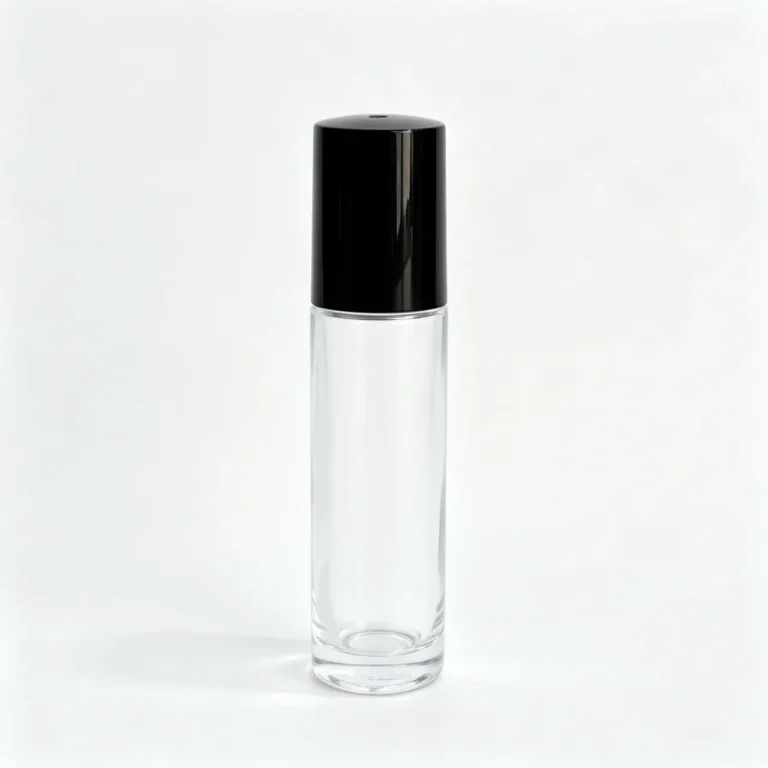

Roller bottles come in a wide range of sizes, from miniature 1ml containers to larger 30ml formats, and are used for essential oil blends, perfume oils, skincare treatments, and other products designed for direct application. The right size depends on what the bottle will hold, how the product will be applied, and how much the user needs at a time. A small fragrance sample, an everyday roll-on perfume, and a targeted skincare oil may all use the same type of applicator, but they do not necessarily need the same bottle size or design.
This guide looks at roller bottle sizes from 1ml to 30ml, including their typical uses, physical dimensions, and the differences between glass colors, finishes, and roller-ball materials. It also covers how printing, coating, caps, and applicator components affect packaging choices. Whether you are comparing bottles for personal use or developing a product line, the aim is to help you understand what each size offers, where its limitations lie, and what needs to be checked before choosing the finished package.
What Roller Bottle Sizes Are Available?
Glass roller bottles are sold in a range of capacities, from miniature trial containers to larger formats for topical oils. The sizes below describe options encountered in the wider packaging market, not one manufacturer’s complete stock list. An advertised volume does not establish that a matching roller insert, cap or mold is available for every design.
| Nominal capacity | Approx. US fl oz | Typical selection consideration |
|---|---|---|
| 1ml | 0.034 | Micro-sample; very limited label space |
| 2ml | 0.068 | Compact trial; confirm applicator availability |
| 3ml | 0.101 | Small tester or portable product |
| 5ml | 0.169 | Small travel or discovery format |
| 8ml | 0.271 | Portable everyday format |
| 10ml | 0.338 | Everyday roll-on perfume or oil format |
| 12ml | 0.406 | Intermediate capacity; shape varies |
| 15ml | 0.507 | Greater fill volume while remaining relatively compact |
| 20ml | 0.676 | Larger daily-use or targeted-care packaging |
| 30ml | 1.014 | Higher-volume format; assess weight and application |
Conversions use US fluid ounces and are rounded. Informal product labels such as “one-third ounce” or “one ounce” are useful shorthand, not exact replacements for a validated milliliter filling specification.
Mini Roller Bottles: 1ml, 2ml, 3ml and 5ml
Mini bottles are particularly relevant when the point is to try a scent, introduce a product or carry a small amount. A 5ml bottle can make sense for a fragrance discovery set without asking the customer to commit to a larger quantity. At 1ml–3ml, however, the closure and applicator can occupy a surprisingly large share of the finished package. These very small formats also leave little room for legible mandatory labeling or direct printing. Buyers should check the assembled bottle rather than judge scale from a close-up image.
Everyday Roller Bottles: 8ml, 10ml, 12ml and 15ml
These sizes give a brand room to balance portability and usable quantity. A 10ml slender cylinder may suit a handbag or travel pouch; a wider bottle of identical capacity may be easier to grip but less convenient in a narrow compartment. Intermediate volumes are worth investigating when the planned retail price or application calls for a little more product, but not enough to justify moving to a large container. Availability of 8ml, 12ml and 15ml depends on the actual bottle and closure program.
Larger Roller Bottles: 20ml and 30ml
A larger bottle may reduce the frequency of replacement for a routinely applied product, but it also carries more liquid and generally places greater demands on the cap, applicator and transport pack. A 30ml roller package is not automatically a better choice for body oil: if the ball is small or the liquid is viscous, application may be slow. The intended application area and dispensing performance need to justify the increased capacity.
FOLOVER’s glass roll-on bottle collection currently displays selected 5ml, 10ml, 20ml and 30ml products. The online catalog is being expanded, so the published collection should not be treated as an exhaustive list of available or developable sizes. Any particular capacity, component set or production route needs confirmation against the requested model.
How Big Is a Roller Bottle? Height, Diameter and Capacity Explained
The bottles illustrated below compare 3ml, 5ml and 10ml designs with different assembled heights. This shows how capacity affects a particular product range; it does not establish fixed dimensions for every 10ml bottle. For a like-for-like 10ml comparison, check two confirmed 10ml SKUs separately.

The outside dimensions of a bottle tell a different story from its nominal volume. A narrow bottle may require more height to accommodate the same liquid as a broader one. Glass distribution matters as well: a thick base adds weight and takes up space that would otherwise belong to the internal cavity. That is why capacity comparisons without dimensions are incomplete.
Why Two 10ml Roller Bottles Can Have Different Dimensions
Imagine comparing a tall cylindrical 10ml bottle with a short, wider 10ml bottle. Both may carry the same nominal capacity, yet their bottom thickness, shoulder geometry, inside diameter and wall profile are different. One may have room for a taller label; the other may offer a broader but shorter printable panel. Neither shape can be classified as smaller overall using the 10ml label alone. To make a proper comparison, obtain drawings or measured samples of both exact SKUs.
Height With and Without the Cap
Packaging drawings should distinguish the glass body’s height from the overall height of the assembled container. The difference is more than cosmetic. A tall decorative cap can prevent a bottle from fitting the planned carton or countertop display, even when the bare glass is short enough. For a brand preparing shipping inserts or gift sets, total assembled height is the dimension that often determines whether the package fits.
Bottle Diameter, Shape and Empty Weight
Diameter affects grip, carton spacing and how a wraparound label meets itself. With a noncircular bottle, ask for the maximum width and thickness rather than a single “diameter.” Empty bottle weight is a separate purchasing and logistics variable. A heavy-base 10ml design can weigh more than a taller-looking bottle, so weight should be taken from the actual product specification, not inferred from photographs.
Nominal Capacity, Brimful Capacity and Filling Volume
Nominal capacity is the name of the product size. Brimful capacity is the volume measured up to the mouth under a defined method. The intended production fill is a third number, determined by the formula, fill process and completed package. A roller-ball insert projects into the neck, while temperature changes and assembly conditions can affect the space required above the liquid. Filling to the rim simply because the bottle is sold as “10ml” is not a safe production instruction.
| Specification to request | Why it matters | What to verify |
|---|---|---|
| Nominal and brimful capacity | Product quantity and filling setup | Definition and measurement method for the exact bottle |
| Glass height and assembled height | Display, carton and packing fit | Measurements with the chosen cap and insert |
| Maximum diameter / width / thickness | Label area, grip and packing layout | Actual external dimensions |
| Empty glass weight | Handling and freight planning | SKU-specific measured or confirmed weight |
| Neck and roller-insert details | Assembly and dispensing | Matching components and physical sample |
Which Roller Bottle Size Is Right for Essential Oils, Perfume and Skincare?
Start with what is inside the bottle and how it is meant to reach the skin. A roller applicator delivers a localized film of product; it does not behave like a pump, dropper or spray. The appropriate capacity therefore depends on both consumption and application, and a suitable bottle still needs a suitable dispensing assembly.
Essential Oil Blends and Aromatherapy Roll-Ons
Compact roll-ons are frequently considered for properly formulated topical essential-oil blends. A small bottle is easy to carry, but size has no bearing on whether the blend is appropriate for skin application. Concentrated essential oils and diluted topical formulations are not interchangeable. The complete pack—glass body, ball, housing and cap—must be checked against the intended ingredients and conditions of use. For projects that may need a dropper or reducer instead of a roller, compare the wider essential oil bottle formats before deciding on the dispensing method.
Roll-On Perfume Oils and Fragrance Products
Perfume oil is an intuitive application for a portable roller bottle because the user can apply it directly to a specific area. For a brand, the decision is whether a small personal fragrance is the main retail product, a companion to a spray, or part of a sample range. Alcohol-containing fragrances need separate scrutiny: the suitability of the housing, cap and sealing materials cannot be assumed from the fact that the bottle is glass. Roller and spray perfume packages are different dispensing systems, not two interchangeable caps for an unspecified bottle.
Facial Oils, Cuticle Oils and Targeted Skincare
Cuticle oils and some targeted skincare oils may benefit from controlled roll-on placement. A narrow applicator can put product close to a small application area; a broad applicator may feel less precise. For facial products, the formulation’s viscosity, intended dose, hygiene requirements and contact materials all deserve attention. Thin facial oil, water-based serum and thick treatment are not equivalent packaging jobs. Do not assume that every serum can be dispensed effectively through the same roller mechanism.
Massage Oils and Larger Roll-On Formats
For a larger area of skin, users may prefer more product and a larger applicator. That does not make 20ml or 30ml the automatic answer. A dense or sticky oil could move poorly around a tight ball-to-housing clearance, while a very free-flowing product may release more than intended. Testing the actual liquid with the selected ball and housing is more informative than choosing a volume first and hoping the application will follow.
Travel, Samples and Gift Sets
A travel-sized bottle is convenient only if its overall dimensions, cap security and use conditions suit the trip. Small sizes also work well in discovery kits, but a miniature label must still carry the information required for the intended market. For gift sets containing several bottle sizes, compare the assembled caps as well as the glass bodies; otherwise, the set can look inconsistent even when the glass shapes were chosen together.
| Application | Size direction to consider | Deciding factor |
|---|---|---|
| Discovery perfume oil | 1–5ml, subject to model availability | Sampling purpose, labeling and applicator fit |
| Portable everyday fragrance | 5–15ml | Carry size and intended use rate |
| Topical essential-oil blend | 5–15ml or as required | Formula suitability and contact-material compatibility |
| Cuticle or targeted skincare oil | Small or medium format | Placement precision and actual dispensing |
| Higher-volume topical oil | 20–30ml where appropriate | Application area, viscosity and ball size |
These are selection directions, not validated performance claims or universal size standards.
Clear, Amber, Blue or Frosted Glass: Which Material and Finish Should You Choose?
“Glass color” can mean colored glass, a coating on clear glass, or a surface finish that changes appearance. Those differences matter when a brand is selecting packaging for a light-sensitive formula or requesting a consistent series of bottles. The current FOLOVER roll-on collection includes soda-lime glass examples in selected clear, amber and frosted presentations; it does not establish that every color or finish is available on every shape.
Clear Glass Roller Bottles
Clear glass lets the customer see liquid color and approximate fill level, which can be useful for perfume oils or visually distinctive cosmetic formulations. The same transparency means the package should not be credited with light protection that has not been demonstrated. If a formula has defined light-sensitivity requirements, evaluate those requirements separately from the packaging’s appearance.
Amber and Cobalt Blue Glass
Tinted glass can change the light spectrum reaching the contents. Exactly how much protection it provides depends on the glass composition, color, thickness and wavelength range. Amber and cobalt blue are not automatically equivalent, and neither should be described as blocking all UV light without measured evidence for that bottle. For light-sensitive products, the formulation team should define what protection is needed and verify the selected finished package.
Frosted, Black and Color-Coated Glass
Frosting changes the surface appearance and tactile impression; a sprayed coating adds another material layer. Black-looking bottles might use colored glass or an external finish, and the technical implications are not identical. A matte surface may photograph well but change the way small lettering or a metallic decoration reads. The finishing sequence should be reviewed on an actual bottle, rather than approved from a color swatch alone.
Glass Composition, Weight and Refillability
Soda-lime glass is one established packaging material, but identifying the glass type does not prove that every assembled roller package is reusable. Refillability also depends on whether the housing can be removed and reassembled without damage, how the product is cleaned, and whether the closure remains suitable for the next fill. A bottle with a removable-looking cap is not necessarily a validated refill system.
| Glass appearance | Practical advantage | Limit to check |
|---|---|---|
| Clear | Shows formula color and fill level | Light sensitivity of contents |
| Amber / blue tinted | Changes appearance and light transmission | Actual transmission at relevant wavelengths |
| Frosted | Diffused, matte presentation | Finish method and decoration result |
| Black or coated | Opaque-looking or branded appearance | Coating durability, contact conditions and light-performance claims |
Stainless Steel, Glass, Plastic or Stone: Roller-Ball Materials Compared
A roller bottle is not simply a bottle with a loose sphere sitting in its neck. The ball sits in a matching housing that holds it in place while allowing it to rotate and transfer product. The ball’s surface, its clearance within the housing and the formulation all influence the experience. That is why an attractive ball material alone cannot establish how the finished pack will perform.
Stainless-Steel Roller Balls
A metal ball offers a distinct weight and touch against the skin, sometimes perceived as cool at first contact. The relevant technical question is which stainless-steel grade is used and whether that grade, the housing and the liquid are suitable together. “Stainless steel” is not a blanket compatibility certificate for every fragrance ingredient or oil blend.
Glass Roller Balls
A glass ball gives a different visual and tactile option, especially in transparent packaging. Its surface condition, diameter and fit with the insert still control whether it rotates freely and remains seated. A glass ball should be specified as part of a particular insert assembly, not selected separately from a photo because it looks like the same size as a metal ball.
Plastic Roller Balls
Plastic rollers are another market option, often considered where component weight and cost are important. But plastic is a broad category: different polymers behave differently when exposed to oils, fragrance materials or solvents. A statement that a plastic ball “works with essential oils” is not meaningful without identifying the material and testing the intended formulation.
Gemstone and Decorative Roller Balls
Rose-quartz and other decorative stone rollers appear in some beauty and aromatherapy packaging. Their role is primarily aesthetic unless a separate performance claim has credible support. Natural stone can vary in surface quality and composition; the supplier should establish how the ball is processed, retained and cleaned, and whether the completed component is appropriate for the product. Claims about healing or energy effects do not belong in a packaging specification.
Why the Roller Housing and Bottle Neck Must Match
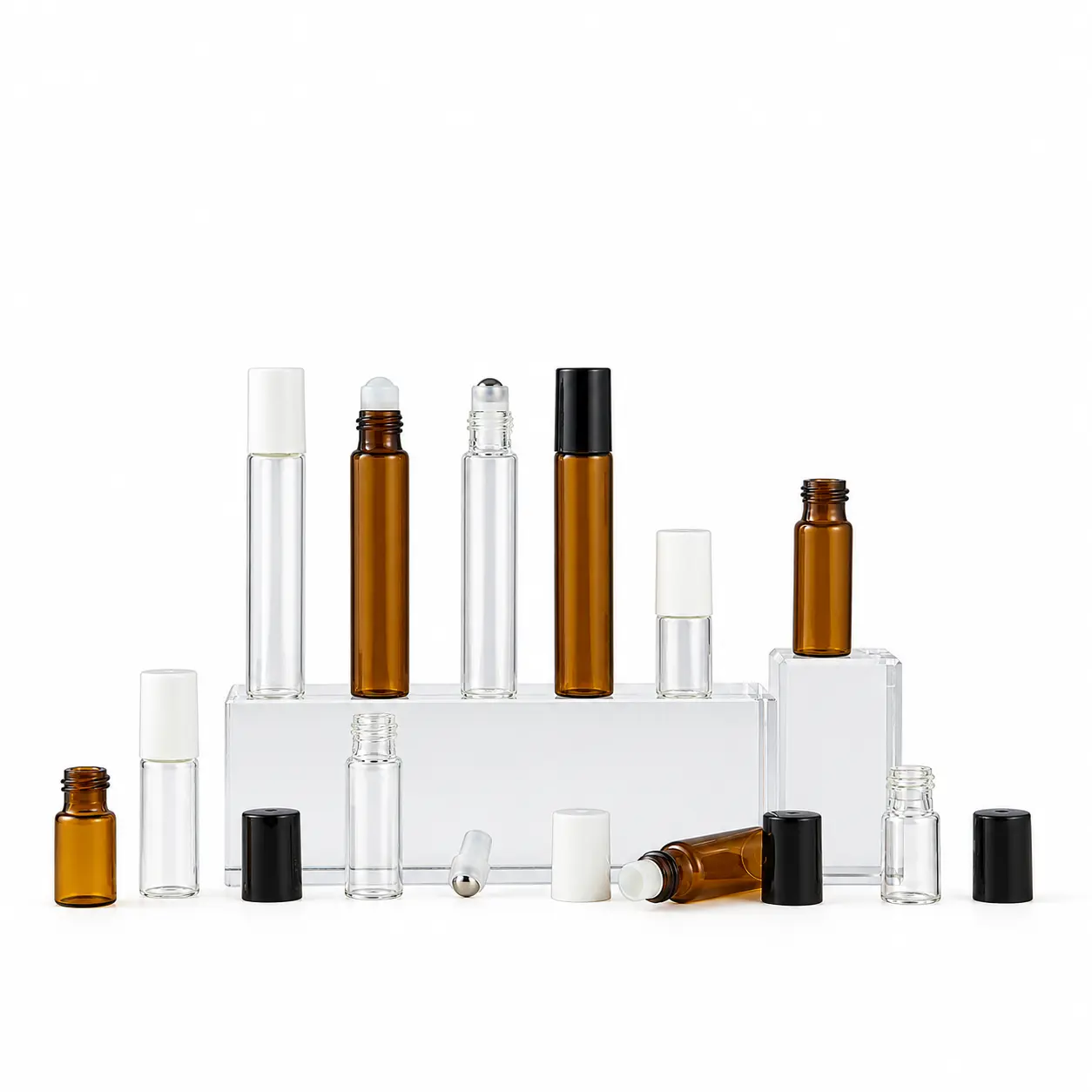
Look beyond the ball. The insert’s external fit to the bottle neck, ball-retaining geometry and internal flow path influence assembly and dosing. Too little movement can make the application frustrating; an inappropriate clearance or poor assembly may cause unwanted product release. The outer cap must also close over the completed insert without interfering with it. Two bottles labeled 10ml can have entirely different neck designs, so component interchangeability must be demonstrated rather than assumed.
| Roller-ball material | Reason buyers consider it | Physical sample checks |
|---|---|---|
| Stainless steel | Metal touch and appearance | Grade, corrosion/compatibility, rotation and housing fit |
| Glass | Glass appearance and contact surface | Surface quality, ball size, retention and dispensing |
| Plastic | Lightweight component option | Polymer identification, formula contact and deformation |
| Decorative stone | Distinctive visual presentation | Material identity, surface condition, fit and cleanability |
Key takeaway: Choose the ball, housing, glass neck and cap as one dispensing system. The capacity printed on the bottle does not verify component compatibility.
How Can Glass Roller Bottles Be Customized Across Different Sizes?
Suppose a fragrance brand plans a 5ml discovery bottle, a 10ml main SKU and a 30ml larger format. The logo file may be the same, but the printable area, shoulder curve and available cap proportions will not be. A decoration that looks balanced on the 30ml bottle can overwhelm the 5ml. Each size requires its own artwork placement review.
Silk Screen Printing on Glass Roller Bottles
Screen printing places artwork directly on the bottle surface. On a small cylinder, the available straight-wall height may be much shorter than the overall bottle height suggests: the shoulder curves away near the top and the base may rise at the bottom. Fine type, small gaps and multicolor registration deserve particular attention. If a brand wants the same two-color logo on several sizes, approve its position and legibility on a physical sample of each selected bottle instead of shrinking a single print file without review.
Color Spraying and Glass Coating
Spray coating can create colored or translucent effects on glass, but it is different from producing glass that is colored through its body. Edges, shoulders, curves and changes in film build can affect the visual result. A digital color reference alone does not establish how the shade will look on clear glass, frosted glass or a bottle with a thick base. The project should specify the substrate, finish, desired opacity and decoration approval sample.
Frosting and Matte Glass Finishes
Frosted glass is often chosen for a muted surface rather than a glossy transparent appearance. The term can describe different processes, so the finish method should be clear before planning secondary printing or labels. A frosted surface changes contrast: pale print on a pale bottle can disappear at normal viewing distance, while a sharply defined logo may need a different process or artwork weight.
Hot Stamping and Metallic Decorations
Metallic details can be introduced through foil decoration, suitable printing effects or a metal-finished closure, but those should not be lumped together as one manufacturing step. Hot stamping onto the bottle and electroplating a separate cap involve different substrates and approval criteria. On a narrow roller bottle, the curvature and size of the intended mark may constrain where a metallic effect can be applied reliably.
Labels vs. Direct Printing
A label can carry detailed text and multiple colors, while direct printing removes the visible label edge and can give a different surface appearance. The trade-off becomes obvious on a small diameter: a wraparound label needs enough room for its seam and must not wrinkle around the shoulder. Printing directly on glass has its own minimum detail and surface requirements. Neither route is inherently better; choose according to artwork, bottle geometry and quantities.
Coordinating Caps, Glass Colors and Logos Across a Product Line

Matching a product family does not require every bottle to use the same glass shape. The more workable approach is to define the non-negotiable design elements—perhaps a restrained logo, one cap color and a consistent print position relative to the shoulder—then approve each size against those rules. FOLOVER’s glass bottle decoration and finishing options provide a starting point for discussing printing, coating, frosting and metallic details. Whether a process is suitable still depends on the chosen bottle and project.
What Should Brands Check Before Ordering Roller Bottles in Bulk?
A product image and the instruction “10ml, amber glass, gold cap” are not enough for a reliable packaging quotation. They leave out the parts most likely to determine whether the product can be filled, assembled and used as intended. Before comparing suppliers, settle the following questions using one proposed bottle and its actual components.
Bottle Neck and Roller Insert Compatibility
Obtain the neck specification and the exact insert proposed for that bottle. Confirm how the insert is seated, whether the ball is retained correctly and how the cap closes over the assembly. Similar-looking necks do not prove a shared fit. If the brand wants to change cap material or ball type later, the revised assembly needs review as well.
Formula Compatibility and Dispensing Performance
Use the intended formulation when examining roll-on performance. Fragrance oil, diluted essential-oil blends and viscous skincare oils can behave differently at the same ball-and-housing clearance. Evaluate contact materials, roll-out rate, residue around the insert and changes after the agreed storage conditions. Water alone is not a substitute for the final product.
Leakage, Cap Fit and Storage Conditions
A bottle may dispense acceptably in upright use yet perform differently when stored on its side or exposed to transport movement. Leakage assessment should therefore involve the filled, fully assembled pack and the conditions relevant to the project. Avoid assuming that a threaded cap or tight-feeling insert makes the package leak-proof. The testing method and acceptance criteria should be agreed before bulk approval.
Stock Bottles vs. Custom Bottle Development
An existing bottle mold can simplify development when the shape, neck and components already meet the brief. A new mold is more relevant when a brand needs a specific profile or dimension unavailable from current options and can justify the development work. FOLOVER’s online product assortment is still being expanded; a capacity not visible on the site should be treated as an inquiry to check, not proof that it is unavailable. Where a stock design falls short, the custom glass bottle development process helps frame the drawing, sampling and approval steps. Mold availability, minimum order quantity, tooling and timing must be confirmed for the actual project.
What to Approve Before Bulk Production
Approve the finished package rather than separate component photographs. The sign-off sample should include the selected bottle, ball and housing, fitted cap, any requested color or print treatment, and the actual product where compatibility work is required. A change to any contact component or decorative process can justify another review.
Roller Bottle RFQ Checklist
- Target nominal capacity and required production fill volume
- Preferred bottle shape, height, maximum width and glass appearance
- Intended formula category, viscosity and relevant contact-material requirements
- Roller-ball material, insert specification and preferred cap
- Logo artwork, decoration method and position on each bottle size
- Estimated quantity, destination and packing or gift-set requirements
- Physical sample, dispensing, storage and final decoration approval criteria
What to Evaluate on a Complete Sample
Check that the insert remains securely seated, the ball rotates and dispenses as intended, the cap closes correctly, and the filled package meets the project-specific handling and storage conditions. Compare the final decorated sample with the approved artwork and color target. Record what passed and what still needs adjustment before confirming bulk production.
Frequently Asked Questions About Roller Bottle Sizes
What Is the Most Common Roller Bottle Size for Essential Oils?
Both 5ml and 10ml are familiar small-format options for topical essential-oil blends, but there is no single correct capacity for every product. Choose according to the intended fill, use pattern and physical bottle dimensions. The formula must be suitable for the intended application, and the selected ball, housing and cap should be evaluated with it.
Is a 5ml or 10ml Roller Bottle Better for Perfume Oil?
A 5ml bottle suits a smaller discovery or travel portion, while 10ml provides twice the nominal liquid capacity. That alone does not establish which package feels better in use. Compare the actual bottle dimensions, roller assembly and retail purpose. Brands planning both sizes should check whether the caps and printed artwork can form a consistent range.
How Big Is a 10ml Roller Bottle in Inches?
There is no fixed height or diameter for every 10ml roller bottle. The glass base, wall thickness, shoulder and cap can change external dimensions without changing the stated capacity. Ask for the exact SKU’s millimeter measurements and convert them to inches using 25.4mm per inch. Specify whether the stated height includes the cap.
How Long Does a 10ml Roller Bottle Last?
The answer depends on how frequently the product is used, the area covered and how much the selected roller assembly dispenses during each application. A freely rotating ball does not always release the same amount of every formula. Without a measured dispensing rate and a defined use pattern, a promise of a particular number of days would be misleading.
Can Roller Bottles Be Used for Facial Serums and Cuticle Oils?
Some cuticle oils and suitable targeted skincare formulas can be considered for roller application. The formula’s viscosity, intended dose, hygiene requirements and contact materials determine whether a particular package is appropriate. Many serums use pumps or droppers for good reasons, so a roll-on should be evaluated as an alternative dispensing system rather than assumed to fit every serum.
Are Amber Glass Roller Bottles Better Than Clear Glass?
Amber glass may be useful when a formula has specific light-sensitivity concerns, while clear glass makes the contents easier to see. Neither choice is universally better. Protection depends on the actual glass and relevant wavelengths, and the formulation’s stability requirements should determine whether the selected package provides sufficient protection. Appearance alone cannot verify it.
Can Different Roller Bottle Sizes Use the Same Roller Ball and Cap?
Sometimes a product family may share components, but capacity does not prove interchangeability. Check the neck finish, roller housing, ball-retention design and cap fit for each bottle. Even when two sizes use nominally similar components, evaluate the physical assemblies before making the components common across purchasing or production specifications.
Can Roller Bottles Be Customized in Sizes Not Listed Online?
Yes, buyers can submit an unlisted capacity or bottle shape for evaluation. An online category page is not necessarily a complete inventory of available molds or development options. Supply, tooling requirements, sample availability, minimum quantity and lead time must be verified against the requested design and components before a project is confirmed.
Final Recommendation: Select the Bottle Size and Roller System Together
A small roller bottle makes sense when compactness is the priority; a larger one makes sense when the product needs more fill volume. Neither decision is complete until the bottle’s dimensions, ball-and-housing assembly, cap and intended formulation have been checked together. Surface decoration should then be approved on the actual bottle size, not just on artwork.
For a FOLOVER packaging inquiry, provide the target capacity, reference bottle shape, formula type, preferred roller and cap, decoration requirements and estimated order quantity. That information is more useful for comparing available bottles or discussing a new design than a capacity figure alone.