
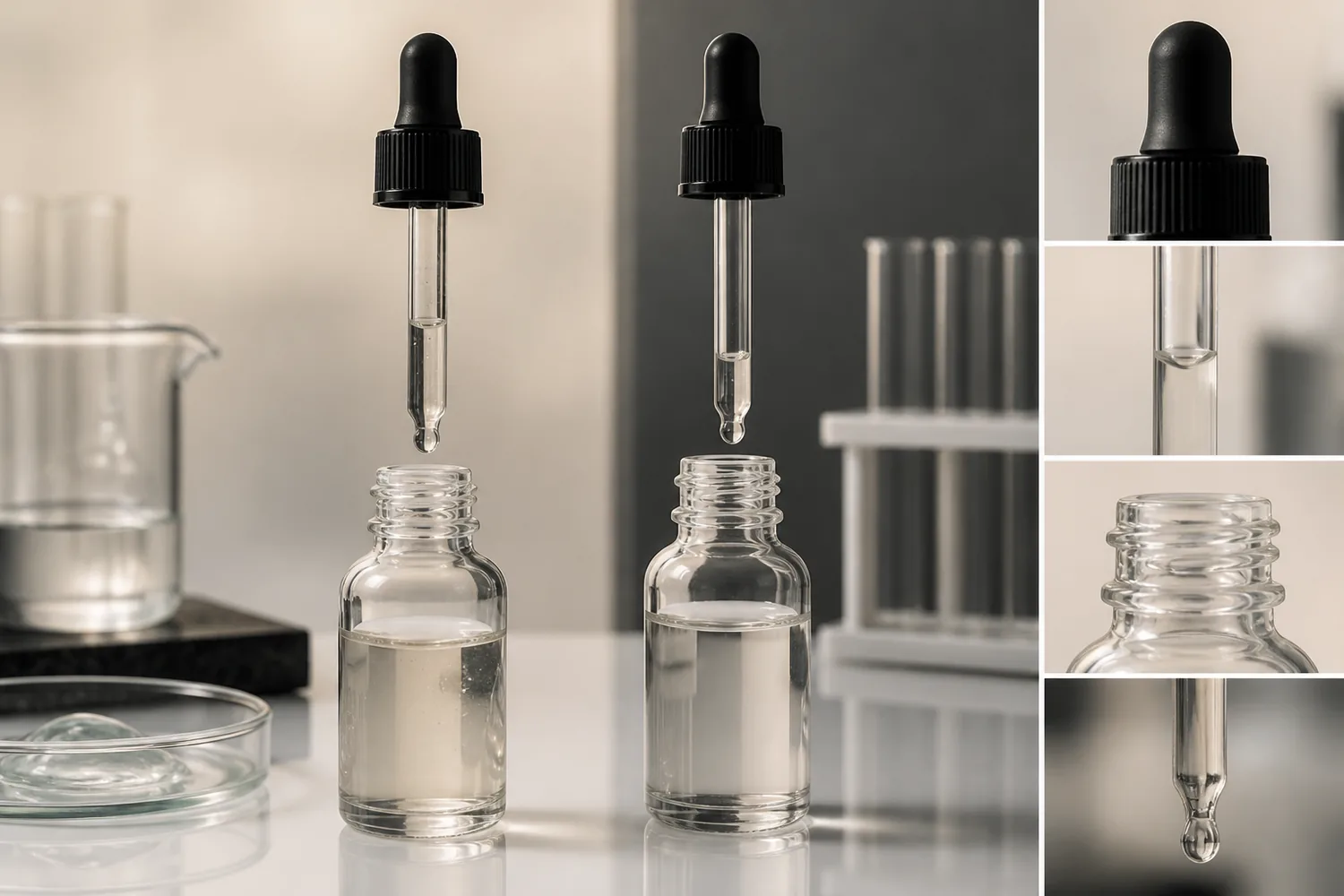
A dropper pipette does not need to fill completely to work correctly. A partial liquid column is often normal because the bulb displaces a limited volume of air. Pipette geometry, formula viscosity, air leaks, immersion depth, and user technique also affect how much liquid is drawn into the tube. The important question is whether the dropper delivers the intended amount consistently, not whether the pipette looks full.
For cosmetic brands, a stable partial fill is not necessarily a packaging defect. However, inconsistent uptake, unexpected dripping, or insufficient delivery requires further evaluation before the bottle and dropper assembly is approved for bulk production.
How dropper suction actually works
When the user compresses the rubber bulb, air is expelled through the pipette. Releasing the bulb with the tip immersed in the formulation allows the bulb to recover, lowering the internal pressure and drawing liquid into the tube.
The amount drawn depends partly on the effective volume displaced by the bulb. If that volume is smaller than the pipette’s capacity, the liquid may not reach the top after one squeeze.
The Florida State University Chemistry Laboratory’s pipette guide illustrates the relationship between bulb compression, suction, and pipette volume. Laboratory pipettes differ from cosmetic dropper assemblies, but the underlying pressure principle helps explain why bulb capacity limits liquid uptake.
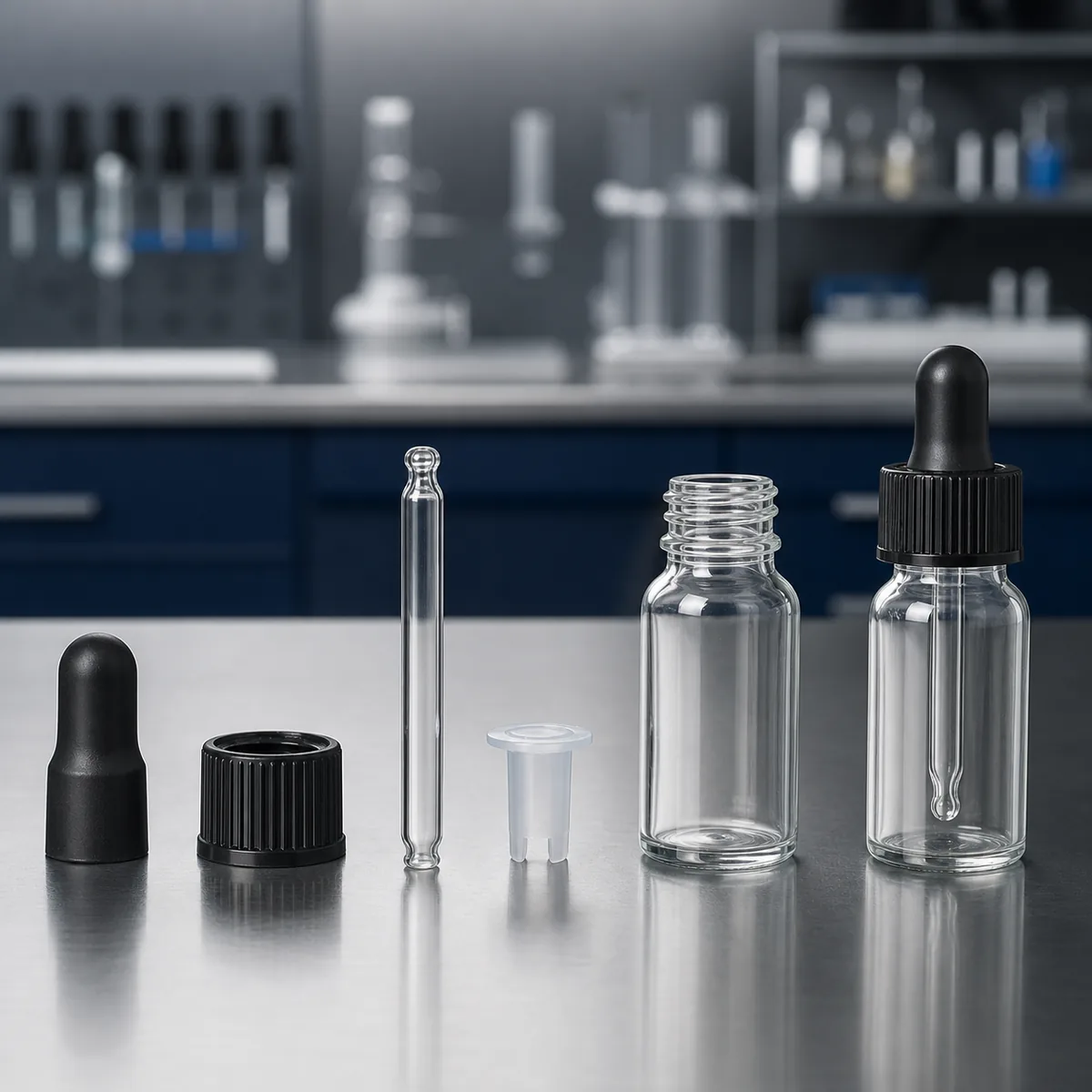
The broader article on how glass dropper systems work explains the roles of bulbs, pipettes, collars, and wipers.
Manufacturer Insight: Before changing a dropper because the pipette looks partially empty, FOLOVER PACK recommends checking the amount delivered per draw and its consistency. A visually full pipette is not a reliable substitute for an approved dispensing requirement.
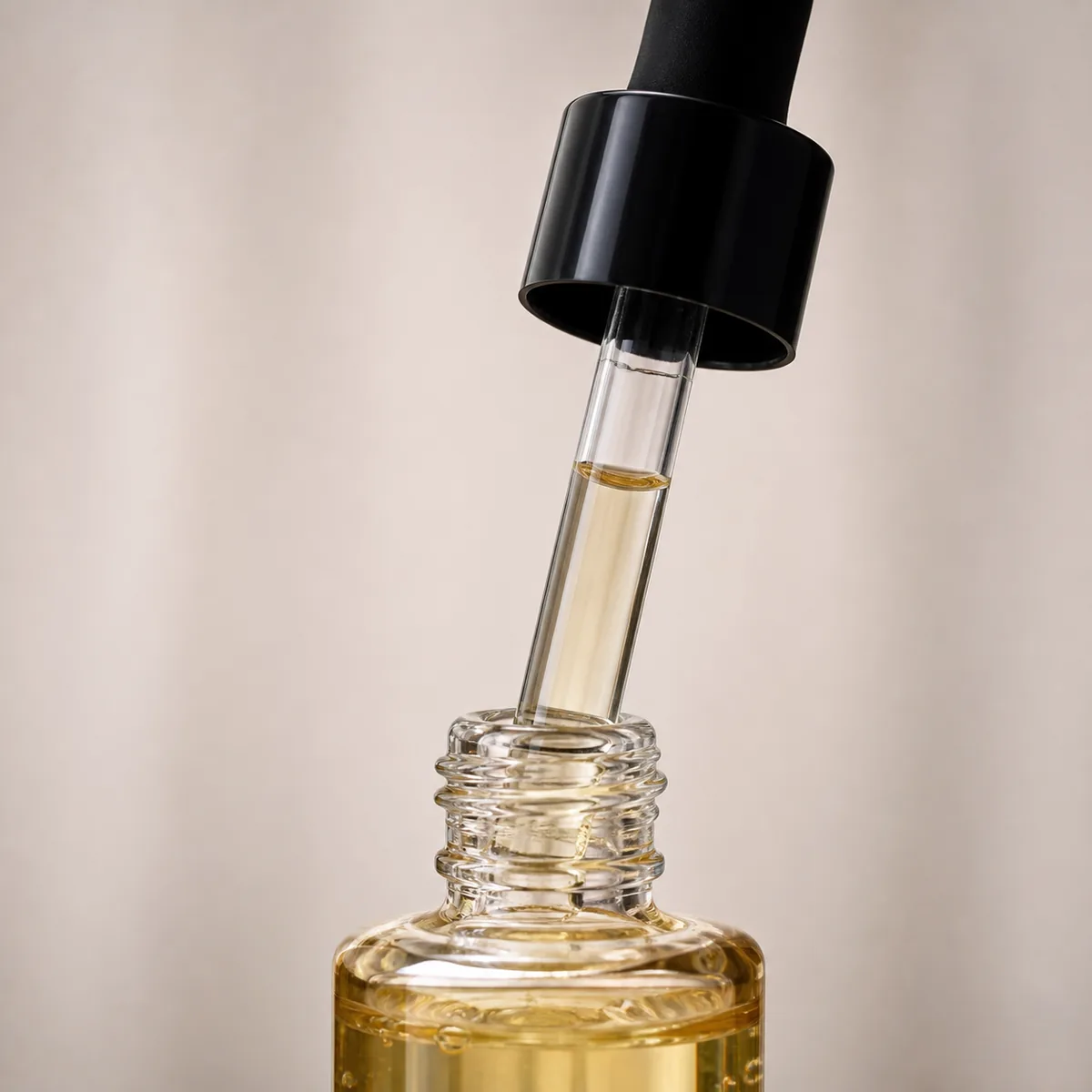
Bulb volume limits uptake
Bulb geometry, material, elasticity, compression distance, and recovery behavior affect how much air is displaced. A larger-looking bulb does not automatically draw more liquid because its effective displacement also depends on how far it can be compressed and how it recovers.
Replacing the bulb may change collar fit, user force, appearance, sealing, and material compatibility. Buyers should therefore evaluate a proposed replacement as part of the complete dropper assembly rather than assume that a larger bulb will solve incomplete filling.
Pipette geometry changes the visible column
The same drawn volume produces a taller liquid column in a narrower pipette and a shorter column in a wider one. Pipette length determines available reach but does not independently determine how much liquid the bulb draws.
Tip geometry also matters. If the tip presses against the bottle base, the opening may become restricted. If the pipette is too short, it may no longer reach the formulation as the bottle empties.
For a brand using one dropper design across several bottle sizes, the pipette length selection guide explains why each bottle configuration requires a suitable pipette length.
Formula viscosity and surface behavior matter
Thicker formulations generally resist flow more than low-viscosity liquids. A viscous serum may enter the pipette slowly, particularly when the inlet is narrow or the bulb is released quickly. Temperature, surface tension, wetting behavior, and entrained air can also affect the result.
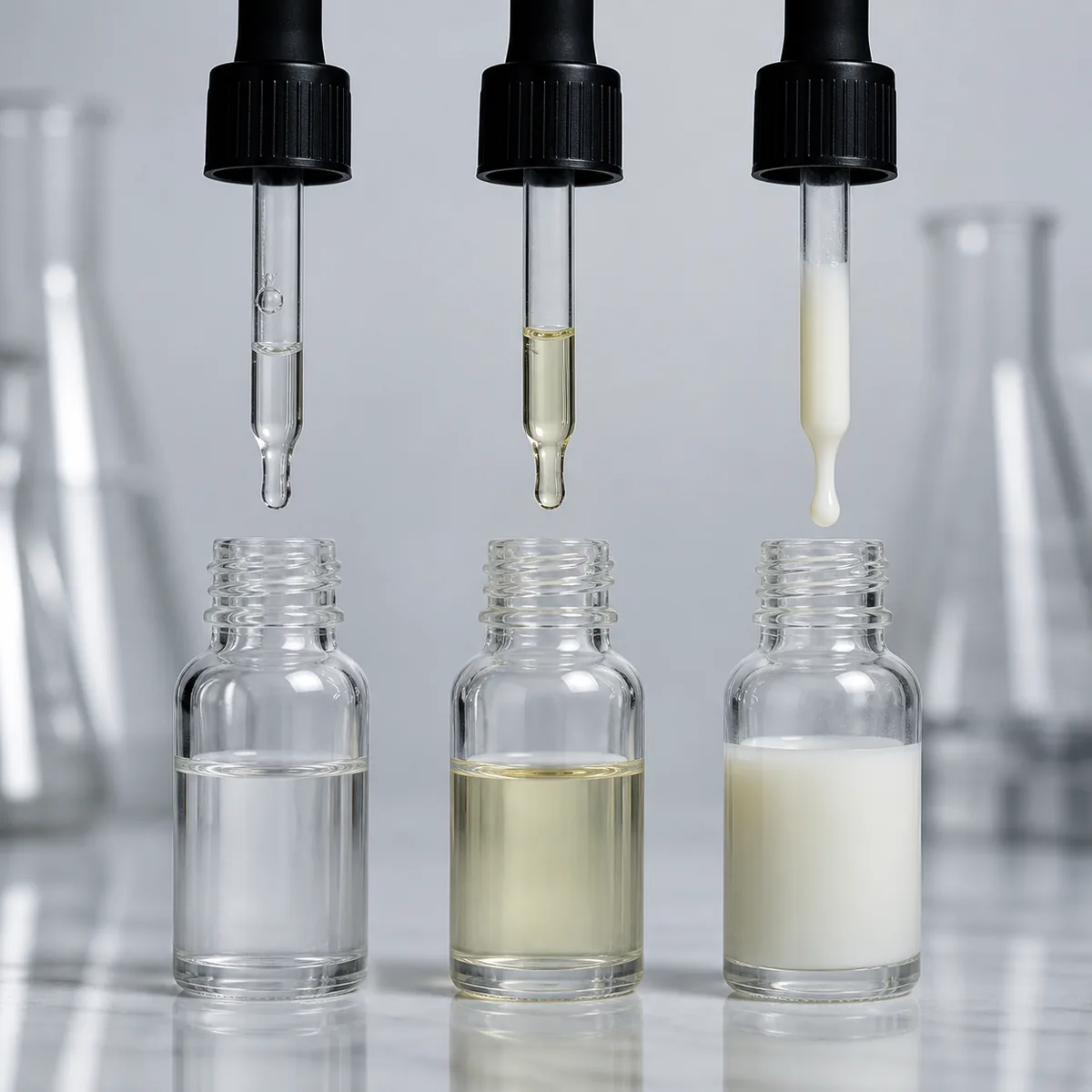
Technical guidance from Thermo Fisher Scientific describes how aspiration technique and waiting time influence liquid transfer in laboratory pipettes. These findings support the importance of controlled liquid-handling conditions, although laboratory pipette performance specifications should not be applied directly to cosmetic droppers.
A water test can help identify basic suction problems, but it cannot establish performance with the finished serum or oil. Buyers should test the selected dropper with the actual formulation under intended storage and use conditions.
The serum bottle guide provides additional context for selecting suitable dispensing systems.
Air leaks can reduce uptake
A damaged bulb, loose bulb-to-collar connection, or poorly fitted pipette can allow air into the suction path. These faults may cause reduced uptake, bubbles, or inconsistent liquid columns.
However, a suction-path leak is not necessarily a bottle-sealing problem. A dropper may draw liquid correctly while the bottle-to-closure seal fails during storage or transport. Conversely, a properly sealed bottle may still have an internal dropper connection problem.
Inspect the bulb, collar, pipette connection, and bottle seal separately before deciding which component requires replacement.
User technique changes the observation
For a conventional bulb-operated cosmetic dropper, compress the bulb before immersing the pipette tip. Keep the tip below the liquid surface while releasing the bulb, allow the liquid column to stabilize, and then withdraw the dropper.
Releasing the bulb before immersion can draw air instead of formulation. Compressing it while submerged may introduce bubbles into the product. These effects become more noticeable when the bottle is nearly empty or the formulation foams easily.
During sample evaluation, use a consistent starting fill level, bulb compression method, immersion depth, release time, and dispensing procedure. This helps distinguish component problems from differences in operator technique.
A symptom-to-cause diagnostic sequence
Before rejecting a dropper, identify the actual symptom and check the most relevant variables. The following table separates normal partial filling from conditions that may require component adjustment.
| Observed symptom | Likely areas to inspect | Useful next check |
|---|---|---|
| Stable partial fill with consistent delivery | Normal bulb displacement and pipette geometry | Measure delivered amount and repeatability. |
| No liquid uptake | Incorrect technique, blocked tip, air leak, or bulb recovery | Inspect the assembly and repeat the test using a controlled procedure. |
| Slow uptake | Formula viscosity, temperature, inlet restriction, or bulb recovery | Standardize temperature and allow sufficient time after releasing the bulb. |
| Bubbles in the liquid column | Insufficient immersion, suction-path leakage, or formulation foaming | Check tip immersion and inspect bulb and pipette connections. |
| Good uptake when full but poor uptake near empty | Pipette reach and internal bottle geometry | Evaluate the intended low-fill condition and confirm pipette length. |
| Different results between identical assemblies | Component variation, assembly consistency, or operator technique | Compare representative samples using the same formulation and test method. |
Buyer decision: If the dropper repeatedly delivers the required amount despite a visible air space, changing the bulb or pipette may be unnecessary. If uptake is insufficient or inconsistent, isolate the relevant cause before approving a component change.
Define performance in measurable terms
For cosmetic packaging procurement, the acceptance requirement should reflect how the consumer uses the product. Depending on the formulation and application, relevant criteria may include the delivered amount per draw, consistency between draws, dripping, residual product, and ease of dispensing.
The required delivery range and acceptable variation should be established for the selected product rather than taken from a different dropper model. A nominal bottle capacity or pipette length does not establish the amount delivered by the assembled dropper.
Dropper Sample Approval Checklist
- Confirm the exact bottle, bulb, collar, and pipette configuration.
- Test with the actual formulation at the intended fill level and relevant temperature.
- Use a consistent bulb compression, immersion, release, and dispensing method.
- Measure the delivered amount and repeatability against the agreed acceptance criteria.
- Check uptake and residual product at the intended low-fill condition.
- Inspect suction connections and bottle-to-closure sealing separately.
- Approve physical samples of the complete assembly before bulk production.
For brands comparing different dispensing configurations, FOLOVER PACK’s serum and essential-oil droppers provide a product selection starting point. Final bottle and closure compatibility should be confirmed using the selected components and physical samples before bulk production.
The Packaging Q&A category covers other common buyer questions, while Packaging Technology explains additional component and dispensing considerations.
Final Recommendation: A dropper that does not fill completely is not necessarily defective. If it consistently draws and delivers the required formulation, the partial liquid column may be normal. If performance is inadequate, evaluate the bulb, pipette, formula, suction connections, and user technique before changing components.
For dropper selection or component matching, share your glass bottle specification, actual formulation, intended delivery requirements, and available sample results with FOLOVER PACK. These details help identify a suitable assembly and the checks needed before bulk-production approval.
Frequently asked questions
Should a dropper pipette fill completely?
No. Many functional droppers retain an air space because the bulb displaces less volume than the pipette can hold. Judge delivery amount and consistency.
Does a larger bulb always draw more product?
No. Effective displacement depends on bulb geometry, material, compression, recovery, connections, and the rest of the assembly. A larger external shape does not guarantee greater uptake.
Can thick serum reduce dropper uptake?
Yes. Higher flow resistance can slow the draw and change the result, especially when temperature, inlet geometry, or release time also varies. Test the actual formula under a controlled method.
Can a loose closure affect suction?
The important suction leaks are within the bulb–collar–pipette air path. Closure fit also matters for storage sealing, but the two functions should be inspected separately.