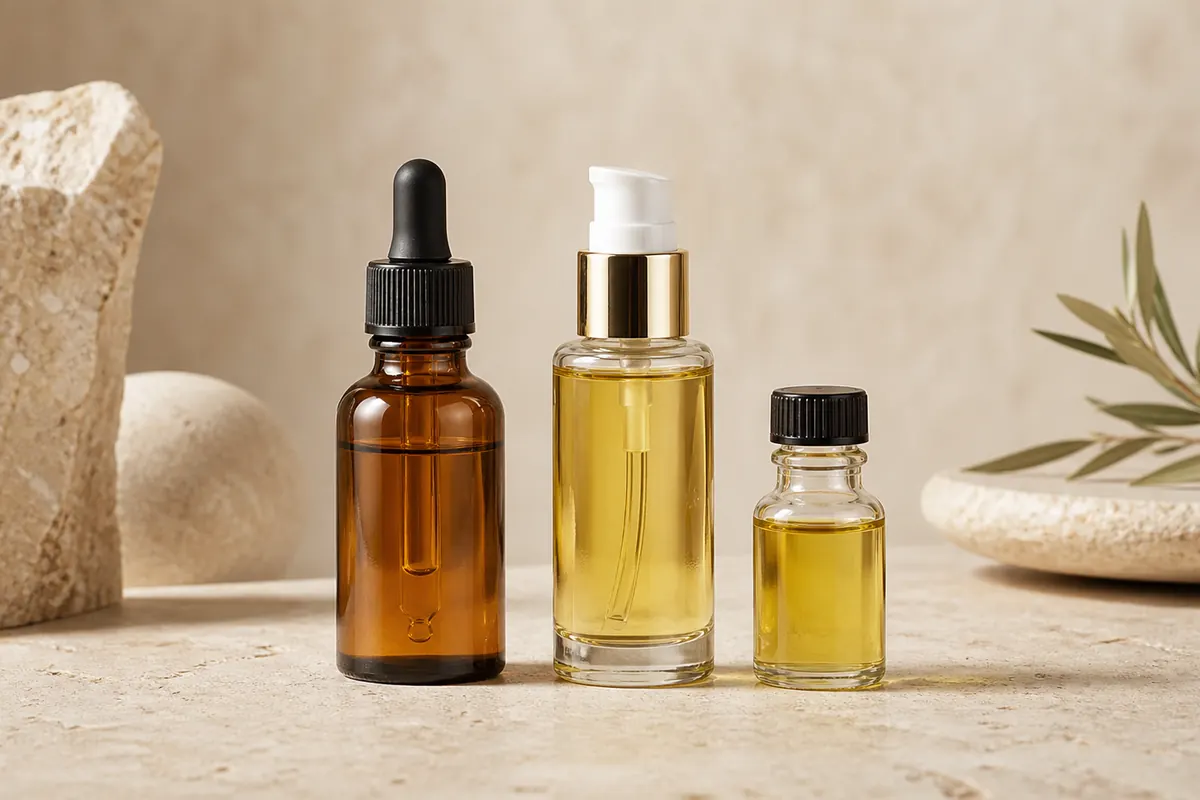
Packaging for facial oils should be selected as a complete bottle-and-dispensing system, not as a bottle plus an interchangeable accessory. A dropper is generally the stronger choice when flexible manual dosing and product interaction are part of the routine; a treatment pump is usually more appropriate when cleaner, more repeatable one-handed dispensing is the priority. Controlled-flow reducers can work for direct drop dispensing when the formula and insert are properly matched.
The final decision should be based on the actual oil blend, viscosity, oxidation sensitivity, intended dose, bottle geometry, closure structure and user handling. Light-management claims, leakage control and formula-contact compatibility should be verified with the selected components and representative formula before bulk production.
What Makes Facial Oil Packaging Different?
Facial oils are often used in concentrated, relatively small doses. That makes dispensing control important: a package that releases too much product can feel messy and wasteful, while a system that is difficult to prime, refill or control can interrupt the routine. Low-to-medium viscosity does not automatically mean that every dropper or pump will work equally well.
The formula may remain in long-term contact with a pipette, bulb, gasket, liner, pump seal and dip tube. Oils can interact differently with elastomers and plastics, so appearance alone cannot confirm compatibility. The package should also keep the neck area manageable in use and limit unnecessary contact between oil residue and decorated or labeled surfaces.
FOLOVER manufacturer insight: In facial-oil projects, we normally evaluate the bottle, closure, formula-contact parts and dispensing behavior as one packaging system. Selecting a bottle first and treating the dropper or pump as a separate accessory creates avoidable risk because neck fit, sealing geometry, pipette or dip-tube configuration, viscosity and target dose can all affect the assembled result.
Glass Dropper Bottles for Facial Oils
A glass dropper bottle supports deliberate manual dosing and lets the user see the product being withdrawn. This familiar ritual can suit facial oils positioned as concentrated treatments. Buyers can review existing cosmetic bottle droppers together with an appropriate bottle rather than selecting the two parts independently.
Dropper performance depends on the complete assembly. Pipette outside diameter, length, tip style, bulb response, wiper or neck geometry and bottle height all influence uptake and release. An oversized or incorrectly configured pipette can contact the bottle base or shoulder; a poorly matched bulb, collar or sealing interface can reduce usability or leakage control. The guide to how glass dropper systems work explains these interfaces in greater technical detail.
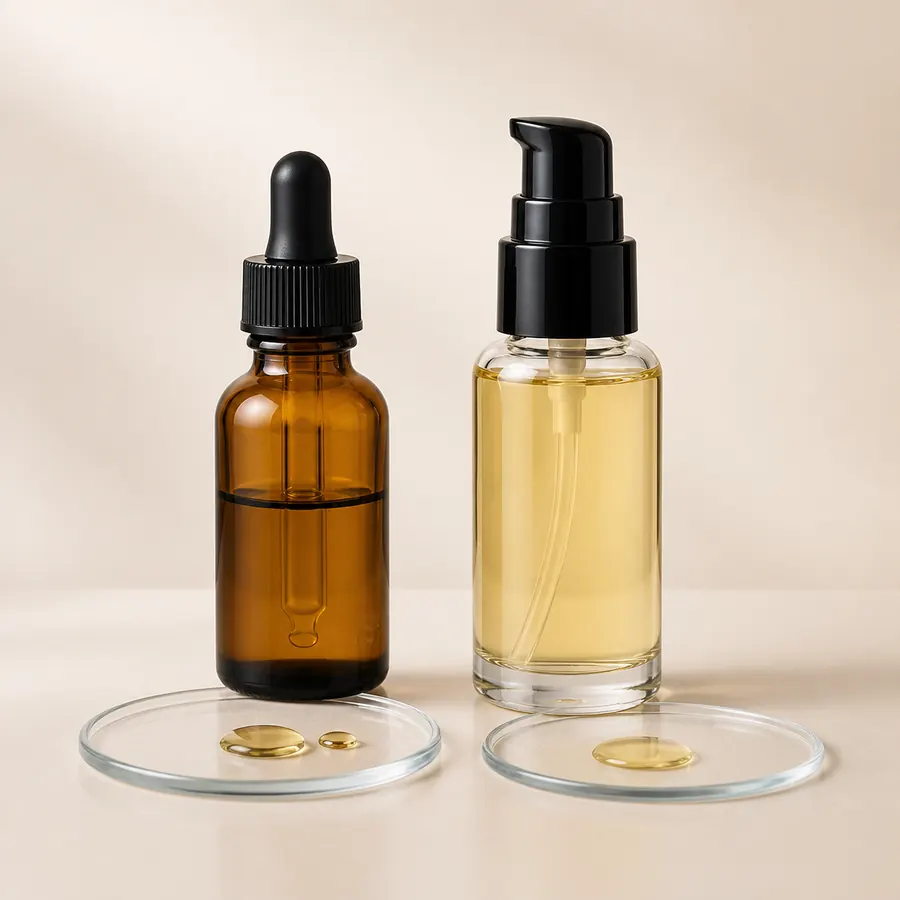
Treatment Pumps for Facial Oils
A treatment pump can offer one-handed actuation, less direct handling of the applicator and a more repeatable dispensing action when the formula and pump are compatible. The selected output should match how the product is used rather than being assumed from a generic catalog description. Buyers can compare relevant cosmetic lotion and treatment pump options, then confirm the exact component with the bottle.
Pump evaluation should include priming, dispensing consistency, recovery between strokes, leakage and residual product. Viscosity, temperature and formula composition can change performance. Dip-tube length and cut also need to match the bottle geometry; the tube should not be estimated from the bottle’s external height.
Dropper vs Treatment Pump: Buyer Decision Table
| Option | Best For | Main Advantage | Main Limitation | What Buyers Should Verify |
|---|---|---|---|---|
| Glass Dropper | Flexible manual dosing and a visible application ritual | User can control uptake and number of drops | Manual dose varies and the bulb, pipette and neck all become compatibility variables | Neck and collar fit, sealing, pipette clearance, bulb condition, dose control and formula contact |
| Treatment Pump | Cleaner one-handed use and more repeatable actuation | Less direct handling of the applicator and consistent user action | Performance can change with viscosity, pump design and dip-tube configuration | Neck fit, priming, dispensing consistency, recovery, leakage, dip-tube geometry and residual product |
| Controlled-Flow Reducer | Direct drop dispensing without a bulb or pipette | Simple user action and compact component structure | Flow depends strongly on insert design, viscosity and bottle orientation | Insert fit, drop formation, flow control, cap sealing, neck cleanliness and repeated-use behavior |
Euro Dropper and Controlled-Flow Options
Some concentrated oils use a reducer-style insert that releases drops when the bottle is tilted. This can create a simple pack with fewer user steps, but flow depends on the insert, orifice, formula viscosity and bottle orientation. It should not be described as a universal substitute for a pipette dropper.
Controlled-flow closures may be useful when a brand wants direct drop dispensing without a bulb. Buyers should check flow behavior, neck fit, cap sealing and cleanliness after repeated use. Essential-oil-style components can provide useful references, and the Essential Oil Bottles covers related dropper and reducer formats, but a facial oil still needs its own formula and user-experience validation.
Clear, Amber or Coated Glass
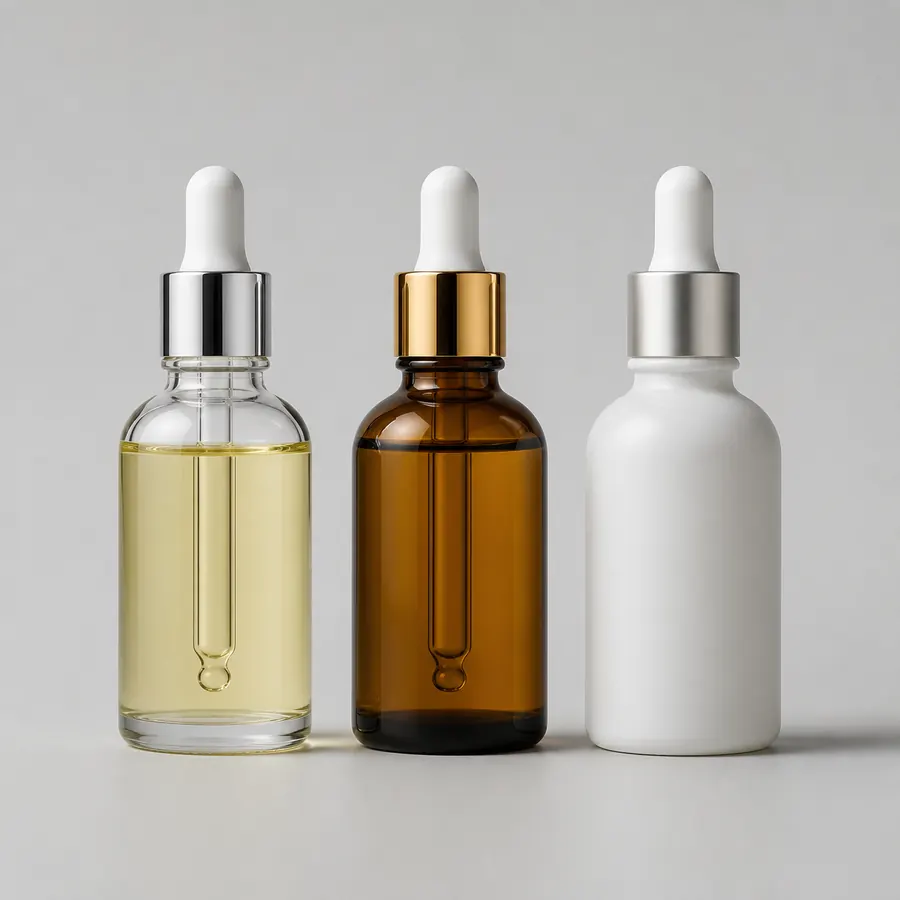
Clear glass shows the oil color and fill level, while amber, colored or coated glass changes light transmission and the visual identity of the pack. The comparison of clear, amber and colored cosmetic glass helps buyers understand these format differences without turning color into an unsupported protection claim.
There is a sound technical reason to treat light exposure as a formulation variable. A 2025 peer-reviewed review of vegetable-oil oxidation notes that light and elevated temperature can accelerate lipid oxidation, while the actual susceptibility depends on the oil system and its composition. That evidence supports evaluating light protection where the facial-oil formulation is oxidation-sensitive, but it does not establish a universal protection percentage for cosmetic facial oils. See the peer-reviewed review indexed by PubMed.
Amber glass does not automatically solve every stability problem, and frosting should not be treated as verified UV protection. When a project requires a quantified light-transmission claim, measured data are more defensible than a color description alone. As a useful technical reference, USP General Chapter <660> Containers—Glass includes spectral-transmission testing for colored pharmaceutical glass. USP <660> is a pharmaceutical packaging standard, not a cosmetic packaging requirement, but its test approach illustrates why light-protection claims should be supported by relevant measurements rather than assumed from appearance.
Closure and Material Compatibility
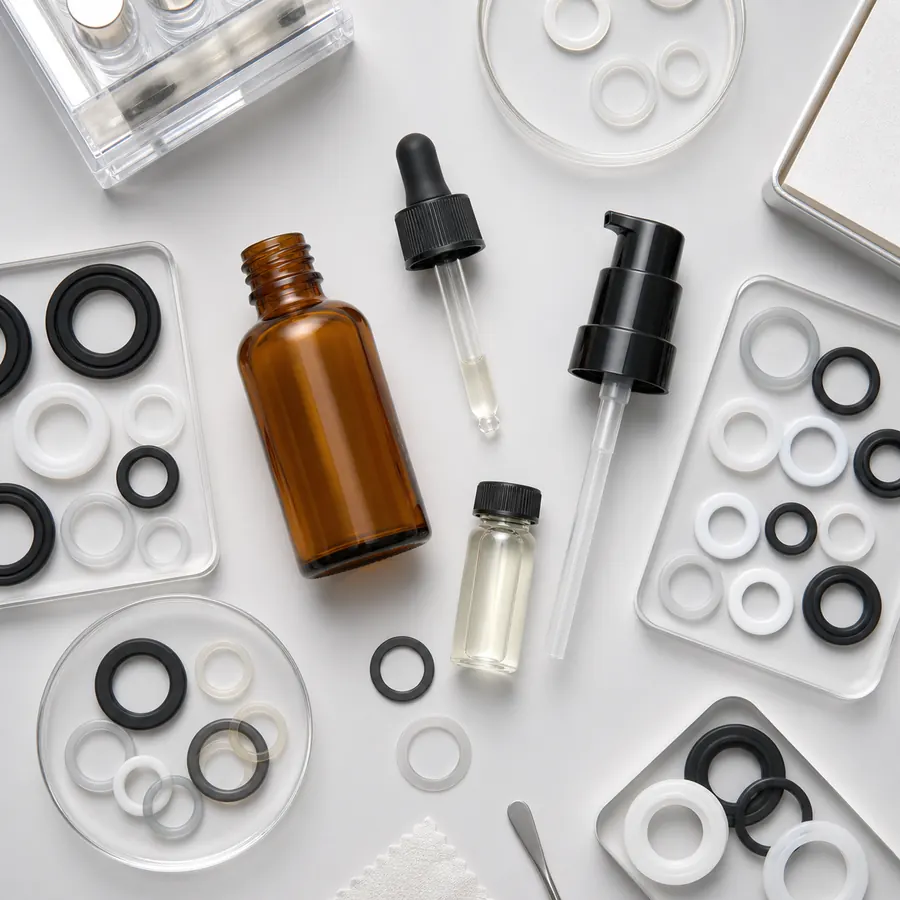
Oil may contact the pipette, bulb, pump seals, gasket, liner, dip tube and inner closure surfaces. Each material can respond differently over time. Swelling, softening, hardening, discoloration, odor transfer or loss of sealing performance are possible observations to monitor, but no general article can predict the result for a specific formula.
This is why generic statements such as “oil-resistant bulb” or “compatible pump” are not enough for production approval. ASTM D471, Standard Test Method for Rubber Property—Effect of Liquids, is an established method for comparing how rubber and rubber-like materials respond to liquid exposure. ASTM also notes that accelerated test results do not directly predict every real service condition. For cosmetic packaging, the buyer implication is practical: use the exact production-intent bulb, gasket or seal with the representative formula and define project-specific acceptance criteria.
Use the exact production-intent components for compatibility work. A similar-looking bulb or pump with a different material is not an equivalent test sample. The broader cosmetic packaging compatibility testing guide explains why the complete filled system, defined conditions and recorded acceptance criteria matter.
Technical boundary: A standard such as ASTM D471 can inform material-testing logic, but it does not certify a facial-oil package or replace a finished-pack compatibility program. Packaging compatibility should be evaluated with the actual formulation under intended storage and use conditions.
Dosing and User Experience
The package should release an amount that fits the expected facial-oil routine. For a dropper, buyers can observe uptake, drop formation, control and whether oil reaches the bulb or closure threads. For a pump, they can review priming strokes, delivered amount, actuator feel and whether product continues to drip after use.
Neck cleanliness matters because oil residue can migrate onto threads, collars, labels or cartons. Travel handling also deserves a separate check: upright shelf use does not prove that a filled pack will remain secure when carried on its side. A protective overcap or secondary seal may be considered only after the exact closure system is defined.
What Should Be Tested With the Actual Facial Oil?
Compatibility work should use the final or representative formula and the exact production-intent bottle, closure and formula-contact components. Before testing begins, the buyer and supplier should agree on what will be observed and what would trigger rejection or further investigation. That makes the result more useful than a simple “pass/fail” note with no recorded criteria.
- Leakage and closure sealing in the intended storage orientations
- Bulb, gasket, liner, seal and dip-tube condition after formula contact
- Dropper uptake, drop formation and pipette clearance
- Pump priming, dispensing consistency, recovery and residual product
- Odor, color or visible formula changes under the project protocol
- Neck cleanliness and product contact with decoration or labels
- Cap fit, opening behavior and handling after repeated use
- Filled-package appearance and any defined stability requirements
At FOLOVER, we normally recommend approving the assembled physical sample rather than isolated bottle and closure components. Final bottle and closure compatibility should be confirmed using the selected components and physical samples before bulk production.
Common Facial Oil Packaging Mistakes
Selecting a bottle only because it looks premium is a frequent mistake. Other problems include assuming amber glass guarantees stability, choosing a pipette from nominal capacity rather than bottle geometry, ignoring oil contact with the bulb, and approving a pump with water instead of the intended formula.
- Dropper failure mode: the pipette is too long, contacts the base or shoulder, or does not reach the usable product zone. Buyer action: confirm the pipette with the selected bottle and filled sample.
- Closure failure mode: the collar or sealing geometry does not match the bottle neck even though the parts appear visually compatible. Buyer action: approve the actual assembled components, not nominal names alone.
- Pump failure mode: the formula primes slowly, recovers poorly or leaves excessive residual product because viscosity, pump structure or dip-tube geometry is unsuitable. Buyer action: test with the representative formula and final bottle geometry.
- Material failure mode: a bulb, gasket or seal changes after prolonged oil contact. Buyer action: monitor the exact production-intent material under the project protocol.
- Light-protection failure mode: amber, colored or frosted glass is treated as proof of a specific UV-protection percentage. Buyer action: request relevant transmission or stability evidence when quantified protection is required.
Another risk is treating facial oil as identical to serum. The two categories can share bottle formats, but formula behavior, dose and customer expectations may differ. The serum bottle selection guide is a useful adjacent resource, while this article remains focused on facial-oil application requirements.
How Buyers Can Build a Clear Facial Oil Brief
A useful RFQ should separate confirmed requirements from items that still need sampling. Provide the supplier with the intended fill volume, dispensing preference, representative formula information, light-protection objective, decoration requirements, market channel and expected use. If a specific output, pipette length, material or closure structure is important, request the exact component drawing or specification instead of relying on a generic product name.
- Target fill volume and bottle format
- Representative formula information and viscosity behavior
- Preferred dispensing method: dropper, pump or controlled-flow reducer
- Target user action and dose-control requirement
- Light-sensitivity or stability concern that the package must address
- Selected bottle and closure combination to be physically sampled
- Decoration and label areas that may contact oil residue
- Expected storage, travel and shipment orientations
- Sample observations and acceptance criteria before bulk approval
- Destination-market documentation required for the exact packaging configuration
For broader formula-to-package selection, the skincare packaging guide provides the parent decision path. The existing Serum Bottles can help organize adjacent bottle and closure decisions, while Packaging Applications and Packaging Buying Guides connect the application to broader selection work.
Storage, Secondary Packaging and Shipment Considerations
The primary bottle cannot control every condition after filling. A carton may help protect a decorated bottle, keep the pack upright and provide space for instructions, but it should not be credited with formula protection unless that contribution has been evaluated. Inserts must hold the bottle without pressing the bulb, pump or decorative surfaces. If an overcap is used, confirm that normal removal does not loosen the pump or dropper closure.
Shipment checks should use the filled, decorated and assembled configuration. Review leakage after agreed orientations, cap security, abrasion between the bottle and insert, and whether oil residue reaches printed or coated areas. Transport packaging is a separate protective layer from the retail carton; neither should be assumed adequate from appearance alone.
Plan for Low Fill Level and End of Use
A facial oil package should be evaluated beyond the first few doses. As the fill level drops, pipette reach, bottle shoulder geometry and tilt angle influence how easily the user can collect the remaining product. Pump systems may leave residual oil depending on the dip tube, bottle base and use orientation. Buyers should observe this behavior with the final geometry rather than promising complete evacuation.
End-of-use evaluation also reveals whether repeated product contact makes the neck messy, whether the bulb remains comfortable, and whether the closure continues to seal after repeated opening. These observations help the brand set realistic usage instructions and choose between bottle shapes without inventing an exact evacuation rate.
Frequently Asked Questions
What type of bottle is best for facial oil?
The best facial-oil bottle is the one whose glass, closure and dispenser meet the formula, dose, stability and user requirements after physical testing. A dropper is usually better for flexible manual dosing, while a compatible treatment pump is usually better for cleaner, more repeatable one-handed use. Buyers should approve the complete filled system rather than the bottle alone.
Is a dropper or pump better for facial oil?
A dropper is generally better when visible, flexible manual dosing is part of the product experience. A treatment pump is generally better when repeatable actuation and reduced direct handling of the applicator matter more. The final choice still depends on formula viscosity, bottle neck, sealing, pipette or dip-tube configuration and physical compatibility testing.
Should facial oil be packaged in amber glass?
Amber glass can reduce transmission of some light compared with clear glass, but it should not be treated as a universal stability solution or assigned an unsupported UV-protection percentage. The required protection depends on the actual formula and stability objective. If quantified light protection matters, buyers should request relevant transmission or stability evidence for the selected package.
Can facial oils affect dropper bulbs?
Yes, some elastomeric materials can change when exposed to oils or other liquids, but the result depends on the exact material and formula. Buyers should test the production-intent bulb and closure rather than assume that a generic “oil-resistant” description proves compatibility. Monitor material condition, sealing and dispensing behavior under the project protocol.
Should facial oil packaging be compatibility tested?
Yes. The complete bottle, dispenser, closure materials, decoration and representative formula should be evaluated together before bulk production. The protocol should reflect intended storage and use conditions and record agreed observations such as leakage, material condition, dispensing behavior, neck cleanliness and visible formula changes.