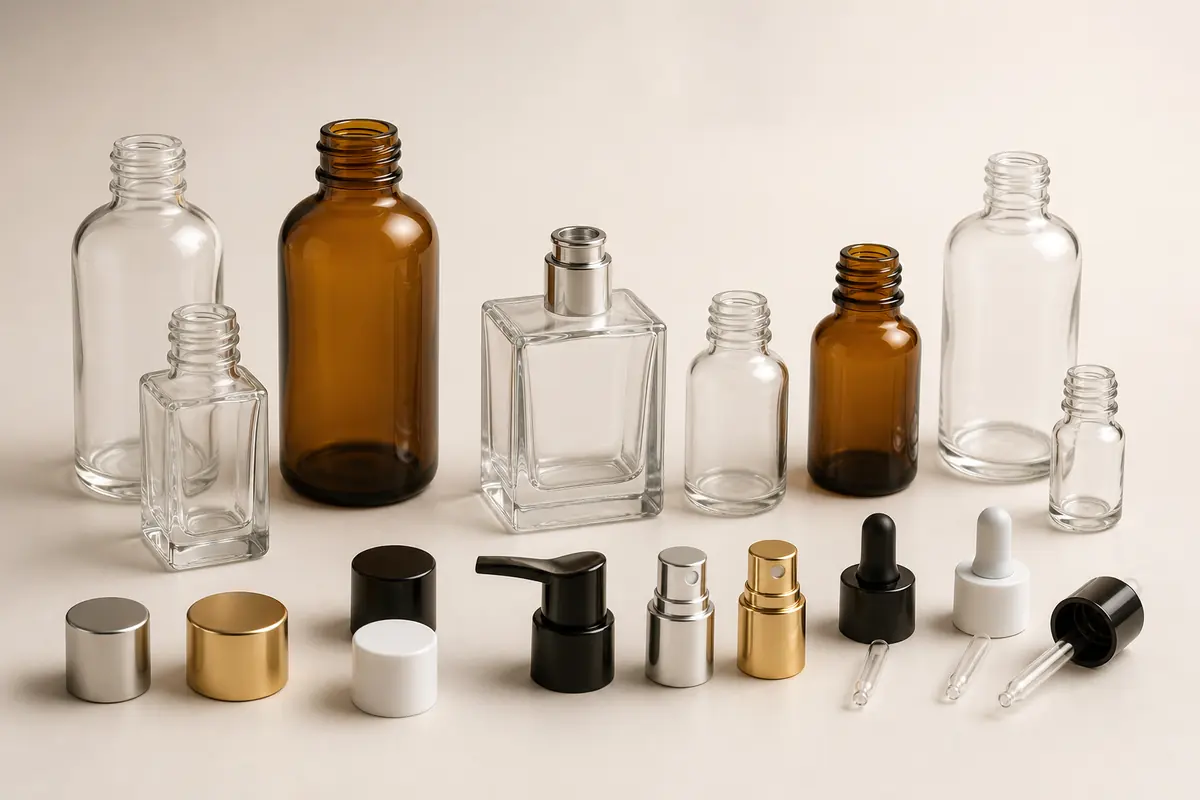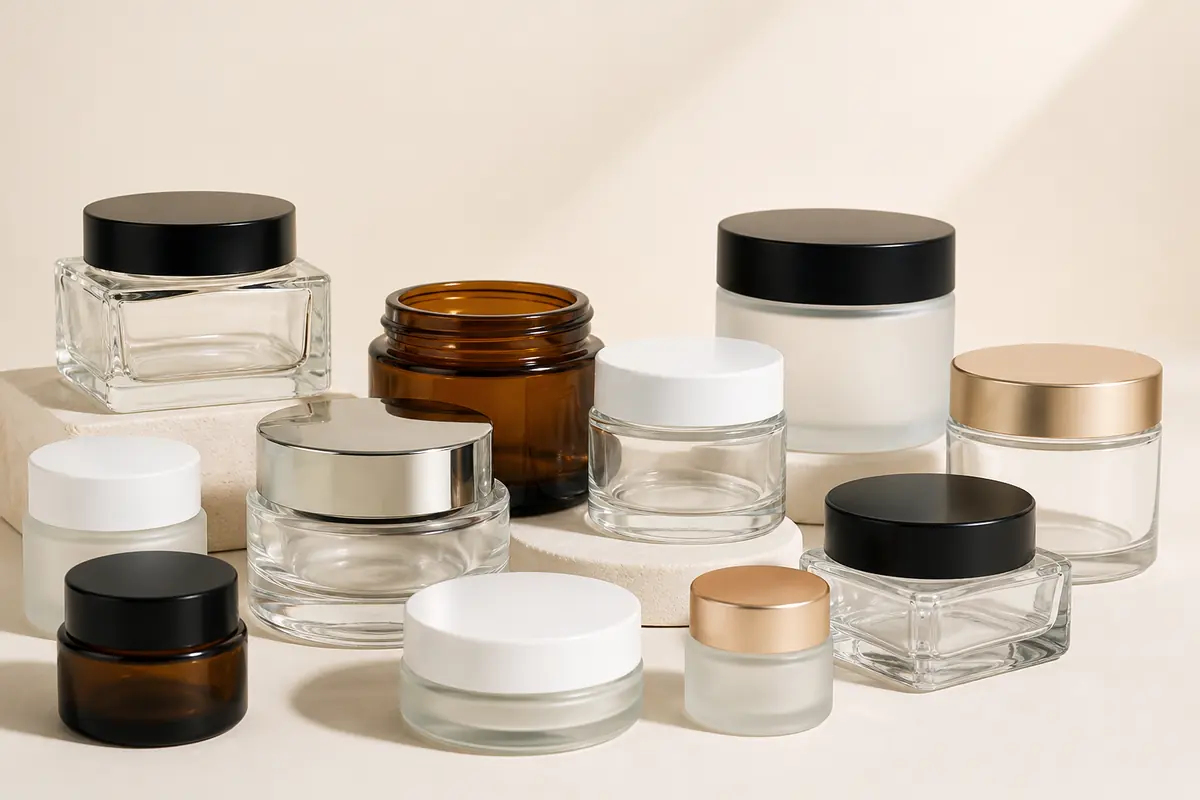
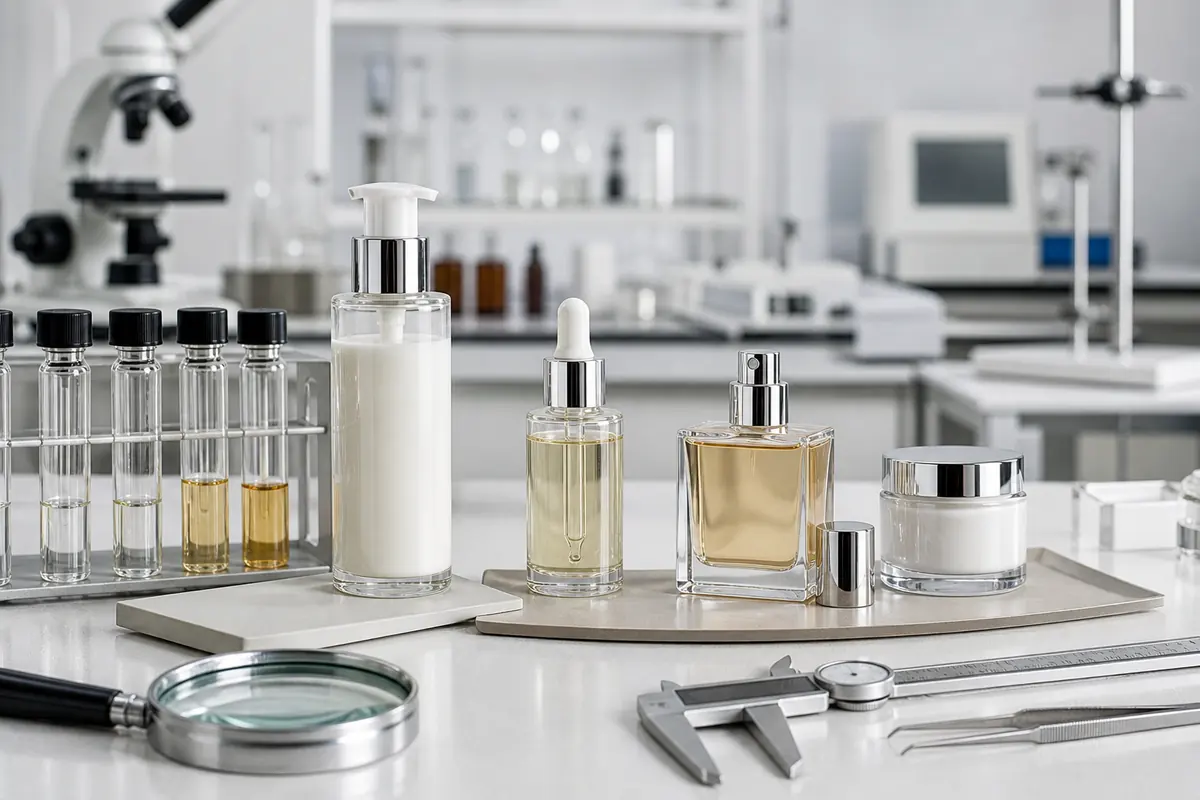
Cosmetic packaging compatibility testing evaluates whether the actual formula, bottle, closure, dispensing system, decoration and intended storage and distribution conditions work together throughout the product’s expected use. A package can look correct and still leak, clog, discolor, lose adhesion or dispense inconsistently. Compatibility must therefore be evaluated using the final assembled packaging configuration, not established from appearance or an individual component specification alone.
Before bulk production, cosmetic brands should test representative packaging samples with the actual formulation under defined storage, transport and use conditions. The evaluation should cover mechanical fit, sealing, dispensing, material interaction, formula stability and decoration performance. Buyers should document the tested components, methods, observations and acceptance criteria before approving the final packaging system.
What Does Packaging Compatibility Mean?
Cosmetic packaging compatibility means that the selected packaging and formulation remain suitable for their intended function under defined conditions. It includes mechanical compatibility, material interaction, dispensing performance, appearance and the ability of the complete package to maintain its intended function.
Compatibility testing should answer several practical questions:
- Does the closure attach and seal correctly on the selected bottle?
- Does the pump, sprayer or dropper dispense the actual formulation consistently?
- Does the formula cause swelling, softening, discoloration or deterioration of any packaging component?
- Does the assembled package maintain acceptable performance during intended storage, handling and transport?
- Does the final decoration remain acceptable under foreseeable filling, handling and use conditions?
A supplier statement about one component cannot establish compatibility for the complete package. The evidence must apply to the actual bottle, closure, formulation, decoration and intended conditions. The cosmetic bottle closure guide helps define the component options that a test plan must identify.
Test the Actual Formula Whenever Possible
The intended formulation is the most relevant test material because viscosity, surface tension, oils, alcohol, solvents, fragrance components, active ingredients and suspended particles can affect packaging differently.
Water or another representative material may support early mechanical screening, such as checking whether a pump operates, a closure seats correctly or a dropper reaches the intended fill level. However, successful screening with a substitute liquid does not establish compatibility with the final formulation.
For example, a pump may dispense water normally but behave differently with a viscous lotion. Likewise, a closure may pass an initial water-based leakage check while its gasket requires further evaluation against the intended formulation.
These are potential failure scenarios rather than evidence of a particular customer incident. The actual cause and corrective action must be established through testing of the selected components.
Formula batches and development versions must remain traceable. If the formulation changes after testing, the brand should assess whether the modification affects previously approved packaging results and repeat the relevant checks when necessary.
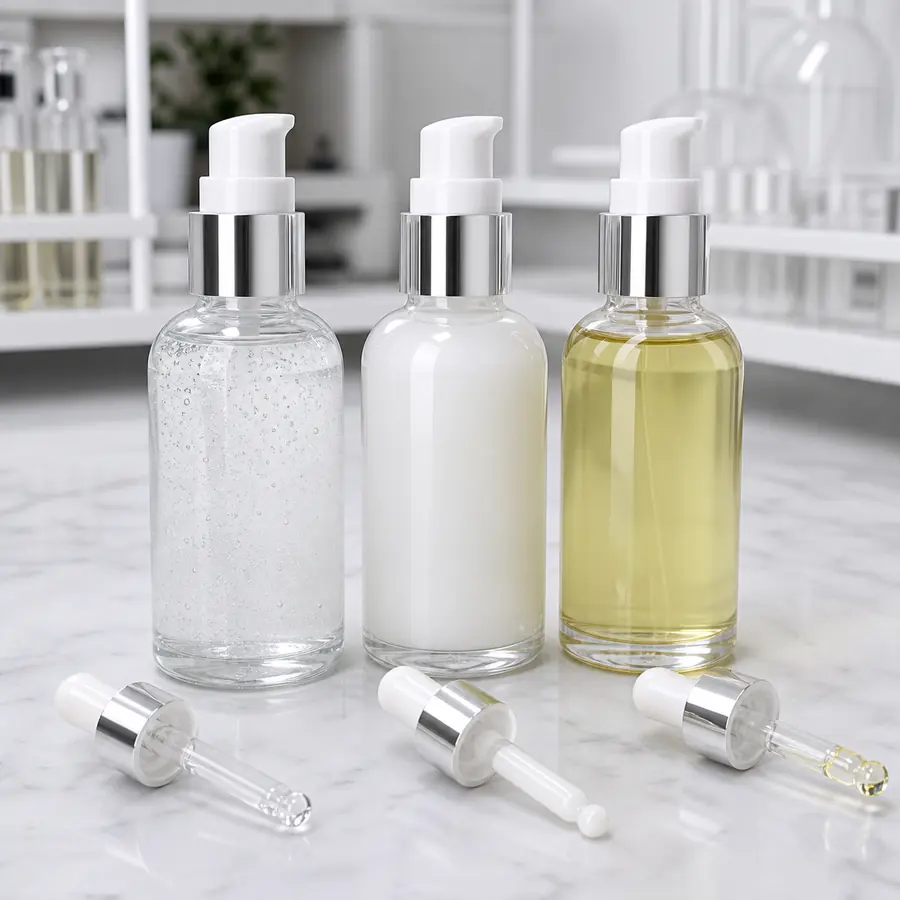
Bottle and Closure Fit Testing
Bottle and closure compatibility begins with the exact neck finish, closure structure, liner or gasket, sealing geometry and intended assembly method.
Buyers should inspect thread engagement, closure seating, alignment, sealing contact, crimp formation where applicable, and opening or actuation behavior. The closure should reach its intended assembled position without abnormal interference or damage.
A shared nominal neck size does not automatically establish compatibility. Different sealing surfaces, thread profiles, closure structures and dimensional variation can affect the finished assembly.
The article on bottle and closure tolerances explains why nominal sizes and one ideal sample cannot establish a robust fit.
Manufacturer Insight: Approve the Complete Bottle and Closure Assembly
For a packaging supplier, confirming that a cap can be screwed onto a bottle is only an initial fit check. The final assembly must also achieve its intended sealing condition with the selected gasket, pump, dropper or other dispensing components installed.
For example, a dropper pipette that contacts the bottle base before the closure is fully seated may introduce mechanical interference. A pump with an unsuitable dip-tube configuration may assemble correctly but fail to provide acceptable product pickup.
FOLOVER PACK recommends evaluating the selected bottle and closure components together before approving bulk production. Buyers should retain the approved assembled sample and confirm that subsequent component substitutions do not change the verified configuration.
Leakage Testing
Cosmetic bottle leakage testing evaluates whether the fully assembled package retains its contents under defined conditions relevant to storage, distribution and consumer use.
Depending on the packaging design and intended application, testing may include upright, horizontal and inverted orientations, temperature conditioning, and appropriately selected pressure or vacuum methods.
There is no universal leakage-test duration, temperature, pressure or orientation sequence suitable for every cosmetic package. The test conditions and acceptance criteria should be established for the specific product and its anticipated distribution risks.
For a filled pump bottle, a practical investigation should distinguish between liquid escaping from the bottle-neck sealing interface and residue remaining around the actuator after dispensing. These observations can indicate different problems and require different corrective actions.
Record where liquid first appears before cleaning or disassembling the sample. Check the neck, gasket, closure, actuator and other possible leakage paths systematically.
The troubleshooting article on why cosmetic bottles leak provides a root-cause framework for interpreting wet packages.
Pump and Sprayer Performance Testing
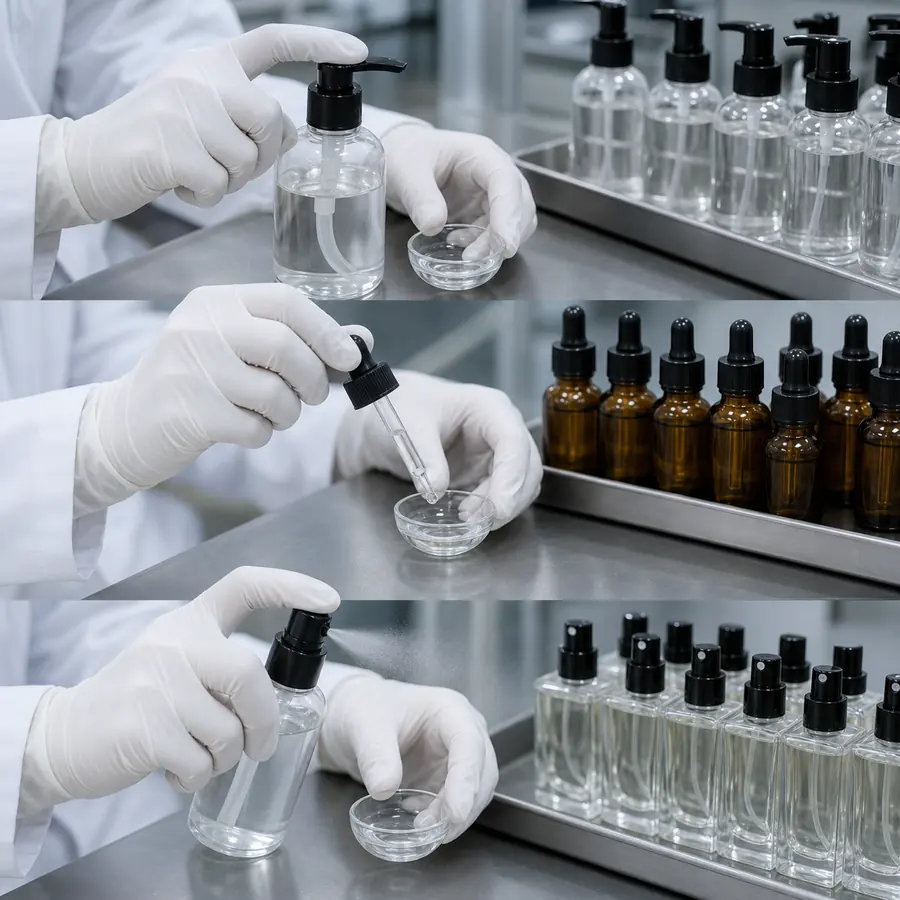
Lotion pump and sprayer compatibility testing should evaluate the selected dispenser installed on the intended bottle and filled with the actual formulation.
Relevant performance checks include initial priming, dispensing consistency, actuator return, dripping, clogging, product pickup and leakage. Fine mist sprayers also require evaluation of spray formation and the intended application experience.
The dip tube must be evaluated against the selected bottle’s internal height and base geometry. An unsuitable tube may restrict product pickup or interfere with the assembled dispensing system.
Formula viscosity, dispensing structure and actuator characteristics can also influence performance. A pump that works with a low-viscosity screening liquid should not automatically be approved for a thicker formulation.
Define a repeatable actuation method and record initial priming separately from normal dispensing. If quantitative output is a project requirement, use the specified measurement procedure and acceptance criteria rather than assuming that the pump’s nominal output represents its performance with every formulation.
Buyers can review available pumps, droppers and bottle accessories when defining potential dispensing options. Final selection should remain subject to the exact bottle, component specifications and physical compatibility testing.
Dropper Performance Testing
Dropper compatibility testing evaluates whether the bulb, pipette, closure and optional wiper operate correctly with the selected bottle and formulation.
Relevant observations include product uptake, holding, release, bulb recovery, pipette position, wiper interaction and leakage.
Bottle depth and final closure seating determine the pipette’s installed position. An overlong pipette may contact the bottle base or interfere with closure seating, while a short pipette can leave more product inaccessible at lower fill levels.
Where a wiper is included, confirm that it matches the intended neck and dropper assembly. Excessive friction or interference during insertion and withdrawal should be investigated before approving the system.
Buyers should test the dropper at relevant fill levels and after repeated use rather than approving the assembly solely on the appearance of its first dispensed drop.
Perfume Atomizer Testing
Perfume atomizer testing examines whether the assembled bottle, pump, collar, cap and dip tube provide acceptable dispensing and sealing performance with the intended fragrance.
Evaluation may include priming, spray pattern, actuator return, dripping, leakage, product pickup and the integrity of the crimp or screw assembly.
Use a consistent spraying distance, background and actuation method when comparing samples. Observe whether the atomizer produces the intended spray characteristics and whether the actuator returns normally after repeated operation.
The selected fragrance must also be considered during material compatibility evaluation. Successful atomization with water does not demonstrate that all wetted pump components are compatible with an alcohol-containing fragrance or its other ingredients.
Cosmetic lotion pumps, droppers and fragrance atomizers should not be treated as interchangeable devices merely because they share some mechanical principles.
Material and Formula Interaction
Material compatibility testing examines whether contact between the cosmetic formulation and its packaging components causes changes that could affect product safety, quality or packaging performance.
The evaluation should consider the actual materials in contact with the formulation, including the bottle, closure liner, gasket, pump components, dip tube, dropper bulb and pipette where applicable.
Potential observations include swelling, softening, cracking, stress-related deterioration, discoloration, changes in odor, visible residues and loss of material clarity.
Glass can provide a useful primary container for cosmetic formulations, but the presence of a glass bottle does not establish compatibility for the complete packaging system. Plastic components, elastomers, metals and other product-contact materials must be evaluated according to their actual exposure.
For cosmetic products intended for the European Union, the European Commission’s Guidelines on Annex I to Regulation (EC) No 1223/2009 address relevant characteristics of packaging materials, including potential interactions between the formulation and its primary packaging.
The guidance identifies the possibility of substances migrating between packaging materials and the cosmetic product as a consideration in the finished product’s safety assessment. It does not establish a universal compatibility test or automatically qualify a particular bottle or closure material.
Extractables, leachables and migration studies are specialized evaluations requiring appropriate methods and expertise. A visual storage inspection alone cannot establish the absence of relevant chemical migration or demonstrate complete product safety.
Buyers should establish the required material documentation and testing scope with qualified technical and safety-assessment parties according to the actual formulation, packaging configuration and destination market.
Decoration Compatibility
Cosmetic packaging decoration testing evaluates whether the final coating, screen printing, hot stamping, frosting or label remains acceptable under the intended manufacturing, distribution and consumer-use conditions.
Filling-line contact, product drips, alcohol or oil exposure, cap friction, carton abrasion and repeated handling can affect the appearance or durability of the decorated package.
A decoration process approved on an empty display sample may require further evaluation when the complete package is filled, capped, packed and handled under its intended conditions.
Buyers should approve the final color, logo placement, coating and decoration on physical samples. The approved sample should identify the relevant bottle, artwork and decoration specifications.
A finish that passes one handling check is not automatically resistant throughout the product lifecycle. Define the required appearance and durability criteria for the actual project rather than assuming universal abrasion resistance or chemical compatibility.
Temperature and Storage Testing
Temperature and storage testing evaluates how the formula and assembled packaging behave under defined conditions relevant to the product’s expected storage and use.
Potential changes include altered formula flow, dimensional changes in components, pressure changes within the package, sealing deterioration, discoloration, material deformation and inconsistent dispensing.
The temperature profile, test duration, light exposure, storage orientation and evaluation intervals should be selected according to the product-development program.
Do not apply a fixed accelerated-aging temperature or test duration to every cosmetic formulation. Different formulations and packaging materials may respond differently, and accelerated conditions do not automatically establish a specific real-time shelf life.
Record baseline observations and include appropriate controls. Define whether samples should be evaluated immediately after temperature exposure, following recovery to ambient conditions or at both stages.
Where the product is intended for the European Union, the European Commission’s cosmetic product safety report guidelines also address the assessment of cosmetic product stability under reasonably foreseeable storage conditions.
The stability program and packaging compatibility evaluation should be coordinated so that observations involving the actual commercial package are considered appropriately.
Transport and Handling Testing
Transport testing evaluates whether the intended primary and secondary packaging can withstand relevant distribution hazards while maintaining acceptable product protection and package integrity.
Potential hazards include vibration, impact, compression, orientation changes and temperature variation. The selected test conditions should reflect the planned shipping method and packaging configuration.
For cosmetic glass bottles, carton dividers, protective trays, closures, caps and the arrangement of filled or empty containers can affect the results. Evaluate the intended shipping configuration rather than testing a loose bottle and assuming that its behavior represents the packed product.
The International Safe Transit Association (ISTA) test procedures provide established approaches for evaluating packaged products against distribution hazards. Different procedures address different transport environments and packaged-product configurations.
For example, ISTA Procedure 3A addresses individual packaged products distributed through parcel delivery systems. It should not automatically be selected for a palletized, full-container or other distribution configuration without confirming that its scope matches the actual project.
Transport simulation supports the evaluation of packaging protection and distribution performance. It does not replace formula compatibility, long-term storage studies or the required product-safety assessment.
Stability Testing vs Packaging Compatibility Testing
Cosmetic product stability testing and packaging compatibility testing overlap, but they answer different technical questions.
Formula stability testing evaluates whether the cosmetic formulation maintains its required physical, chemical, microbiological and other relevant quality characteristics under defined conditions.
Packaging compatibility testing evaluates whether the selected formulation and assembled package remain suitable when used together, including sealing, dispensing, material interaction and packaging performance.
A single development program may produce evidence relevant to both areas. However, neither term should be used as a blanket substitute for the other.
Scope boundary: A visual packaging inspection does not establish cosmetic formula stability, regulatory compliance or finished-product safety. Each conclusion must be supported by the corresponding test method, sample configuration and documented evidence.
How to Build a Pre-Production Test Plan
A cosmetic packaging compatibility test plan should connect the actual product risks with the components, test methods and acceptance criteria required for approval.
- Freeze the proposed specification: Identify the bottle, closure, seal, dispenser, tube, decoration and formula revisions intended for evaluation.
- Assemble representative samples: Use the selected components and production-relevant assembly methods.
- Fill the actual formula: Record the formula batch, fill level and sample preparation conditions.
- Define the test conditions: Connect storage, orientation, transport and use checks to the identified risks.
- Record baseline observations: Photograph and inspect each package before exposure.
- Perform functional and visual checks: Apply repeatable methods and defined evaluation intervals.
- Investigate failures: Distinguish observed symptoms from confirmed root causes.
- Approve the final system: Preserve the component specifications, test evidence, approved samples and change-control requirements.
Testing should not begin with an arbitrary list of procedures. The team should first identify which packaging failures could affect the actual product, then select suitable methods for evaluating those risks.
What Should Be Documented?
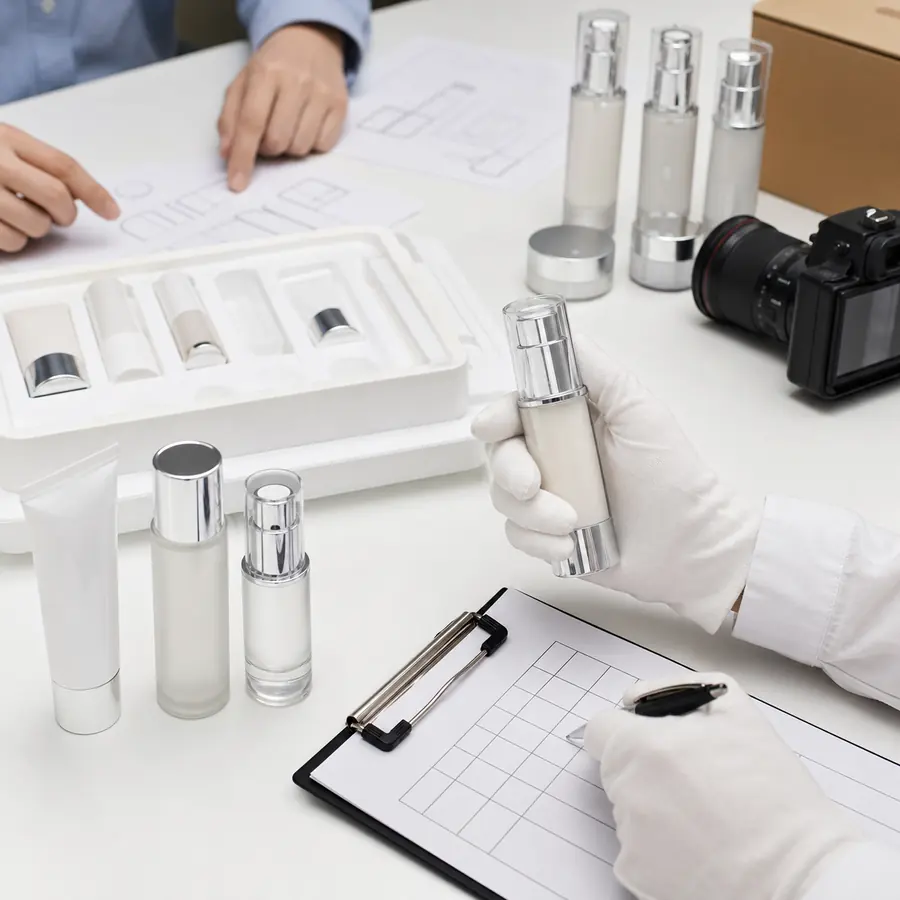
Compatibility test records should allow another reviewer to identify exactly what was tested, how the evaluation was performed and which results supported the approval decision.
Record the formula batch, bottle and closure references, component lots, dispenser and sealing parts, decoration revision, assembly method, sample quantity, fill level, test conditions, orientation, evaluation intervals, photographs, raw observations, deviations and final decision.
Record failures before cleaning or disassembling affected samples. Identify the first visible symptom and preserve relevant components where practical.
A report stating only that a package passed or failed is insufficient for investigating a subsequent production problem. The documented observations should make it possible to compare the approved configuration with the actual components involved in the investigation.
Build a Test Matrix from Real Risks
A compatibility test matrix connects each identified risk to a test configuration, evaluation method, observable result and approval decision.
For example, leakage risk may require defined storage orientations, while dispensing problems may require evaluation at different fill levels. Decoration-related risks may require relevant product-contact and handling checks.
| Testing Area | Main Risk | Recommended Evaluation | What Buyers Should Verify |
|---|---|---|---|
| Bottle and closure fit | Incorrect seating or sealing interference | Inspect the assembled neck, closure, gasket and relevant dimensional variation. | Confirm correct assembly and the intended sealing condition using selected physical components. |
| Formula and material interaction | Swelling, softening, discoloration or other material changes | Evaluate actual formulation contact under project-defined storage conditions. | Check each relevant product-contact material and establish whether additional specialized testing is required. |
| Dispensing performance | Inconsistent output, clogging, poor pickup or dripping | Test the installed dispenser with the actual formula at relevant fill levels. | Confirm acceptable priming, dispensing, return and repeated-use performance. |
| Leakage | Loss of contents from the assembled package | Evaluate defined orientations and relevant storage or distribution conditions. | Identify leakage paths and confirm that the selected assembly meets the agreed acceptance criteria. |
| Decoration | Visible coating, printing or label deterioration | Evaluate the final decorated package against relevant contact and handling conditions. | Approve physical decoration samples and record acceptable appearance limits. |
| Transport | Breakage, leakage or packaging damage during distribution | Evaluate the intended primary and secondary packaging under a suitable distribution test plan. | Confirm that the selected test method reflects the actual shipping configuration. |
The test matrix should be proportionate to the actual project. A serum bottle fitted with a dropper does not require an unrelated lotion-pump performance test, while a pump-dispensed emulsion may require more extensive dispensing evaluation than a product packed in a simple jar.
Define Acceptance Criteria Before Testing
Acceptance criteria establish the conditions a tested packaging system must meet before approval. They should be defined before the test results are reviewed.
Depending on the project, these criteria may address visible leakage, closure seating, dispensing performance, material deterioration, decoration appearance and the continued function of the assembled package.
Acceptance criteria may be quantitative, observational or a combination of both. The selected method must provide sufficiently consistent observations to support the intended decision.
For example, a pump performance requirement should distinguish between initial priming and normal dispensing. A decoration requirement should identify the relevant visual reference and handling conditions rather than relying on a vague statement that the finish must remain attractive.
Exact leakage limits, pump outputs, test durations, temperatures and acceptable dimensional ranges must come from the applicable product specifications or approved project test plan. They should not be assigned as universal industry values without supporting evidence.
Use Controls and Representative Samples
Controls and representative samples help distinguish changes associated with the test conditions from normal differences between packaging components or formula batches.
Baseline samples should be documented before exposure. Where appropriate, control samples may be retained under separately defined conditions for comparison.
The tested packages should represent the intended component configuration, assembly method and decoration. If different production lots, mold cavities or component sources introduce relevant variation, the sampling plan should account for those risks.
There is no universal sample quantity that establishes compatibility for every cosmetic packaging project. The required number depends on the evaluation method, identified risks, component variability and the confidence needed for the approval decision.
One sample may reveal a problem, but a successful result from a single hand-selected package does not establish consistent performance across production.
Investigating a Compatibility Failure
When a cosmetic packaging sample fails, the first objective is to identify the failure mechanism rather than immediately replace the bottle, closure or dispensing component.
Record the original observation, preserve affected samples and review the formulation batch, component lot, assembly method, storage conditions and handling history.
Manufacturer Insight: Isolate the Failure Before Changing Components
Consider a development-stage serum bottle that shows liquid around its closure after storage. The visible symptom alone does not establish whether the problem originates from the neck finish, gasket, dropper assembly, formulation interaction or handling conditions.
A practical investigation can compare the affected assembly with an approved reference, inspect the sealing interface, review pipette position and evaluate the actual formula’s interaction with the relevant closure materials.
If the evidence identifies a component-related issue, revise the affected specification and repeat the necessary checks using the proposed final configuration.
Changing several components simultaneously may make it difficult to determine which modification resolved the problem. Where practical, use controlled comparisons to distinguish cause from coincidence.
This diagnostic scenario illustrates a troubleshooting approach; it is not presented as a documented FOLOVER customer incident or laboratory result.
A packaging supplier can assist with component comparison, dimensional information, assembly review and physical sample coordination. Formula-related or specialized material investigations may require additional expertise from the brand, formulation developer or qualified testing laboratory.
Pilot Production and Scale-Up Checks
Development samples may be assembled individually under controlled conditions, while bulk production introduces equipment settings, repeated handling, higher assembly speeds and variation across larger component quantities.
A pilot or first-production review should confirm that the intended assembly process reproduces the approved packaging configuration.
Relevant process variables may include closure application, crimping where applicable, dip-tube cutting, filling, capping, decoration and secondary packaging.
Compare pilot-production samples with the approved component specifications and physical reference samples. Repeat critical sealing, leakage, dispensing or other affected evaluations after production-relevant assembly.
Successful development testing does not automatically establish that an altered production process will deliver the same results. Scale-up verification complements the original compatibility evidence rather than replacing it.
Approval, Ownership and Change Control
The brand or responsible product owner should define final approval requirements with the relevant packaging supplier, formulation developer and qualified technical partners.
A packaging supplier can provide product specifications, component drawings, samples and agreed support for mechanical matching and packaging evaluation. These activities should not be assumed to replace the brand’s responsibility for finished-formula stability, product safety or destination-market requirements.
For products intended for the European Union, Regulation (EC) No 1223/2009 establishes responsibilities for cosmetic product safety assessment. Its Annex I safety-report guidelines explain how relevant packaging-material information contributes to the broader assessment of the finished cosmetic product.
The applicable responsibilities and documentation requirements must be determined for the actual product and destination market. A packaging compatibility test report is not, by itself, a universal certificate of regulatory compliance.
The final approval record should identify the authorized formula and packaging configuration. Changes to the bottle, closure, gasket, dispenser, dip tube, decoration, formulation, assembly method or secondary packaging should trigger an assessment of their potential effect on the approved results.
Where a change affects a previously evaluated characteristic, repeat the relevant tests before accepting the revised configuration for bulk production.
When to Start Compatibility Testing
Compatibility testing should begin early enough to influence packaging selection, but exploratory screening must be distinguished from final validation.
Early development samples can help compare bottle formats, closure systems and dispensing options. Once the formulation and packaging design are sufficiently stable, the intended configuration should be defined for the final approval program.
Waiting until finished packaging is ready for shipment leaves limited opportunity to investigate failures, revise components or repeat necessary testing.
Conversely, treating an early prototype as final evidence may result in approval based on a formula, closure or bottle design that has subsequently changed.
Plan compatibility-testing milestones alongside formulation development, component selection, decoration approval, tooling decisions and production preparation.
Common Testing Mistakes
- Testing an empty package and assuming compatibility with the final formulation.
- Approving one ideal sample without considering representative component variation.
- Changing the bottle, gasket, pump, tube or formula after approval without assessing the effect on previous results.
- Applying identical storage or leakage conditions to unrelated products without considering their actual risks.
- Ignoring decoration, secondary packaging or production assembly settings.
- Recording only a pass or fail result without supporting observations, photographs or component references.
- Assuming that a supplier’s component statement replaces the brand’s responsibility for final packaging validation.
Procurement inspection and compatibility validation are connected but different. The guide on how to evaluate cosmetic packaging samples focuses on buyer sample review, while this article defines the wider formula-and-system testing framework.
Find related material in Packaging Technology and sourcing guidance in Packaging Buying Guides.
Conclusion
Cosmetic packaging compatibility should be established using evidence from the final formulation and assembled package, not visual fit or a generic component statement. Define the product-specific risks, evaluate representative samples, document the testing conditions and results, and repeat affected checks after material or specification changes.
For B2B buyers, the practical priority is to approve the bottle, closure, dispensing components and formulation as one packaging system before bulk production.
FOLOVER PACK can support coordinated glass bottle selection, closure matching and physical sample review according to confirmed project requirements. Share your selected bottle reference, formulation type, dispensing requirements and available component specifications to discuss suitable packaging options and sample coordination.
Frequently Asked Questions
What is cosmetic packaging compatibility testing?
Cosmetic packaging compatibility testing evaluates whether the selected formulation, bottle, closure, dispensing components and decoration remain suitable when used together under defined conditions. It examines mechanical fit, sealing, material interaction, dispensing and relevant storage or handling performance. Buyers should evaluate representative samples of the final assembled configuration before approving bulk production.
Should packaging be tested with the actual formula?
Yes, the actual formulation should be used for final compatibility evaluation whenever possible. Water or another representative material may help with early mechanical screening, but it cannot automatically establish compatibility with the finished formula. Buyers should identify the approved formula version and repeat affected evaluations if subsequent formulation changes could alter packaging performance.
How do you test cosmetic bottles for leakage?
Fill and assemble the selected bottle and closure using the intended formulation, then evaluate the package under defined orientations and relevant storage or transport conditions. Record where liquid first appears and distinguish confirmed leakage from dispensing residue. The test method, duration and acceptance criteria should reflect the specific product and packaging configuration rather than an assumed universal standard.
How do you test a lotion pump?
Evaluate the selected lotion pump installed on the intended bottle and filled with the actual formula. Check initial priming, dispensing consistency, actuator return, dripping, clogging, product pickup and leakage. Where output is a project requirement, use an agreed measurement method. Confirm the dip-tube configuration and repeat relevant checks after any component or formula change.
Is stability testing the same as packaging compatibility testing?
No. Formula stability testing evaluates whether the cosmetic formulation maintains its required characteristics under defined conditions. Packaging compatibility testing evaluates whether the formulation and assembled package continue to function together, including sealing, material interaction and dispensing performance. The two programs may share observations, but approval in one area does not automatically establish satisfactory results in the other.
How many samples should be tested?
There is no universal sample quantity suitable for every cosmetic packaging compatibility test. The sampling plan should consider the identified risks, test method, component variation and intended approval decision. Buyers should evaluate representative assemblies rather than relying solely on one ideal sample, and agree on the required sample quantity and acceptance criteria before testing begins.
Should decoration be included in compatibility testing?
Yes, when the final decoration may be affected by formula contact, filling equipment, caps, cartons, storage or consumer handling. Evaluate the intended coating, printing, hot stamping, frosting or label on representative physical samples under relevant conditions. Buyers should approve the final appearance and decoration specifications before bulk production rather than relying only on artwork or an undecorated bottle sample.