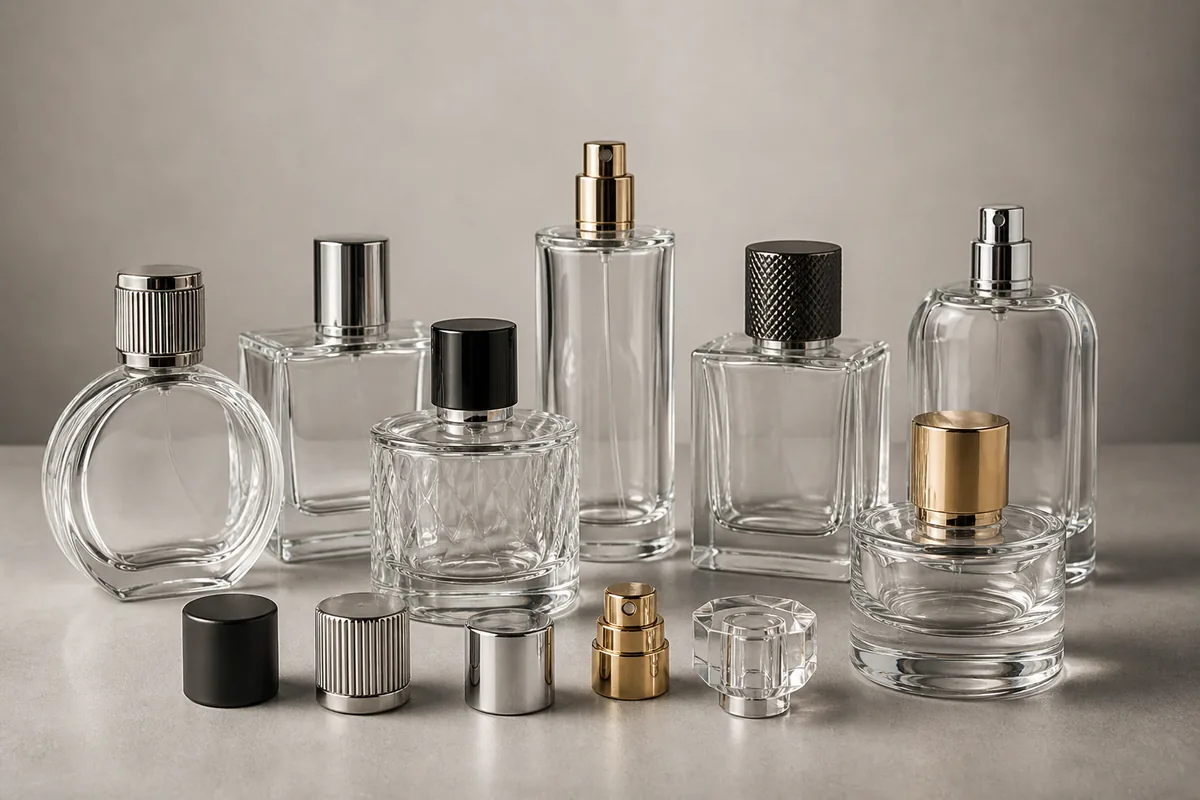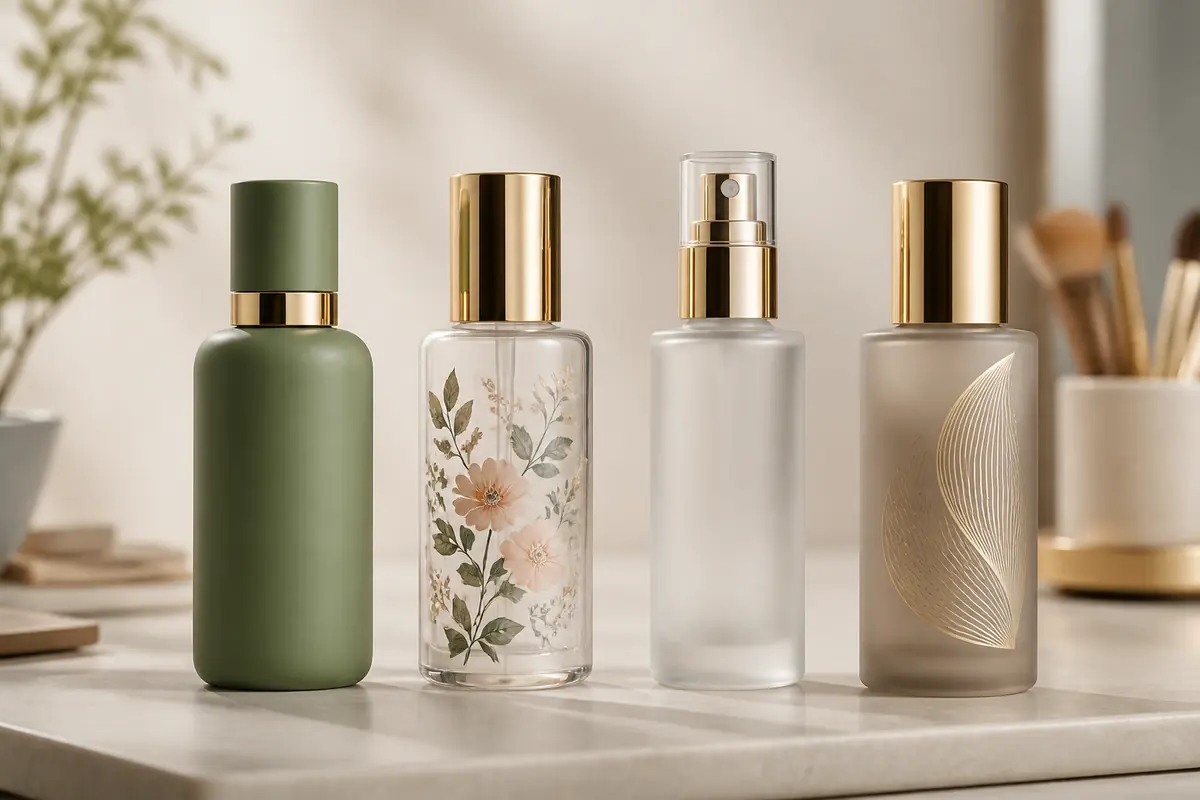

Put two clear perfume bottles on a white table, and they may look almost identical. Lift them toward the light, though, and the thick base of one might have a faint green edge. The other may look nearly colorless. Both can be sold as clear glass. They are not necessarily made to the same color specification.
That is one of the details worth understanding before choosing perfume or skincare packaging. A glass bottle begins with a controlled mix of raw materials, moves through a furnace and forming molds, and then goes through cooling and inspection. Its color and shape are only part of the finished result. A perfume sprayer still has to match the neck; a serum dropper has to fit the bottle; a decorated surface has to match the approved sample.
Here is how the process works, where the differences in glass clarity come from, and what to examine when comparing finished bottles.
What Glass Are Perfume and Cosmetic Bottles Usually Made From?
Soda-Lime Glass: The Everyday Container Material
Pick up a typical molded perfume bottle, a 30 ml serum bottle or a glass cream jar. In most cases, the container is made from soda-lime glass. It is the standard material for a wide range of commercial glass containers because it can be formed efficiently in molds and made in many shapes and colors.
The same material can produce very different-looking bottles. A heavy square fragrance bottle, a narrow dropper bottle and a wide-mouth jar need different mold designs, but none of those shapes tells you whether the glass is a different chemical type. A heavy base is a design feature, not proof of a special glass composition.
Where Borosilicate Glass Fits In
Borosilicate glass has a different composition, including boron-containing ingredients. Its resistance to thermal shock makes it useful for laboratory glassware and certain specialist containers. That does not make it the standard choice for molded cosmetic bottles.
There is a common mix-up here: a very clear perfume bottle is sometimes described as if it must be borosilicate or crystal. Not necessarily. A near-colorless bottle may still be soda-lime glass made with raw materials selected to keep visible tint low. If the project calls for a particular glass composition, the specification should name it.
Material Type Is Not a Transparency Grade
Soda-lime and borosilicate describe families of glass. Flint, high flint and extra flint are terms used in the container trade for clear-glass appearance. They should not be read as three universally standardized chemical formulas. One supplier’s extra-flint designation may not have the same acceptance limits as another’s.
For a purchase specification: state the glass composition when it matters, and state the required visible color separately. A clear appearance alone cannot establish the material.
What Goes Into the Furnace?
Sand, Soda Ash and Limestone
Silica sand provides the main glass-forming ingredient in a typical soda-lime batch. Soda ash helps the mixture melt at a workable temperature. Limestone and other calcium-bearing materials contribute to the chemical durability needed in the finished glass. Each ingredient is weighed as part of a controlled formulation.
The raw materials also carry small amounts of other substances. Iron is particularly relevant to clear glass. Even when the bottle looks transparent, iron-related color can be noticeable when you look through a thick section. That is why the raw-material selection behind a large, heavy-base perfume bottle deserves more attention than its front-view photograph suggests.
Where Recycled Glass Enters the Batch
Glass cullet is broken glass prepared for remelting. Some comes from glassmaking operations; some comes from recovered containers that have been sorted and processed. Cullet is a normal raw material in container-glass production, not an unusual shortcut.
Sorting matters. A furnace producing near-colorless glass cannot treat a load of mixed green, amber and clear cullet as interchangeable with well-sorted clear material. Ceramics, metals and other contaminants also need to be kept out. The point is not that recycled glass makes a bad bottle. It is that recycled content needs suitable feedstock and process control, particularly when color is tightly specified.
Will Recycled Glass Turn a Clear Bottle Green?
Not by itself. A greenish tint can come from the overall glass composition and color-producing impurities, whether the batch contains cullet or not. How much cullet is used, where it came from and how it was sorted are more informative than the word recycled on its own.
A buyer asking for recycled content and a buyer asking for water-white glass are asking two different questions. Both requirements can be discussed in the same order, but each needs its own evidence: documentation for recycled content, and an agreed appearance reference or measurement for color.
Standard Flint, High Flint and Extra Flint: What Changes in the Finished Bottle?
The Green Edge on Standard Clear Glass
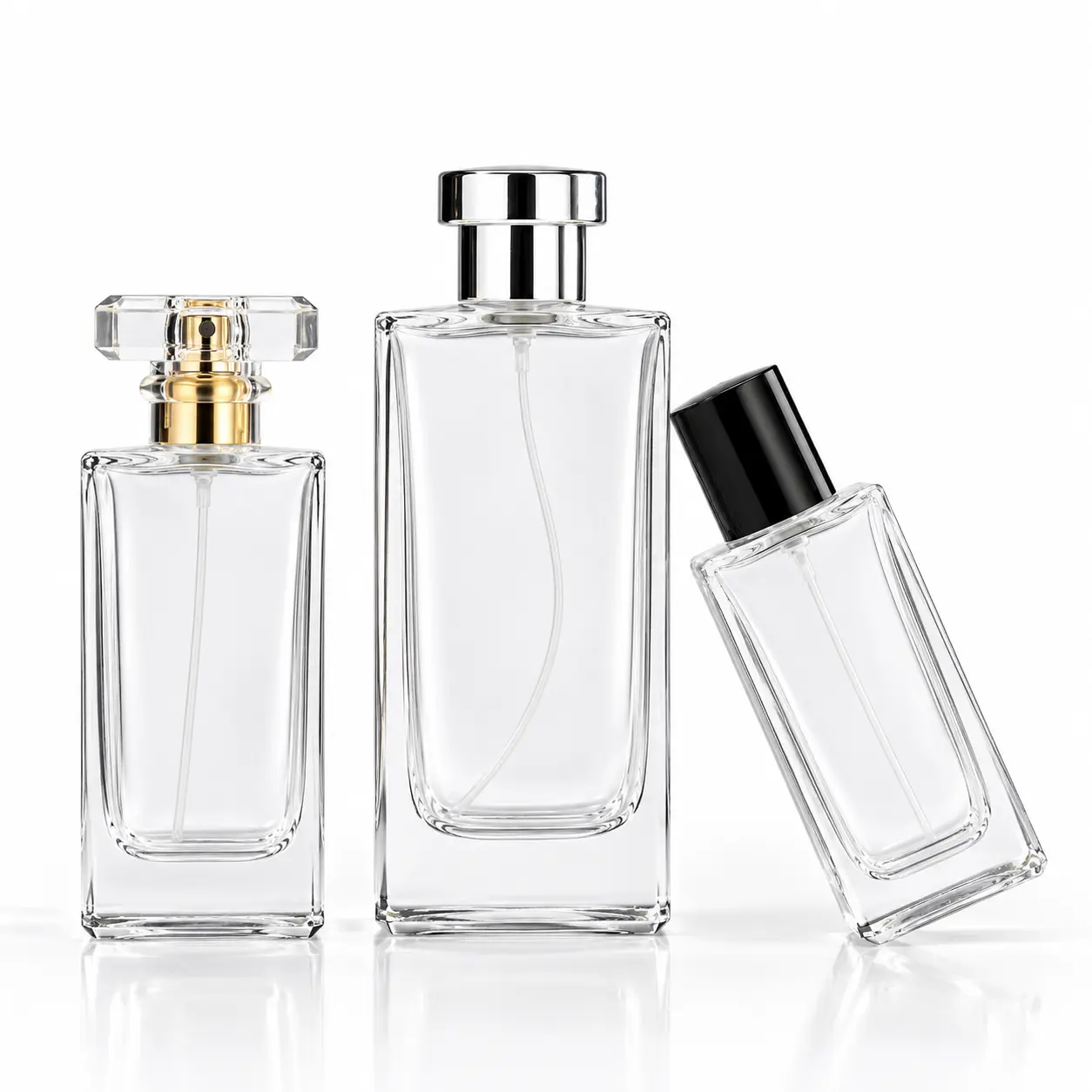
Flint generally means clear or nominally colorless container glass. Hold a standard flint bottle against a white background and the wall may look neutral. Look sideways through the base, and a faint green or yellow-green shade can appear. The longer path through the glass makes a small tint easier to notice.
That does not automatically mean the bottle is defective or unsuitable for cosmetics. Some clear serum bottles are small enough that the tint is barely visible. Some perfume bottles will receive an opaque or translucent coating. Others are filled with colored liquid. What matters is whether the finished appearance meets the approved reference—not whether someone can find any trace of green at all.
What Buyers Usually Mean by Extra-Clear Glass
High flint, extra flint and super flint are names suppliers may use for glass intended to look more neutral. In practical terms, the buyer is often trying to avoid a noticeable green cast, particularly in a thick perfume-bottle base.
These trade descriptions need a little care. They do not, by themselves, give a universal iron-content threshold, a guaranteed light-transmission percentage or a measured color difference. A factory can specify the appearance using its own grade definitions. For an important visual requirement, compare actual bottles and obtain the supplier’s written limits where available.
Which One Should You Choose?
| Application | What the eye will notice | What to specify |
|---|---|---|
| Clear, heavy-base perfume bottle | Tint can collect visually at the thick base and corners | Approved base-glass sample and acceptable tint |
| Small transparent serum bottle | Wall thickness, contents and background affect the apparent color | Empty and filled sample appearance |
| Coated perfume or lotion bottle | Coating shade and coverage may dominate the appearance | Decorated sample, including edges and shoulders |
| Amber or other body-colored glass | Target body color matters more than being near-colorless | Approved color reference and consistency criteria |
A trade name such as high flint is not a measured optical specification. If a low-tint appearance is critical, compare physical samples of the intended bottle shape and thickness, and request the supplier’s stated color criteria or applicable test method. Do not compare numbers unless thickness and method are equivalent.
Why Can Transparent Glass Look Green, Blue or Amber?
Iron, Thickness and the View Through the Base
Iron in the raw materials is one common source of the greenish cast in clear container glass. A small amount of color is far easier to detect when light travels through the bottom of a heavy perfume bottle than through a thin sidewall. Bottle geometry therefore affects what you see, even before decoration or filling.
Compare samples on a neutral white surface, in the same light, and from more than one angle. Photographs taken with different backgrounds or white-balance settings can exaggerate—or hide—the difference. For a heavy-base design, always look through the base.
Color in the Glass or Color on the Glass?
An amber, green or blue bottle may get its color from the glass formulation itself. A clear bottle can instead be sprayed with a colored coating, frosted or printed. The finished photographs may resemble one another, but the processes, surface behavior and approval points are different.
Color alone is also not evidence that a bottle protects a formula from light. A light-sensitive product needs a packaging assessment based on relevant transmission data and actual use conditions. An attractive amber appearance should not be treated as a substitute for that assessment.
Check It Empty—and with the Intended Product
Clear liquid can reveal a green edge that looks less noticeable with a colored serum inside. Coatings may change the way a bottle looks when filled, too. When the visual result is important, examine the actual container in the state customers will see it. The sample approval should say which appearance is being accepted.
How a Glass Bottle Is Made, from Batch to Inspection

1. Batching and Mixing
Production starts well before the bottle reaches a mold. Silica sand, soda ash, calcium-bearing ingredients and any suitable cullet are weighed and mixed to the chosen recipe. Consistent batching matters for melt behavior as well as color. A small change in raw-material quality can become easier to spot in a transparent, thick-base container.
2. Melting and Refining
The mixed batch is heated until it becomes molten glass. The melt then needs to be refined and conditioned before forming. Bubbles, inhomogeneity and temperature variation are concerns at this stage, which is why glassmaking is more involved than simply melting sand and pouring it into a shape.
Published furnace temperatures can help explain the general process, but they are not a single setting for every glass formulation or production line. The actual operating conditions belong to the specific process.
3. Feeding the Forming Machine
Molten glass is delivered in measured portions called gobs. The gob must suit the bottle being made. If a design has a substantial glass base or an unusual profile, controlling the amount and distribution of glass becomes particularly important.
4. Shaping the Bottle in a Mold
Most industrial container bottles are formed in molds. In a blow-and-blow process, compressed air helps form an intermediate shape, or parison, before the bottle is blown to its final form. In press-and-blow forming, a plunger forms that intermediate shape before final blowing. The chosen method depends on the machine, mold and container design.
For a custom cosmetic bottle, a 3D rendering is only the beginning. A thick base, sharp-looking corners or a narrow neck must still be considered in relation to glass flow, mold construction and the practical forming process.
5. Annealing the Bottle
A newly formed bottle needs controlled cooling. It travels through an annealing lehr to reduce residual stresses left by forming and temperature changes. Skipping that control would create unnecessary risk in later handling. Annealing is a production requirement; it is not a promise that the finished bottle cannot break.
6. Inspecting and Sorting
Inspection begins with the bottle itself: its shape, finish, dimensions and visible condition. Problems may include cracks, inclusions, distortion or damage around the neck. Which marks are acceptable and which are critical should be set out in the agreed quality criteria. The standard for a minor visual feature is not the same as the standard for a defect that could affect safe use or assembly.
What Changes When the Bottle Is Made for Perfume or Skincare?
Perfume Bottles: Look Closely at the Base and Neck
Perfume packaging often places more glass where the buyer can see it: a thick base, squared-off corners or faceted sides. That makes a subtle color cast easier to notice. It also makes glass distribution and a well-formed neck important parts of assessing the actual sample.
A 50 ml bottle label tells you its nominal capacity, not which atomizer will fit it. The sprayer, collar and cap have to be chosen for the particular neck and assembled system.
Serum Bottles, Lotion Bottles and Cream Jars
Skincare containers present a different set of decisions. A serum bottle may carry a dropper; a lotion bottle may use a pump; a cream jar needs a wider opening and suitable closure. Their glass can belong to the same material family even though their openings and dispensing systems differ.
For serum, lotion, toner and cream projects, the cosmetic and skincare glass packaging range shows the container families buyers can compare before selecting a suitable dispensing or closure system.
For bottle shapes and closure configurations used in fragrance projects, compare the perfume glass bottle range. The bottle profile is only one part of the decision; neck finish and the selected sprayer still need to match.
Decoration Comes After the Glass Takes Shape
Coating and Frosting
A bottle may leave the forming line as clear glass and later receive a color coating or frosted finish. Coating can change how strongly the underlying tint is seen, but the final color still depends on the glass, the coating and how evenly the finish is applied. The base, corners and shoulders deserve a second look because they often show coverage differences more clearly than a flat front face.
Printing, Hot Stamping and the Limits of a Bottle Shape
A logo that looks clean on a flat artwork file may be difficult to place across a curved shoulder or close to a sharp corner. Screen printing, hot stamping and other techniques each have their own practical requirements. Before deciding on a method, consider the bottle shape, the available print area and the size of the artwork.
The decoration and finishing options provide a starting point, but the decision belongs to the actual design. A decorated physical sample is more useful than approving a color or print position from a screen.
What Should Be Checked on a Finished Glass Bottle?
The first question is not whether a bottle is described as premium, crystal-clear or extra flint. It is whether the delivered bottle matches the agreed sample and specifications. A near-colorless bottle can still have a wrong neck finish. A well-formed bottle can still arrive with a coating shade that does not match the approved design.
Start with the Appearance Reference
For transparent perfume bottles, compare the thick base as well as the body. For a spray-coated bottle, inspect the finish where the neck meets the shoulder and around other changes in shape. If color consistency matters, agree on the reference and acceptance criteria before approving production. “Clear glass” on a purchase order leaves too much open to interpretation.
Then Measure What Has to Fit
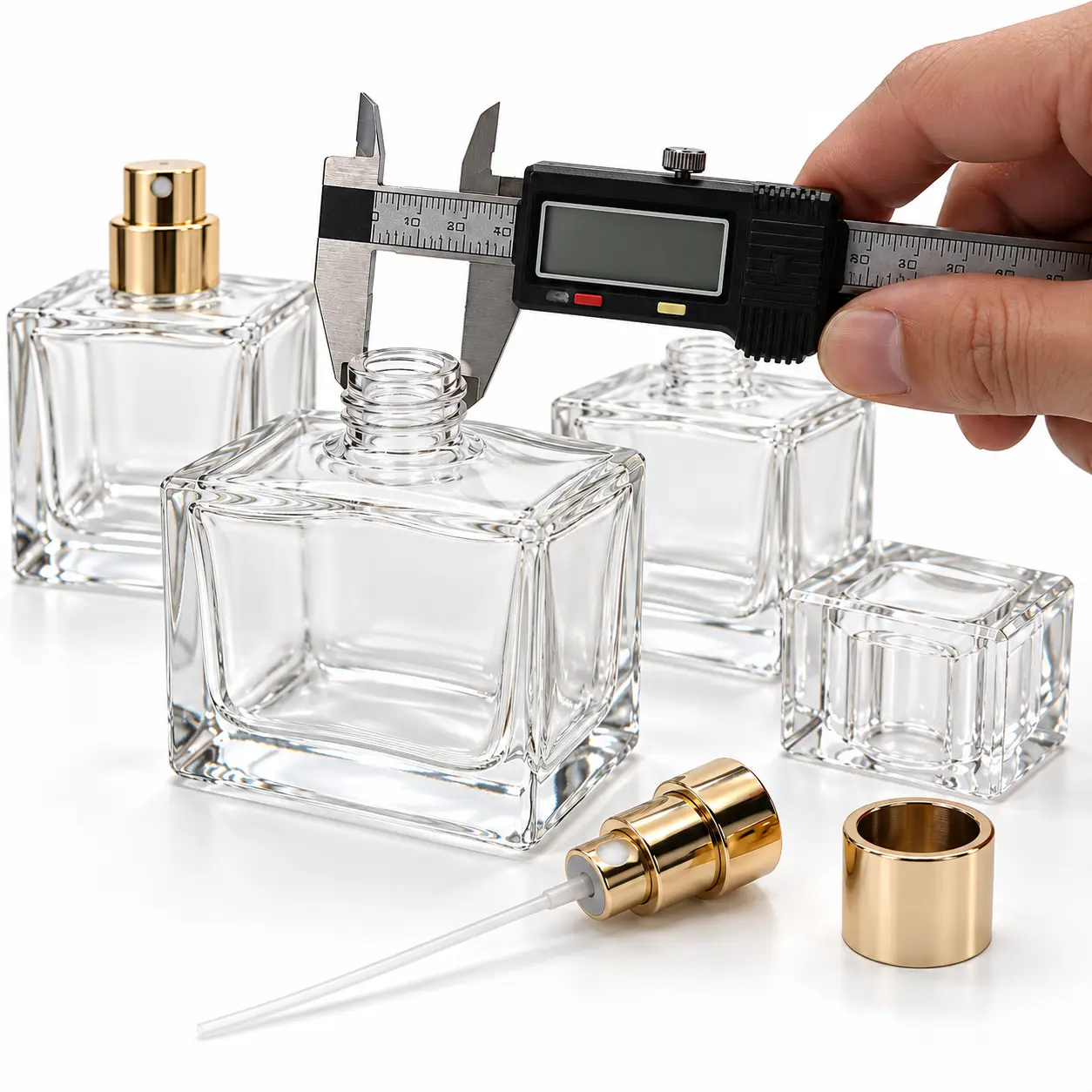
Height, width, capacity and weight may all matter, but neck finish is especially important when a sprayer or pump is involved. Bottles of the same nominal capacity can have different necks and overall dimensions. Those differences affect component fit, filling-line handling and the final pack.
Approve an Assembled, Decorated Sample
The bare glass bottle answers some questions: shape, underlying tint, basic dimensions. It cannot show how the final logo will sit or whether the cap lines up once the sprayer is fitted. Where those details matter, approve the decorated bottle with its selected components—not three separate product photos.
A Useful Sample-Approval Sequence
Look through the heavy base before judging clarity. Compare the decorated sample in ordinary, consistent light. Fit the actual sprayer, dropper or pump, then check alignment and operation under the intended conditions. Keep the signed-off sample available as a reference. This is a more precise discussion than asking a supplier whether its glass is simply “high quality.”
A visual check cannot establish leakage resistance, coating adhesion or formula compatibility. If any of these properties affects the product, the relevant sample and testing conditions need to be agreed separately. No clarity grade can replace that work.
The Glass Bottle Is Only One Part of the Package
Match the Closure to the Neck
The selected neck finish determines which closure systems can be considered. A screw neck and a crimp neck are not interchangeable just because the bottles have the same capacity. Thread details, crimp dimensions, sealing surfaces and the selected component design all need to be considered as a set.
Check the Parts with the Actual Formula
Good mechanical fit is a starting point, not a complete performance test. A perfume sprayer needs a dip tube suited to the bottle geometry. A serum dropper needs the appropriate pipette and wiping or sealing arrangement where applicable. A lotion pump has its own dispensing requirements. The actual liquid and conditions of use may also affect which tests are necessary.
On the Sample Table
- Put the intended closure on the exact bottle being ordered.
- Inspect the neck, cap position and visible alignment.
- Check pipette or dip-tube reach where the design uses one.
- Evaluate filling, dispensing and leakage under representative conditions.
- Review the assembled package after decoration—not only the plain bottle.
What Happens Before the Bottles Are Shipped?
Glass can chip when bottles strike one another, and decorated surfaces can scuff when they rub together. After the relevant inspections and finishing steps, the packing method has to suit the particular bottle—its shape, weight, coating and journey. A heavy base does not protect a delicate rim.
Ask how the bottles will be separated or protected, how many go into each carton, and what the packed weight and carton dimensions will be. These are order-specific details. A carton configuration that works for a small round serum bottle should not be copied to a heavy square perfume bottle without checking it.
Before Ordering: Stock Design or New Mold?
Start with the Bottle That Already Exists
A stock bottle can save development work when its capacity, proportions and neck finish suit the project. Decoration may provide enough visual distinction without changing the glass mold. But changing the bottle silhouette, base or overall dimensions may call for a new mold—and a review of whether the design can be manufactured reliably.
For projects that cannot use a stock design, the custom bottle development process is the appropriate next step. A drawing alone is not a production approval. Tooling, order quantity and scheduling need project-specific confirmation.
What to Put in the RFQ
Share the intended contents, capacity, bottle shape, glass appearance, decoration reference and preferred closure. Add an estimated quantity and say whether an existing design is acceptable. If you need low-tint glass, documented recycled content or a particular color measurement, put those requirements in the inquiry from the start.
Details Worth Sending with the First Inquiry
- Application: perfume, serum, lotion, toner, cream or another formula
- Capacity and approximate bottle dimensions
- Preferred shape and any heavy-base or custom-mold details
- Clear, low-tint, amber or coated-glass appearance reference
- Required glass composition or recycled-content documentation, if applicable
- Neck finish, sprayer, dropper, pump or cap requirements
- Artwork, decoration method and sample-approval expectations
- Estimated quantity, filling conditions and shipping requirements
A reference image is helpful for shape. It is much less helpful for deciding whether a bottle has too much green tint, whether a coating matches the approved shade or whether a closure will fit. Those decisions belong to a real sample and an agreed specification.
Frequently Asked Questions About Glass Bottle Manufacturing
What material are most perfume and cosmetic glass bottles made from?
Most ordinary molded perfume bottles, skincare bottles and cosmetic jars use soda-lime container glass. Borosilicate glass is used for selected applications, but a bottle’s clear appearance does not mean it is borosilicate. Confirm the material if it is a project requirement.
How are perfume glass bottles manufactured?
Typical production includes batching and mixing raw materials, melting and conditioning the glass, delivering it to molds, forming the container, annealing it and inspecting the finished bottle. Coating, printing, component assembly and packing may follow according to the order specification.
Why does clear perfume glass sometimes look green?
Iron impurities in the raw materials can give clear glass a slight green or yellow-green tint. The tint is often easier to see through a thick base or edge because light passes through more glass than it does through a thin wall.
Is extra-flint glass the same as borosilicate glass?
No. Extra flint is generally a commercial description for a clearer-looking grade of container glass, often within the soda-lime family. Borosilicate describes a different glass composition. Ask the supplier to confirm both composition and the clarity specification.
Does recycled glass make a bottle less transparent?
Not automatically. The result depends on the color and cleanliness of the cullet, sorting, the full batch formulation and process control. Recycled-content percentage alone does not tell you whether the finished bottle will look neutral, greenish or cloudy.
Can perfume bottles be made in custom shapes and colors?
Custom shapes and colors may be possible, depending on mold design, glass formulation and the chosen decoration process. Colored glass and a coating on clear glass are different approaches. Confirm the intended appearance on a physical sample before production.
How can buyers check glass bottle quality before mass production?
Agree on the reference sample and the required appearance, dimensions and neck finish. Then check the selected closure, decoration and assembled package. Where leakage, dispensing, coating or formula compatibility matters, define the appropriate evaluation instead of relying on a visual inspection alone.
The Bottle Has to Work Beyond the Mold
Raw materials and forming determine much of a glass bottle’s shape and appearance. The buying decision continues after that: look at the color through the thickest glass, check the decorated finish, and make sure the neck and closure work together. A faint green cast may be acceptable on one project and unacceptable on another. Extra-clear glass may be worth specifying for a heavy-base fragrance bottle, but it does not solve a poorly matched sprayer.
For a new perfume or skincare bottle order, send the target capacity, shape, clarity or color reference, closure details, decoration and estimated quantity. The useful next step is to agree on a physical sample and the checks that matter for that particular package.