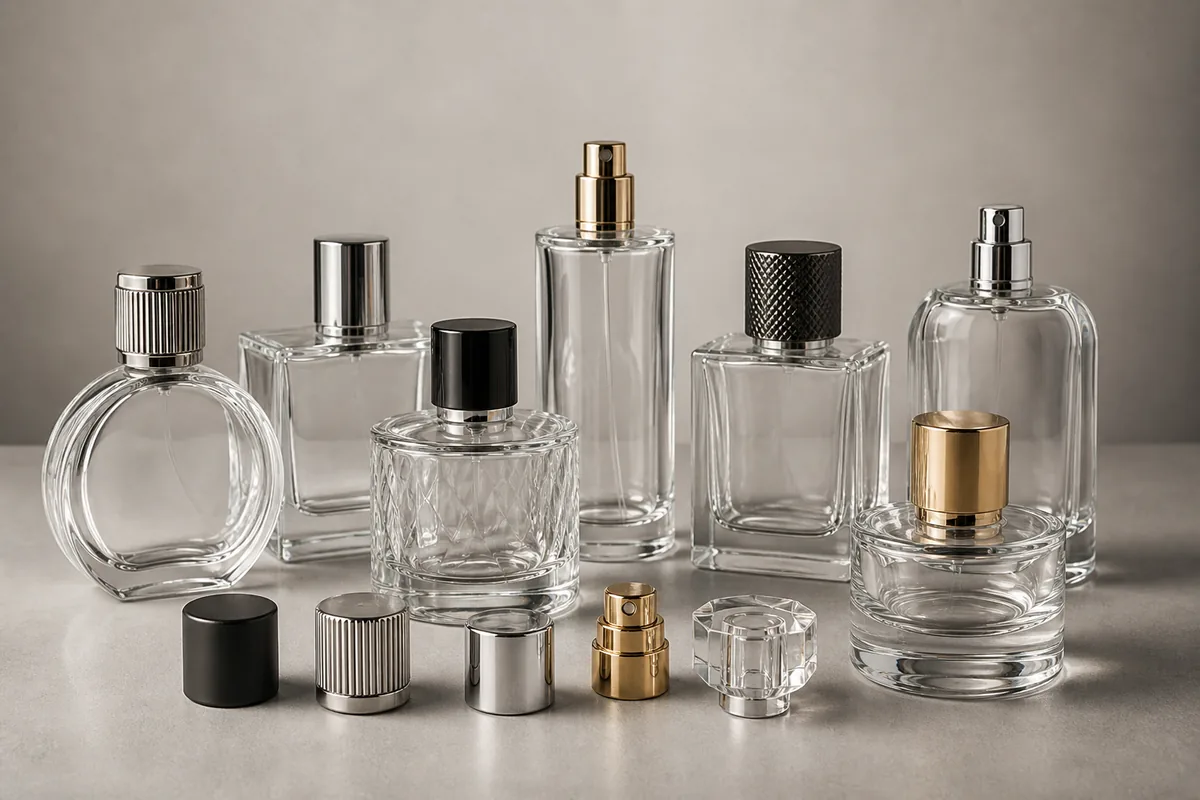

Choose a glass dropper bottle as a complete packaging system, not as a bottle with a separate pipette accessory. The glass bottle, neck finish, threaded closure or collar, bulb, pipette, sealing element, and any optional wiper or reducer must work together with the intended formula and dispensing experience.
For packaging buyers, the practical decision is whether the selected bottle and dropper can assemble, seal, pick up product, dispense acceptably, and remain suitable under the intended storage and use conditions. This glass dropper bottle buying guide explains what to define before requesting samples or approving bulk production. It forms part of FOLOVER PACK’s packaging buying guides, with supporting component fundamentals available in Product Knowledge.
What Products Commonly Use Glass Dropper Bottles?
Glass dropper bottles are commonly considered for facial serums, facial oils, essential oil blends, concentrated cosmetic liquids, and other products that benefit from controlled manual dispensing. The best configuration depends on the actual formula and desired use experience, not on the product name alone.
A free-flowing oil may move through a pipette differently from a viscous serum. A formula that is sensitive to light may require a different packaging evaluation from a product sold mainly for visual transparency. A treatment pump may also be more suitable than a dropper when repeatable actuation, cleaner dispensing, or a different dose experience is the priority. Buyers comparing these directions can review the broader guide to choosing a serum bottle for the intended formula.
| Dispensing Option | Best For | Main Advantage | Main Limitation | What Buyers Should Verify |
|---|---|---|---|---|
| Glass pipette dropper | Serums, facial oils, and concentrated liquids where manual dosing fits the product experience | Direct product interaction and flexible manual dispensing | Dose and pickup can vary with formula, pipette geometry, bulb action, and user technique | Neck fit, pipette reach, formula pickup, dripping behavior, seal, and sample performance |
| Treatment pump | Products where repeatable actuation, cleaner dispensing, or a more controlled user action is important | More consistent actuation-based dispensing when the pump is correctly matched | Performance depends on formula viscosity, pump design, bottle neck, and dip-tube configuration | Neck compatibility, formula dispensing, pump function, dip-tube configuration, and assembled-package testing |
Choose the Right Dropper Bottle Size
Dropper bottles are available in small, medium, and larger retail formats, but capacity should be treated as a project decision rather than a universal standard. The useful size depends on the amount applied per use, expected usage period, formula value, retail positioning, filling-line requirements, shipping weight, and the proportions of the assembled dropper.
Small formats can support concentrated products, trial programs, or lower doses. Medium formats are often evaluated for everyday facial serums and oils. Larger bottles may suit products with higher use volume, but they also require attention to pipette reach, component proportions, pack weight, and how comfortably the user can control the dropper. Confirm the bottle overflow and nominal filling requirements with the actual supplier specification instead of relying only on a market label such as “30 ml.”
Buyer check: Request the exact bottle drawing or specification, then confirm the intended fill volume, closure system, pipette, and secondary packaging as one configuration.
Clear, Amber, Blue or Coated Glass?
Glass color affects product visibility, brand presentation, decoration planning, and how the package is perceived. Clear glass shows the formula and can support a clean or clinical appearance. Amber and blue glass create a different visual identity and may be considered when light management is part of the brief. Frosting or a colored coating can extend the design range when a stock bottle shape needs a more distinctive finish.
Color alone does not prove a protection level for every formula. Glass composition, color density, coating, wavelength exposure, storage conditions, and the sensitivity of the actual formula can all matter. A brand should involve its formulator or testing partner when light stability is critical. Treat statements about protection as project-specific evidence, not as a general promise attached to a color.
Evidence boundary: The USP 2026 revision proposal for <660> Containers—Glass concerns pharmaceutical packaging, not a cosmetic-packaging requirement, but it illustrates an important testing principle: light protection for colored glass is evaluated through spectral transmission rather than assumed from appearance. Peer-reviewed research has also shown sunlight-driven composition changes in specific essential oils, including pummelo essential oil. The buyer implication is to define the actual formula risk and validate the selected package instead of treating amber, blue, or frosted glass as a universal protection claim.

Buyers can browse glass essential oil bottle directions or serum and essential-oil dropper components while keeping final compatibility subject to the exact project specification.
Understand the Dropper Components
The visible dropper is an assembly of several parts. Each part has a separate function, and changing one component can affect the fit or use of the complete package.
Bulb
The bulb creates the manual suction and release action. Its material, size, shape, resilience, and connection to the closure influence the feel of dispensing. The bulb should also be evaluated for contact conditions and long-term appearance with the intended formula and storage environment. As a general materials-testing reference, ASTM D471 evaluates how rubber and rubber-like compositions change after liquid exposure. It is not a finished cosmetic-package test, but it supports the broader principle that elastomer compatibility should be evaluated rather than assumed.
Collar or Closure
The collar provides the connection to the bottle neck and may also carry the visible finish. Thread form, dimensions, liner or gasket arrangement, and application conditions affect assembly and sealing. A decorative outer shell does not replace the need to confirm the functional closure underneath.
Pipette
The pipette draws and releases product. Its outside diameter, internal bore, tip shape, length, straightness, and connection to the bulb system can influence pickup and dispensing. The intended formula must be evaluated because two liquids with different viscosity or surface behavior may not produce the same result.
Wiper or Reducer Where Applicable
Some systems include an insert that helps manage product on the outside of the pipette or controls access at the bottle opening. An insert must be designed for the bottle neck and dropper assembly. It can change insertion force, withdrawal feel, sealing interfaces, and usable clearance, so it should not be added as an isolated accessory.

For a wider view of closure families and functional interfaces, use the cosmetic bottle closures and dispensing guide.
How to Determine the Correct Pipette Length
Pipette length should be based on the bottle internal height, the seated position of the closure, the geometry of the bottle shoulder and base, required bottom clearance, and manufacturing tolerances. The pipette needs enough reach to support useful product pickup without pressing against the bottom or interfering with proper closure seating.
There is no reliable universal length formula that can be applied without the component drawings and physical samples. A nominal bottle height is not the same as the distance from the installed closure to the internal base. Rounded shoulders, push-up geometry, thick glass bases, inserts, and closure construction can change the available space. Buyers should request a matched sample or a supplier-confirmed pipette specification, then inspect multiple assembled units rather than judging one sample.
Check Neck Finish and Thread Compatibility
The bottle neck is the technical interface between the glass container and closure. A closure that appears to fit can still have a different thread profile, sealing surface, diameter, height, or tolerance range. These differences may cause incomplete engagement, excessive application force, loose assembly, damaged threads, or inconsistent sealing.
Ask the supplier to identify the bottle neck specification and the exact closure designed for it. When combining components from different sources, drawings can help screen the match, but an assembled sample test remains necessary. The complete closure, gasket, pipette, and optional insert must be included in that evaluation.
Manufacturer Insight
Based on FOLOVER PACK’s experience supporting bottle-and-closure matching, one of the highest-risk sourcing sequences is approving the bottle first and treating the dropper as a later accessory choice. Lock the bottle neck, functional closure, sealing element, pipette configuration, and any insert as one matched assembly before final decoration approval. This reduces the risk of discovering a fit, sealing, or clearance problem after color, printing, or component finishes have already been approved.
Match the Dropper to Formula Viscosity
Low-viscosity liquids generally enter and leave a pipette more easily, while oils and thicker serums may change pickup speed, retained volume, dripping behavior, and the force needed at the bulb. These are general tendencies, not guaranteed dosage results. Temperature and formula composition can also change how a product behaves.
Define the intended user action: a controlled drop, a partial pipette, or a visually measured amount. Then evaluate the real formula with the proposed bulb and pipette. A manual dropper should not be treated as a guaranteed fixed-dose system unless the specific configuration has been validated for that purpose. If repeatable dosing is a critical requirement, compare the dropper with other dispensing systems rather than assuming manual dispensing will meet it.
Leakage and Sealing Considerations
Dropper bottle leakage can originate from more than one interface. Potential variables include the bottle finish, closure thread, gasket or liner, pipette connection, closure application, component tolerances, formula behavior, transport orientation, and temperature changes. A leak observed at the bottle does not automatically identify which part is responsible.
During sample evaluation, inspect closure seating, application consistency, seal contact, and visible component damage. Test the assembled package in realistic storage and transport orientations with the intended formula. Exact torque or test conditions should follow the verified component specification and project protocol; they should not be copied from an unrelated bottle.
Common Failure Modes to Check
- The closure appears fully applied but the sealing element is not compressed or positioned consistently.
- The pipette is too long, contacts the internal base, or interferes with complete closure seating.
- The bulb, gasket, or other elastomeric part changes after prolonged contact with the formula.
- An optional insert reduces usable clearance or interferes with pipette insertion and withdrawal.
- A package that remains dry upright leaks after side or inverted storage, temperature change, or transport handling.
Decoration and Branding Options
Dropper bottles can support design directions such as frosting, colored coating, screen printing, hot stamping, labels, and coordinated closure finishes, depending on the selected bottle and project requirements. Confirm the structural bottle and closure first, because decoration can affect artwork area, dimensional perception, component clearances, and sample approval.
Evaluate color and decoration on the actual glass surface. Check alignment, adhesion, readability, finish consistency, and interaction with the closure during assembly. A complete packaging mockup is more useful than approving the bottle decoration while the final dropper remains undecided.
What to Inspect in Dropper Bottle Samples
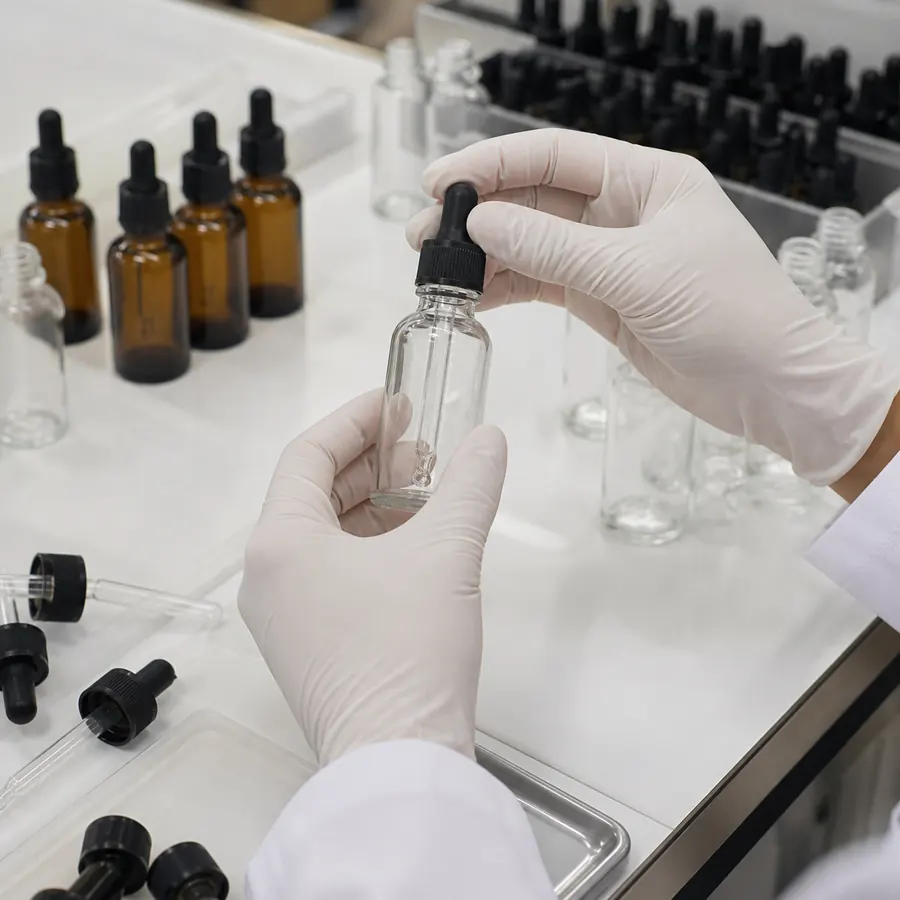
- Confirm the bottle, closure, bulb, pipette, gasket, and optional insert are the specified combination.
- Check closure engagement, seating, opening feel, and visible thread or glass damage across multiple samples.
- Inspect pipette straightness, connection, bottom clearance, withdrawal, and practical product pickup.
- Evaluate dispensing with the intended formula under realistic temperatures and use conditions.
- Review leakage in planned storage and transport orientations using an approved test protocol.
- Check decoration, color, print position, finish consistency, and contact between decorated surfaces and components.
- Confirm the assembled pack fits the intended insert, carton, filling, capping, labeling, and packing process.
EU buyer note: For cosmetics placed on the EU market, Annex I of Regulation (EC) No 1223/2009 requires the Cosmetic Product Safety Report to address relevant packaging-material characteristics, particularly purity and stability. The Commission’s Annex I guidelines also identify possible product–packaging interaction and migration as considerations. Buyers should therefore obtain material information for the exact bottle, closure, gasket, bulb, other product-contact components, and decoration where relevant and provide it to the responsible person or safety assessor as appropriate.
This sample-first approach is consistent with the wider process for selecting a complete cosmetic glass bottle system.
Buyer RFQ Checklist
- Product type and general formula characteristics, including viscosity and any known sensitivity.
- Target fill volume, retail format, estimated quantity, and destination market.
- Preferred bottle shape, glass color or finish, and reference package if available.
- Required dispensing experience and whether an optional wiper or reducer is being considered.
- Decoration direction, artwork, closure color, and desired component coordination.
- Filling and assembly method, secondary packaging, sample needs, and target launch schedule.
- Documents, drawings, and project-specific tests required before approval.
Frequently Asked Questions
What size glass dropper bottle should I choose?
Choose capacity from the intended dose, usage period, formula value, retail positioning, filling requirements, and package proportions. Confirm the exact bottle specification rather than relying only on a nominal market size.
Is amber glass better for essential oils?
Amber glass may be considered when light management is part of the packaging brief, but it is not proof of protection for every formula. Confirm requirements with the formulator and evaluate the actual package under relevant conditions.
How do I choose pipette length?
Use the bottle internal geometry, installed closure position, bottom clearance, component tolerances, and pickup requirement. Request a supplier-confirmed matched configuration and verify it with physical samples.
Can any dropper fit any bottle?
No. Compatibility depends on the exact neck finish, thread and sealing geometry, closure construction, gasket, pipette, optional insert, tolerances, and intended formula.
Why do dropper bottles leak?
Possible causes include bottle-finish variation, closure mismatch, seal problems, incorrect application, damaged components, tolerance interaction, formula behavior, and transport conditions. The source must be investigated on the complete package.
Can dropper bottles be spray coated?
Spray coating may be available for selected bottles and projects. Confirm the glass surface, color target, decoration specification, closure clearances, sample standard, and production requirements with the supplier.
Conclusion
A reliable glass dropper package begins with system compatibility, not appearance alone. A dropper is most defensible when manual dispensing fits the formula and user experience; a treatment pump may be the better direction when repeatable actuation or cleaner dispensing is the stronger requirement. In either case, define the formula, capacity, bottle neck, closure, pipette or pump configuration, seal, color, and decoration before approval, then evaluate the assembled package with the intended formula and realistic handling conditions.
To compare available components, review FOLOVER PACK’s cosmetic bottle droppers and pumps, droppers, and bottle accessories, or discuss a complete packaging requirement with the project team.