
Heavy Metals in Cosmetic Packaging: Glass, Pigments, Inks & Decorative Components addresses a purchasing and market-control question that cannot be solved by a generic certificate or material slogan. The answer depends on the final packaging configuration, destination market, applicable requirements and scope of the available evidence.
For cosmetic packaging buyers, the first step is to identify the selected glass bottle, color, decoration, closure and other relevant components. Then determine which substances and requirements apply, what the existing supplier documentation actually covers and whether additional testing or evaluation is necessary before bulk production.
This guide is written for B2B cosmetic packaging buyers, product developers, sourcing teams and brand compliance reviewers. It provides practical manufacturing and procurement guidance rather than legal advice. Explore the Regulations & Compliance hub and Sustainable Packaging resources for related decision paths.
Direct Answer
Heavy metals in cosmetic packaging must be assessed against the selected materials, applicable regulatory requirements and relevant exposure conditions. A glass bottle, coating, printing ink or metallic accessory cannot be declared universally compliant based on its appearance or a generic supplier certificate.
For EU packaging, Regulation (EU) 2025/40 establishes a combined concentration limit of 100 mg/kg for lead, cadmium, mercury and hexavalent chromium in packaging or packaging components, subject to the applicable provisions and exemptions. Other markets and chemical requirements may use different substances, assessment methods or criteria.
Buyers should connect each conclusion to the exact commercial component, named substances, assessment method, reporting limits where relevant and destination market. A result reported as not detected does not establish that the material contains absolutely zero heavy metals.
FOLOVER Manufacturer Insight
FOLOVER PACK supplies cosmetic glass packaging and coordinates bottles, closures, decoration and related packaging components. For a decorated glass packaging project, the base bottle and its additional materials should be identified before the buyer requests chemical compliance documentation.
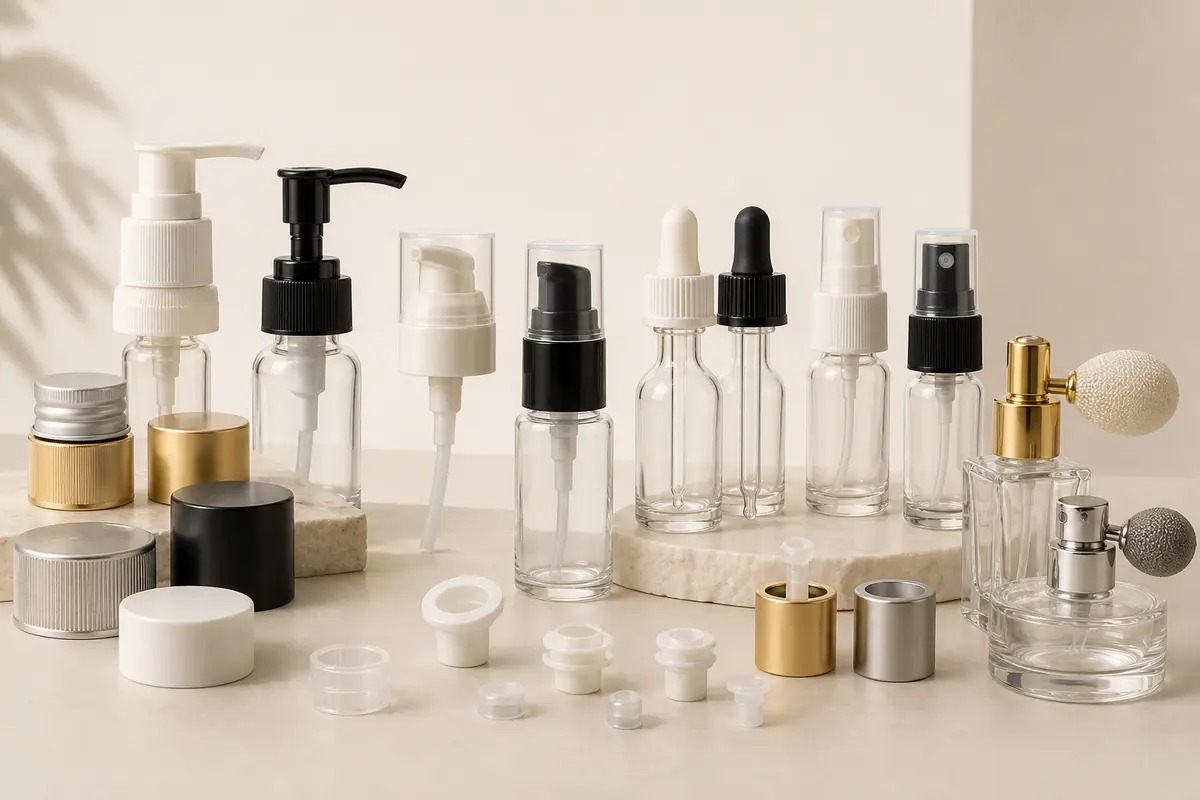
A clear glass bottle may be offered with different spray-coated colors, screen-printed logos or metallic caps. Although the bottle shape remains unchanged, the selected decoration and accessories may introduce different materials or suppliers.
For this reason, a report for the undecorated bottle should not automatically be extended to another color, coating, print or plated component. Available supplier declarations and technical reports should be reviewed against the exact product, material, finish and destination market.
FOLOVER can assist with component identification, decoration coordination, physical sample preparation and available product-specific documentation. Where additional chemical testing or qualified regulatory review is necessary, the required scope should be agreed before the final packaging configuration is approved.
For a productive inquiry, provide the intended application, bottle or jar style, closure system, formulation considerations, decoration, destination market, required documentation and target quantity. Product-specific specifications and evidence should take precedence over general material claims.
Which heavy metals matter?
There is no single worldwide heavy-metal list or concentration limit that can be copied into every cosmetic packaging specification. Lead, cadmium, mercury and hexavalent chromium are prominent substances in EU packaging legislation. Other metals, including nickel, may be relevant under different material-specific, exposure-based or customer requirements.
Under Article 5(4) of Regulation (EU) 2025/40 on packaging and packaging waste, the sum of the concentrations of lead, cadmium, mercury and hexavalent chromium resulting from substances present in packaging or packaging components must not exceed 100 mg/kg, subject to the applicable regulatory provisions and exemptions.
100 mg/kg is equivalent to 100 ppm by mass. The figure refers to the combined concentration of the four named substances under the specified packaging requirement. It is not a separate 100 ppm allowance for each substance, a universal migration limit or a worldwide maximum for all heavy metals.
The regulation’s overall application date is 12 August 2026. Buyers should review the applicable legal provisions, transitional arrangements and exemptions for their actual packaging configuration and market-placement date.
The concentration requirement should also be distinguished from restrictions under other EU legislation. A component may require additional assessment under REACH or another applicable provision even when the packaging-specific four-metal requirement has been addressed.
Buyer action: Write the destination market, named substances, applicable legal or customer requirement, assessment unit, acceptance criterion and any relevant exemption directly into the purchasing specification. Do not request a generic heavy-metal certificate without defining the decision it must support.
Evidence to retain: Applicable legal text, named substances, component or material identification, acceptance criteria, relevant exemption assessment and designated regulatory reviewer.
Can glass bottle bodies contain relevant metals?
Glass should not be assumed compliant or non-compliant merely because it looks clear, colored or recycled. Raw-material composition, colorants, recycled inputs and manufacturing controls can affect the information required for the selected glass container.
A clear glass bottle and an amber or custom-colored bottle may use different colorant systems. A declaration or laboratory report for one glass composition should not automatically be applied to another unless the documented material scope supports that conclusion.
Buyers should also distinguish total substance concentration from migration or release. A total-content result reports the amount of a substance determined in the tested material. A migration result evaluates substance transfer under defined conditions. These measurements answer different questions and cannot be compared as interchangeable compliance evidence.
Where recycled glass is used, any applicable glass-specific provisions or exemptions must be assessed against the actual production and material conditions. The presence of recycled content alone does not establish that an exemption applies or that the finished bottle satisfies every relevant requirement.
Buyer action: Use the skincare packaging guide to define the intended application, then request the exact bottle code, glass color, material description and commercial version before determining which heavy-metal evidence is relevant.
Evidence to retain: Bottle code, glass color, available material information, sample identity, supplier declaration, relevant test method and report scope.
Why pigments, inks and coatings deserve separate review
Decoration can introduce additional materials that are not covered by evidence for the base glass bottle. Pigments may be used in colored glass, spray coatings, screen-printing inks, ceramic inks, lacquers and other decorative finishes.
These materials should not automatically be assigned the same chemical profile. Two colors produced using the same decoration process may contain different pigment systems, while visually similar colors from different suppliers may use different material formulations.
For example, when a brand changes from a clear bottle to a custom-coated version, the original glass declaration may remain relevant to the substrate. However, the coating introduces an additional material that may require its own supplier information or applicable chemical assessment.
The same distinction applies to screen printing. A declaration for one ink series or pigment combination should not automatically cover every alternative ink color.
A physical color sample establishes the approved appearance, not the chemical composition of the finished decoration. Likewise, a chemical declaration cannot prove coating adhesion, abrasion resistance or visual consistency.
For decorated cosmetic glass packaging compliance, buyers should therefore review material evidence and physical decoration performance as separate approval decisions.
Buyer action: Record the selected coating or ink system, color reference, supplier, application area, relevant production process and approved physical sample. Review whether existing declarations cover the exact commercial decoration before bulk production.
Evidence to retain: Decoration material identification, relevant supplier declaration, approved color or finish code, physical sample, process information and supplier change-notification requirements.

Metallic foils, collars, caps and pump parts
A metallic appearance does not establish the underlying material composition or surface treatment of a cosmetic packaging component.
Hot-stamping foil, vacuum-metallized plastic, electroplated parts, anodized aluminum and metal springs require different material and assessment questions.
A gold-colored cap, for example, may use a metal substrate or a metallized plastic construction. A declaration covering an aluminum component should not automatically be used for a plated plastic alternative.
Likewise, a dispensing pump may contain several plastic materials, an internal metal spring, elastomer seals and a decorative exterior. A report for the glass bottle body does not cover these components unless its documented scope explicitly includes them.
Nickel may be relevant for certain metallic components under applicable contact or exposure requirements. However, the presence of a nickel-containing material does not automatically establish a regulatory violation or trigger the same testing requirement for every cosmetic package.
For an externally plated collar, the assessment should distinguish the visible decorative surface from internal components that may contact the cosmetic formulation.
Buyer action: Map the visible and hidden components of the selected cosmetic glass packaging system. Identify the substrate, relevant plating or foil material, supplier and contact status before determining which declarations or laboratory reports are needed.
Evidence to retain: Component BOM, substrate identification, selected plating or foil specification, supplier code, relevant formula-contact information and exact report coverage.
What does “heavy-metal free” actually mean?
An unqualified heavy-metal-free claim is generally too vague for a controlled purchasing specification or consumer-facing marketing statement. A useful conclusion should identify the substances, tested material or component, applicable requirement and supporting evidence.
Analytical methods have detection and reporting limits. When a laboratory reports that a substance was not detected, the result should be interpreted according to the specified method and its detection or reporting limit.
A non-detect result does not establish absolute zero concentration. It also does not automatically cover other substances, untested materials, future production batches or the complete packaging assembly.
For example, a report may establish that the concentrations of four specified metals in an identified packaging sample are below the applicable acceptance criterion. That conclusion is more precise than claiming that the entire cosmetic package contains no heavy metals.
Marketing statements require separate review because consumers may interpret a broad free-from claim as applying to every component and substance in the finished package.
Buyer action: Treat the claim as a conclusion supported by evidence rather than a phrase to request from the supplier first. Review the sustainable packaging claims guide before using heavy-metal-related statements in product marketing.
Evidence to retain: Defined substance list, tested material or component, analytical method, applicable detection or reporting limits, sample identity, test date and approved claim wording.
Supplier declarations versus laboratory reports
A supplier declaration and a laboratory test report serve different purposes. A declaration communicates the supplier’s conclusion for an identified product or material, while a laboratory report documents the evaluation of a defined sample using specified methods and conditions.
Testing may be appropriate when required by an applicable regulation, customer specification, material-risk assessment or unresolved technical question. It is not automatically mandatory for every packaging component.
A laboratory report should identify the tested sample, substances, method, results, units and relevant assessment criteria. Where results are reported as not detected, the applicable detection or reporting limits should also be reviewed.
A supplier declaration should identify the covered commercial item, relevant materials or requirements, issuing supplier, assessment date and any limitations.
A declaration without component traceability provides limited support for a product-specific purchasing decision. A laboratory report that cannot be connected to the actual commercial component may be equally insufficient.
Buyer action: Review the cosmetic packaging document types before accepting a TDS, SDS, COA, factory certificate or supplier declaration as a substitute for the evidence actually required.
Evidence to retain: Document issuer, covered product code, identified material, relevant method, reported results and units, applicable acceptance criteria, document date and confirmed match to the commercial item.

How should composite packaging sets be assessed?
A cosmetic packaging set should be reviewed as an assembly of identifiable components and materials, not as one undifferentiated glass bottle.
A serum package may include glass, a metal or plastic collar, dropper bulb, pipette, wiper and decoration. A lotion package may contain a glass bottle, multiple pump materials, an internal spring, gasket, dip tube, overcap and label.
These components can have different material compositions, suppliers, surface treatments and contact conditions.
The table below identifies practical evidence questions for common cosmetic packaging components. It does not assign an automatic heavy-metal failure risk or a mandatory testing requirement to any material category.
| Packaging component | Material or process to identify | Main review question | What buyers should verify |
|---|---|---|---|
| Clear or colored glass bottle | Glass composition, colorants and relevant raw-material information. | Does the available evidence cover the selected glass composition and color? | Exact bottle code, material description, color, supplier and applicable substance requirements. |
| Spray coating or screen printing | Coating or ink system, pigment formulation and relevant production process. | Does the base-glass evidence also cover the selected decoration? | Actual coating or ink material, approved color, supplier, sample version and relevant chemical evidence. |
| Hot-stamping foil or metallic collar | Foil construction, substrate, plating or other decorative finish. | Which materials are present in the selected component, and which requirements apply? | Component construction, material specification, supplier declaration and relevant testing scope. |
| Pump, dropper or closure | Plastic, metal, elastomer and other constituent materials. | Which individual components are covered by the available documentation? | Approved component BOM, supplier, material identity, contact status and applicable evidence. |
| Labels and adhesives | Label substrate, printing materials, adhesive and any relevant decorative finish. | Are the selected label materials included in the packaging assessment? | Actual commercial label construction, supplier information and applicable requirements. |
Risk-based grouping may be appropriate when material and process equivalence is supported by relevant evidence. However, similar appearance alone does not establish equivalent chemical composition.
Where REACH/SVHC obligations are relevant, the assessment should also distinguish constituent articles from substances or mixtures. The applicable concentration basis must follow the relevant legal requirement rather than an arbitrary calculation using the weight of the complete glass bottle assembly.
Buyer action: Connect the component map with the REACH and SVHC review for cosmetic packaging so that chemical declarations and supporting reports use the same controlled BOM.
Evidence to retain: Complete component BOM, material identification, contact status, supplier source, relevant grouping rationale, applicable exclusions and document-to-component references.
What should buyers put in a heavy-metal specification?
A useful heavy-metal specification translates a general concern into a defined requirement that the supplier, laboratory and buyer can evaluate consistently.
The specification should identify the destination market, named substances, applicable legal or customer requirement, selected material or component, appropriate assessment method, reporting unit and acceptance criteria.
For an EU-market project, the applicable PPWR requirement may be relevant to the selected packaging or packaging component. For a U.S. project, different federal or state provisions may require a separate assessment.
How should California Proposition 65 be considered?
California Proposition 65 addresses exposure to listed chemicals and requires applicable businesses to provide a clear and reasonable warning before certain exposures unless the relevant statutory or regulatory conditions for not providing a warning are met.
It is not a universal heavy-metal concentration limit for cosmetic glass bottles, and the EU packaging concentration limit of 100 mg/kg should not be substituted for a California exposure assessment.
The California Office of Environmental Health Hazard Assessment explains the applicable warning framework and exposure-based considerations in its Proposition 65 guidance for businesses.
Where Proposition 65 is relevant, the responsible business should identify the listed chemical, actual exposure pathway, applicable exposure criteria and supporting assessment before deciding whether a warning or another action is required.
Can EN 71-3 or RoHS reports be used?
EN 71-3 addresses the migration of certain elements from toy materials and toy parts. EU RoHS requirements primarily concern electrical and electronic equipment within the directive’s scope.
Neither framework should automatically be described as a universal mandatory heavy-metal certification standard for ordinary cosmetic glass packaging.
An existing report may provide supporting information when the tested material, method and results are relevant to a defined assessment. However, a passing result under one standard does not automatically establish compliance with a different packaging regulation or exposure requirement.
Buyers should first determine whether the standard is legally applicable, contractually required or being used as supporting technical evidence.
Buyer action: Ask the FOLOVER PACK manufacturing capabilities team about available product-specific information while retaining brand-side responsibility for defining the applicable market requirements and final approval criteria.
Evidence to retain: Approved specification revision, destination market, named substances, applicable legal basis, component scope, reporting unit, relevant method, acceptance criteria, responsible reviewer and supplier acknowledgment.
When should testing or evidence be refreshed?
Heavy-metal evidence should be reassessed when a change may affect the materials, components, processes or regulatory requirements supporting the original conclusion.
A new pigment, ink, coating, foil, plated finish, resin grade, recycled-material source, component supplier or manufacturing location may affect the existing evidence scope.
Changes to the destination market, applicable legal requirements or customer specifications may also require reassessment.
For example, a supplier may propose replacing the approved gold foil with an alternative that has a similar appearance. The buyer should confirm whether the replacement uses the same relevant materials and whether the existing declaration or test report covers the new foil.
If material equivalence is not established, additional supplier information or a new evaluation may be necessary before accepting the replacement.
Not every change automatically requires the complete testing program to be repeated. The review should identify which existing documents remain applicable and which approval questions need to be reopened.
Where no relevant change has been reported, periodic document review can still help confirm that the approved commercial configuration, supplier information and applicable regulatory basis remain current.
Buyer action: Establish supplier change-notification requirements before bulk production. Keep the original and revised packaging versions distinguishable, and record the reason for each reassessment.
Evidence to retain: Supplier change notice, affected component or material, original and revised specifications, applicable document references, reassessment conclusion and final production approval.
Common mistakes to avoid
The main documentation failure is often using authentic evidence to support a conclusion beyond its actual scope.
- Treating a glass report as coverage for the complete package: Confirm whether the selected pump, cap, coating, ink and other relevant components are included.
- Using an ISO management-system certificate as product evidence: A factory-system certificate does not automatically establish the chemical composition of an individual bottle or decoration.
- Using an SDS as a finished-bottle compliance certificate: Confirm whether the document concerns a substance, chemical mixture or finished packaging article.
- Assuming all colors use the same pigment chemistry: Identify the actual material series and verify whether the evidence supports grouping different colors.
- Comparing incompatible analytical results: Distinguish total concentration, migration and exposure-based assessments, including their methods and reporting units.
- Claiming zero heavy metals from a non-detect result: Record the substances tested and applicable detection or reporting limits.
- Applying a limit from the wrong regulation: Do not treat the EU packaging concentration limit, California Proposition 65, EN 71-3 and RoHS as interchangeable requirements.
Buyer action: Complete a component-by-component evidence review before tooling or bulk-production release. Record any unsupported conclusion as an open item rather than assuming that the presence of a supplier certificate resolves it.
Evidence to retain: Document-to-component cross-reference, identified evidence gaps, responsible reviewer, required follow-up action and final release decision.
Worked Buyer Scenario
Illustrative procurement scenario: A skincare brand selects a clear glass serum bottle, a plated dropper collar and two-color screen printing for a product intended for the EU market.
The supplier provides a laboratory report covering the clear glass bottle body. The buyer initially considers using that report as evidence for the complete decorated packaging assembly.
However, the report does not identify the plated collar or the selected printing inks. It therefore cannot automatically establish the status of those additional materials.
The buyer should first map the glass body, collar substrate, plated finish and printing materials as identifiable components or material scopes. The applicable requirements should then be compared with the available evidence for each item.
If the glass report supports the selected bottle, it may remain valid for that component. Relevant declarations or laboratory reports for the collar and inks should be reviewed separately where the applicable assessment requires them.
If a laboratory result is reported as not detected, the approval record should identify the tested substance, method and detection or reporting limit rather than stating that the material contains zero heavy metals.
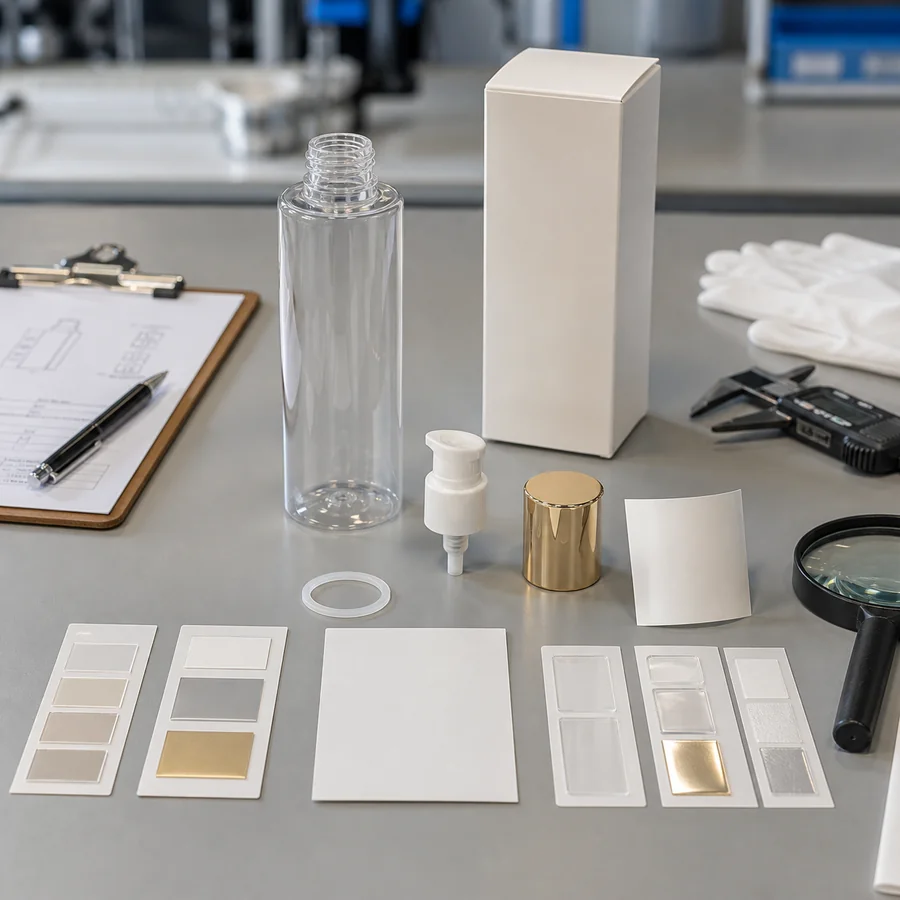
Before bulk production, the buyer should confirm that the approved physical sample uses the same bottle, collar, printing materials and commercial specifications referenced in the evidence file.
If the ink supplier or plated finish changes, the affected declarations and testing scope should return for review. The existing glass report need not automatically be rejected or repeated when the glass substrate and its relevant assessment remain unchanged.
This scenario illustrates a practical purchasing decision. It is not presented as a documented FOLOVER customer incident, an actual customs detention or a confirmed chemical-compliance failure.
Decision-Control Matrix
Use the following matrix as a working review structure. Each row identifies an approval question, the supporting evidence required for that decision and the event that may make the original conclusion insufficient.
| Decision area | Minimum controlled input | Approval owner | Reassessment trigger |
|---|---|---|---|
| Which heavy metals matter? | Current applicable requirements, named substances, component scope, acceptance criteria and relevant exemptions. | Brand compliance or designated qualified regulatory reviewer. | Destination-market, regulatory or customer-requirement change. |
| Can glass bottle bodies contain relevant metals? | Bottle code, glass color, material description, supplier information and relevant declaration or report. | Packaging development and designated technical or regulatory reviewer. | Glass composition, colorant, recycled-material source, supplier or bottle-version change. |
| Why pigments, inks and coatings deserve separate review | Decoration material, supplier, color or finish code, relevant evidence and approved physical sample. | Packaging development and quality, with regulatory review where required. | Coating, ink, pigment, supplier or relevant process change. |
| Metallic foils, collars, caps and pump parts | Component BOM, actual substrate, plated or decorative finish, supplier and relevant evidence. | Packaging development and designated material or regulatory reviewer. | Component construction, material, supplier, plating or relevant contact-condition change. |
| What does “heavy-metal free” actually mean? | Defined substances, tested component, analytical method, reporting limits, sample identity and proposed claim wording. | Brand compliance and designated claim-approval reviewer. | New evidence, material change, broader claim scope or applicable market-requirement change. |
A conditional approval should remain conditional in the controlled record and purchase specification. Do not convert a conclusion that applies to one identified item and market into a universal compliance statement.
The matrix should reference original supplier documents, laboratory reports and approved physical samples rather than replace those records.
Pre-Production Buyer Checklist
- Define the destination markets, applicable legal requirements and responsible reviewers.
- Confirm the exact bottle, closure, decoration, label and relevant component suppliers.
- Identify the substances and acceptance criteria applicable to each material or component.
- Match every declaration and test report to the selected commercial item and version.
- Distinguish total-content results, migration results and exposure-based assessments.
- Confirm whether existing evidence covers the selected glass color, coating, printing ink and metallic accessories.
- Record analytical methods and detection or reporting limits where relevant.
- Separate material evidence, packaging compatibility, physical decoration approval and marketing-claim review.
- Resolve unsupported conclusions before bulk-production release.
- Establish supplier change-notification requirements and retain the approved documentation history.
Frequently Asked Questions
Can one supplier certificate approve the complete cosmetic package?
No. A supplier declaration or laboratory report supports only the materials, components and requirements within its documented scope. A glass bottle report does not automatically cover the selected pump, cap, coating, ink or metallic accessories. Buyers should match the available evidence to the final commercial configuration and obtain additional information where the existing documents do not support the required decision.
Does a third-party report remove the buyer’s responsibility?
No. A third-party report provides evidence for its tested sample, substances, method and conditions. The responsible business must determine whether that evidence applies to the selected packaging and destination-market requirements. Buyers should review the report’s limitations and obtain additional technical or regulatory assessment where the available evidence is insufficient.
Can similar-looking packaging share the same evidence?
Only when the relevant materials, component construction, production processes and supplier sources have been evaluated and the evidence scope supports the proposed grouping. Visually similar bottles may use different pigments, coatings or plated components. Buyers should confirm material and process equivalence before reusing existing declarations, laboratory reports or sample approvals.
When should evidence be reviewed again?
Review the affected evidence when relevant changes occur to the product, material, supplier, decoration, manufacturing process, formulation, destination market, applicable requirements or claim scope. Not every change requires all tests to be repeated. Buyers should identify the affected components and determine which supplier confirmations, laboratory evaluations or approvals are necessary.
What can FOLOVER PACK support?
FOLOVER PACK can support cosmetic glass packaging selection, bottle development, component coordination, decoration, physical samples, relevant quality checks and available product-specific documentation. The exact supporting information depends on the selected materials and supplier evidence. Final legal, safety and market-placement decisions remain with the appropriate responsible businesses and qualified professionals.
Is this article legal advice?
No. This article provides practical guidance for evaluating heavy-metal requirements, supplier evidence and production approval for cosmetic packaging. Applicable requirements depend on the actual materials, destination market, product configuration and business responsibilities. Buyers should consult current official sources and qualified regulatory or technical professionals when making compliance decisions for a specific commercial product.
Official Sources Reviewed
Regulatory requirements, substance lists and technical standards may change. The following official sources provide the regulatory context for the heavy-metal assessment and packaging-development decisions discussed in this guide. Buyers should confirm the requirements applicable to their actual products and intended market-placement date.
- EU Packaging and Packaging Waste Regulation 2025/40 — Article 5(4) establishes the combined concentration requirement for lead, cadmium, mercury and hexavalent chromium in packaging or packaging components, subject to the applicable provisions and exemptions.
- ECHA REACH restrictions information — Provides information about substance restrictions under Annex XVII of the REACH Regulation. Buyers should determine whether a restriction applies to the actual material, component or intended use.
- ECHA Candidate List obligations — Explains relevant REACH communication and notification obligations concerning Candidate List substances in articles.
- California OEHHA Proposition 65 guidance for businesses — Explains exposure-based warning obligations, safe-harbor concepts and relevant business responsibilities.
- EN 71-3:2019+A2:2024 — Safety of Toys: Migration of Certain Elements — Identifies the migration-testing scope for toy materials. The standard should not automatically be treated as a mandatory cosmetic packaging certification requirement.
- European Commission — RoHS Directive — Explains the restriction of hazardous substances in electrical and electronic equipment and the relevant regulatory scope.
Conclusion
Heavy-metal compliance for cosmetic packaging should be established through the requirements applicable to the selected materials, components and destination market. The EU packaging concentration requirement, REACH restrictions and California Proposition 65 address different regulatory questions and should not be treated as interchangeable standards.
Before bulk production, buyers should confirm that the selected glass bottle, color, decoration, closure and other relevant components are supported by appropriately scoped evidence. A passing report for one material should not automatically be extended to another commercial version or the complete packaging assembly.
FOLOVER PACK can assist with cosmetic glass packaging selection, component coordination, decoration requirements, physical samples and available product-specific documentation. These services support the buyer’s packaging-development and evidence-collection process without replacing the finished product’s legal or safety responsibilities.
If you are sourcing cosmetic glass packaging for international markets, share your intended application, selected or preferred bottle, closure requirements, decoration, destination market and documentation needs. FOLOVER can review the relevant packaging options and clarify which component information and physical samples can be supplied for further evaluation.