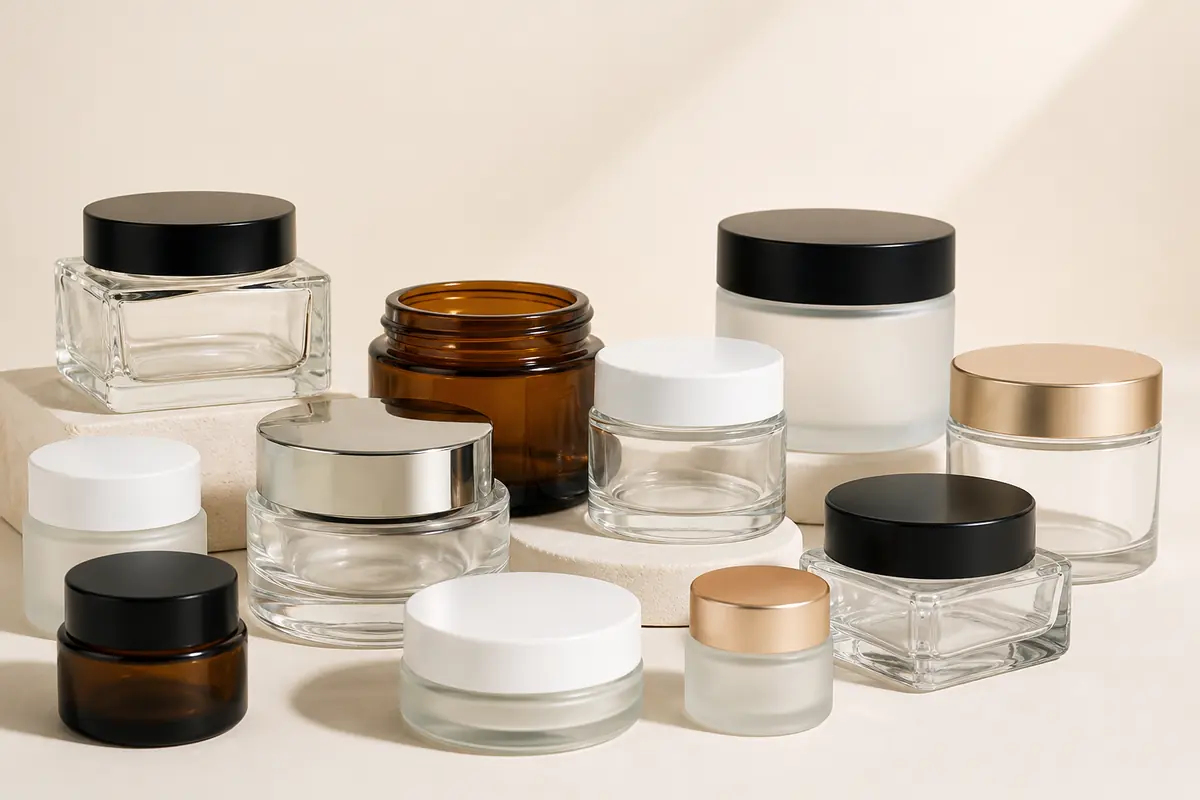

EU cosmetic packaging compliance requires buyers to review several separate areas: cosmetic product safety, packaging-material suitability, REACH and SVHC obligations, labeling, and packaging waste requirements. A supplier declaration or laboratory report can support a specific decision, but no single certificate automatically approves the complete cosmetic packaging system for the EU market.
For a new packaging project, start by identifying the final bottle, closure, dispensing components, decoration, formulation and destination markets. Then determine which documents each component requires, who is responsible for reviewing them and what must be confirmed before bulk production.
This guide provides practical procurement and packaging-development guidance, not legal advice. The Regulations & Compliance hub and Packaging Buying Guides resources provide related information for market-specific and sourcing decisions.
The Core Buyer View: EU compliance is a stack of separate workstreams with different evidence owners
EU cosmetic packaging compliance is not established by collecting the largest possible number of certificates. It requires matching each applicable requirement to the correct packaging component, supporting evidence and responsible reviewer.
A useful buyer file separates cosmetic-product safety, packaging-material suitability, chemical-substance obligations, labeling, packaging waste and commercial specifications. Before production approval, the buyer should know which decisions are supported, which remain unresolved and which changes would require reassessment.
Start with the EU Cosmetics Regulation
Regulation (EC) No 1223/2009 establishes the central EU framework for cosmetic products. Article 4 requires a designated responsible person for cosmetic products placed on the EU market. Under Article 10, the responsible person must ensure that the cosmetic product undergoes a safety assessment and that a Cosmetic Product Safety Report (CPSR) is prepared before market placement.
Article 11 also requires the responsible person to maintain a Product Information File (PIF) containing the specified product information and supporting records.
A glass bottle supplier’s material declaration is not a substitute for these finished-product responsibilities. Packaging specifications and test reports may support the safety assessment, but the responsible person and qualified safety assessor must determine their relevance to the actual cosmetic formulation and packaging configuration.
Buyers should consult the EU Cosmetics Regulation consolidated text and check subsequent amendments applicable to their product and market-placement date.
Buyer action: Identify the responsible person, the finished-product safety assessor and the packaging information needed for the CPSR and PIF. Confirm which party will supply each record before final packaging approval.
Packaging information supports product safety assessment
Annex I, Part A, point 4 of the Cosmetics Regulation identifies relevant characteristics of packaging material, particularly purity and stability, as information for the cosmetic product safety report.
The European Commission’s guidelines on cosmetic product safety reports explain that the assessment should consider possible substance release from packaging, product deterioration and interactions between the formulation and packaging materials.
For example, a glass serum bottle may be supplied with a plastic pump and an elastomer gasket. The bottle specification alone cannot establish the suitability of every formula-contact component.
The buyer should identify the selected bottle, pump and sealing materials, then provide the relevant information to the product-development and safety-assessment teams.
Final bottle and closure compatibility should be confirmed using the selected components and physical samples before bulk production. Packaging compatibility should be evaluated with the actual formulation under intended storage and use conditions.
Food-contact material documentation may provide useful supporting information where its material and test scope are relevant. However, Regulation (EC) No 1935/2004 concerns materials intended for food contact and should not automatically be presented as a universal mandatory certification for cosmetic packaging.
Evidence to retain: Approved component specifications, relevant formula-contact material information, identified packaging samples, compatibility evaluation records and the safety assessor’s information requirements.
Material data should be proportional to risk
A glass bottle body, plastic pump, elastomer gasket, metal collar and decorative coating have different material compositions and contact conditions. Buyers should determine the appropriate evidence for each component rather than request the same certificate and test package for every material.
Begin with a component-level material inventory. Identify which parts contact the formulation directly, which may contact it during intended use and which are external decorative or protective components.
Use the skincare packaging guide to define the actual packaging system and its relationship to the intended formulation.
| Packaging component | Main review question | Relevant supporting information | What buyers should verify |
|---|---|---|---|
| Glass bottle or jar | Does the selected container support the intended formulation and packaging configuration? | Product specification, available material information, relevant quality or test reports, and compatibility evidence. | Exact bottle version, formula-contact conditions and applicability of existing evidence. |
| Plastic pump or dispensing closure | Do the selected components meet the relevant material, sealing and dispensing requirements? | Component specifications, available material declarations and relevant compatibility or functional evaluations. | Actual component construction, bottle interface, formula-contact materials and assembled-sample performance. |
| Elastomer gasket or sealing component | Could the selected sealing material affect product safety or packaging performance? | Material identification, relevant supplier information and project-specific compatibility evidence where needed. | Exact gasket material, supplier, sealing geometry and contact with the actual formulation. |
| Metal collar, coating or printed decoration | Which chemical, packaging or appearance requirements apply to the selected finish? | Relevant material or decoration information, applicable declarations, artwork and approved physical samples. | Finished decoration, relevant substance scope, production version and whether the component contacts the formulation. |
This is a procurement review framework, not a list of mandatory certificates for every material. Required documents and testing depend on the actual packaging configuration, applicable regulations, product safety assessment and agreed customer specifications.

REACH is a separate chemicals workstream
REACH, Regulation (EC) No 1907/2006, establishes EU obligations concerning chemical substances, including certain requirements applicable to substances in articles such as packaging components.
Relevant provisions may include restrictions under Annex XVII, Candidate List communication requirements under Article 33 and other obligations depending on the substance, component, concentration and economic-operator role.
There is no single universal REACH certificate that automatically establishes the compliance of every material, component and finished cosmetic product.
A supplier declaration should identify the actual packaging item, the regulatory provisions addressed, the relevant material or article scope, the assessment date and any limitations.
The dedicated REACH and SVHC for cosmetic packaging guide explains how component identity, declaration scope and the applicable Candidate List should be evaluated.
Buyer action: Request declarations for the selected commercial components rather than accepting a general statement that all packaging products are REACH certified.
SVHC review must include more than the glass body
Substances of very high concern (SVHCs) included on the ECHA Candidate List can trigger information and other obligations under REACH.
Under Article 33, suppliers of articles containing a Candidate List substance above 0.1% by weight must provide the applicable information to recipients. For a complex product assembled from multiple articles, the threshold is assessed at the level of each relevant constituent article that retains its article status.
A complete glass bottle assembly may include plastic closures, pump housings, elastomer seals, metal components and other separately identifiable articles. The weight of the glass body should not automatically be used to calculate the concentration of an SVHC in a separate constituent article.
Buyers should distinguish constituent articles from chemical mixtures such as certain inks and coating formulations. Not every material layer should automatically be classified as a separate article.
The European Chemicals Agency’s Candidate List obligations guidance explains the relevant communication and notification requirements.
Buyer action: Identify the selected components, obtain relevant supplier declarations and record the Candidate List review date. Reassess affected material information when the list or approved packaging configuration changes.
Important distinction: The 0.1% Article 33 threshold is an information-obligation trigger, not a universal maximum permissible concentration for every chemical substance in cosmetic packaging.
Heavy metals and decorations require scoped questions
Glass coloring, spray coating, screen printing, hot stamping and decorative metal components may involve different materials and production processes. A test report for an undecorated glass bottle should not automatically be used as evidence covering every finished decoration.
Under Article 5(4) of Regulation (EU) 2025/40, the sum of the concentrations of lead, cadmium, mercury and hexavalent chromium resulting from substances present in packaging or packaging components must not exceed 100 mg/kg, subject to the applicable regulatory provisions and exemptions.
This packaging-specific restriction should not be confused with a universal migration limit for all cosmetic formulations or a mandatory testing requirement for every glass bottle.
Where analytical testing is necessary, the buyer should establish which substances, materials, methods and regulatory criteria the evaluation must address.
For Cosmetic and skincare glass packaging, review the intended final decoration and component combination rather than relying solely on information for the undecorated container.
FOLOVER Manufacturer Insight: Decoration approval is not material approval
FOLOVER PACK supports cosmetic glass packaging selection, decoration coordination and component matching. For a decorated bottle, the physical sample can establish the approved appearance, color reference, logo placement and selected finishing process.
However, visual approval does not establish chemical compliance or compatibility with the cosmetic formulation. Where material declarations or laboratory reports are required, their scope should correspond to the selected materials and finished packaging configuration.
For example, changing from a printed label to direct screen printing may introduce a different decoration material and approval process. The buyer should review the affected artwork, supplier information and relevant material evidence before approving the revised commercial version.
FOLOVER recommends confirming the final color, coating, printing and component appearance on physical samples before bulk production. Product-specific technical and regulatory evidence should be reviewed separately.

Packaging and labeling are separate compliance areas
Packaging-material suitability and cosmetic labeling requirements are related but separate approval decisions.
Article 19 of the EU Cosmetics Regulation establishes requirements for information appearing on cosmetic containers and packaging. Depending on the product and applicable conditions, this includes the responsible person’s name and address, nominal content, relevant durability information, precautions, batch identification, product function and ingredient information.
The country of origin must also be specified for imported cosmetic products. The regulation contains detailed conditions and exceptions concerning the placement and presentation of certain information.
Packaging buyers should confirm that the selected bottle and retail carton provide sufficient space for the approved information. Decoration, label size and bottle geometry can affect the practical legibility of the final artwork.
FOLOVER can coordinate the physical decoration and sample presentation, while the brand’s responsible regulatory team should approve the legal labeling content, relevant language requirements and product claims.
Buyer action: Approve the artwork on the selected physical packaging. Keep the packaging production proof and regulatory artwork approval linked to the same commercial version.
PPWR now forms another EU packaging workstream
Regulation (EU) 2025/40 on packaging and packaging waste, commonly known as the Packaging and Packaging Waste Regulation (PPWR), generally applies from 12 August 2026.
It establishes requirements concerning packaging composition, recyclability, packaging minimization, labeling, reuse and producer responsibilities. Individual requirements have different application dates and may depend on further implementing or delegated acts.
For example, the PPWR’s recyclability framework includes staged design-for-recycling and recycling-at-scale requirements. Buyers should not assume that every detailed future recyclability criterion was already fully applicable on 12 August 2026.
The regulation also addresses packaging composition, including the heavy-metal concentration requirement discussed above.
For cosmetic packaging projects, PPWR review may require component-level material and weight information, identification of the relevant packaging categories and assessment of the intended packaging configuration against applicable requirements.
The official 2026 Commission guidance provides further interpretation of the regulation’s scope and implementation. Buyers should also consult the PPWR legal text for the applicable provisions and effective dates.
The related packaging waste, EPR and recyclability basics article explains the separate questions of producer responsibility and packaging end-of-life assessment.
Buyer action: Record the destination market, planned market-placement date, packaging materials and applicable PPWR requirements. Do not treat a REACH declaration or a statement that glass is recyclable as evidence of complete PPWR compliance.
Imported packaging needs traceable supplier information
Importing cosmetic packaging from a non-EU supplier does not automatically transfer the EU responsibilities of the cosmetic product’s responsible person, importer or other relevant economic operator to that packaging supplier.
Supplier declarations, specifications and test reports can support the buyer’s assessment when their origin, component identity and scope are clear.
For a packaging system assembled from components supplied by different businesses, buyers should identify the actual source of each relevant document and connect it to the approved bill of materials (BOM).
Request information before final sample approval so that missing evidence can be addressed without changing an already approved production configuration.
FOLOVER PACK manufacturing capabilities provide information about the company’s packaging sourcing, decoration and component-coordination services. The available documentation and technical support should be confirmed for the selected products and project requirements.
Buyer action: Include the selected component codes, supplier information, destination market and required documentation in the RFQ. Confirm the scope and availability of each document rather than assuming that every packaging component has the same supporting records.

Changes require reassessment
A new formulation, pump, cap, gasket, pigment, coating, print process, supplier or destination market may affect an existing packaging approval.
Consider a skincare brand that has approved a glass serum bottle with a particular dispensing pump. During purchasing, an alternative pump is proposed with a similar appearance and nominal neck size.
The buyer should not automatically reuse the original pump’s material declaration or compatibility report. The replacement may have different internal materials, sealing geometry or dispensing characteristics.
The appropriate response is to identify the affected components, request relevant information from the replacement supplier and determine which existing evidence remains applicable.
Physical samples should be used to confirm the selected bottle and closure combination. Packaging compatibility should be evaluated with the actual formulation under intended storage and use conditions.
This is an illustrative procurement scenario, not a documented customer incident or a claim that a specific packaging component failed an EU compliance assessment.
Use the cosmetic packaging compliance file as a controlled record of the approved configuration, supporting documents, responsible reviewers and reassessment triggers.
Buyer action: Keep the original and revised packaging versions distinguishable. Resolve the relevant evidence gaps before releasing the replacement component for bulk production.
Build a practical EU buyer file
Keep the approved packaging BOM, component-specific supplier evidence, test reports and physical sample approvals in one controlled file. Link each record to the selected commercial packaging version and identify the reviewer responsible for unresolved issues.
The foundational cosmetic packaging compliance basics article explains the broader responsibilities and documentation principles.
Evidence to retain: Approved BOM revision, supporting documents, approval status, responsible reviewer and change history.
Build an Approval Matrix Instead of a Certificate Folder
A certificate folder shows which documents have been collected. An approval matrix shows which decision each document supports, which component and version it covers, who reviewed it and what changes would require reassessment.
Use the matrix to distinguish packaging-supplier information from the legal and technical conclusions that remain with the appropriate responsible businesses and professionals.
| Decision area | Evidence package | Approval gate | Reassessment trigger |
|---|---|---|---|
| Start with the EU Cosmetics Regulation | Applicable legal requirements, responsible-person identification and safety-assessor information requests. | Confirm responsibilities and required packaging information before final product approval. | Changes to the product, destination market, responsible person or applicable requirements. |
| Packaging information supports product safety assessment | Approved component specifications, relevant material information, formula-contact assessment and compatibility evidence. | Review the selected packaging configuration with the actual formulation before bulk-production approval. | Changes to the formulation, bottle, closure, sealing materials or intended use. |
| Material data should be proportional to risk | Component-level material inventory, supplier information and relevant technical or regulatory evidence. | Confirm the evidence required for the selected components and their intended functions. | Material, component construction, supplier or relevant processing changes. |
| REACH is a separate chemicals workstream | Component-specific declarations, applicable REACH provisions, Candidate List review information and relevant supporting evidence. | Confirm the regulatory scope and component identity before accepting supplier evidence. | Relevant Candidate List, material, supplier or applicable legal requirement changes. |
| Packaging and labeling are separate compliance areas | Approved artwork, physical packaging sample, destination-market information and responsible regulatory review. | Approve legal labeling content and physical artwork presentation before production release. | Changes to artwork, packaging dimensions, formulation, claims or destination market. |
| PPWR now forms another EU packaging workstream | Packaging material and weight information, applicable requirements, market-placement date and relevant supporting records. | Confirm the packaging configuration and applicable waste-related obligations before market placement. | Changes to the packaging design, material, component weight, market or applicable PPWR requirements. |
Approval roles should be assigned according to the actual project. A supplier can identify components and provide available supporting documents, while the responsible regulatory or safety professional determines whether the evidence supports the applicable finished-product or market-placement decision.
Record conditional approvals explicitly. Evidence supporting one formulation, decoration, supplier or packaging version should not automatically be applied to another configuration.
Buyer Compliance File Checklist
- Define the destination markets, finished cosmetic, intended use and responsible legal entities.
- Confirm the selected bottle, closure, sealing components, decoration, labeling and component suppliers.
- Identify direct, indirect and reasonably foreseeable contact with the actual formulation.
- Match each declaration, specification and test report to the correct component and version.
- Separate cosmetic product safety, REACH, labeling, PPWR and commercial specifications into the appropriate review workstreams.
- Record unresolved evidence gaps and assign responsible reviewers and required follow-up actions.
- Confirm the final bottle and closure combination using selected physical samples.
- Approve the final decoration and artwork against the intended commercial packaging.
- Establish supplier change-notification requirements and relevant reassessment triggers.
- Retain the final packaging approval records and supporting documents before bulk production.
How to Review a Supplier Document
Check the issuing entity, component code, material or process covered, supplier, regulatory or testing basis, issue date and authorized issuer. Match the document to the approved packaging version before accepting it as supporting evidence.
Assess its actual scope and relevance. A report for an undecorated bottle may not cover the selected screen printing, while a newer report for a different component may be less relevant than an older report that accurately identifies the approved material and configuration.
Record the buyer’s conclusion separately: what the document supports, what remains outside its scope and whether supplier clarification, additional testing or qualified regulatory review is required.
Frequently Asked Questions
Does one certificate prove a cosmetic package is compliant?
No. A supplier certificate or declaration supports only the materials, components and requirements within its stated scope. Complete EU cosmetic packaging compliance depends on the finished product, packaging configuration, destination market and applicable responsibilities. Buyers should identify the exact items covered by each document and obtain additional evidence where the existing information does not support the required approval decision.
Does a glass bottle report cover its pump, cap and decoration?
Only if the report explicitly covers those components and materials within its documented scope. A glass bottle report does not automatically establish the status of a separately supplied pump, gasket, cap or decorative finish. Buyers should map the selected components, review the available supplier information and request further evidence where the existing report does not cover the final packaging configuration.
Does a passing test guarantee legal compliance?
No. A laboratory report provides evidence for the tested sample, substances, method and conditions. It does not automatically establish compliance with every applicable EU cosmetic product, chemical, labeling or packaging waste requirement. Buyers should confirm the report’s applicability to the selected commercial component and obtain qualified regulatory or safety review where the required legal conclusion remains uncertain.
When should the file be reassessed?
The file should be reassessed when relevant changes affect the formulation, packaging component, material, supplier, color, decoration, manufacturing process, destination market or applicable regulatory requirements. Buyers should identify the affected documents, determine whether existing evidence remains applicable and complete any required supplier confirmation, testing or approval before accepting the revised packaging configuration.
Can the packaging supplier approve the finished cosmetic?
A packaging supplier can provide product specifications, available material information, relevant declarations, agreed testing evidence and physical samples within its actual service scope. Finished-product safety assessment, legal labeling approval and market-placement responsibilities remain with the appropriate responsible businesses and qualified professionals. Buyers should clarify these responsibilities and obtain the required packaging information before approving the final commercial configuration.
Official Sources Used
EU cosmetic packaging requirements and their implementation may change. The following official sources provide the regulatory context for the packaging-development and procurement decisions discussed in this guide. Buyers should confirm the applicable legal versions and requirements when assessing a live project.
- EU Cosmetics Regulation, consolidated text — Articles 4, 10, 11 and 19 establish relevant responsibilities concerning cosmetic product safety, documentation and labeling. Annex I addresses information used in the cosmetic product safety report.
- EU guidelines on Annex I cosmetic product safety reports — Section 3.4.3 explains the relevance of packaging-material characteristics, supplier information and possible interactions with the formulation.
- Regulation (EC) No 1907/2006 — REACH — Establishes the EU chemical regulatory framework, including applicable restrictions and information obligations concerning substances in articles.
- ECHA Candidate List obligations — Explains relevant SVHC communication and notification obligations, including the Article 33 information threshold.
- Regulation (EU) 2025/40 on packaging and packaging waste — Establishes the EU PPWR framework, including packaging composition, recyclability and other packaging-related requirements.
- Commission guidance for Regulation (EU) 2025/40 — Provides official interpretation of selected PPWR provisions and their implementation.
Conclusion
EU cosmetic packaging compliance begins with the actual packaging configuration and the applicable responsibilities, not with a generic certificate request. Before bulk-production approval, buyers should confirm that the selected bottle, closure, decoration and other relevant components are supported by appropriately scoped documents and physical sample evaluations.
FOLOVER PACK can assist with cosmetic glass packaging selection, component coordination, decoration requirements and available product-specific documentation. These services can support the buyer’s packaging-development and evidence-collection process without replacing the finished-product safety assessment or applicable regulatory responsibilities.
If you are preparing a cosmetic packaging project for the EU market, share your intended application, selected or preferred bottle, closure requirements, decoration, destination market and documentation needs. FOLOVER can review the relevant packaging options and clarify which component information and physical samples can be supplied for further evaluation.